Can Corporate Governance Be Improved?

Lucy P. Marcus writes:  Business and government leaders worry about a multitude of issues these days. Climate change, weapons of mass destruction, water scarcity, migration, and energy are the greatest threats we face, according to the 750 experts surveyed for the World Economic Forum’s Global Risk Report 2016. And at the WEF’s annual meeting in Davos this year, the sheer number of unsettled issues – the Middle East meltdown, the European Union’s future (particularly given the possibility of a British exit), America’s presidential election, the refugee crisis, China’s economic slowdown, oil prices, and more – was itself unsettling.

But consider this: None of the risks highlighted in the WEF report caused the recent spike in debt crises or the wave of scandals that engulfed – just in the last year – Volkswagen, Toshiba, Valeant, and FIFA. These developments (and many more) are rooted in a more pedestrian – and perennial – problem: the inability or refusal to recognize the need for course correction (including new management).

As anti-establishment parties and candidates gain ground with voters throughout Europe and in the United States, political leaders who continue to pursue a business-as-usual approach could find themselves looking for new jobs. And the same is true of business leaders: Activist investors are fed up and determined to force change, either with a hands-on approach or by voting with their feet and divesting from companies that don’t meet their criteria.

As Barbara Novick, a vice chair of BlackRock, noted on a panel on corporate governance and ethics at this year’s Davos gathering, her firm looks carefully at whether the boards of companies in which BlackRock invests include people who are engaged and asking hard questions consistently throughout the year.

And yet the heads of some of the world’s largest companies still seem to be in denial. I spent several hours last year with the chief executive and chair of a bank who thought it unfair that investors were planning to vote against him holding both posts. Though he agreed that having one person in both roles is, in principle, a bad idea, he insisted that he was the exception.

I had a similar conversation this year with someone who noted that most of his company’s board had served for upwards of 20 years, and that his company had just established an age limit of 80 for board members. More rapid turnover might work for other companies, he conceded; but, again, his company was somehow exceptional.

On the other hand, Hiroaki Nakanishi, CEO and Chairman of Hitachi, spoke eloquently to me about the importance of corporate governance and the changing demands that global companies faced. He noted the importance of having non-Japanese board members as Hitachi seeks to expand further internationally.

The problem is that those now speaking up for long-term investing, commitment to the community, and building companies that last are doing so over dinner, behind closed doors, or under the protection of the Chatham House Rule (which requires that reported statements remain unattributed to those who made them). Indeed, in the program for this year’s Davos meeting, the phrase “corporate governance” appeared just once (for the panel with Novick that I was on). The same was true for “board” and “boardroom,” while a search for “ethics” turned up sessions on medicine and biotech. “Governance” was primarily about political governance, and “stewardship” referred to the planet.

Many people are cynical about Davos – and they aren’t completely wrong. Years ago, it was because the meetings were so openly secretive (much like the way people perceive board meetings). Nowadays, the WEF webcasts many of its sessions, and the cynicism comes from the sense that what is being discussed is not what business and government leaders need to think about.

That’s not the WEF’s fault. Davos has extraordinary convening power and the ability to bring important issues to the fore, including LGBT issues this year. There is no reason it cannot also include issues like the pay gap between executives and labor, the impact of corporate decisions on communities and the environment, and the growing loss of trust toward business and government. What it can’t do is force CEOs, board directors, investors, and policymakers to speak about such issues openly and on the record.

It is easy for companies to see far-off risks that they cannot control. It is a lot harder, but a lot more important, for them to acknowledge the risks stemming from how they operate. And it is harder still to persuade those business leaders who do comprehend such risks to talk about them on a public stage. That reluctance to speak openly about how to restructure corporate governance in a way that improves stewardship places all of us at risk.
Shareholders v Stakeholders?

Do Low Interest Rates Boost Demand?

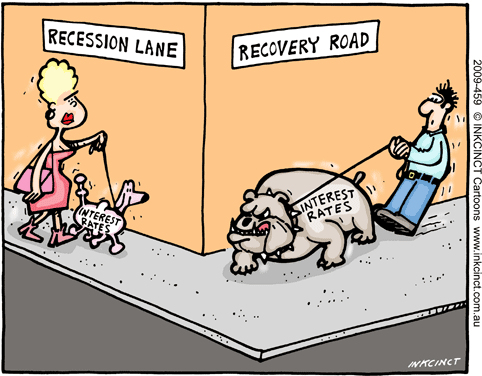
Adair Turner writes:  Financial markets were surprised by the Bank of Japan’s recent introduction of negative interest rates on some commercial bank reserves. They shouldn’t have been. The BOJ clearly needed to take some new policy action to achieve its target of 2% inflation. But neither negative interest rates nor further expansion of the BOJ’s already huge program of quantitative easing (QE) will be sufficient to offset the strong deflationary forces that Japan now faces.

In 2013 the BOJ predicted that its QE operations would deliver 2% inflation within two years. But in 2015, core inflation (excluding volatile items such as food) was only 0.5%. With consumer spending and average earnings falling in December, the 2% target increasingly looks out of reach.

The unanticipated severity of China’s downturn is the latest factor upsetting the BOJ’s forecasts. But that slowdown is the predictable (and predicted) consequence of debt dynamics with roots going back to 2008.

Excessive private credit growth in the advanced economies before 2008 left many companies and households overleveraged, and their attempted deleveraging after the global financial crisis erupted that year threatened Chinese exports, employment, and growth. To offset that danger, China’s rulers unleashed an enormous credit-fueled investment boom, pushing the debt/GDP ratio from around 130% to more than 230%, and the investment rate from 41% of GDP to 47%. This in turn drove a global commodity boom, and strong demand for capital-goods imports from countries such as South Korea, Japan, and Germany.

But the inevitable consequence within China was wasteful construction investment and enormous overcapacity in heavy industrial sectors such as steel, cement, and glass. So even though service-sector expansion supports strong employment growth (with 13.1 million new urban jobs created in 2015), the Chinese industrial sector is in the midst of a hard landing.

Indeed, official survey results suggest that manufacturing has contracted for six months in a row. This, in turn, has reduced demand for commodities, driving countries such as Russia and Brazil into recession, and posing a major threat to African growth. Lower industrial imports are having a major impact on many Asian economies as well. South Korea’s exports fell 18% year on year in January, and Japan’s fell 8% in December.

In the eurozone, annual inflation is running at 0.2% – still far below the European Central Bank’s target, and German exports to China are down 4%. As a result, at its March meeting, the ECB’s Governing Council may also consider moving interest rates further into negative territory, or increasing the scale of its QE program.

But it is increasingly clear that ultra-low short and long-term interest rates are not boosting nominal demand.

The BOJ’s announcement of a negative interest rate certainly did produce a currency depreciation. But a lower yen would help Japanese exporters only if China, the eurozone, and South Korea – all themselves struggling with deflationary pressures – do not match Japan’s rate cuts.

At the global level, currency depreciation is a zero-sum game – we cannot escape a global debt overhang by depreciating against other planets.

Depressed equity markets and falling bond yields worldwide in January 2016 thus illustrate the global nature of the problem we face. Demand is still depressed by the overhang of debt accumulated before 2008. Indeed, this pre-2008 debt has not gone away; it has simply been shifted between sectors and countries.

Total global debt (public and private combined) has increased from around 180% to more than 210% of world GDP. Faced with this reality, markets are increasingly concerned that governments and central banks are running out of ammunition to offset global deflation, with the only tools available those that simply redistribute demand among countries.

But the fact is that central banks and governments together never run out of policy ammunition to offset deflation, because they can always finance tax cuts or increase public expenditure with printed money. This is precisely what the Japanese authorities should do now, permanently writing off some of the BOJ’s huge holdings of Japanese government bonds and canceling the planned sales-tax increase which, if it goes ahead in April 2017, will further depress Japanese growth and inflation.

There are no credible scenarios in which Japanese government debt can ever be repaid in the normal sense of the word “repay”: and none in which the bulk of the BOJ’s holdings of Japanese government bonds will ever be sold back to the private sector. The sooner that reality is admitted, the sooner Japan will have some chance of meeting its inflation targets and stimulating total demand, rather than seeking to shift it away from other countries.

Interest Rates

Anomalous Economics?

Nouriel Roubini writes:  Since the beginning of the year, the world economy has faced a new bout of severe financial market volatility, marked by sharply falling prices for equities and other risky assets. A variety of factors are at work: concerns about a hard landing for the Chinese economy; worries that growth in the United States is faltering at a time when the Fed has begun raising interest rates; fears of escalating Saudi-Iranian conflict; and signs – most notably plummeting oil and commodity prices – of severe weakness in global demand.

And there’s more. The fall in oil prices – together with market illiquidity, the rise in the leverage of US energy firms and that of energy firms and fragile sovereigns in oil-exporting economies – is stoking fears of serious credit events (defaults) and systemic crisis in credit markets. And then there are the seemingly never-ending worries about Europe, with a British exit (Brexit) from the European Union becoming more likely, while populist parties of the right and the left gain ground across the continent.

These risks are being magnified by some grim medium-term trends implying pervasive mediocre growth. Indeed, the world economy in 2016 will continue to be characterized by a New Abnormal in terms of output, economic policies, inflation, and the behavior of key asset prices and financial markets.

So what, exactly, is it that makes today’s global economy abnormal?

First, potential growth in developed and emerging countries has fallen because of the burden of high private and public debts, rapid aging (which implies higher savings and lower investment), and a variety of uncertainties holding back capital spending. Moreover, many technological innovations have not translated into higher productivity growth, the pace of structural reforms remains slow, and protracted cyclical stagnation has eroded the skills base and that of physical capital.

Second, actual growth has been anemic and below its potential trend, owing to the painful process of deleveraging underway, first in the US, then in Europe, and now in highly leveraged emerging markets.

Third, economic policies – especially monetary policies – have become increasingly unconventional. Indeed, the distinction between monetary and fiscal policy has become increasingly blurred. Ten years ago, who had heard of terms such as ZIRP (zero-interest-rate policy), QE (quantitative easing), CE (credit easing), FG (forward guidance), NDR (negative deposit rates), or UFXInt (unsterilized FX intervention)? No one, because they didn’t exist.

But now these unconventional monetary-policy tools are the norm in most advanced economies.

Some alleged that these unconventional monetary policies  were a form of debasement of fiat currencies.

Instead, inflation is still too low and falling in advanced economies, despite central banks’ unconventional policies and surging balance sheets.

The reason ultra-low inflation remains a problem is that the traditional causal link between the money supply and prices has been broken. One reason for this is that banks are hoarding the additional money supply in the form of excess reserves, rather than lending it (in economic terms, the velocity of money has collapsed).  Unemployment rates remain high, giving workers little bargaining power. And a large amount of slack remains in many countries’ product markets, with large output gaps and low pricing power for firms (an excess-capacity problem exacerbated by Chinese overinvestment).

And now, following a massive decline in housing prices in countries that experienced a boom and bust, oil, energy and other commodity prices have collapsed.

The recent market turmoil has started the deflation of the global asset bubble wrought by QE.

How long markets not only ignore the real economy, but also discount political risk?

Welcome to the New Abnormal for growth, inflation, monetary policies, and asset prices, and make yourself at home. It looks like we’ll be here for a while.

Global economy

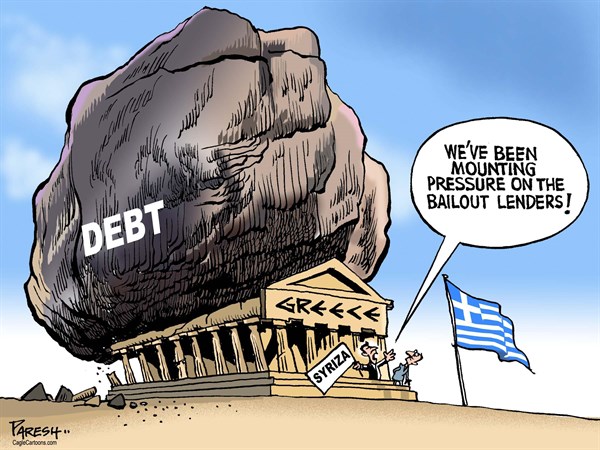
Greek Debt Relief as Important as Pension Reform?

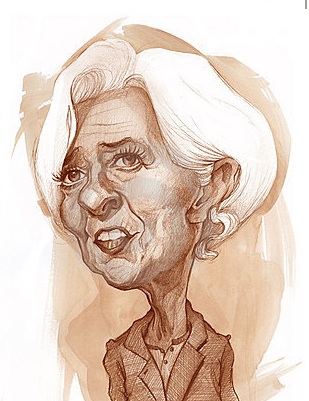
As the first phase of talks between Greece and its creditors draws to an end, International Monetary Fund chief Christine Lagarde stressed that debt relief is as important for Greece as the reforms that creditors are demanding, notably of the pension system.

“I have always said that the Greek program has to walk on two legs: one is significant reforms and one is debt relief. If the pension [system] cannot be as significantly and substantially reformed as needed, we could need more debt relief on the other side.”

She noted, however that Greece’s pension system must become sustainable irrespective of any debt relief that creditors may decide to provide. Plowing 10 percent of gross domestic product into financing the pension system, compared to an average of 2.5 percent in the EU, is not sustainable, she said. She called for “short-term measures that will make it sustainable in the long term.”

As for criticism of the IMF as excessively harsh, Lagarde suggested it was unfair.  “I really don’t like it when we are portrayed as the “draconian, rigorous terrible IMF.” “We do not want draconian fiscal measures to apply to Greece, which has already made a lot of sacrifices. We have said that fiscal consolidation should not be excessive, so that the economy could work and eventually expand. But it needs to add up.”

Apart from pension reform, Lagarde underlined the need for Greece to improve tax collection “so that revenue comes in and evasion is stopped.”

“And the debt relief by the other Europeans must accompany that process.  We will be very attentive to  the sustainability of the reforms, to the fact that it needs to add up, and to walk on two legs. That will be our compass for Greece. But we want that country to succeed at the end of the day, but it has to succeed in real life, not on paper.”

Greek Debt


Twilight of Oil?

Christine Lagarde said the Fund stood ready to help struggling countries such as Azerbaijan and Nigeria cope with a renewed drop in oil prices, amid reports that the African nation has sought support from the World Bank.

“Oil and metals prices have fallen by around two-thirds from their most recent peaks, and are likely to stay low for quite some time,  As a result, many commodity-exporting emerging economies are under severe stress, and some currencies have already seen very large depreciations,” said Christine Lagarde.

Ms Lagarde called on policymakers to boost the global “safety net” to cope with future financial shocks.

The managing director called for more co-operation between central banks as well as better planning for countries to access credit in times of stress.

In separate comments on Thursday, Ms Lagarde praised Azerbaijan for taking steps to reassess spending and use its exchange rate as a “buffer”.

However, she said Nigeria was still wasting money on subsidies and suggested that the country’s woes were being exacerbated by the naira’s peg to the US dollar.

Ms Lagarde also sought to calm fears about China, as she said a slowdown in growth would not lead to a “hard landing” for the world’s second largest economy.

She said the transition towards consumption from investment-led growth would “create spillover effects – through trade and lower demand for commodities, and amplified by financial markets”, but that this would lead to more sustainable growth.

As tens of thousands of Greeks took to the streets to protest against government pension reforms needed to meet demands of international creditors, Ms Lagarde said spending on pensions in the country remained well above the European average, but added that reform demands had to be realistic.

Ms Lagarde also said the perception that the IMF was acting in a “draconian” or “terrible” way on reforms was unfair.

“Greece has made a lot of sacrifices; [austerity] should not be excessive but it needs to add up,” she said. “[Greece’s] tax collection system needs to be improved so revenues come in and evasion is stopped and debt relief from other European countries must accompany this process. We want the programme to be a success, but it has to succeed in real life, not just on paper.”

Twilight of Oil?


Failure of Anti-Corruption Measures in Ukraine?

Claims of resigned Ukraine’s Economic Development Minister Aivaras Abromavicius about corruption in the government could indicate failure of introduced reforms, International Monetary Fund (IMF) Managing Director Christine Lagarde said.

“His [Abromavicius’s] recently announced resignation is of concern,” Lagarde stated. “If the allegations that he makes in his resignation are correct, then it is obviously an indication that the anti-corruption measures that were committed to by the government are not yet working.”

Abromavicius announced his plans to resign because he was unable to work effectively. In his resignation letter, the minister named corruption and political pressure as reasons for the decision.

Lagarde noted that Abromavicius conducted “good and solid reforms” in Ukraine, and paid tribute to his effort.

“We have known all along that in relation to corruption, a lot of work needs to be done,” she added.

In March 2015, the IMF approved a four-year $17.5-billion assistance package to Ukraine to help the recovery of its ailing economy. To receive the financial aid, Kiev has committed to complex reforms, including enhanced anti-corruption policies.

Lagarde


Does Europe Need a New Deal?

Thomas PIketty writes:  It will be important for European leaders—the French and Germans in particular—to acknowledge their errors. We can debate endlessly all sorts of reforms, both small and large, that ought to be carried out in various eurozone countries: changed opening hours for shops, more effective labor markets, different standards for retirement, and so on. Some of these are useful, others less so. Whatever the case, however, the failures to make such reforms are not enough to explain the sudden plunge in GDP in the eurozone from 2011 to 2013, even as the US economy was in recovery. There can be no question now that the recovery in Europe was throttled by the attempt to cut deficits too quickly between 2011 and 2013—and particularly by tax hikes that were far too sharp in France. Such application of tight budgetary rules ensured that the eurozone’s GDP still, in 2015, hasn’t recovered to its 2007 levels.  A New Deal for Europe

Will Russia Privatize State Businesses?

Mark Adomanis writes:  You know that Russia is in real trouble when liberal economic policies start getting batted around. This is particularly true of “privatization,” a typically boring and technical term studiously avoided during periods of stability and then suddenly thrust back into the public consciousness during periods of crisis.

In 2009, the last time that oil prices tanked and the government’s coffers became a bit sparse, the Kremlin talked openly about privatizing a number of state-owned companies. Impressive sounding plans were released, and officials mouthed the pieties about “attracting investment” and “improving efficiency.” Nothing came of this campaign (oil prices rebounded quickly enough that the pressure on the state’s finances quickly abated and the state’s economic role actually grew), but it established a precedent that is being repeated.

As the economy experiences a nasty recession and pressure on the government’s budget mounts, the Kremlin is once again mulling the initiation of a large-scale program of privatization.

Both in 2009 and in 2016, the official justification for privatization is familiar: privatization will both raise money to plug holes in the budget and, perhaps even more importantly, will make the economy as a whole more competitive. It’s no secret that government-owned companies almost always lack the incentives needed for long-term profitability.

Compared with private sector peers, state-owned firms tend to have some combination of bloated payrolls, unrelated assets (think golf courses), or suspiciously large capital expenditures.

Gazprom’s capex as a percentage of sales was somewhere between three and four times the level of comparable publicly-traded companies. It’s easy to imagine that more profit-oriented managers would do a better job.

If the government’s main goal is to increase the economy’s efficiency, privatization is an excellent tactic. But, rare indeed is the instance in which a government single-mindedly pursues greater efficiency.

According to the Kremlin’s public statements, privatization is going to achieve the following goals simultaneously: 1) increase the economy’s competitiveness, 2) raise funds to plug the hole in the budget, 3) maintain state control of “strategically important companies,” 4) avoid a “fire sale” in which the government “gives away” valuable assets, 5) limit the involvement of state banks and 6) attract foreign investors.

It is simply impossible to design a privatization scheme that achieves all of these goals simultaneously.

Alternately, the government could drastically limit the involvement of state banks. This would likely improve the quality of management but would significantly depress valuations.

Unless the government significantly changes its stated goals, foreign investors will remain uninterested.

The Russian government needs to decide what it values most highly. Does it want to involve foreigners or keep everything registered in Russia? A properly-structured program of privatization would marginally boost the country’s growth rate and bring in fresh management, but would require such economic de-regulation that, by all accounts, the Kremlin deems unacceptable.

I would expect a reprisal of 2009’s performance — self-satisfied talk of privatization with very little action. The real question is whether oil prices will rebound like they did last time.


Regulation of Big Pharma in US?

If you are a drug company, and you acquire a drug that has no competitors, and you immediately massively increase the price of the drug, we assume that you’re doing it to make money. There is a fairly well accepted playbook for distracting attention from that obvious explanation. You’re raising the price to fund research and development, for instance. Or, sure the list price of the drug is high, but you have assistance programs to make sure that anyone who needs it can get it.

Valeant Pharmaceuticals International Inc. and Turing Pharmaceuticals AG, both under congressional investigation over skyrocketing drug prices, were focused on making money before helping patients, members of Congress said internal documents obtained from the companies show.

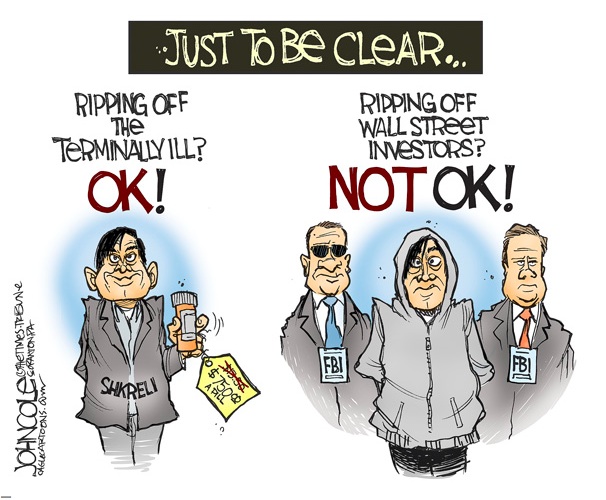
“$1 bn here we come,” former Turing Chief Executive Officer Martin Shkreli said in an e-mail to the chairman of the board on May 27, after the company had made progress toward acquiring the antiparasitic drug Daraprim, according to a memo from House Oversight and Government Reform Committee’s ranking Democrat Elijah Cummingsof Maryland. After buying the drug later that year, Turing raised the price by more than 50-fold, to $750 a pill.

They are really just in no way good for those companies. Valeant had a presentation describing “PR Mitigation” as a “Critical Risk” to its plans, and suggesting that it should “Minimize media coverage of the pricing increase,” oops. More worrying, perhaps, is an e-mail from Howard Schiller (then chief financial officer, now interim chief executive officer) to Mike Pearson (then CEO) saying that “about 80%” of Valeant’s growth came from price, not volume, which John Hempton points out seems to contradict what Pearson said on an earnings call.

Turing was run by Martin Shkreli, how do you think its internal e-mails read? Turing Pharmaceuticals, had paid $55 million to acquire the drug Daraprim, and had raised its price more than fiftyfold to $750 a pill, or $75,000 for a bottle of 100.” Turing even price-gouged a dog, though at least it had the heart to recommend a generic alternative. The Director of Specialty Pharmacy Development at Walgreens forwarded a request for financial assistance for a dog that had been prescribed Daraprim to treat its toxoplasmosis. The request stated: “I have an unusual request. There is a dog that is a patient and he needs Daraprim. He is obviously not covered by insurance … the cost of what was prescribed is $5,000 for this little guy.” Jon Haas, the Director of Patient Access at Turing, responded: “You can buy Pyramethamine/Sulfa [sic] combo pills from a vet meds website for about $80.”

Benjamin Brafman, the same lawyer who helped get rapper Sean ‘Diddy’ Combs acquitted of gun and bribery charges in 2001 represents Shkreli. Shkreli asserts that he is “innocent, and not guilty,” a potent combination, while Brafman is more circumspect, saying that “Mr. Shkreli never intended to violate the law, nor did he intend to defraud anyone.” Shkreli does not, however, have a new public relations person.

“The world is changing its mind about me,” he said. “I think the tide is swinging from, you know, this is a bad guy to people listening to me and really understanding who I am.”

To be fair, an actual public relations professional says of Shkreli’s approach: “It’s certainly unconventional, but is it bad? I don’t think we know yet.” I feel like I know?

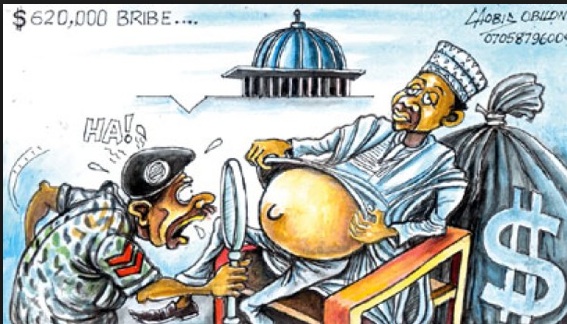
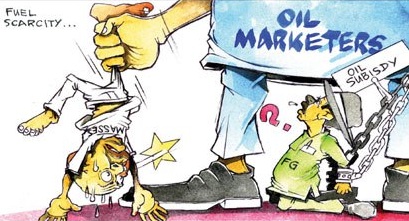
Nigeria Gets Loans to Cover Oil Deficits

Nigeria has asked the World Bank and African Development Bank for a $3.5 billion loan.

The request comes as Africa’s largest economy grapples with a $15 billion budget deficit in the wake of the oil crash that has seen prices fall about 70% in the last year and a half.

Nigeria’s finance minister, Kemi Adeosun said these loans aren’t an “emergency” measure, but merely the cheapest way for the country to shore up its finances.

Nigeria produces about 1.8 million barrels of oil per day and 35% of its GDP comes from the oil and gas sector; 90% of Nigeria’s export revenue comes from the sale of petroleum.

The important takeaway, however, is that while the crash in oil prices seen during 2014 and 2015 was stunning, it isn’t until this year and beyond that we’ll start to see the real impacts on both private corporate and government budgets from the sustained decline in prices.

Nigeria’s package might be composed of $2.5 billion from the World Bank and $1 billion from the African Development Bank. The loans would likely be priced at below-market rates.

There is a rising risk of violence inside the country disrupting its oil production, a development that could boost international prices but would certainly further stress Nigeria’s financial position.

The proposed package of loans made to Nigeria wouldn’t come with the strings usually attached with a loan from the IMF — which often include extensive “structural reforms,” which is basically short-hand for coming up with additional revenue to ensure repayment — the IMF will be expected to endorse a loan from the World Bank.

Nigeria Nigerian Oil Leaves the Country Dry