EU to Go After Smugglers of Humans

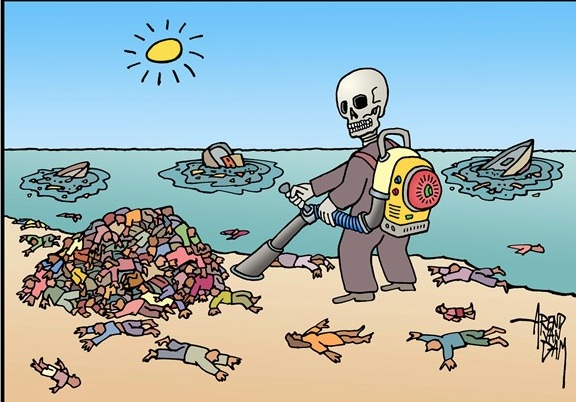
European Union members agree to allow for the boarding, search, seizure and diversion of vessels on the high seas suspected of being used for human smuggling and trafficking.  Like the Mexican immigrants to the US who pay drug cartels when they start their journey, criminals are often at the start of migration to the EU.  Recognizing this, the EU announces that they will detain smugglers’ ships on the high seas.

Getting to the EU

Admati Hammers at Risk-Taking Bankers

Dean Starkman writes:  Anat R. Admati, a professor of finance and economics at Stanford’s business school, is an unlikely player in Washington’s financial reform scene.

The Israeli-born economist arrived at Stanford in 1983 with an interest in mainstream financial issues and a firm belief that markets—with their unique ability to assign a price to risk and channel capital to its most efficient use—were a powerful force for good.

The 2008 financial crisis upended that faith. She turned her gaze to the industry at the center of the crisis: banking.

Admati made waves on the national financial reform scene in 2013 with the book “The Bankers’ New Clothes: What’s Wrong With Banking and What to Do About It,” co-authored with economist and banking expert Martin Hellwig.

Here’s an excerpt of a discussion with Admati:

Why did you write “The Bankers’ New Clothes,” a book for the general public and not strictly for scholars?

We thought we had to. There was, I thought, a certain lack of engagement on the part of many academics, and it was disturbing to me that there was not enough serious discussion about what was going on.

I was not a banking expert, but after studying it, I found that a lot of policymakers and people commenting on it didn’t actually know what they were saying or were saying wrong things or misleading things.

There seemed to be, to take a charitable interpretation, that there were blind spots or confusion or, the most cynical interpretation, there was sort of willful blindness.

How did you get so involved in Washington financial policy circles?

From the beginning, I tried very hard to engage with anybody in Washington who would engage with me. It started by being appointed by Sheila Bair (then the FDIC chairwoman) to a committee in the spring of 2011, which just allowed me into the room at all.

So, what’s wrong with banking?

What’s wrong with banking is that a lot of people are able to take risks and not be fully responsible and accountable for those actions.

People need to understand that the biggest banks are really, really big, by any measure. Just how much is a trillion? It’s an enormous number. They are larger than just about any corporation, so it’s not just big. It’s really very, very big.

It’s also the complexity and sort of breathless scope of what they do and just how much of it is opaque. It remains incredibly fragile as a system.

Capital requirements, boiled down, amount to a few percentage points of a bank’s total assets. What’s the right ratio?

Current requirements are ridiculous by any normal standards. A supposedly “harsh” regulation would be 5 percent of the total. Corporations just never ever live like that.

I talk about 20 percent-30 percent of assets, but what’s really complicated is how you measure assets. The way assets are measured now pretends to be scientific, but the rules are designed in a flawed way. I want simpler measures and for capital to be 20 percent-30 percent of the total.

Anat Admati

Making Money on Music in the Digital Age

Elliott Morss writes on the changes in the music business.  Where once artists made their money from sales of records and sheet music, today you have to go on the road to make big bucks.

 Unit and Value Sales of Music Products

The 12 Largest Grossing Tours of All Time

Classical music is struggling to be a live draw.

Percent of American Adults Attending Classical Music Events


Ratcheting up the Consequences of Money Laundering

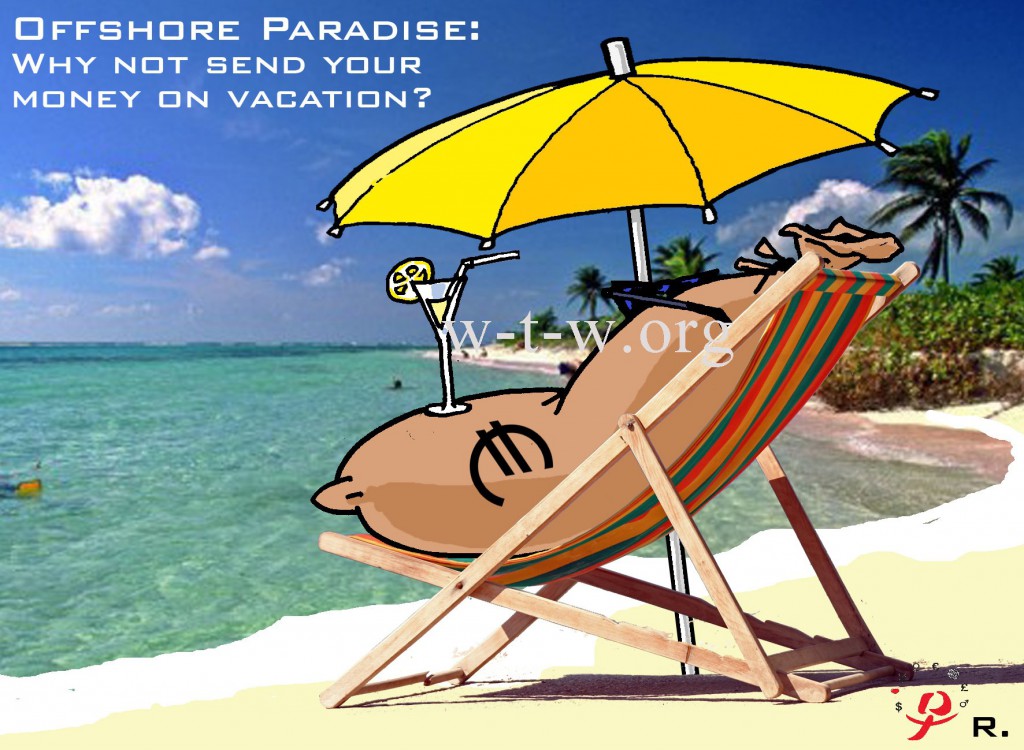
Christie Smythe writes:  Lawyer Patrick Poulin says he helped clients set up offshore corporations in the Caribbean. And that’s what he was working on when he flew to Miami from the Turks and Caicos last year to meet with two Americans who wanted him to invest $2 million from a real estate deal.  Instead, they arrested him at the airport.

The clients, who went by the names of “Bob” and “Abraham,” according to Poulin, were really federal agents who were targeting him as part of a money laundering sting. Poulin eventually pleaded guilty to conspiracy and spent a year in prison.

The U.S. has since brought charges against at least four other businessmen working as “incorporators” — people who help clients establish offshore shell companies for tax planning or other reasons. The cases come amid a campaign by U.S. prosecutors to pursue suspect foreign incorporators in countries where corporate secrecy laws and the demands of extradition have stifled investigative efforts. The strategy: Lure the service providers out of their overseas havens to the U.S. with aggressive techniques such as undercover operations, wiretaps and stings, case filings show.

This new front in the long-running battle against money-laundering is opening as part of a broader U.S. crackdown on tax evasion. Taxpayers who seek amnesty under Internal Revenue Service disclosure programs are snitching on the incorporators, as well as naming Swiss banks and the bankers who aided them.

More than 50,000 U.S. taxpayers have avoided charges since 2009 in the offshore tax evasion crackdown; the program required them to disclose which banks and advisers helped them hide assets, according to the U.S. Internal Revenue Service..

The aggressive strategies are likely meant to send a message to incorporators that they’re being watched, said Jeffrey Neiman, a former federal prosecutor who worked on the groundbreaking 2009 tax evasion case against UBS Group AG and whose law firm represented an associate of Poulin.

“It plants the seed around the world that just maybe the government is listening to this conversation,” he said.

By luring incorporators to the U.S. to make an arrest, authorities also avoid often-complicated and lengthy extradition battles, and it’s easier to resolve a case, Neiman said.

About 30 Swiss advisers, for example, have been indicted in the U.S. since 2008, part of a broad probe of tax evasion and undeclared offshore accounts. At least 21 are still at large, among them, Josef Beck. The financial adviser was indicted in 2012 for allegedly conspiring with UBS to help Americans evade taxes. Yet he has never come to the U.S. to face the charges.


Prosecutors are moving up the chain and targeting even bigger operations. U.S. officials last year brought charges against Belize-based IPC Corporate Services founder Robert Bandfield, his employee Andrew Godfrey and several associates at brokerages and other firms. Prosecutors accused them of helping clients, including as many as 100 Americans, profit off of illegal stock trades and launder about $500 million.

An undercover investigator, posing as a corrupt stock promoter, paid the incorporator and his associates $9,600 for help setting up a corporate structure designed for illegal trading and money laundering, prosecutors said in court papers in Brooklyn. Bandfield and Godfrey told the investigator they might be able to return laundered funds on prepaid debit cards in $50,000 installments, the government alleged.

“We can make it so it’s not attached to you,” both men told the investigator during a 2013 meeting in Belize, according to prosecutors.

The government’s crackdown comes as offshore tax shells proliferate. President Barack Obama said in a 2009 speech that one Cayman Islands address had as many as 12,000 corporations registered to it. Bloomberg News found the number was closer to 19,000.

Design Rachel Gold @wtwfinance

Design Rachel Gold
@wtwfinance

Should Germany Exit Euro?

Michael Heise writes:  The debate about whether Greece should leave the eurozone has revived the idea that Germany, and other similarly strong economies, would best serve the rest of the continent if they exited the monetary union.

Any serious discussion of exit would cause chaos in financial markets.  Even more important are the argument’s economic flaws, three of which are immediately apparent. First, the proponents of a German exit argue that if Germany left, the rest of the eurozone would devalue and that this devaluation would restore growth. This is unlikely.

The result of Greece and Spain’s devaluing their currencies in the 1980s was inflation with little growth. It was precisely the painful consequences of their sliding currencies that enticed these countries to join a monetary union with Germany.

Currency devaluation can boost exports in the short term, but it also makes imports more expensive, eroding households’ purchasing power. Workers then demand higher wages to compensate.  The result is often a wage-price spiral that quickly offsets the competitiveness gains of a weaker currency.

Second, advocates of a German exit argue that its economy is too competitive to share a currency with weaker players.  Flattering but wrong. Since 2000, France’s cumulative GDP growth has been the same as Germany’s. Ireland and Spain have done even better, despite the deep slumps they had to endure during the crisis.

Competitiveness does not depend only, or even primarily, on the exchange rate. Fundamentals such as productivity, education, research and development, and the tax system are more important. In these areas, Germany is far from being in a league of its own.

To be sure, the eurozone does not fully meet all of the conditions of an optimal currency area (which include an open and diversified economy, free movement of capital and labor, and flexible prices and wages). But, although the eurozone certainly has plenty of room to improve, the crisis has brought much progress in terms of integration and flexibility. The eurozone may not be perfect, but it is good enough to last.

One of the most important – but often ignored – conditions for a successful currency union is its members’ ability to agree on certain fundamentals of economic policy. Most notably, countries must agree that it is the private sector, rather than the state, that is responsible for creating jobs, and that sustainable economic growth requires open product and labor markets.

In the case of Greece, these fundamental ideas do not appear to have been universally accepted.

Greek wages and prices have already fallen sufficiently to restore competitiveness; the country now needs a framework in which private economic activity can thrive.

The eurozone’s survival requires, first and foremost, that all of its member countries have strong and flexible economies, which means that all of them must undertake continuous efforts to remain competitive.

Should Germany Exit Euro?

Refugees are Good for Business

Lucy P. Marcus writes:  In the face of the largest influx of refugees into Europe in decades, the responses and policy proposals from the European Union and its member governments have varied enormously, and the debate has become deeply politicized.  But one group’s voice has been conspicuous by its absence: business.

While governments, charities, and donor organizations actively discuss how to share responsibility for refugees on all steps of their journey – from camps in Jordan, Lebanon, and Turkey to transit to settlement – European business has been strangely silent. But, at a time when business is more powerful than ever, with multinational corporations stretching around the world, the private sector must work with governments and NGOs to help address the short-term and long-term challenges posed by the massive refugee inflows.

Indeed, industry leaders in all sectors owe it to themselves to be involved from the start. Only by turning the challenges into opportunities can social, political, and economic risks be mitigated.

There has been one notable exception to the pattern of private-sector silence. Just as German Chancellor Angela Merkel has been at the political forefront of the migration crisis, the Federation of German Industries (BDI) has been at the business forefront. The BDI has spoken clearly and decisively about the benefits of refugees for business and has proposed changes to Germany’s labor laws and regulations, including fast-tracking the newcomers’ right to work. In order to make business engagement and investment sustainable, the BDI has also sought assurances that migrants who find employment will not be deported.

Now it is time to hear from other countries’ business associations. How do the Confederation of British Industry or France’s MEDEF intend to respond? And what of individual multinational corporations? What legislative changes do they think they will need to aid governments and the EU in addressing the refugee crisis and ensuring long-term stability in Europe?

The challenge, everyone agrees, is not confined to managing the huge inflows and processing asylum applications. In the coming months and years, destination countries must lay the foundations for integrating refugees into their workforces. To wait too long is to miss an important opportunity to be involved in developing a strategy that works for businesses, governments, and societies alike.

Becoming involved early in the process of assessment, education, and integration planning would allow the private sector to help shape policy from the outset, rather than complaining about the government’s failures after the fact. Business leaders can help identify the skills and abilities that would most benefit their sectors, establish guidance and training programs, and offer apprenticeships.

The benefits are clear. The refugees arriving on Europe’s shores are often young, well educated, skilled, and eager to integrate quickly into society. They are an antidote to aging populations and low birth rates, and many come ready to work. By collaborating with the public sector, business can help to ensure that they get the training and jobs they need.

Business also has a role to play in helping to shape societal attitudes toward refugees. This is particularly true of public-facing organizations. Football clubs across Europe are not only donating money, but also taking concrete steps to encourage a welcoming atmosphere, with welcome banners, training camps for refugees, and, in the case of Bayern Munich, language lessons.

Not all of these refugees will remain in Europe permanently. One day, many may return to their homeland. When they do, they will have the skills to help rebuild their societies and economies, as well as provide strong ties to the country where they sought refuge. The importance of this investment in future state building, as well as business relationships, cannot be underestimated. Although the payoff may seem distant, investing in today’s refugees could make all the difference in building tomorrow’s strong, stable trading partners.

Europe’s refugee crisis continues to be viewed solely as a political problem, in part because that is how the media portray it. The only business coverage tends to focus on the financial impact caused by the disruption of transport links such as the port of Calais. But Europe’s refugee crisis is also a business problem. By addressing it now, business can turn that problem into an opportunity for allf.

 Refugees are Good for Business

Refugees: An International Issue

The Rocky Road to Globalization

Refugees may be the first issue that the world has to deal with as a whole.

EU members are considering a call from the European Commission for mandatory refugee quotas for each country – as the bloc looks to find a solution to the influx of migrants.

Syria’s neighbors have been dealing with this refugee crisis for much longer.

For its part – Jordan’s king says the country has taken in 1.4 million people who’ve fled the Syrian civil war.

Jordan’s Queen Rania discussed Jordan’s contribution to the crisis.

“I think as an international community this is no longer a Middle East problem nor is it exclusivity European dilemma.  This is for the whole international community to deal with and we need to come together for collective action. We need to come up with a comprehensive and cohesive policy in order to deal with this,” she said.

Queen Rania


Poroshenko Gets Ready for Loans

Mariana Antonovych writes:   Ukraine sidestepped default and now faces an opportunity to raise social standards for 3.5 million public sector employees, 7.5 million retirees and 1.5 million people who get different kinds of social aid from the state, Poroshenko said.  The government plans to spend Hr 10 billion – or $440 million – on the increases.

Social Policy Minister Pavlo Rozenko promised that more than 80 kinds of social aid, compensation, scholarships and other payments are set to increase. The minimum payments per person will increase for Hr 160 and will amount to Hr 1,378 ($62), while the minimum pension rate will constitute Hr 1,074 ($48).

Ukraine’s total budget is expected to reach less than $25 billion this year on gross domestic product of $75 billion this year.

Parliament will consider these changes to the 2015 state budget during the next week, said Verkhovna Rada’s speaker Volodymyr Groisman, noting that this is a part of “social contract with Ukrainian people Ukraine’s government has to execute in good faith.”

“This is a symbol of commitment of Ukraine’s authorities to its duties,” Poroshenko said. “This is a signal that painful reforms bring benefits.”

This result was not easy to achieve, though. It required restructuring debt, fighting corruption and increasing revenues to the state budget, Poroshenko admitted.

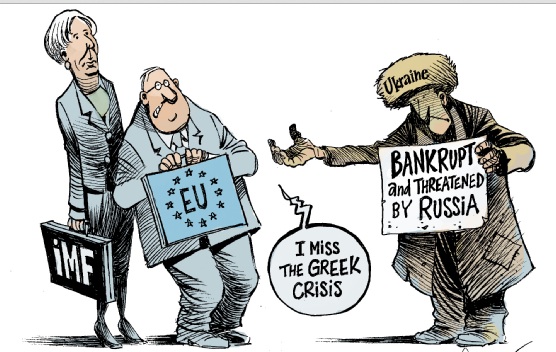
During a meeting with Poroshenko, International Monetary Fund Managing Director Christine Lagarde said that Ukraine “has surprised the world, surprised with what it managed to achieve during such a short term,” according to the president.

Given Ukraine’s previous practice of repeated violations of its commitments, Largarde’s words “delighted” Poroshenko. “This is an international recognition of efforts of our country,” he said.

“Lagarde also recognized that in difficult circumstances ‘Ukrainians achieved a macroeconomic stability, while Ukraine’s economy already demonstrates signs of recovery,’ ” Poroshenko said noting that IMF does not waste words.

The first and second loan tranches issued by IMF to Ukraine in March and August – part of a $17.5 billion loan commitment – helped stabilize Ukraine’s payment balance, harmonize export and import, and stabilize banking system.

While debt restructuring deal concluded on Aug.27 didn’t merely write off 20 percent of Ukraine’s debt before foreign creditors, but also delayed exorbitant burden for state’s budget for the next four years, said Poroshenko.

According to Ukraine’s Finance Minister Natalie Jaresko, this deal saved Ukraine some $9.2 billion, including the amount of loans and costs needed for their servicing.

Given the IMF’s forecasts regarding growth of Ukraine’s gross domestic product by 4 percent, Ukraine will be able to reach the level of Swiss economy by 2040, Jaresko added.

However, it doesn’t mean that Ukraine has overcome all challenges. Russia’s military threat, instability in the world’s economy and rising political tensions within Ukraine are the main challenges Ukraine is facing now.

“Ukraine has to stay united,” Poroshenko said, referring to the clashes near parliament on Aug. 31 in which three National Guard members were killed by a grenade, allegedly thrown by a former soldier during a demonstration against proposed constitutional changes.


“We agreed with Lagarde that it would be preferable if IMF decides to loan Ukraine $1.7 billion in October,” said Poroshenko, noting that borrowing from international donors is no substitute for attracting direct foreign investment in Ukraine.

To achieve this goal, Ukraine has to speed up reforms in all sectors: deregulation, liberal tax reform, introduction of visa-free regime and full operation of free trade zone with the European Union.

Ukraine on the Move


HSBC “Lagarde List” Goes to Cyprus

Petro Petrides writes:  France has handed to Cypriot authorities a controversial list of Cypriots with deposits at HSBC bank in Switzerland, Finance Minister Harris Georgiades said.Cypriot parliamentarians probing the cause of the near melt-down of the economy in 2013 have repeatedly urged the government to obtain the so-called “Lagarde List” in anticipation that it will provide clues to people who may have sent abroad money obtained illegally.But Georgiades told CyBC radio that foreign deposits are not illegal and details contained in the list cannot be made public unless legislation banning publication of personal data is amended.

“The list is currently being examined by the Chief Taxation Officer to confirm that those appearing on the list as Cypriots or with an address in Cyprus can justify the deposited amount,” Georgiades said.

“It will be processed so as to verify that taxation has been paid for the amounts deposited in the bank,” he added.

Georgiades said he would have no problem disclosing the names of people which will be found to be tax evaders after the examination of the list.

But the list has been forwarded to the speaker of the Cypriot Parliament, Yiannakis Omirou, for examination in the context of an ongoing investigation into the causes of Cyprus’s economic disaster.

Lawmakers are demanding that any names in the list of “politically exposed people” — meaning people holding state, government and party posts or are associated with the the banking system and the media — must be made public.

It is to be expected that it will not be long before the list is leaked to the media as it happened with similar documents in the past.

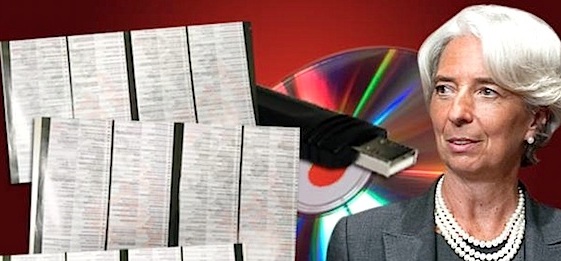
The “Lagarde List” is part of a wider list, the Falciani list, named after Herve Falciani, an HSBC bank computer technician who stole the data from the computers of his employers from 2006 through 2007 and handed them to then French finance Minister Christine Lagarde.

It is believed the list contains about 80,000 names of people with deposits at the bank.

Georgiades said the list obtained by Cypriot authorities contains only the names of either Cypriot people or foreign physical and legal entities who had given the bank a correspondence address in Cyprus.

The “Lagarde List” became prominent when it was handed to the Greek government in 2012, then negotiating the country’s bailout with international lenders.

It was leaked to a magazine which published it, causing a public outcry as it revealed that the names of some prominent people in the governing party were among depositors.

 Lagarde List

Paying for the Refugees?

The New York Times editorilaizes on paying for refugees  The world’s attention has been riveted on the refugee crisis unfolding in Europe, and on the shift in Europe as leaders, finally, take steps to deal with it. But one of the reasons Syrians are risking their lives to reach Europe is that life has become unbearable in the countries closer to home.

About 12 million Syrians — more than half the country’s prewar population — have been displaced since fighting began in 2011. More than four million have fled the country, with most going to neighboring Jordan, Turkey and Lebanon. In Lebanon, Syrian refugees are now a quarter of the population.

These countries are overwhelmed and, as numbers have swelled, conditions for refugees have deteriorated sharply. One reason is that the United Nations agencies that provide vital food, medical care and shelter are, as the United Nations high commissioner for refugees, António Guterres, bluntly warned in July, “financially broke.”

As a direct result, the World Food Program has had to cut rations for 1.6 million Syrians, with refugees in Lebanon allocated just $13 a month.

There is also scant money for emergency medical care — including treating bullet and shrapnel wounds — let alone for treating preventable and other diseases. Many Syrian refugees are being forced to sacrifice housing or medical care to try to feed their families. Only 30 percent of Syrian children in Lebanon are in school. No wonder refugees who can gather the money to pay smugglers are risking the fraught journey to Europe.

We support welcoming refugees, but we also need to understand who is financing their movements.  Mexican drug lords collect money for the journey.  They are the ones who profit.  We need to address this problem at its root, as well as the humanitarian needs of families.

Refugee Problem