Philippines Attract Financial Fraud

Why does the Philippines attract financial fraud? Wirecard is only latest example of Manila being caught up in corporate misdeeds.

reports:
Dr. Stephen Cutler is a security analyst and anti-money laundering consultant in the Philippines who previously served in the FBI.

What is it about the Philippines that seems to attract financial fraud?

Funds stolen from Bangladesh’s central bank were routed to a Philippine bank in 2016, from where they were laundered into the gambling industry. Westpac Banking was accused last December by Australia’s financial crime watchdog of money-laundering breaches, which included payments to suspected child exploiters in the Philippines.

And in late June, it was confirmed that Wirecard, the German payments technology company, had been involved in a fraud where apparent business partners in the Philippines did not exist, along with 1.9 billion euros ($2.1 billion) supposedly held in two Philippine banks.

Allegations of spurious documents, fraudulent transactions and the involvement of junior employees of major Philippine banks call into question not just how these banks supervise internal matters but larger issues of weaknesses in the country’s oversight of its financial system.

What these cases point to is a lack of enforcement capacity on the part of the Philippines’ Securities and Exchange Commission; the Bangko Sentral ng Pilipinas, its central bank; and the Anti-Money Laundering Council, or AMLC.

While these agencies have many good and diligent employees, what appear to be lacking are the ability and willingness of these three bodies to conduct meaningful routine monitoring and verification of financial institutions. This should be aimed at ensuring real compliance with best practices and the legal requirements of due diligence and know your customer policies, beyond going through the motions for audits.

Senior managers at banks have admitted that accounts with them are often opened with “show money,” allowing businesses to obtain SEC documentation, after which the accounts are closed. The accounts are intended to assure investors that money is available to protect them, but closing the accounts, giving no notice to the SEC, leads to shell companies. The SEC has limited staff and cannot conduct reviews of documentation to ensure all remains in order.

The BSP and AMLC both also lack the staffing that would allow meaningful investigations and follow-ups of suspicious activity and even of legally required suspicious transaction reports. The sieve intended to catch bad actors and protect the nation has too many holes. That needs to change.

Reporting on Wirecard shows that a whistleblower raised serious issues on the handling of transactions and accounting issues to senior management. But in the Philippines, there is little to no encouragement for any whistleblower to come forward with serious allegations.

There is, in theory, a witness protection program from the Philippine Department of Justice. But it has a poor reputation for actually protecting anyone. Part of the problem is that it can only move people within the Philippines, not to a faraway place where they can rebuild their lives.

Recently, the government advised the public that it could report misbehaving or corrupt public officials through the 8888 citizens’ complaint hotline — but this does not apply to criminal behavior in private corporations.

The Philippines must take steps to upgrade its ability and, even more so, the perceptions of its willingness to protect witnesses. The Philippines needs to develop a strong whistleblower system, allowing employees to safely and securely report errant behavior by senior management. The BSP, SEC and AMLC should establish protected mechanisms for such reports, with meaningful follow-up investigation on allegations.

Incidents involving the Philippines may well be greeted with “here we go again” and a sigh of disappointment bordering on disbelief. The Philippine financial system must take greater action as an industry to reduce reputational risk and strengthen its standing in international circles. This will start with boards and senior management making public and credible statements in support of transparency and global state of the art banking practices.

The Wirecard allegations should spur serious work by Philippine banks and their regulator to bolster the nation’s reputation in financial services. Wirecard-Prüfung von Kostas Koufogiorgos | Wirtschaft Cartoon ...
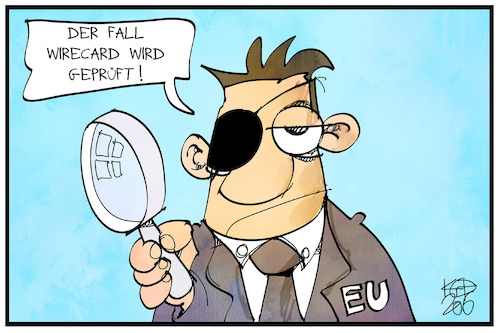
@Kostas Koufogiorgos

So-Called Stablecoins

FATF Report to the G20 Finance Ministers and Central Bank Governors on so-called stablecoins1 have the potential to spur financial innovation and efficiency and improve financial inclusion. While so-called stablecoins have so far only been adopted on a small-scale, new proposals have the potential to be mass-adopted on a global scale, particularly where they are sponsored by large technology, telecommunications or financial firms. In the same way as any other large scale value transfer system, this propensity for mass-adoption makes them more vulnerable to be used by criminals and terrorists to launder their proceeds of crime and finance their terrorist activities, thus significantly increasing their risk of criminal abuse for money laundering and terrorist financing (ML/TF) purposes improve financial inclusion.

While so-called stablecoins have so far only been adopted on a small-scale, new proposals have the potential to be mass-adopted on a global scale, particularly where they are sponsored by large technology, telecommunications or financial firms. In the same way as any other large scale value transfer system, this propensity for mass-adoption makes them more vulnerable to be used by criminals and terrorists to launder their proceeds of crime and finance their terrorist activities, thus significantly increasing their risk of criminal abuse for money laundering and terrorist financing (ML/TF) purposes…
Virtual-Assets-FATF-Report-G20-So-Called-Stablecoins

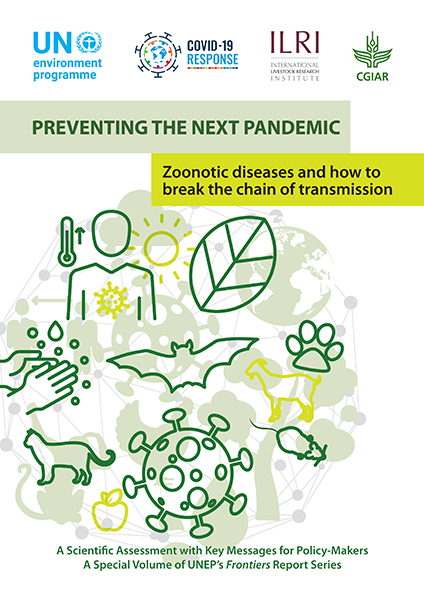
Zoonotic Diseases And How To Break The Chain Of Transmission

While wildlife are the most common source of emerging human disease, domesticated animals may be original sources, transmission pathways, or amplifiers of zoonotic disease. Such linkages – as well as the interconnectedness with issues such as air and water quality, food security and nutrition, and mental and physical health – should inform policies that address the challenges posed by current and future emerging infectious diseases, including zoonoses….Key message

In this time of crisis, thousands of papers and guidelines have already been published about COVID-19. Most of these consider the important questions of how to respond to the ongoing public health crisis, or how to mitigate the impacts of the pandemic. This report takes a step back and considers the root causes of the emergence and spread of the novel coronavirus and other ‘zoonoses’—diseases that are transmitted between animals and humans. The report also offers a set of practical recommendations that can help policymakers prevent and respond to future disease outbreaks. 

UNEP Executive Director Inger Andersen and ILRI Director General Jimmy Smith launched the report at a press briefing in New York City on 6 July 2020. Watch session here. Zoonotic diseases and how to break the chain of transmission

How to Whistle-Blow: Dissensus and Demand

What makes an external whistleblower effective?

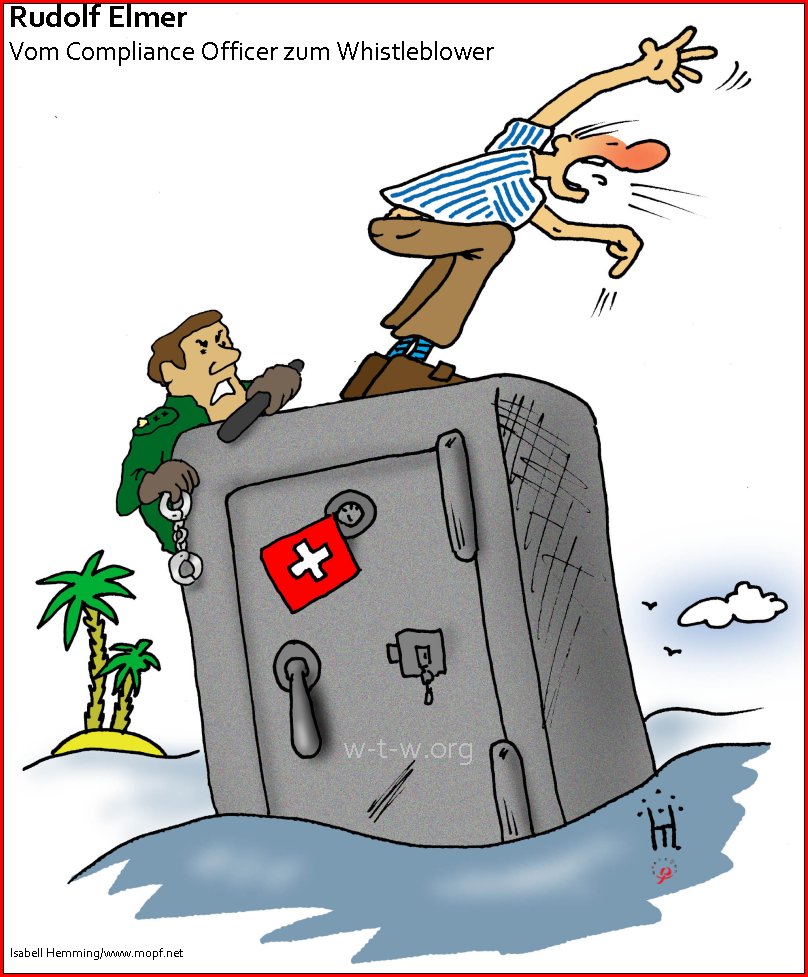
Kate Kenny and Alexis Bushnell report:  Whistleblowers represent an important conduit for dissensus, providing valuable information about ethical breaches and organizational wrongdoing. They often speak out about injustice from a relatively weak position of power, with the aim of changing the status quo. But many external whistleblowers fail in this attempt to make their claims heard and thus secure change. Some can experience severe retaliation and public blacklisting, while others are ignored.

This article examines how whistleblowers can succeed in bringing their claims to the public’s atten- tion. We draw on analyses of political struggle by Ernesto Laclau and Chantal Mouffe. Specifically, we propose that through the raising of a demand, the whistleblowing subject can emerge as part of a chain of equivalences, in a counter-hegemonic movement that challenges the status quo. An analysis of a high-profile case of tax justice whistleblowing-that of Rudolf Elmer-illustrates our argument. Our proposed theoretical framing builds upon and contributes to literature on whistleblowing as organizational parrhesia by demonstrating how parrhesiastic demand might lead to change in public perception through the formation of alliances with other disparate interests—albeit that the process is precarious and complex.

Practically, our article illuminates a persistent concern for those engaged in dissensus via whistleblowing, and whose actions are frequently ignored or silenced. We demonstrate how such actions can move towards securing public support in order to make a differ-ence and achieve change…Elmers Story 2020

Isabell Hemming
www.w-t-w.org/en/isabell-hemming

A Whistleblower’s War Against Off-Shore Banking

EU To Put Cayman Islands On Tax Haven Blacklist

The top 10 countries that have done the most to proliferate corporate tax avoidance and break down the global corporate tax system are:

1. British Virgin Islands (British territory)
2. Bermuda (British territory)
3. Cayman Islands (British territory)
4. Netherlands
5. Switzerland
6. Luxembourg
7. Jersey (British dependency)
8. Singapore
9. Bahamas
10. Hong Kong

These 10 jurisdictions alone are responsible for over half (52 per cent) of the world’s corporate tax avoidance risks as measured by the Corporate Tax Haven Index. Over two fifths of global foreign direct investment4 reported by the International Monetary Fund is booked in these 10 countries, where the lowest available corporate tax rates averaged 0.54 per cent…Taxjustice.net

Cayman Islands
In wake of Brexit, EU to put Cayman Islands on tax haven blacklist.
Decision on British overseas territory comes less than two weeks after UK left bloc.

The Cayman Islands, a British overseas territory, is to be put on an EU blacklist of tax havens, less than two weeks after the UK’s withdrawal from the bloc.

In a clear indication of the country’s loss of influence on the EU’s decision-making, the bloc’s 27 finance ministers are expected to sign off on the decision next week.

The EU’s blacklist is an attempt to clamp down on the estimated £506bn lost to aggressive tax avoidance every year but member states are not “screened” in the process of drawing up the blacklist…..TheGuardian.com

Design Rachel Gold
@wtwfinance
www.w-t-w.org/en/rachel-gold

Following the Drug Money

lawgazette.co.uk

Hybrid Threat Networks Exploit Financial Markets

There are three types of hybrid warfare.

The first, often labelled as an attack on governance, uses legal means to undermine democratic liberal societies by inserting foreign influence or trying to gain financial and economic leverage over our normal democratic processes. Examples of this type of influencing are all around us: Russian television stations or news agencies and China’s 10% ownership of EU ports as well as its assertive presence in the South China Sea. To successfully respond, we have no other choice than making sure that we are working hard to assert our own democratic values and economic models. We simply need to out-communicate and outbid our adversaries.

The second type of hybrid warfare consists of the more brazen, illegal attempts to undermine and polarise our societies by sowing fear and mistrust. This is achieved by carrying out orchestrated attacks against the core elements of our social cohesion: free and fair elections, critical infrastructure and IT networks, the credibility of news and information, and the integrity of our business and financial transactions.

The third – and the most dangerous – type of hybrid warfare means using the aforementioned strategies as preparation and prelude for a military attack. This happened in Ukraine in March 2014 when Russian Special Forces, posing as “little green men”, seized the institutions, transport links, ports and communication channels of Crimea, thus preventing a Ukrainian response. While conflicts of…Friends of Europe.org
The vital role of public-private partnerships in countering hybrid threats/ Nov 2019
HYBRID AND TRANSNATIONAL THREATS


The Laundromat

Hollywood A-listers Steven Soderbergh and Meryl Streep have spoken out against the secrecy of tax havens and lauded the bravery of the journalists who expose corruption at the opening of Panama Papers-inspired movie, The Laundromat.
The movie, which premiered on Sunday at the Venice International Film Festival, explores the world of tax havens and complex offshore financial structures through the eyes of Panamanian lawyers Jürgen Mossack and Ramón Fonseca, played by Gary Oldman and Antonio Banderas.

Their eponymous law firm, Mossack Fonseca, was at the heart of the International Consortium of Investigative Journalists’ 2016 Panama Papers investigation, which revealed how politicians, celebrities, criminals and the global elite obscured their wealth and conducted questionable business deals through hard-to-trace companies and tax havens. More than 350 journalists from 80 countries worked together to uncover secrets hidden in a trove of 11.5 million leaked Mossack Fonseca files…icij.org

The Laundromat | Official Trailer |

A widow (Meryl Streep) investigates an insurance fraud, chasing leads to a pair of Panama City law partners (Gary Oldman and Antonio Banderas) exploiting the world’s financial system.

“Die Geldwäscherei” – A “MUST“ For Every Woman

What is a Whistleblower?

Dooa Eladl
www.w-t-w.org/en/doaa-eladl/