World Bank Supports Bangladesh’s AML Efforts

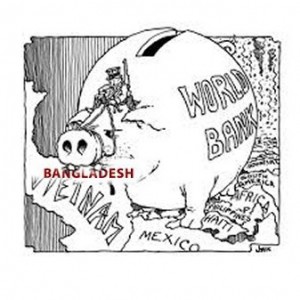
The World Bank has been supporting the Bangladeshi government in strengthening the country’s efforts to better combat money laundering and the financing of terrorism, said the Washington-based lender Thursday.

In a statement, the bank said that it is providing technical assistance to grant financing to improve compliance on Anti-Money Laundering-Counter Financing of Terrorism (AML/CFT) regime.

As part of its initiatives, the bank has recently organized two training workshops for government officials and representatives from NGOs and banks, aiming to enhance the capacity and competency for implementing the provisions of targeted financial sanction and Anti-Terrorism Law under the United National Security Council Resolutions (USRs) and Financial Action Task Force (FATF) Recommendations.

“Bangladesh is steadily addressing the needs required to strengthen its Money Laundering-Counter Financing of Terrorism regime,” said Christine Kimes, acting country head of World Bank Bangladesh.

…workshop showcases the government’s commitment for improving capacity of the relevant stakeholders from implementing and reporting agencies for implementing targeted financial sanctions.”

According to the bank, Bangladesh has already formed a national committee headed by the foreign secretary and consisting of all stakeholders to supervise and monitor the implementation of targeted financial sanctions.
World Bank Press Release World Bank Supports Bangladeshs AML Efforts
A Branch of India’s First All-Women Bank in Aurangabad.

“The government is also on look-out for locations to set up the branches in Kolkata, Guwahati, Chennai, Bangalore, Jaipur, Lucknow, Mysore and Indore. The proposed bank to be headquartered in Delhi is likely to be operational by November this year. The Reserve Bank of India gave its in-principal approval for the Bharatiya Mahila Bank in June.”

The key objectives of the bank is to focus on the financial needs of women and promote economic empowerment.
Indias first all-women bank
India First All-Women Bank

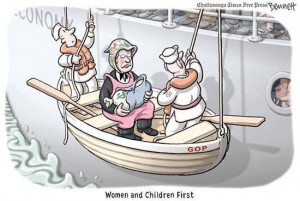
Women And Children First?

At this season’s annual party conferences, the race has been on to court the all-important female vote. Labour’s promise of an extension of free childcare is a challenge to the coalition, but only if it can deliver.

Over the past five years of the economic downturn, women have been on the front line of the struggle to stay financially aoat. They have borne the brunt of public sector job cuts and pay freezes. Too many have seen their employment rights eroded, and yet they are still the ones, in the majority of households, who have to balance the household budget in the face of falling wages, rising costs and reduced support from government.
Women and children first Women and children first

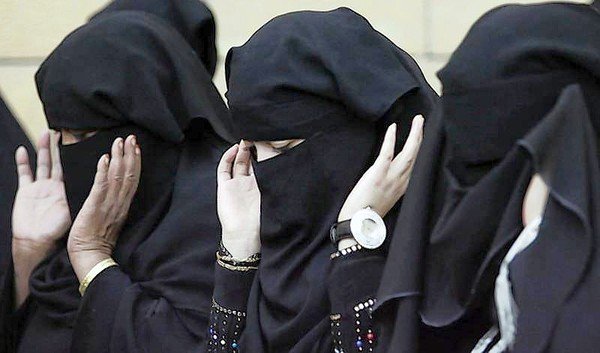
Saudi Arabia: Women, Business and the Law 2014

Saudi Arabia worst on women’s legal issues: Report

Saudi Arabia tops the list of countries for laws that limit women’s economic potential, while South Asia, the Middle East and North Africa have made the least progress over the last 50 years in improving women’s economic opportunities, a report issued on Tuesday says.

Women in 15 nations need spouse’s okay to work !!

Take a look at the Worldbank Report !
and check your country.Women, Business and the Law 2014

UN Special Rapporteur urges Italy to “rekindle its fight to end human trafficking”

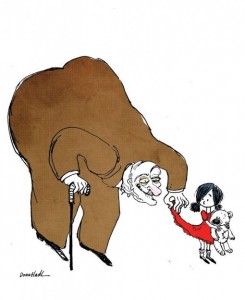
ROME (20 September 2013) – The United Nations Special Rapporteur on trafficking in persons, especially women and children, Joy Ngozi Ezeilo, today called on the Government of Italy to further boost and coordinate its national anti-trafficking response.

“Italy needs to rekindle its fight to end human trafficking, especially the unabated exploitation of the prostitution of foreign women and girls,” Ms. Ezeilo said* at the end of her official visit to Italy, from 12 to 20 September 2013, during which she examined the situation of trafficked individuals and assessed the impact of anti-trafficking measures in the country.

As a matter of fact, none of the 28 EU member states is complying with the EU directive 2011/36/EU on preventing and combating trafficking in human beings and protecting its victims. No major change from EU Commissioner’s Malmström shocking statement from April 15 2013 can be recognized.

The reality is that the 28 EU member states do not comply with the basic EU laws and regulations against Organized Crime as for example the EU money laundering directive and the EU directive against human trafficking and forced labour.

In June 2013 the Joseph Rowntree Foundation (JRF) published a report concluding that governments across Europe were in a state of confusion and denial over the extent of forced labour within their own borders, contributing to hundreds of thousands of people remaining trapped in exploited, unpaid and dangerous working conditions.

According to the UN International Labor Organization (ILO) 21 million people are now victims of forced labour worldwide. There are about 880,000 people in forced labour conditions across Europe. 70% of the 880,000 people identified as being in forced labour conditions are in forms of labour exploitation, with a further 270,000 people estimated to be victims of sexual exploitation…
UNHR Trafficking Italy

UN Special Rapporteur

Indian Women: Why Women Should Take Financial Decisions

Participation of Indian women in making financial decisions is still low, there are small but steady steps they are taking. 

Financial planners concur that women investors bring to the table a stable and long-term approach towards investing. If you are a single, working woman and understand the benefits of investing, start now. They tend to take a holistic approach and put things like children’s education ahead of their own goals.

So, if you are married, working or not, take some interest in family investments; you may be surprised at the stable dimension you can lend to your family’s financial plan.
Why women should take financial decisions

Why Women Should Take Financial Decisions


BIS: Warns Global Economic Imbalances

now worse than 2008 with emerging markets most vulnerable.

The only major global financial body to correctly warn that the global financial crisis was coming in 2008, the Swiss-based Bank of International Settlements is again sounding alarm bells as the Federal Reserve prepares to wind down its QE3 money printing program this week.

More and original report:
BIS_Quarterly Report September 2013 Full Report

The Spaniard Jaime Caruana is the Chief of the secretive Bank for International Settlements (BIS).

Der Spanier Jaime Caruana ist der Chef der geheimnisumwitterten Bank für Internationalen Zahlungsausgleich