Zimbabwe: Women make easy prey for corrupt politicians

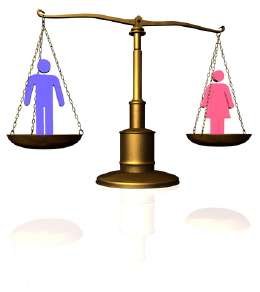
Politicians in Zimbabwe are taking advantage of the fact women face existing legal limitations. Research shows that women, who often have lower incomes, have limited access to basic public services because they are less likely to pay bribes to get the services. This makes it difficult for them to acquire registration documents like a mining licence or a permit to sell gold, especially in countries like Zimbabwe where corruption is endemic…articleIn Zimbabwe most of the women’s economic empowerment

China to Deal Positively with Online Anti-corruption Efforts…?

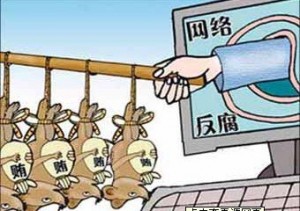
The Internet is an effective channel to fight against corruption and the government should deal positively with the anti-corruption clues offered by netizens, said Ma Wen, a deputy to the 12th National People’s Congress (NPC), on March 3, 2013…….

….”In future, China should regulate online acts so as to make the most of online anti-corruption efforts,” said Ma.  Ma also said that she often uses her micro-blog to gather information and suggestions from netizens…articleThe Internet is an effective channel to fight against corruption.

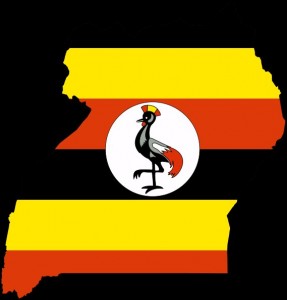
Uganda: Some of Uganda’s Richest Women

Women in Uganda have made great strides over the years and have transformed from being stay-at-home moms to top managers. They have also ventured into the private sector, an area formerly dominated by men, and are doing well.

Businesses run and owned by women have steadily been on the rise. Women entrepreneurs have boosted the economy through paying taxes and creating employment opportunities for hundreds of Ugandans, in addition to looking after their families. As we celebrate Women’s Day on March 8, we take a look at some of the richest women entrepreneurs in Uganda…articleUganda

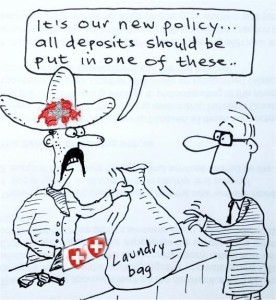
Swiss to crack down on Money Laundering?

The Swiss Federal Council adopted two consultation drafts which are supposed to implement the revised international recommendations on combating money laundering and terrorist financing. In addition, untaxed assets will be blocked from financial intermediaries in Switzerland by extending due diligence requirements.

The Basel AML index attaches Switzerland a ML risk score of (is this 578) 5,78 (Status 28.2.2013) which places Switzerland on the ranking between Vanuatu and Mexico.

The key points of the proposed amendment bills are:

  • Introduction of a disclosure obligation for holders of bearer and registered shares of unlisted companies in order to enhance the transparency of legal entities, and extension of the due diligence requirement for establishing the identity of beneficial owners. The proposed measures should also meet the requirements of the Global Forum.
  • Duty to verify identity and risk-based due diligence requirements for politically exposed persons in Switzerland and international organisations.
  • Introduction of a new predicate offence to money laundering in the form of qualified tax fraud in the area of direct taxation and extension of the existing predicate offence in the area of indirect taxation.
  • Purchases of real estate and movables may be paid for in cash only up to a sum of CHF 100,000. It is mandatory for payments of larger sums to be processed via a financial intermediary subject to the Anti-Money Laundering Act (AMLA).


UNODC United Nations Office on Drugs and Crime

Islamic Republic of Afghanistan High Office of Oversight and Anti-Corruption

CORRUPTION IN AFGHANISTAN: December 2012 Recent patterns and trends.

While corruption is seen by most Afghans as one of the most urgent challenges facing their country, it seems to be increasingly embedded in social practices, with patronage and bribery being an acceptable part of day-to-day life. For example, 68 per cent of citizens interviewed in 2012 considered it acceptable for a civil servant to top up a low salary by accepting small bribes from service users (compared to 42 per cent in 2009). Similarly, 67 per cent of citizens considered it sometimes acceptable for a civil servant to be recruited on the basis of family ties and friendship networks (up from 42 per cent in 2009).

The survey was based on a representative sample of 6,700 Afghan citizens aged 18 and above interviewed across Afghanistan. Of the respondents, 42 per cent were women. Corruption report Afghanistan UNODC United Nations Office on Drugs and Crime


Anti-Corruption Working Group Meeting opens in Moscow

Anti-Corruption Working Group Meeting opens in Moscow

Opening the Anti-Corruption Working Group Meeting (ACWG) Dmitry Feoktistov, the Co-Chair of the meeting and Deputy Director of the Department on New Challenges and Threats of the Russian Ministry of Foreign Affairs, noted that in accordance with the working group principles the agenda is focused on the consistent discussion of the G20 Anti-Corruption Action Plan for 2013-2014. Within the course of the first ACWG meeting the discussion will be organized around four core topics: combating foreign and domestic bribery, international cooperation, cooperation with the private sector and civil society and enhancing transparency and accountability. Moreover, this year Russia has introduced several new proposals for the ACWG agenda. One of the suggestions deals with exploring the positive impact of robust anti-corruption policies on growth. G20 AC news

Background information

The G20 Anti-Corruption Working Group (ACWG) was established in June 2010, at the Toronto Summit. Its primary goal was to prepare “comprehensive recommendations for consideration by Leaders of how the G20 could continue to make practical and valuable contributions to international efforts to combat corruption.

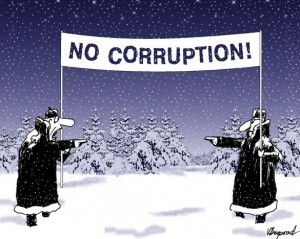
Laws are one thing, enforcement quite another. Public pressure may not create political will among decision-makers. Anti-corruption laws can be politicised and used for partisan purposes.No corruption 1