Indian Company to Sell UK Steel-Making Business?

India’s Tata Steel plans to sell its loss-making UK business, putting the jobs of thousands of workers at risk.

Its European holding company has been told to “explore all options for restructuring”, including the partial or entire sale of its UK operations.

Union leaders travelled to Mumbai in a bid to persuade Tata to keep making steel at plants including Port Talbot.

The UK and Welsh governments said they were working “tirelessly” to ensure the future of the British steel industry.

Tata’s restructuring decision, which was announced after a board meeting in Mumbai on Tuesday, will also affect workers at its other UK plants including Rotherham, Corby and Shotton.

Tata said trading conditions had “rapidly deteriorated” in the UK and Europe due to a global oversupply of steel, imports into Europe, high costs and currency volatility.  Steel demand is still falling. It peaked in 2013. It is very hard to see who would the steel making end itself, although the rolling mills are more attractive.

In a joint statement, the UK and Welsh governments said: “We remain committed to working with Tata and the unions on a long-term sustainable future for British steel-making..

Unions expressed concern at the announcement and urged Tata and politicians to work at finding a buyer for the business.

Tata Steel has been operating in the UK since 2007 when it bought Anglo-Dutch steelmaker Corus.

In January the company announced more than 1,000 UK job cuts, including 750 in Port Talbot, where it employs 4,000 staff and a further 3,000 contractors and temporary workers.

Port Talbot

And last October Tata Steel said nearly 1,200 jobs would go at plants in Scunthorpe and Lanarkshire.

There have been allegations that Chinese steel is being “dumped” on world markets at prices that UK plants cannot hope to compete with.

At the same time China’s economy has remained sluggish, meaning that its need to export has grown as the demand for steel from its construction sector weakens.

Yellen Will Proceed Cautiously. Markets Rally

Federal Reserve chair Yellen will keep interest rates low.  The Dow Jones industrial average and Standard & Poor’s 500 index both closed at 2016 highs Tuesday after Federal Yellen pulled stocks out of an early slump when she said the central bank will move cautiously on interest rates hikes because of risks of a weak global economy and low inflation.

“Given the risks to the outlook, I consider it appropriate for the (Fed’s policymaking committee) to proceed cautiously in adjusting policy,” Yellen said in the text of a speech she delivered to the Economic Club of New York.

Yellen’s speech came at a key time for markets, as the 12% rally for the Dow Jones industrial average since the low on Feb. 11 has lost some momentum. Her comments today on monetary policy reinforced the Fed’s decision two weeks ago that dialed back its rate hike plans this year to two rate hikes, down from four. Investors were nervous prior to the speech after  comments last week from one Fed member  suggested that the next rate hike could come as early as April.

The Dow, which had its five-week winning streak snapped last week, had been down about 35 points prior to the speech and then quickly moved into positive territory. At the close, the Dow was up about 98 points, or 0.6%, to 17,633 based on preliminary numbers. The S&P 500 index was up or 0.9%, as it moved back into into positive territory for the year, topping its 2015 close of 2043.94. The Nasdaq composite index gained 1.7%.

Tuesday’s finish was the highest this year for both the Dow and S&P and left each in the black for 2016, with the Dow up 1.5% and the S&P up 0.5%. The Nasdaq still has some work to do to wipe out its 2016 loss, and at Tuesday’s close was down 3.2% for the year.


What To Do When Young People Leave?

Paola Subachhi writes:  Over the last 20 years, roughly a half-million Italians aged 18 to 39 have moved abroad, especially to more economically dynamic European Union countries such as Germany, France, and the United Kingdom. And those are just the official figures; the actual numbers are probably much higher, possibly more than double. Why are young Italians so eager to leave?

Young Italians remain deeply dissatisfied with the state of their country and the economic opportunities it can provide. Some 90,000 Italians under the age of 40 have since left.

Youth unemployment stands at 39% – one of the highest rates in the EU and well above the bloc’s average of 20%. With 26% of people under the age of 30 not in school, employment, or training – the second-highest rate in the EU, behind only Greece – structural youth unemployment will prove difficult to correct.

Even those who have jobs have reasons to be unhappy. According to Eurostat, Italy’s young people are among the most dissatisfied with their jobs, with many convinced that the best jobs are reserved for the well connected. And, indeed, corruption still poses a major challenge for Italy.

Making matters worse, Italy’s economy has been stagnant for years. To be sure, it remains the world’s eighth-largest economy, with a per capita income of roughly €26,000 ($29,300) and a relatively high gross savings rate of 18% of GDP.

Unsurprisingly, for many young people, emigration seems a better option than unemployment or underemployment at home, where they must rely on support from their families. For the most skilled and best qualified, the chances of building a career in their chosen field abroad are significantly higher than in Italy.

Not surprisingly, it is Italy’s most qualified who are most likely to leave. This trend began in the late 1980s, with PhDs and researchers who could not find a place at local universities, which are hierarchically controlled, prone to corruption, and starved of funding. Since then many other professionals, from doctors and health-care practitioners to librarians and software specialists, have joined them.

To some extent, this trend is being offset by immigration, with three newcomers (officially) arriving for every Italian who leaves. For Italy’s demographic balance, this influx of foreigners – just over five million people, 8.3% of the population – is a positive development. Not only does Italy have the EU’s oldest population after Germany, with 1.5 people over 65 for every one person under 15; its fertility rate, 1.35 children per woman, is also one of the world’s lowest, about on par with Japan.

But the limited supply of higher-skill jobs in Italy, compared to other advanced EU countries, also affects migrant flows.  Those who remain in Italy – Italian or foreign – tend to be the least skilled.

The good news is that Italy, along with its EU partners, has already committed to improving these education outcomes. The European Commission’s Europe 2020 growth strategy – aimed at creating “a smart, sustainable, and inclusive economy” – demands that countries reduce by 2020 the share of early school leavers to below 10% and ensure that at least 40% of people aged 30-34 have completed some form of higher education.

But these goals represent just one feature of an effective strategy for revitalizing Italy’s economy and capacity to attract top talent. Italy’s government must also fulfill its promise of further improving labor-market flexibility and fighting corruption, including in the form of nepotism. Given the headwinds of a sluggish world economy and the legacy of a long recession, however, reforms will be difficult to implement. At the very least, they will take time.

In the meantime, young Italians will continue to try to build their future elsewhere. Not even a young, buoyant prime minister can persuade them to stay.

Do Currency Unions Benefit Trade?

Reuven Glick and Andrew K. Rose of the San Francisco Federal Reserve write:  The economic benefits of sharing a currency like the euro continue to be debated. In theory, countries that use the same currency face lower trade costs and exchange rate risk and are able to compare prices across borders more easily. These advantages should help increase trade among the economies involved. New estimates suggest that this has been the case in Europe, though perhaps to a lesser degree than previously thought.

The costs of forgone national control of monetary policy have become particularly apparent for member countries like Greece.

We earlier estimated how the amount of trade between two countries related to whether they were in a currency union. We looked at more than 200 countries from 1948 to 1997, before the establishment of the EMU. We found that bilateral trade approximately doubled as a pair of countries formed and halved when a currency union dissolved.

Many other things affect trade, so the interaction of all these factors makes it difficult to isolate and measure the effect of currency unions.  Our data set consists of almost 900,000 bilateral trade observations for roughly 200 countries from 1948 to 2013.

During our sample period, a large number of countries joined or left currency unions. By far the biggest recent event in monetary unions was the establishment of the EMU, which began with 11 member countries in 1999 and has since expanded to 19 members.

To see what the data can show about the effect of currency unions on international trade we measure trade as the average of exports and imports between each pair of countries and use a “fixed effects” estimator.

This approach suggests currency unions have a positive effect on trade. The EMU is estimated to raise trade by around 50%, while non-EMU currency unions boost exports by over 100%.

The magnitude of exports between any two countries depends not only on their level of bilateral trade resistance but also on how difficult it is for each of them to trade with the rest of the world – what they call multilateral resistance. With all other things held constant, higher levels of multilateral resistance should be associated with higher bilateral trade.

With this second approach, the EMU raises exports by roughly 50%, similar to our first estimation approach.

We are also interested in estimating the effects of currency unions over time, including how much trade is affected before and after the year of entry or exit from a currency union. As shown in Figure 1, the EMU has a positive effect on trade even before entry, and it increases further in the years after entry. This is consistent with the view that the path followed by policymakers as they prepared to launch the euro was credible enough to lock in expectations about exchange rates before the euro’s formal adoption in 1999.

Effects of EMU entries on exports


The costs and benefits of sharing a common currency through membership in the EMU or any other currency union continue to be debated. The costs of forgoing national monetary policy control and giving up the ability to change the exchange rate are particularly apparent for member countries such as Greece. These costs must be weighed against the benefits of belonging to a currency union, including the greater trade and investment fostered by the lower transaction costs of changing currency, lower exchange risk, and the greater transparency of price comparisons across countries.

We estimate the effect of the EMU and other currency unions on trade using annual data that cover more than 200 countries between 1948 and 2013, including 15 years since the EMU was established. Our results suggest the EMU has a stimulating effect on trade. It is these benefits, among others, that presumably give Greece a strong reason to remain in the EMU.

China’s Growth?

Justin YiFu Linjus writes:  China’s recently finalized 13th five-year plan maps out its economic strategy and ambition for the 2016-2020 period. Among its objectives are a doubling of GDP and average rural and urban household incomes relative to their 2010 levels. These targets would require China’s economy to grow at an average annual rate of at least 6.5% during the next five years. While this pace would be significantly slower than the 9.7% growth the country has averaged since 1979, it is undeniably fast by international standards. And, given that China’s growth has decelerated every quarter since the beginning of 2010, some have questioned whether it is achievable. I believe that it is.

Economic growth results from increases in labor productivity caused by technological advance and industrial upgrading. High-income countries, already on the cutting edge of productivity, must earn their increases through technological and organizational breakthroughs; as a result, their typical growth rate is about 3%. Developing countries, however, could potentially accelerate productivity growth, and thus GDP growth, by borrowing technology from advanced countries.

The question for China, after 36 years of catching up, is how much longer it can continue to benefit from this process. Some scholars believe it has reached its limits.

In the five years after Japan reached that level, its economy grew at an average annual rate of 3.6%. In South Korea, growth fell to 4.8%. In Hong Kong, it slowed to 5.8%. Given that China is projected to cross the same threshold sometime this year, many believe its average annual growth over the next five years will fall well below 7%.

What this analysis fails to take into account is the fact that advanced countries are not sitting by idly; they are growing and making technological breakthroughs. And that creates opportunities for developing countries to continue to learn.

Those who predict a slowdown in China are correct to look at its per capita GDP, which is a reflection of a country’s average labor productivity and thus the level of its technical and industrial advancement. But the best indicator of China’s growth potential is not its per capita GDP relative to some arbitrary threshold; it is the difference in per capita GDP between China and the United States, the world’s most advanced economy. And on this measure, China has plenty of room for expansion.

When Japan crossed the $11,000 threshold in 1972, its per capita GDP was 72% of the US level. When Taiwan crossed it in 1992, its per capita GDP was 48% of America’s. The comparable figure for China today is only about 30%.

In 2008 China’s per capita GDP was 21% of the US level. By examining how other East Asian economies performed when they were at a similar point compared to the US, we can estimate China’s potential for growth.

Japan’s per capita GDP was 21% of America’s in 1951, and in the following 20 years it grew at an average rate of 9.2%. In the two decades after Singapore hit that level in 1967, it grew at an average of 8.6%.

The Chinese economy’s current slowdown is the result of external and cyclical factors, not some natural limit. China has been suffering from the aftereffects of the 2008 financial crisis and plummeting export demand. From 1979 to 2013, annual export growth averaged 16.8%. In 2014, it dropped to 6.1%; in 2015, it dropped further, to -1.8 %.

This external drag is likely to continue, as politics in developed countries impedes efforts to implement the structural reforms – such as reducing wages, lowering social benefits, financial deleveraging, and consolidating budget deficits – needed to revive economic growth. Indeed, like Japan beginning in 1991, much of the developed world risks lost decades.

To achieve its growth targets, China will have to rely on domestic demand, including investment and consumption. Thankfully, it has strong prospects in both areas. Unlike developed countries, which often struggle to find productive investment opportunities, China can pursue improvements in infrastructure, urbanization efforts, environmental management, and high-tech industries. And, unlike many of its developing-country rivals, China has ample fiscal space, household savings, and foreign-exchange reserves for such investments. The investments will generate jobs, household income, and consumption.

Even if external conditions do not improve, achieving 6.5% and above annual growth is well within China’s reach. In that case, the country will continue to be the world’s primary economic engine, contributing about 30% of global growth until at least 2020.


Understanding Trump and Sanders Appeal in the US

Michael Spence and David Brady write:  How to improve economic performance at a time when political instability is impeding effective policymaking.

Brady shows the correlation between rising political instability and declining economic performance, pointing out that countries with below-average economic performance have experienced the most electoral volatility.

Over the last 15 years increasingly powerful digital technologies enabled the automation and disintermediation of “routine” white- and blue-collar jobs. With advances in robotics, materials, 3D printing, and artificial intelligence, one can reasonably expect the scope of “routine” jobs that can be automated to continue expanding.

The rise of digital technologies also boosted companies’ ability to manage complex multi-source global supply chains efficiently.  The tradable sector as not generated much employment, at least not enough to offset declines in manufacturing. In the United States, for example, net employment generation in the third of the economy that produces tradable goods and services was essentially zero over the last two decades.

The share of national income going to labor, which rose in the early post-war period, began falling in the 1970s. While globalization and digital technologies have produced broad-based benefits, in the form of lower costs for goods and an expanded array of services, they have also fueled job and income polarization, with a declining share of middle-income jobs and a rising share of lower- and higher-income jobs splitting the income distribution. The magnitude of this polarization varies by country, owing to disparate social-security systems and policy responses.

Until 2008, when economic crisis roiled much of the world, the concerns associated with rising inequality were at least partly masked by higher leverage, with government expenditures and wealth effects from rising asset prices supporting household consumption and propping up growth and employment.

In the post-war industrial era, one could reasonably expect to earn a decent living, support a family, and contribute in a visible way to the country’s overall prosperity. Being shunted into the non-tradable service sector, with lower income and less job security, caused many to lose self-esteem, as well as fostering resentment toward the system that brought about the shift.

While technology-driven economic transformation is not new, it has never occurred as rapidly or on as large a scale as it has over the last 35 years, when it has been turbocharged by globalization. With their experiences and fortunes changing fast, many citizens now believe that powerful forces are operating outside the control of existing governance structures, insulated from policy intervention. And, to some extent, they are right.

The result is a widespread loss of confidence in government’s motivations, capabilities, and competence.

As Brady points out, during the more stable period immediately following World War II, growth patterns were largely benign from a distributional perspective, and political parties were largely organized around the interests of labor and capital, with an overlay of common interests created by the Cold War.

This has several economic consequences. One is policy-induced uncertainty, which, by most accounts, amounts to a major impediment to investment. Another is the distinct lack of consensus on an agenda to restore growth, reduce unemployment, reestablish a pattern of inclusiveness, and retain the benefits of global interconnectedness.

These trends may actually be healthy, as they bring concerns about globalization, structural transformation, and governance – which have so far been expressed mainly in the streets – into the political process.

When a developing country gets stuck in a no-growth equilibrium, building a consensus on a forward-looking vision for inclusive growth is always the critical first step toward achieving better economic performance and the policies that support it. .

Aung San Suu Kyi’s Finance Minister a Fake?

The man proposed as Myanmar’s new finance and planning minister has a fake degree in finance, it has emerged.

Kyaw Win admitted buying the bogus PhD from a fictitious online university – Brooklyn Park in the US – which sold fake qualifications from Pakistan.

He was caught when the National League for Democracy party, which is forming the new government, made his CV public.

It remains to be seen if Kyaw Win remains on the list of cabinet ministers to take office next week.

A party spokesman said the fake degree did not matter..

A check found the title still on his LinkedIn page, reports the BBC’s Jonah Fisher.

Kyaw Win wrote a number of articles on economics and finance using his fake title.

If the former civil servant is confirmed as minister, he will be responsible for a huge budget and his honesty and accuracy will be vital to the smooth running of Aung San Suu Kyi’s new government in Myanmar, also called Burma.

Brooklyn Park University was among the websites exposed as making tens of millions of dollars in estimated revenue from fake degrees back to Pakistan.

Tragic Terrorist Attacks Bound to Impact Economies?

After the terrorist attacks in Paris, citizens returned to work displaying an remarkable degree of fortitude. Investors were equally stoic. France’s CAC-40 index was never down much more than 2%, ending just 0.1% lower for the day. London’s FTSE-100 index slipped by a larger, but still-measured, 1%, while Germany’s DAX index actually inched 0.1% higher.

A sad sign of the times, perhaps. Experienced investors have learned that, unlike the human toll, the financial ramifications of a terrorist attack can be short lived. While travel and tourism related stocks like airlines, booking sites and cruise line operators were effected across global markets.

While a downturn in travel stocks is a common, and typically transitory, reaction to threats and acts of terrorism, a more lasting effect could come from the economic impact of fearful consumers and tighter borders.

European economies and the institutions underpinning the European Union are in fragile condition anyway.  Refugees have put pressure on many countries.

It’s not just France that will suffer. The ability of the Islamic State to strike indiscriminately, and at will, means that consumers across Europe could pull in their horns. Anecdotal evidence suggests that British shoppers remained home over the weekend, unnerved by reports that additional security personnel had been assigned to patrol shopping areas in London’s busy West End and in popular shopping malls.

The damage to Europe’s Schengen zone, which allows freedom of movement amongst 26 European countries, may be longer lasting. A number of nations had already erected temporary border controls in the face of the unprecedented wave of migrants fleeing the Middle East and Africa.

Yet the efficient transfer of goods across national boundaries has been crucial in creating pan-European supply lines. Witness Airbus, which sources components from Spain, Germany and the UK (admittedly, not party to the Schengen agreement) for assembly at hangars in southern France. Gone are the days when manufacturers consistently shipped completed units for sale abroad. Border bottle necks could profoundly affect manufacturing industries across Europe, at a time when industrial production is barely expanding.

But it may be political risk that poses the greatest threat to European economic prosperity. Nationalist parties have been gaining ground across Europe, not least France’s own National Front. Anti-austerity messages resonate with voters keen to register discontent with all policies emanating from EU headquarters in Brussels, economic or otherwise.

These novice political parties have no experience in steering already-traumatised economies to safety. Look no further than Greece for an example of a new political grouping grappling with the implementation of financial reform, to the detriment of its people. The human cost of these terrorist tragedies is incalculable; a measurable economic toll is bound to follow.

Should International Considerations Be Built Into the Policy of Central Banks?

Raghuram Rajan. Governor of the Reserve Bank of India, writes: Our world is facing an increasingly dangerous situation. Both advanced and emerging economies need to grow in order to ease domestic political tensions. And yet few are. If governments respond by enacting policies that divert growth from other countries, this “beggar my neighbor” tactic will simply foster instability elsewhere. What we need, therefore, are new rules of the game.

Why is it proving to be so hard to restore pre-Great Recession growth rates? The boom preceding the global financial crisis of 2008 left advanced economies with an overhang of growth-inhibiting debt.  Structural factors like population aging and low productivity growth – which were previously masked by debt-fueled demand – may be hampering the recovery.

Politicians know that structural reforms – to increase competition, foster innovation, and drive institutional change – are the way to tackle structural impediments to growth. But they know that, while the pain from reform is immediate, gains are typically delayed and their beneficiaries uncertain.

Central bankers face a different problem: inflation that is flirting with the lower bound of their mandate. With interest rates already very low, advanced economies’ central bankers know that they must go beyond ordinary monetary policy – or lose credibility on inflation. They feel that they cannot claim to be out of tools. If all else fails, a ‘helicopter drop, where  the central bank prints money and sprays it on the streets to create inflation.

Monetary policy works by influencing public expectations. If an ever more aggressive policy convinces the public that calamity is around the corner, households may save rather than spend. Conversely, if people were convinced that policies would never change, they might splurge again on assets and take on excessive debt, helping the central bank achieve its objectives in the short run. But policy inevitably changes, and the shifts in asset prices would create enormous dislocation.

Beyond the domestic impacts, all monetary policies have external “spillover” effects. If a country reduces domestic interest rates to boost domestic consumption and investment, its exchange rate depreciates, too, helping exports.

Central banks in developed countries find all sorts of ways to justify their policies, without acknowledging the unmentionable – that the exchange rate may be the primary channel of transmission.

If a policy has positive effects on both home and foreign countries, it would definitely be green. A policy could also be green if it jump-starts the home economy with only temporary negative spillovers for the foreign economy (the policy will still be good for the foreign economy by eventually boosting the home economy’s demand for imports).

An example of a red policy would be when unconventional monetary policies do little to boost a country’s domestic demand – but lead to large capital outflows that provoke asset-price bubbles in emerging markets.

There will be plenty of gray areas (or orange, to stick to the analogy). A policy that has large positive effects for a big economy might have small negative effects for the rest of the world and yet still be positive overall for global welfare. Such a policy would be permissible for some time, but not on a sustained basis.

Can we reach a new international agreement along the lines of Bretton Woods, and some reinterpretation of the mandates of internationally influential central banks.

The international community has a choice. We can pretend all is well with the global monetary non-system and hope that nothing goes spectacularly wrong. Or we can start building a system fit for the integrated world of the twenty-first century.


Do Central Banks Have Too Much Power?

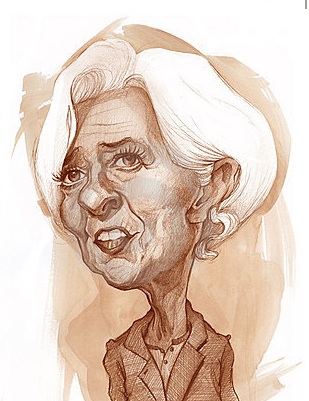
Negative interest rates set by central banks in Japan and Europe to fight deflation are good for the global economy, International Monetary Fund Managing Director Christine Lagarde said

The unorthodox negative short-term rates, in which commercial banks pay central banks to hold their money, had probably supported stronger economic growth.

“If we had not had those negative rates, we would be in a much worse place today, with inflation probably lower than where it is, with growth probably lower than where we have it,” she told the broadcaster.

“It was a good thing to actually implement those negative rates under the current circumstances.”

The European Central Bank, the Bank of Japan, and the central banks of Sweden, Denmark and Switzerland have taken rates negative in the past year in efforts to spur commercial banks to push more of their surplus funds into the economy to generate more spending and investment.

While in theory the concept should work, economists are closely studying what happens in Europe and Japan amid worries that negative rates could actually provoke businesses and consumers to be more cautious about spending.

Janet Yellen, chair of the Federal Reserve, which raised interest rates in December, said Wednesday that the Fed is watching the experience of negative rates in other countries.

“I guess I would judge they seem to have mixed effects, you know, some positive and some negative things,” she said.

The Fed, for its own part, is “certainly not actively considering negative rates,” she added.

 Lagarde