Princess Haya Bint al-Hussein, accompanied by her lawyer, leaves the High Court in London July 30, 2019. The princess has applied for a forced marriage protection order, custody of their children and for a non-molestation order.
The estranged wife of Dubai’s ruler, who dramatically fled her sheikh husband last month, surfaced in the UK, ready to engage in what will certainly be a nasty legal battle to retain custody of the couple’s two small children.
Princess Haya, 45, the sixth wife of billionaire Sheikh Mohammed bin Rashid al-Maktoum, 70, fled Dubai in late June with her seven-year-old son and 11-year-old daughter, along with $31 million dollars.
In addition to custody of her children, the princess is asking the court for a forced marriage protection order and a non-molestation order for herself.
The princess made an appearance in the central London court, however, her husband was not present. Although the court has ordered details of the proceedings to be kept under tight wraps, what is known is that the sheikh has asked for his children to be returned to Dubai.
The details of the protection order requested by the princess have not been made public. As reported by CNN, “A forced marriage protection order can be made under English law to protect a person from being forced into a marriage or help someone already in forced marriage, for example by preventing the person from being taken abroad.”… Estranged Wife of Dubai’s Ruler Surfaces in UK for Court Battle
One issue that’s been in the headlines for many years is anti-money laundering (AML). When criminals are able to successfully hide the illicit origins of their cash, both the financial institution and society suffer.
Why AML Should be a Top Priority for Financial Institutions
The to-do list for any financial executive is surely daunting. From navigating technology changes to managing talent effectively, there’s many initiatives competing for attention.
One issue that’s been in the headlines for many years is anti-money laundering (AML). When criminals are able to successfully hide the illicit origins of their cash, both the financial institution and society suffer. So, what makes AML more important now than it has been in the past?
Rising up the Priority Ladder
Today’s infographic from McKinsey & Company explains the factors which have brought anti-money laundering urgently to the forefront in recent years.
1. Regulatory Action
Enforcement actions related to AML have been on the rise. Since 2009, regulators have levied approximately $32 billion in AML-related fines globally.
2. Threat Evolution
Criminals are using more sophisticated means to remain undetected, including globally-coordinated technology, insider information, and e-commerce schemes.
3. Reputational Risk
AML incidents put a financial institution’s reputation on the line. There’s a lot at stake: today, the average value of each of the top 10 bank brands is $45B.
4. Rising Costs
Most AML activities require significant manual effort, making them inefficient and difficult to scale. In 2018, it cost U.S. financial services firms about $25.3B to manage money laundering risk.
5. Poor Customer Experience
Compliance staff must have multiple touch points with a customer to gather and verify information. Perhaps not surprisingly, one in three financial institutions have lost potential customers due to inefficient or slow onboarding processes.
It’s no wonder anti-money laundering has now become a top priority for many CEOs in the financial industry.
A Wave of Innovation
In the last five years, there has been an explosion of “RegTech” startups—companies that address regulatory requirements using technology.
A number of factors in recent years have brought anti-money laundering to the forefront for banks and other financial institutions. In this infographic, we explore the various trends, and then look at how innovations in technology are offering new ways to address AML challenges in areas such as customer onboarding, transaction monitoring, and management oversight. In conclusion, we look at how investments in AML can create competitive advantages for financial institutions.
Why AML should be a top priority for financial institutions PDF/ Download
Mauritius Leaks is our cross-border investigation into how one law firm on a small island off Africa’s east coast helped companies leach tax revenue from poor African, Arab and Asian nations.
Led by the International Consortium of Investigative Journalists, the investigation is a collaboration by 54 journalists in 18 countries.
More than 200,000 documents from the Mauritius office of a prestigious offshore law firm, Conyers Dill & Pearman, are at the heart of the investigation. ICIJ corroborated company information from the leaked documents with data in the Mauritius corporate registry and the Financial Services Commission’s register of licensees.
The documents offer a rare window into corporate tax avoidance in countries in Africa, the Middle East and Asia.
Argentina brands Hezbollah terrorist organization, freezes assets
Argentinian authorities designated Hezbollah, which it blames for two attacks on its soil, a terrorist organization on Thursday and ordered the freezing of the Lebanese Islamist group’s assets in the country.
The announcement coincided with a visit by U.S. Secretary of State Mike Pompeo as Argentina marks the 25th anniversary of the deadly bombing of a Jewish community center in Buenos Aires in which 85 people died. Argentina blames Iran and Hezbollah for the attack. Both deny any responsibility.
Argentina also blames Hezbollah for an attack on the Israeli embassy in Buenos Aires in 1992 that killed 29 people.
The Argentine government’s Financial Information Unit, ordered the freezing of assets of members of Hezbollah and the organization a day after the country created a new list for people and entities linked to terrorism. The designation of Hezbollah as a terrorist group was the first by any Latin American country.
“At present, Hezbollah continues to represent a current threat to security and the integrity of the economic and financial order of the Argentine Republic,” the unit said in a statement….Reuter
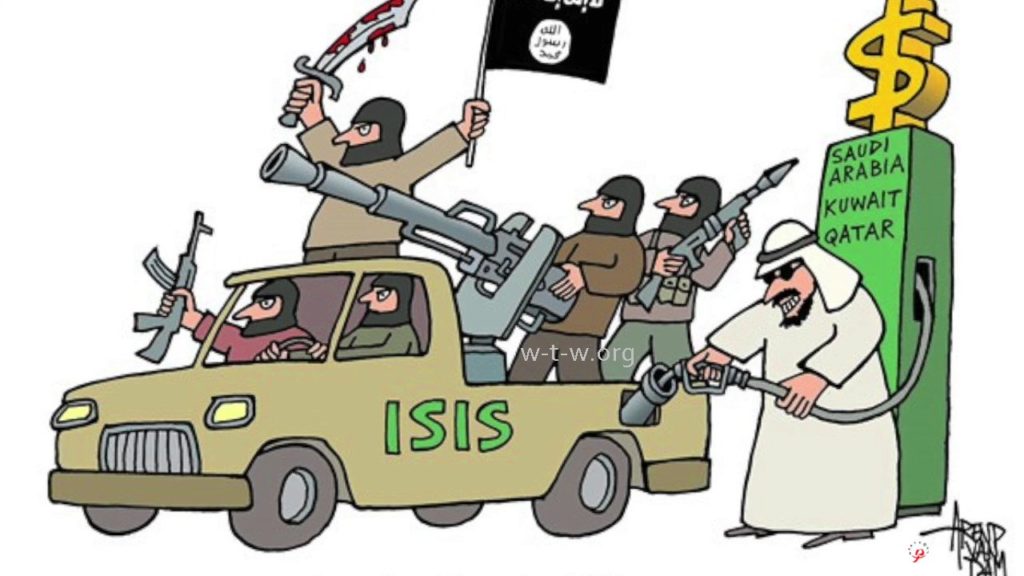
Arend van Dam https://www.w-t-w.org/en/arend-van-dam/
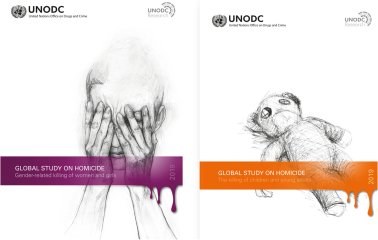
says new the new UNODC’s Global Study on Homicide 2019.
Since the start of the twenty-first century, organized crime killed about as many people as all armed conflicts across the world combined. Moreover, just like armed conflicts, organized crime destabilizes countries, undermines socioeconomic development and erodes the rule of law.
The UNODC study found that organized crime is one of the biggest drivers of homicides around the world. Organized crime was responsible for up to 19% of deaths worldwide.
Most homicide victims are men, but women more often killed by family and intimate partners Globally, some 81 per cent of homicide victims recorded in 2017 were men and boys, and more than 90 per cent of suspects in homicide cases were men, according to the most recent estimates. However, the study shows that the gender disparity among victims changes with age. Girls and boys aged nine and under are killed at roughly equal rates, in marked contrast to all other age groups, in which males make up more than 50 per cent of the victims, according to data from 41 countries….Press/Release Methodological Annex to The Global Study on Homicide 2019 GLOBAL STUDY ON HOMICIDE Executive Summary
What is a free port? Plans have been mooted for tax-free zones to offset post-Brexit tariffs. But are they needed? And do they actually work?
Lux goods: inside Luxembourg’s warehouse for the super-rich.
The medieval Cinque Ports of southern England and the northern European Hanseatic League benefited from special privileges, while bonded warehouses in the 19th century handed out tax breaks on alcohol and tobacco.
Ireland created the Shannon free zone in 1959 to encourage activity at its struggling airport.
Britain operated several free ports as recently as 2012, when the government stopped renewing their licences. Created in the 1980s, they included Birmingham, Belfast, Cardiff, Liverpool, Prestwick and Southampton. A free port remains in operation on the Isle of Man – a crown dependency and therefore not part of the EU or UK.
Does the UK need to leave the EU to establish free ports?Within the EU, there are currently 82 free ports or zones in 21 EU member states, including historic free ports such as Copenhagen and Bremen, raising questions over whether the UK would need to leave the EU to make more use of them.The UK has in recent years created 61 enterprise zones – which differ from free zones but still benefit from tax breaks – including the Ceramic Valley in Stoke-on-Trent and the Dorset innovation park.Obstacles could arise, however, if the government created free zones with particularly aggressive benefits equivalent to tax havens, which could be contested under EU law.
Other nations could still object at the World Trade Organisation, while aggressive tax policies and state support could hinder a post-Brexit trade deal with the EU.Would free zones benefit the UK?…TheGuardian
Inside the Luxembourg free port storing riches for the super-wealthy. Depending on who you speak to, Le Freeport is a high-security storage facility or a money-laundering risk…Theguardian
A five-step guide
Dirty money needs laundering if it’s to be of any use – and the UK is the best place in the world to do it.
Oliver Bullough reports: Kleptocrats, fraudsters and crooks steal hundreds of billions of pounds, dollars and euros from the rest of us every year, but that gives them a problem: how can they stop the rest of us knowing what they’ve done with the proceeds? They have to stop their haul looking suspicious, to cleanse it of any criminal taint, or face losing their hard-stolen cash.
Money laundering, as this process is known, is notoriously difficult to uncover, investigate and prosecute. Occasionally, however, an insider breaks cover – someone such as Howard Wilkinson, who blew the whistle on perhaps the largest money-laundering scheme in history, the movement of €200bn of suspect funds through the Estonian branch of Denmark’s biggest bank between 2007 and 2015, most of it earned in the dodgier corners of the former Soviet Union, some perhaps belonging to Vladimir Putin himself.
Lose yourself in a great story: Sign up for the long read email
Read more
“No one really knows where this money went,” Wilkinson, a former Danske Bank employee, told Denmark’s parliament last year. Once the money had got into the global financial system, “it was clean, it was free.”
Britain’s most famous money launderer is HSBC, thanks to its systematic cleansing of the earnings of the Latin American drug cartels over the second half of the last decade, for which it was fined $1.9bn by the US government in 2012. But that was a tiny operation compared to the Danske Bank scandal. If gathered together, the suspect funds moved through the bank’s Estonian outpost could buy HSBC, with more than enough left over to buy Danske Bank too.
The scandal has been big news in Denmark and Estonia, but barely grazed public consciousness in the UK. This is strange, because Britain played a key role. All of the owners of the bank accounts that first aroused Wilkinson’s suspicions had their identity hidden behind corporate structures registered in the UK – including Lantana Trade LLP, the one that may have been connected to Putin. That means this is not just a Russian, Estonian or Danish scandal, but something far closer to home. In November, Wilkinson told a European parliament committee that the countries hosting these companies are just as culpable. “Worst of all is the United Kingdom,” he said. “The United Kingdom is an absolute disgrace.”
The British government is supposedly committed to tackling grand corruption and financial crime, yet Britain’s involvement in this mega-scandal has never been mentioned in parliament, or been addressed by ministers. It is far from the first time that British companies have been involved in high-profile money-laundering. Among the characters who have used British shell companies to hide their money are Paul Manafort, disgraced former chairman of Donald Trump’s election campaign, and Viktor Yanukovich, overthrown president of Ukraine, among thousands of lower-profile opportunists…..TheGuardian
The Transnational Security Report “Cooperating Across Borders: Tackling Illicit Flows” covers selected spotlights of transnational illicit flows – from the trafficking of goods, arms, and people, to illicit financial flows – which endanger global security by funding conflicts and perpetuating instability. The report illustrates regional and international security implications and provides ideas for cooperative solutions, building on ongoing efforts by many institutions across the world.
Modelled on the MSC’s flagship Munich Security Report, as well as thematic reports such as the European Defence Report, the data analysis and graphics – many of them previously unpublished or updated specifically for this report – were compiled in close cooperation with renowned institutions and experts dedicated to increasing the understanding of illicit flows and transnational organized crime in its different forms and countering its threat to stability and security….Securityconference MSC Transnational Security Report
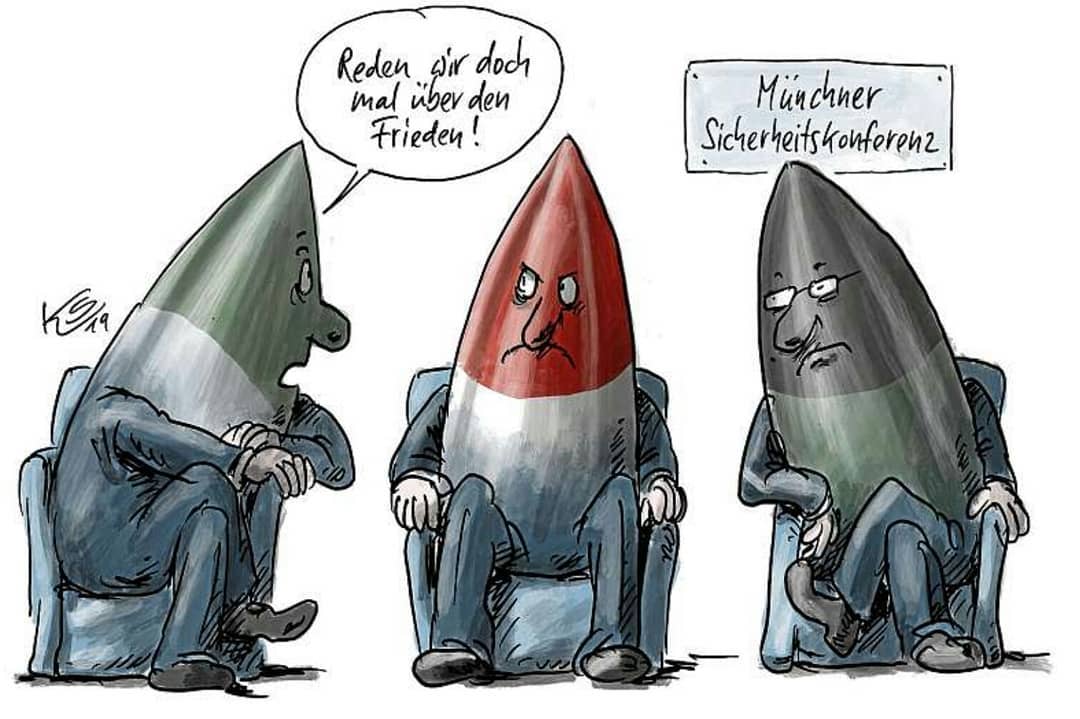
#münchnersicherheitskonferenz Munich Security Report : “Lets Talk About Peace”
On 20 June 2019 Congressman Robert Pittenger and Hon. Sonia Krimi hosted the 14th Parliamentary Intelligence-Security Forum in Paris France. This forum has provided the opportunity for Members of Parliament throughout the world to learn from experts and each other about issues of national security particularly in reference to counter-terrorism efforts. These forums have not only shared critical information but encouraged co-operation between governments, private, and public sector organizations.
The 14th forum aimed to address the growing concern about the relationship between countering terrorism and the financing of terrorism. The conference discussed where terrorism currently stands, how it functions, and how the international community can counter terrorist financing methods. While this forum highlighted several terrorist organizations, for the purposes of this article, the focus will be on the discussion surrounding Jihadist terrorist movements.
The terrorism threat has changed dramatically over the last several decades. With huge population growth in areas without access to markets and vulnerability of states in the Middle East and Sub-Saharan Africa, the rifts in the Jihadist nebula have primed areas to recruit and act. There is no longer one state, but insurgencies in previously nonimpacted areas all which create a larger global network and establish roots in strategy. While the aims of the different fissures in this network differ, they are beginning to develop new strategic priorities to determine to focus on close or remote enemies.
Women also act as perpetrators and supporters of terrorism, as we have seen recently that there has been an increase in attention to female foreign terrorists fighters traveling to (and returning from) conflict zones. This radicalization of the role of women in spreading this terrorist network, while under-studied, is a crucial component to the spread of global jihadist network and changes in strategic movements in the variety of groups and networks.
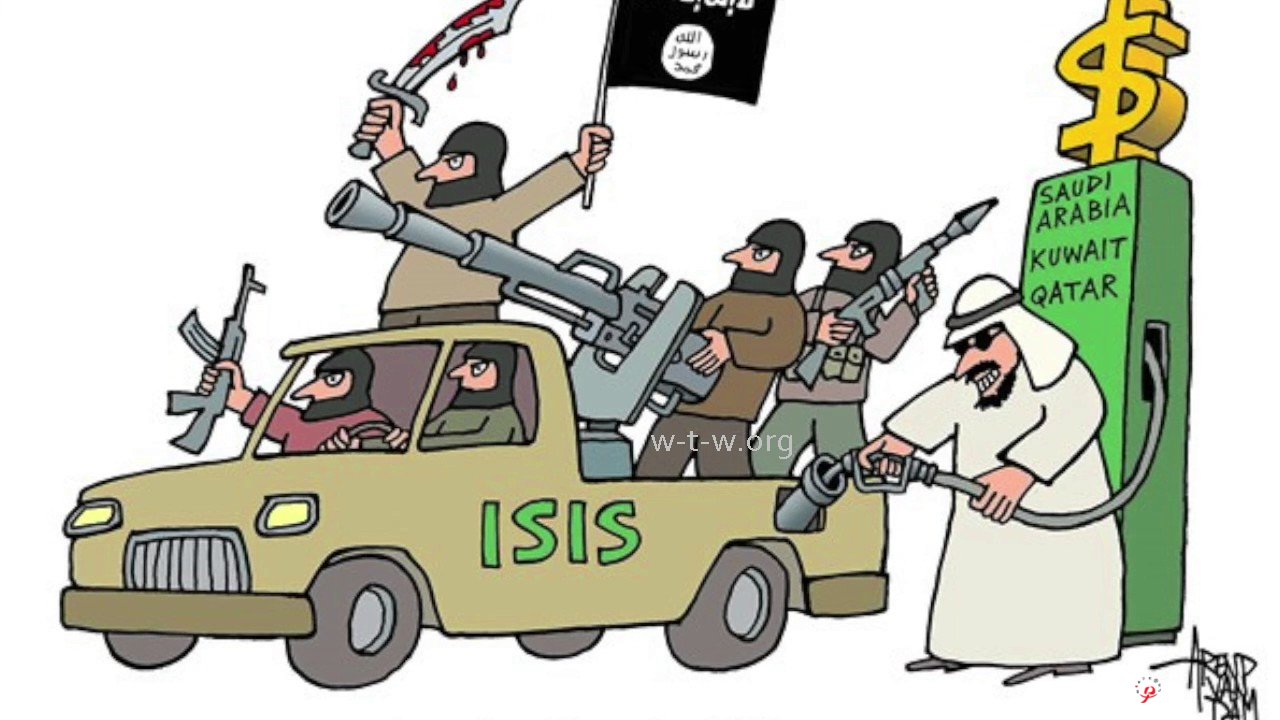
This shift has come with new approaches to the tactics of terrorist groups. There has been a rise in the myth of the Caliphate in the Middle Eastern region, perpetuated by leaders who allow this myth to expand. Alongside the growing reliance on social media, terrorist groups are able to reach more individuals, create a larger network, increase visibility, and dissolve information with ease. This larger global system is then bolstered by a marriage of convenience between terrorist groups and gangs, mafias, and other crime organizations. This convergence has increased the amount of illicit money and terrorist financing (through money laundering and other illegal methods).
Women have played a key role in this new type of terrorism and the justification of illegal financing in these groups. As these groups tend to have a foundation in purity, through the twisting of the Quran they are able to make trafficking and laundering acceptable to support their efforts. Women have served as a compliment to this system and used to support this financing process providing both practical support and justification in these financing methods.
The rate of terrorism and the illegal funding of these organizations can be worsened by economic exclusion which weaken states and make them vulnerable to terrorist attacks. Further, there are new methods of warfare which can be quicker, larger scale, and of greater intensity than previous terrorist methods. The international community must act swiftly to address these new risks and rely on coordination between governments and the private sector.
To fight this terrorism, we cannot rely on conventional warfare. There is a significant difference in the strength of states and terrorist groups benefit from over-reaction from states. Therefore, lethal methods must be a last resort and we should first aim to stifle terrorism at its start- specifically in terms of financing. The international community should emphasis AFL/CFT regulations to reduce reliance on money laundry and create strong financial structures in states to monitor money laundering. Women’s unique roles in societies can serve as an important role in order to enhance the effectiveness of these type of policies. In order for this defense style to work, we must reduce disunity between democracies to ensure clear communication and collaboration to end terrorist financing.
When addressing counter terrorism financing rules, it is crucial to consider the impact which these laws may have on women. For example, research has demonstrated that counter-terrorism financial laws can impact women more severely in places where access to the formal banking sector is limited and the rely on alternative remittance system. These areas may also be more highly susceptible to terrorism and counter terrorism laws as weaker states with less access to economic inclusion may be vulnerable. These rules may also increase risks for women’s rights organizations and undermine peace work according to Women’s International League for Freedom.
The 14th Parliamentary Intelligence-Security Forum was an excellent convergence of government representatives and members of the private sector to address this important and rapidly changing nature of terrorism and terrorist organization’s financing. There was an emphasis on the relationship between organizations and governments to create a coordinated approach to stifling the sources of financing in terrorist cases. We must learn from this conference and encourage strong structures AFL/CFT, greater coordination between different groups, and a renewed focus on the nature of counter terrorist financing methods.
Below is a video summary report of the 14th Parliamentary Intelligence-Security Forum in Paris on June 20, 2019 held at the French National Assembly with 180 delegates from 32 countries. We have provided twelve brief interviews of the thirty officials and experts who addressed the forum.
Arend van Dam https://www.w-t-w.org/en/arend-van-dam/
Authorities in the United States have more information about library card holders than the owners of registered companies, according to a bipartisan group of U.S. senators behind a bill that would overhaul the country’s dated anti-money-laundering laws.
The senators, members of the Committee on Banking, Housing, and Urban Affairs, are seeking to enact The Illicit Cash Act, which would empower regulators to force shell companies to disclose their true ownership for the first time.
The draft bill was introduced on June 10. Key proponent, Senator Doug Jones, a Democrat from Alabama, said that as a former U.S. Attorney he was “all too familiar with criminals hiding behind shell corporations to enable their illegal behavior.”
“Our anti-money laundering laws have not kept pace with the increasingly sophisticated means by which criminals and terrorist organizations use our financial system to move their money around the world,” he said in a joint press release. Lack of transparency….ICIJ.org/Investigation

 Princess Haya Bint al-Hussein, accompanied by her lawyer, leaves the High Court in London July 30, 2019. The princess has applied for a forced marriage protection order, custody of their children and for a non-molestation order.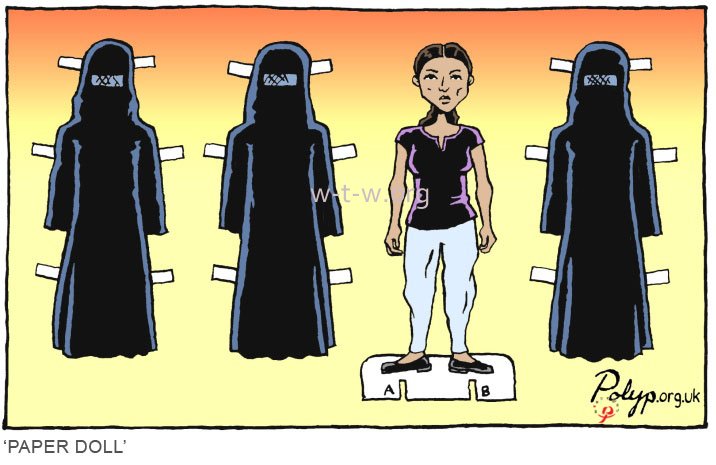

 Africa’s east coast helped companies leach tax revenue from poor African, Arab and Asian nations.