How to Whistle-Blow: Dissensus and Demand

What makes an external whistleblower effective?

Kate Kenny and Alexis Bushnell report:  Whistleblowers represent an important conduit for dissensus, providing valuable information about ethical breaches and organizational wrongdoing. They often speak out about injustice from a relatively weak position of power, with the aim of changing the status quo. But many external whistleblowers fail in this attempt to make their claims heard and thus secure change. Some can experience severe retaliation and public blacklisting, while others are ignored.

This article examines how whistleblowers can succeed in bringing their claims to the public’s atten- tion. We draw on analyses of political struggle by Ernesto Laclau and Chantal Mouffe. Specifically, we propose that through the raising of a demand, the whistleblowing subject can emerge as part of a chain of equivalences, in a counter-hegemonic movement that challenges the status quo. An analysis of a high-profile case of tax justice whistleblowing-that of Rudolf Elmer-illustrates our argument. Our proposed theoretical framing builds upon and contributes to literature on whistleblowing as organizational parrhesia by demonstrating how parrhesiastic demand might lead to change in public perception through the formation of alliances with other disparate interests—albeit that the process is precarious and complex.

Practically, our article illuminates a persistent concern for those engaged in dissensus via whistleblowing, and whose actions are frequently ignored or silenced. We demonstrate how such actions can move towards securing public support in order to make a differ-ence and achieve change…Elmers Story 2020
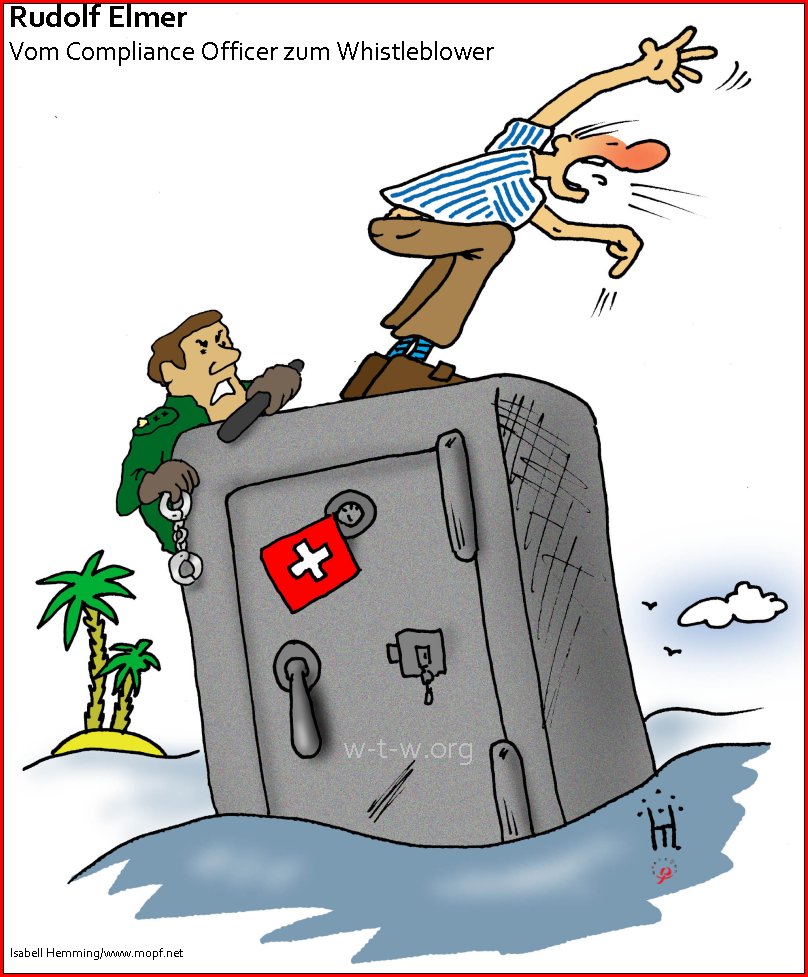
Isabell Hemming
www.w-t-w.org/en/isabell-hemming
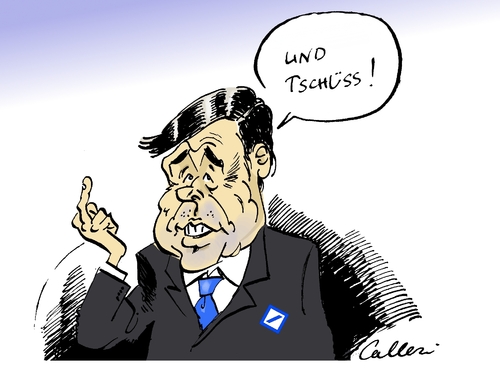

A Whistleblower’s War Against Off-Shore Banking

Josef Ackermann’s Leadership Changed The Bank In 2002

Dark Towers’ exposes chaos and corruption at the bank that holds Trump’s secrets.
Deutsche Bank was willing to work with Donald Trump when others would not. In his book, David Enrich details Deutsche Bank’s quest to become the world’s largest bank — and how its corporate culture led to countless.

Dave Davies reports: In the 1990s, long before he became president, Donald Trump was known as a cash-strapped New York City businessman with shaky credit.

“His record of defaulting on loans and stiffing his business partners was very long and very well-documented,” New York Times finance editor David Enrich says. “Any mainstream financial institution that had competent risk management systems in place — there is no way they were going to do business with Donald Trump.”

Enter Deutsche Bank, which Enrich says was a “second-tier player” in the banking world in the 1990s. Seeking to make a name for itself, the bank was willing to work with Trump when others would not.

“The bank was so hungry for profits, for short-term profits, and so hungry to make a name for itself in the United States that it was really eager to just disregard any red flags that presented themselves with clients,” Enrich says. “Trump would default on a bond offering. He would default on a loan. He would sue the bank. And yet, time after time, Deutsche Bank executives kept going back to him for more business.”

On Deutsche Bank’s concerns about Trump holding political office…
On Deutsche Bank’s ties to the Nazi regime…
On Deutsche Bank’s transformation in the 1990s…
On Deutsche Bank violating American sanctions…
On Deutsche Bank laundering money for Russian customers…
On the chaos at the Deutsche Bank office in Jacksonville, Fla., which analyzes suspicious transactions…
mprnews.org

www.paolo-calleri.de/

EU To Put Cayman Islands On Tax Haven Blacklist

The top 10 countries that have done the most to proliferate corporate tax avoidance and break down the global corporate tax system are:

1. British Virgin Islands (British territory)
2. Bermuda (British territory)
3. Cayman Islands (British territory)
4. Netherlands
5. Switzerland
6. Luxembourg
7. Jersey (British dependency)
8. Singapore
9. Bahamas
10. Hong Kong

These 10 jurisdictions alone are responsible for over half (52 per cent) of the world’s corporate tax avoidance risks as measured by the Corporate Tax Haven Index. Over two fifths of global foreign direct investment4 reported by the International Monetary Fund is booked in these 10 countries, where the lowest available corporate tax rates averaged 0.54 per cent…Taxjustice.net

Cayman Islands
In wake of Brexit, EU to put Cayman Islands on tax haven blacklist.
Decision on British overseas territory comes less than two weeks after UK left bloc.

The Cayman Islands, a British overseas territory, is to be put on an EU blacklist of tax havens, less than two weeks after the UK’s withdrawal from the bloc.

In a clear indication of the country’s loss of influence on the EU’s decision-making, the bloc’s 27 finance ministers are expected to sign off on the decision next week.

The EU’s blacklist is an attempt to clamp down on the estimated £506bn lost to aggressive tax avoidance every year but member states are not “screened” in the process of drawing up the blacklist…..TheGuardian.com

Design Rachel Gold
@wtwfinance
www.w-t-w.org/en/rachel-gold

17th Parliamentary Intelligence-Security Forum in Washington


Washington, D.C., United States of America December 2019

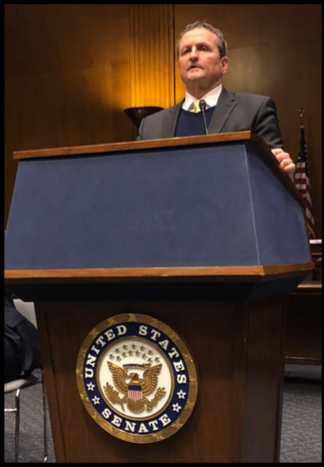
W-T-W Women and Finance participated again together with Members of Parliament in Washington at the Parliamentary Intelligence-Security Forum. The former Congressman Robert Pittenger organizes the conference on a rotation basis between Washington and a European capital. Next meeting will take place in May in Hungary.

The forum took place with about 340 participants from 80 countries in the Dirksen Building of the Senate. This year’s focus was on the control of financial flows that make the deadly triangle of terror, corruption and organized crime possible in the first place…
2019 DC Forum Report

Mr. Mariano FEDERICI, Chair of the Egmont Group, Egmont Group Executive Secretary, spoke at the Parliamentary Intelligence Security Forum in Washington, D.C.

Mr. FEDERICI explained to Members of Parliament what an FIU is, its mandate, functions, legal framework, legal powers and the necessity to have FIUs that are autonomous and operationally independent. Last year the Chair also underlined the adopted
UN Resolution 2462 that stresses the key role of FIU in the AML/CFT Chain.


Andreas Frank from Germany was focusing on the fight against Money Laundering (AML) and Countering the Financing of Terror (CFT).
As an AML/CFT expert he serves as an advisor to the Bundestag, the Council of Europe (CoE) and the European Parliament’s PANA committee (Committee of Inquiry to investigate alleged contraventions and maladministration in the application of Union law in relation to money laundering, tax avoidance and tax evasion) as well as to the European Parliament’s TAX3 committee (Special Committee on Financial Crimes, Tax Evasion and Tax Avoidance).

See his remarkable speech:
Hybrid Warfare, Money Laundering, Offshore Structures /PDF

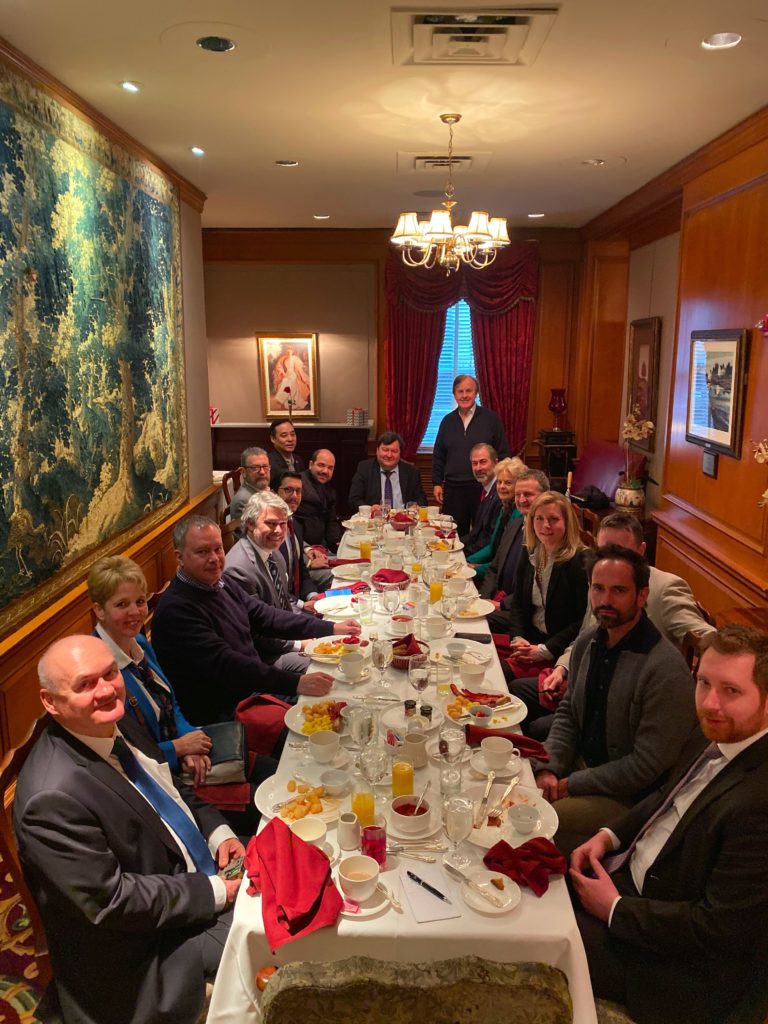
Congressman Pittenger with Members of the Parliamentary Intelligence-Security Forum Steering Committee, at a post-forum planning breakfast. Dr Csaba Hende (left) will host next meeting in Mai in Hungary. Also at the table the Honorable Emanuelis Zingeris from Lithuania, Founder W-T-W Women and Finance Dagmar Frank and Mr. Mariano Federici, President Financial Intelligence Unit.


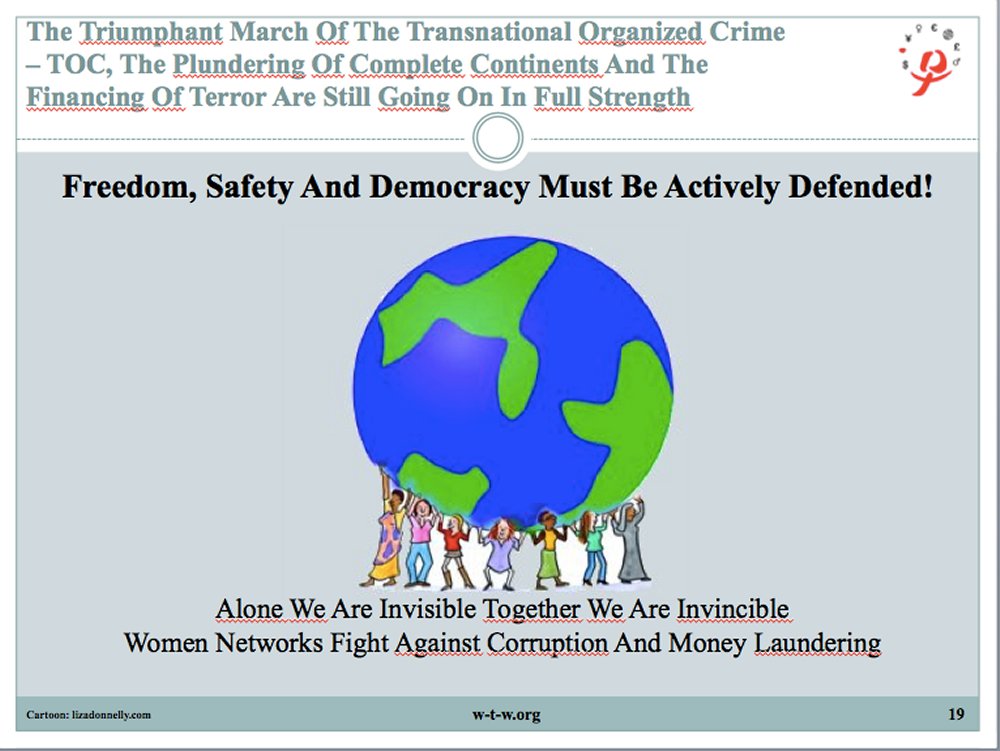
Cartoon: www.w-t-w.org/en/liza-donnelly

Past Event:
On 20 June 2019 Congressman Robert Pittenger and Hon. Sonia Krimi hosted the 14th Parliamentary Intelligence-Security Forum in Paris France.

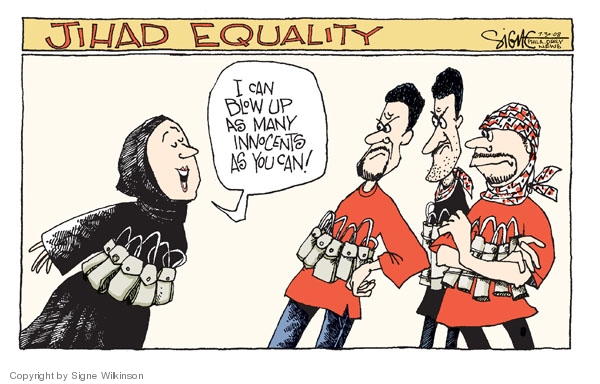
Women in the Service of Jihad

 – Buds of Gender Equality?

Keren Shein Daskal and Dr. Eitan Azani report:  One of the most surprising developments in female involvement within various Islamic terrorist organizations is the way Jihadi organizations have allowed women to assume various roles, including battlefield positions and execution of terror attacks. These women are integrated into an arena that from a historical and classical perspective has been a male dominated-arena (Von Knop, 2007).

The number of women in Jihadi organizations has gradually grown since 1976. Between 1985-2010 female terrorists have perpetrated over 275 suicide bombing, about 25% of the total attacks, on behalf of various organizations around the world. These women have killed hundreds of men, women and children and injured scores of others (Bloom, 2011). It is evident that the common denominator between female motivation to partake and terror organizations’ motives to let them in has expanded and enabled this phenomenon.

Even though classic Islam has consistently frowned upon female participation in Jihad, radical Islam takes a different approach and tries to justify their participation. For example, to date, there are a number of Fatwas that allow female participation in Jihad and even female suicide bombers (Von Knop, 2007; Davis, 2013). Terror is perceived as a male-dominated field, among other reasons, due to the fact that the percentage of terror attacks perpetrated by women, although on an upward trend, is still very low. This number leads to a flawed analysis of the phenomenon and belittles women’s’ contribution to Jihad’s survival and the scope of terrorism.

A large body of research is dedicated to the “male” Jihad that often includes violence and terror attacks whereas most of the women who identify themselves as radical Muslims adopt a “feminine” Jihad that is perceived as “softer” than its male counterpart because it is far less violent. Women’s’ long-term contribution to Jihad is in some respects even harder to eradicate than the “male” Jihad (Von Knop, 2007). The classic “female” Jihad is manifested in many “soft” fields such as fundraising, indoctrination and incitement trough education and of course steering the private household (husband and children) towards Jihad…Women in the Service of Jihad .ict.org.il

signetoons.com

WEF: Live

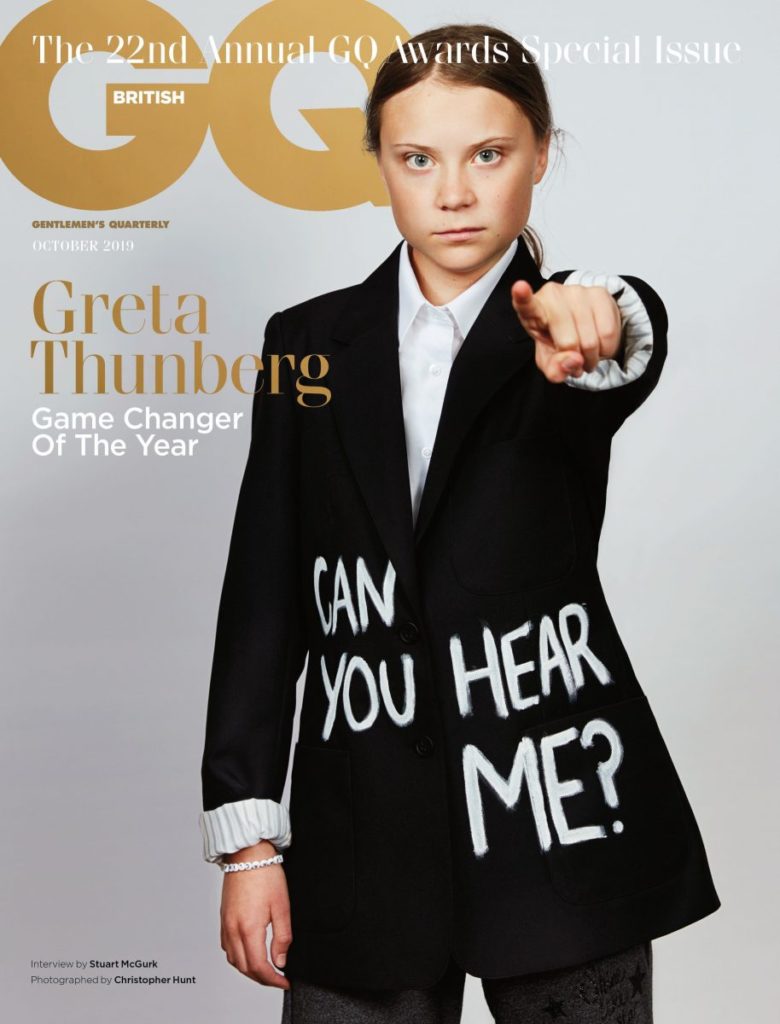
Fighting against “Organised Crime, Money Laundering, Offshore Structures and Corruption” would be very important for climate and environment.

W-T-W Women and Finance is writing and speaking to inform women worldwide.
Women Networks Fight Against Corruption and Money Laundering

Environment and Climate in the Grip of Organised Crime:
Finanz-Treff / Umwelt im Griff der Organisierte Kriminalität

Follow the WEF Sessions:  Live Annual Meeting-2020 / 21—24 January 2020

Foto: Christopher Hunt/GQ Magazine/Press Association Images/dpa

Identifying Money Transfers In the Service of Hamas

ICT Cyber-Desk: Identifying Money Transfers In the Service of Hamas

While investigating a Bitcoin address associated with the Popular Resistance Committees in the Gaza Strip, an irregular increase in the scope of activity has been identified compared to a previous review. A deeper review showed that the same address served a seemingly legitimate financial website by the name of cash4ps, which has been active for the past four years.

Further, the company has been identified as operating an account in a designated bank. It seems that alt least one of the web site’s managers has ties to Hamas. Moreover, an analysis of the varied financial transactions carried out through the website point out to methods of funds transfer by terror organizations into Gaza, from Gaza and within Gaza.

Even though one cannot point out with complete certainty specific transactions as done for of by terror organizations, the very nexus between the Bitcoin address, the site’s managers affiliation and the type of the site’s activity presents a variety of means to be used by terror organization to raise donations and funds, pay operatives and finance terror attacks outside of Gaza….Read Full Publication

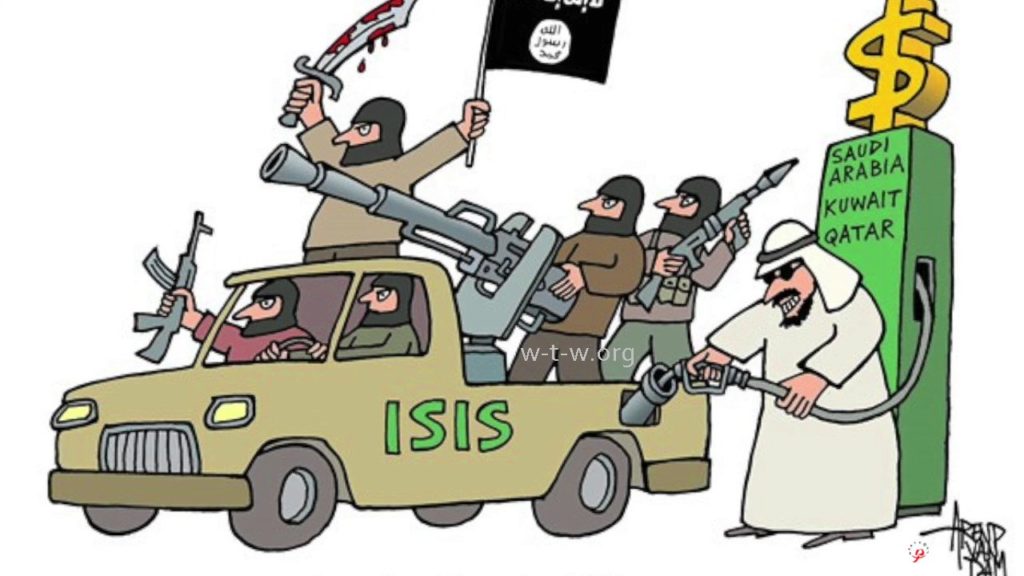
Arend van Dam
https://www.w-t-w.org/en/arend-van-dam/


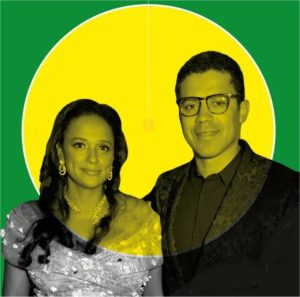
The Diamond Deal That Rocked Angola

For Sindika Dokolo and Isabel dos Santos,
a stake in De Grisogono was a status symbol.
But Angola claims it has been left to foot a $200m bill

Hilary Osborne and Caelainn Barr report: The jeweller De Grisogono may not be a household name, but it has cachet among the stars. Its annual party at the Cannes film festival is a sparkling occasion, and not just for the A-listers who get to wear the diamond necklaces the company produces.

This is a glamorous world – and one in which Isabel dos Santos, Africa’s richest woman and daughter of the former president of Angola, and her husband, Sindika Dokolo, have had a place since he acquired a stake in the Swiss company in 2012. But this share of one of the world’s most prestigious jewellery makers, and the money behind it, is now part of an investigation in Angola, where prosecutors have said they are looking at allegations that the couple enriched themselves at the expense of the country….Theguardian.com

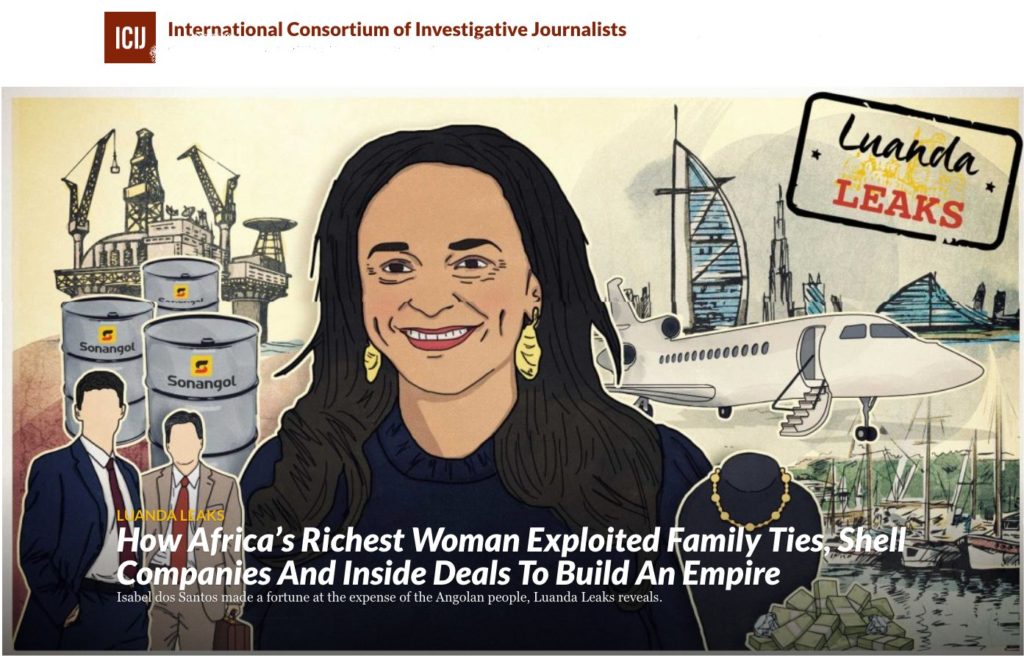
LUANDA LEAKS
How Africa’s richest woman exploited family ties, shell companies and inside deals to build an empire.
Isabel dos Santos made a fortune at the expense of the Angolan people, Luanda Leaks reveals.

  • Two decades of unscrupulous deals that made Isabel dos Santos Africa’s wealthiest woman and left oil- and diamond-rich Angola one of the poorest countries on Earth.
  • A web of more than 400 companies and subsidiaries in 41 countries linked to Isabel dos Santos or her husband, Sindika Dokolo, including 94 in secrecy jurisdictions like Malta, Mauritius and Hong Kong.
  • How a cadre of Western business advisers moved money, set up companies, audited accounts, suggested ways to avoid taxes and turned a blind eye to red flags that experts say should have raised serious concern.
  • Directed hundreds of millions of loans and contracts to her companies.
    ….icij.org

Engineering an Empire

Luanda Leaks exposes decades of insider deals that made Isabel dos Santos Africa’s richest woman. The trove of more than 715,000 records also reveals a vast network of shell companies used by dos Santos and her husband, Sindika Dokolo, to hold money, buy real estate and purchase stakes in banks, telecom, energy companies and more. Hit the play button to see their empire grow, or use the toggles at the top to explore by jurisdiction or industry.  Download the Data:

  • How Africa’s richest woman exploited family ties, shell companies and inside deals to build an empire
    icij.org/investigations/luanda-leaks

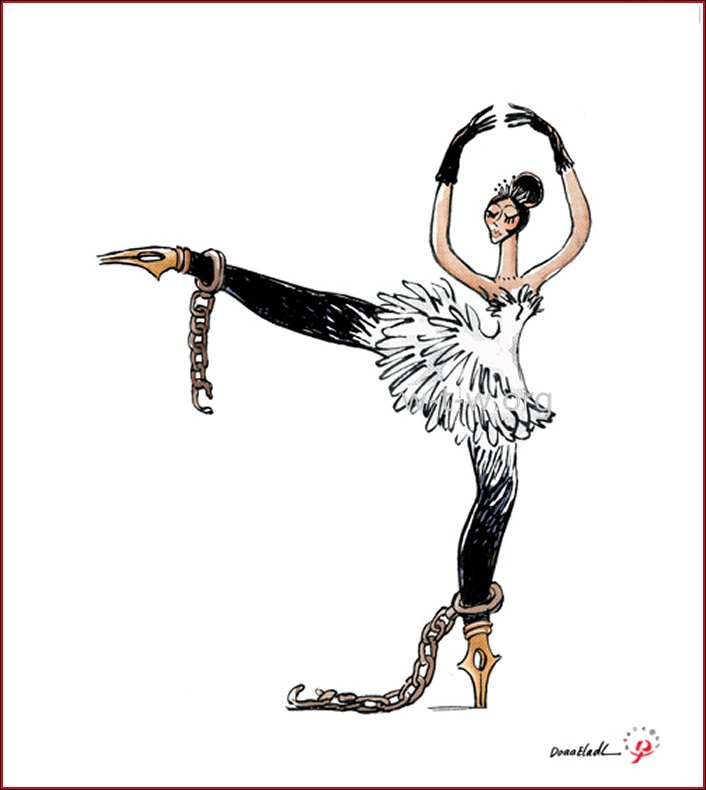
Daphne Caruana Galizia Prize for Investigative Journalism!

European Parliament creates Daphne Caruana Galizia Prize for investigative journalism.

The Bureau of the European Parliament has decided to create a prize for investigative journalism named after the murdered Maltese journalist Daphne Caruana Galizia. In its resolution of 15 November 2017, the European Parliament had for the first time called for a Daphne Prize for investigative journalism. However, the proposal had been delayed and blocked by Parliament’s Bureau for two years now.

Sven Giegold, spokesman for Bündnis 90/Die Grünen in the European Parliament and co-initiator of the prize idea, explains:

“The cruel murder of Daphne Caruana Galizia has demonstrated that freedom of the press cannot be taken for granted in Europe. The prize is intended to strengthen investigative journalism and press freedom in Europe as a whole. There are problems with freedom of the press not only in Malta but also in Hungary and Poland. The importance of investigative journalism has been demonstrated by the many revelations of tax scandals in recent years. Without cross-border investigative journalism, it would hardly have been possible to uncover the Panama Papers or LuxLeaks….EU-Parlament-Daphne-Prize

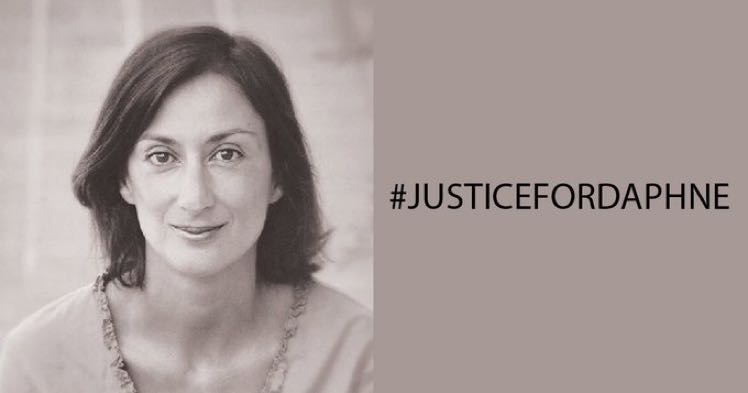
#JusticeForDaphne

Forbidden Stories: Daphne Project: the secret offshore cash of alleged mastermind of Daphne killing

Matthew Caruana Galizia:  @mcaruanagalizia

Dooa Eladl
www.w-t-w.org/en/doaa-eladl/


Mord auf Malta – Der Fall Daphne Caruana Galizia

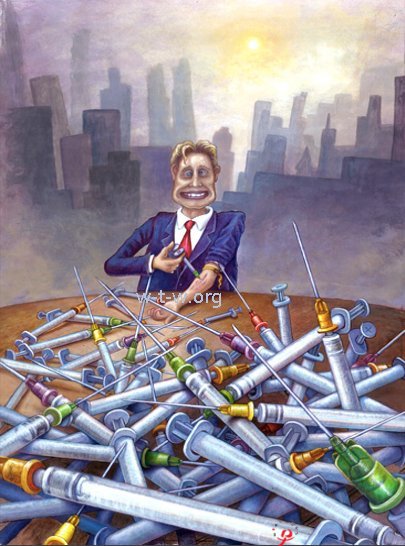
2019 EU Drug Markets Report from the EMCDDA and Europol

New report highlights wide-ranging impacts of EU drug markets on health and security.

Why gender matters in drug addiction

Europeans are spending at least EUR 30 billion on drugs each year at retail level, making the drug market a major source of income for organised crime groups in the European Union. This figure is announced today in the EU Drug Markets Report released by the EU drugs agency (EMCDDA) and Europol (1). Around two-fifths of this total (39%) is spent on cannabis, 31% on cocaine, 25% on heroin and 5% on amphetamines and MDMA (2)

The two agencies have joined forces to provide their third state-of-the art overview of the European illicit drug market. The report covers trends along the supply chain from production and trafficking to distribution and sales. It describes how the drug market has wide-ranging impacts on both health and security and how a holistic approach is crucial for effective drug control policies. 

Presenting the report’s findings today, Dimitris Avramopoulos, European Commissioner for Migration, Home Affairs and Citizenship said: ‘Organised crime groups are quick to seize new opportunities for financial gain and are increasingly exploiting technological and logistical innovations to expand their activities across international borders. At the same time, drugs are now more accessible to European consumers, often via social media and the internet. Today’s report proves once again that the illicit drug market remains a threat to the health and security of our citizens. We will continue working relentlessly with our Member States and international partners on strengthening our fight against drugs in all its aspects; for our youth, our citizens, our society.’

The strategic and action-oriented analysis combines data from the EMCDDA’s drug monitoring system with Europol’s operational intelligence on organised crime. The latest data (3) show that overall drug availability within Europe remains ‘very high’ and that consumers have access to a wide variety of high-purity and high-potency products at steady, or falling, prices….Press Release

Eva Schlunke
www.w-t-w.org/en/cartoon/eva-schlunke/