Tech Industry Good for Women at the Top

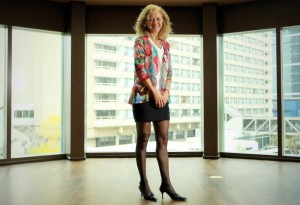
If you were Marissa Mayer of Yahoo, making nearly $25 million for one year’s worth of work — not to mention getting $50,000 in company-paid personal security — the gender pay gap would probably not be a major concern. Women scaling the heights of corporate America tend to have compensation packages that are as jaw-droppingly gigantic as men at a similar level.

On the Equilar list, the technology industry has the most women — Ms. Mayer, Virginia M. Rometty of IBM and Meg Whitman of Hewlett-Packard. Their median pay, $17.6 million, is more than that of the male tech chiefs, who earn $15.9 million. The pay of at least three other women who are high-profile tech executives would have put them on the list had they been chief executives, according to Equilar: Safra A. Catz, president and chief financial officer of Oracle ($43.6 million); Sheryl Sandberg, chief operating officer of Facebook ($16.1 million); and Angela Ahrendts, the new retail chief at Apple. Her salary and bonus have not yet been released, but her equity award alone would catapult her near the top of the list, at $68.5 million.

One reason tech might be better for women on the executive track is that the industry is young and fast-moving, without the entrenched behaviors and prejudices of more traditional businesses.

“Because the industry’s reinventing itself all the time, there’s not a set model about who could or should be successful,” said Susan Wojcicki, the chief executive of YouTube.

That became clear when Yahoo hired Ms. Mayer as chief executive when she was seven months pregnant — a decision that would be hard to imagine in more conservative industries like finance.

Tech jobs generally tend to be more flexible about priorities outside work, especially for high-performing employees the companies do not want to lose. The result is a narrower pay gap in tech, along with other benefits for women. Ms. Wojcicki insists on being home from 6 p.m. to 9 p.m. to be with her four children.  Women CEOs
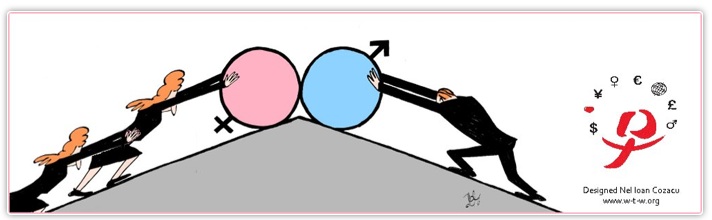
Women CEOs

China Considers the Regulation of Crowdfunding

China Securities Regulatory Commission (CSRC) is mulling plans to regulate crowd funding, an online financing vehicle, to ward off risks, according to China Business News Monday, a move that will put the brakes on the booming Internet finance industry.

CSRC regulations on peer-to-peer and crowd funding services are expected to be released earlier than those of the country’s banking regulatory commission, as CSRC Chairman Xiao Gang has launched field investigations on the industry.

Xiao visited two Internet finance companies last week, including the Beijing Angel Crunch Financial Information Service Co Ltd, mainly an equity-based online crowd funding platform, according to the report citing an industry researcher.

Equity-based crowd funding as a fledgling business is believed to be another innovative financing tool designed to help start-ups and small businesses to gain a foothold in the capital market. And the attitude of the CSRC on that is positive, the report said.  In the US, the SEC allows equity-based crowdfunding up to 1 million dollars.

Crowdfunding in China


Women are More Successful Investors Than Men


Marya Stark wites about women’s success in investing.

As the end of the fiscal year reminds us, we should all be looking for ways to contribute to retirement savings and invest wisely. This is also a good time for men, and especially women, to assess their strengths and weaknesses – and for the financial services industry to do more to correct false assumptions about investing.

Data show that women can actually be the sober sex.  Women outperform men in personal investing – by a lot. “Boys Will Be Boys: Gender, Overconfidence and Common Stock Investment”, a 2001 study using data from Paine Webber, the brokerage, showed that women earned returns on their investments that are almost 1 per cent more per year than men. Almost no professional investor on Wall Street consistently outperforms by 1 per cent per year.
This is a big deal. While men and women both reduce their returns with trading mistakes, men make 50 per cent more mistakes, and combined with additional trading costs, this means men substantially reduce their returns. These findings were confirmed by a 2010 Vanguard study of 2.7m investors.

It is also worth noting that women’s advantages in investing are not limited to amateurs. Among professional investors, women have outperformed men by an even greater margin.
Trust could be a factor. According to a 2013 study by the American Economics Association, people simply do not trust women with money as much as they trust men.  The credibility bar is much higher for women.

The consequences are serious. Because women earn less than men and live longer, women over the age of 65 are 50 per cent more likely to be unable to meet their basic daily needs, according to a study of US Census Department data conducted by Wider Opportunities for Women, a non-profit organisation that focuses on women and workforce issues.

While closing the gap in confidence between men and women is unlikely to happen overnight, ending the stereotype that women are not good at investing is a good place to start. Then men too can benefit, by gaining a better understanding of why they are not as good at investing as they may think.

Women are Better Investors

Mafia in Italy Survives the Financial Crisis

Avvenire.it reports:  The prosecutor in Reggio Calabria has mounted operation “‘Ndrangheta banking” focusing on a bank which financed firms in Calabria and Lombardy.  While many factories closed, those in Mafia hands grew.  Assets totaling 110 million were seized in Naples from accounts that appear to be drug money from Camorra.

Corruption involving companies, administrators and politicians confirms the Mafia’s ability to infiltrate the construction business.  Fifty-five companies related to ‘Ndranghela’ were about to begin work on post earthquake projects.

Ninety percent of the businesses run by the Mafia and then taken over by the State fail.  A supermarket let 500 employees go after the State takeover.  The unemployed say, “The Mafia gave us work.  The State takes it away.”

Everywhere, from traditional sectors such as construction to innovative renewable energy, waste from supermarkets, from health care to welfare, dall’agroalimentare to tourism and gambling, you find the Mafia.  This Mafia no longer operates with gun shots and blasts of Kalashnikovs, although no one forgets them.  Instead they use dirty money,  corruption and apparently clean business support:  The financial and managerial face of the mafia.

The Clean face is only a mask, warns the prosecutor of Reggio Calabria, Federico Cafiero de Raho, long at the head of the DDA in Naples, a great connoisseur of the new dynamics of the Mafia businesswomen. He speaks of the “gauntlet of credit” provided by the clans.  Entrepreneurs must understand that they not only lose their money but also their safety and freedom.  The Mafia is here among us, manages business, finances, does the friendly face, and there are those who think to take advantage of. We never tire of quoting the words of a businessman from Calabria years under escort, “Here, there are entrepreneurs who pay protection money and others that are raking it in.”  When the Mafia arrive before judges it is always too late.

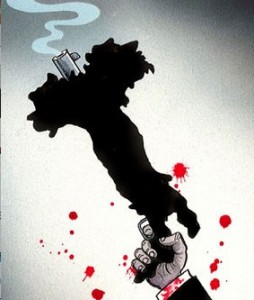
Mafia in Italy

Assessing China’s Economic Stability

Michael Spence discusses the importance of China’s economy and the issues facing it:  Faotors impacting on growth are China’s current territorial disputes with its neighbors, the deteriorating relationship with the US and Xi’s efforts to make the country more transparent and less corrupt.

Spence asserts that because China as such a large presence in global markets, it may be demand-constrained which would take a trio of policies involving high return on investment, higher value of government services and higher level of consumer demand.

Public and private investment can drive China’s growth, but only if the returns are high. China is doing this as it licenses new private banks and a shadow banking system.  Minimum wages have increased household income and the potential for demand.  But there is a question about whether income growth or leverage is driving demand.   Leverage, of course, brings future demand to the present, but does not solve future problems.

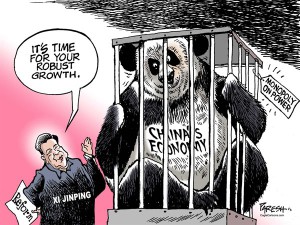
China's Economic Growth

Abu Dhabi Bank Launches Talent Platform For Emirates Women

Andy Sambidge reports: Abu Dhabi Commercial Bank (ADCB) has launched a talent development platform that aims to empower Emirates women in the job market.

The new platform, named Tamooha, will provide job opportunities that suit women’s social norms and family responsibilities by enabling them to choose to work from or near their own home or in ADCB’s dedicated women-only operations centre in Al Ain, the bank said in a statement.

It added that additional centres are being developed in the Western Region and the Northern Emirates in order to accommodate a total of more than 300 female employees.

ADCB said that female employees will be responsible for non- customer facing roles including data entry, auditing and validating the accuracy of transactions received from branches and call centres, such as new account requests, clearing checks as well as outbound customer experience calls.

Tamooha is part of ADCB’s ambition to promote Emiratisation at various administrative levels in line with the directives of the UAE’s leadership. This includes providing more opportunities and bigger roles for Emirates women and creating an appropriate environment for them, the statement added.

Ala’a Eraiqat, ADCB’s CEO, said: “At ADCB, we’re committed to supporting the right of Emirates women to pursue their careers without compromising their social norms.  “We are proud to be the first bank to provide a unique career structure that enables Emirates women to join the workforce while meeting their everyday life responsibilities…We have already received encouraging feedback on the initiative and have hired 100 women in addition to the women administrative officers in charge of work teams who are responsible for training and supervising operations.”

Employment for Emarati Women

Abu Dhabi Bank Launches Talent Platform For Emirati Women

Bank Regulation: Why?

With the Assange dcoument about bank regulations being released, it is good to go back to Elizabeth Warren.  Here she is discussing her role on COP, the Congressional Oversight Panel to which Harry Reid, Speaker of the Senate,  appointed he when she was teaching at Harvard.

We forget what the difference between banks and insurance companies and other public companies is.   Banks handle other peoples’ money. Not theirs.

Oversight of banks is in the interest of the public good.  Because bankers act like they do not have the public responsibility, they reset oversight.

Here is Warren on the nerve this comimittee was sriking when they asked members of th ebaning community to tesify. (COP did not have subpoena power, so people could come or not as theywished.)

Hank Greenberg, by then the fromer CEO of AIG, called Warren and demanded to see her in her offices at Harvard. He did not dispute the conclusions of the COP: the wild risk-taking at AIG and its risk to the entire economy. Instead he wanted to talk about why he was under-appreciated as a great CEO.

When he was unable to persuade Warren that AIG had been a messy risk tangle under his leadership, he turned his anger on Eliot Spitzer, the former Atotrney General of New York State. When that didn’t get him anywhere where gave up.

Warren’s conclusion: executives of large financial institutions have very different world views than other people.  If these companies did not have in trust so much money that was not theirs, this egocentrism might not be so consequential.   But we have given banks an advantage. They get, manage and profit from other peoples’ money and they are considered so indispensable to the economy that we will not let them fail when they deserve to. At least if we don’t let them fail, we should put some fo their leaders in jail.

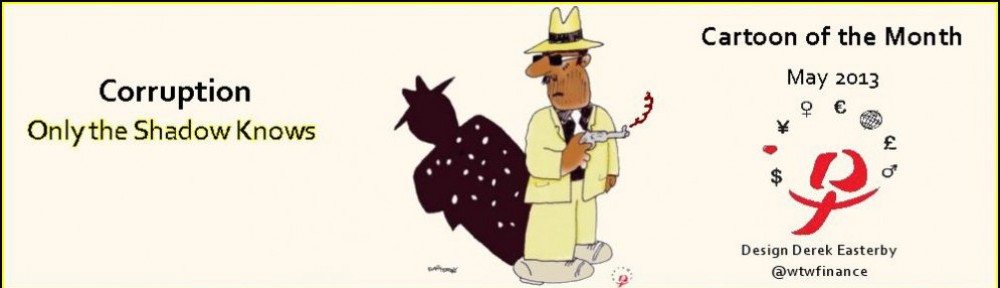
Bankers Behind Bars?

Google to Teach High School Girls to Code


Google’s diversity report last month revealed just how white and male the company — and the tech industry as a whole — really is. But in a first step to correct the disparity, the company has launched a new initiative to help get school-age girls interested in coding.  Made with Code.

By the numbers, women make up half of the economy’s workforce but are seldom represented in science, technology, engineering and mathematics (STEM) fields. Women only make up about 25 percent of STEM jobs and have even lower representation in tech alone.

Google reported they employ only three women for every seven men, and just 17 percent of their tech workers are women. Yahoo introduced its own diversity program.  Both companies also reported low rates of women in leadership positions. Yahoo only had 15 percent women in tech supervisory roles, compared to 21 percent at Google, which has no female executives and only one woman on its senior leadership team.

But the lack of women in the tech workforce goes beyond 24/7 jobs and pizza rinds.  Less than 20 percent of high school girls take the advanced placement (AP) computer science test, or go on to earn a college degree in the subject. While AP computer science courses aren’t available at most schools, two states didn’t have a single female student take the test in 2013.

Girls also tend to be steered away from STEM, and many develop negative views of the field early on.  While 80 percent of high school students are clueless as to what computer science majors learn, female students unfamiliar with the subject often associated it with words such as “boring” and “hard.”

Made With Code aims to close the gap by showing girls that there’s more to coding than it seems. Girls will be able to design 3-D printed bracelets or create songs using Blockly coding technology, which lets users build programs with blocks of code rather than typing it in manually. The program spotlights women who are dancers, music producers, cinematographers and humanitarians and shows how they all use coding to do their jobs. Google is also sponsoring and partnering with similar initiatives nationwide such as Girls Who Code, Black Girls Code and Technovation.

Computer Programming


Assange Releases Document Showing How Bank Regulation is Being Stifled


Deal among 50 countries would help prevent added regulation of financial services, website says.  WikiLeaks-secret-tisa-financial-annex

WikiLeaks has published what it calls “the secret draft text for the Trade in Services Agreement (TISA) Financial Services Annex,” apparently covering 50 countries and most of the world’s trade in services.

“The draft Financial Services Annex sets rules which would assist the expansion of financial multinationals — mainly headquartered in New York, London, Paris and Frankfurt — into other nations by preventing regulatory barriers,” the website says in a statement.

The draft deal is seen as a way to prevent more regulation of financial services, despite calls for tighter regulatory measures that followed the 2007-08 world financial crisis. That market meltdown set the world’s biggest banks up against critics who said governments needed to rein them in.  Canada is among the countries named as being partner to the negotiations. The last round of TISA talks took place April 28 to May 2 in Geneva.

WikiLeaks also alleged in its statement that the U.S. is “particularly keen on boosting cross-border data flow” and that this would include personal and financial data.

On Wednesday, WikiLeaks founder Julian Assange promised the release of a massive cache of documents Thursday, involving 50 countries, including Canada.

Trade om Services Agreement


Mattel Introduces Entrepreneur Barbie

Mattel consulted with real live entrepreneurs in the creation of their new doll.  She carries a smart phone and a tablet and is launching her own million dollar company.  All good for the “I Can Be” line of Barbies.

But why are we still living with an anatomical presentation that can’t be: unless you live under the plastic surgeon’s knife and eat nothing.  When will Mattel make their iconic figure like the rest of us?

Entrepreneur Barbie