Some Shareholders Protest Credit Suisse Compensation

Jonathan Weil reports:  Proxy advisers, like anyone else, can get pretty emotional. Take Dominique Biedermann. He runs Ethos, the largest proxy adviser in Switzerland, which recently recommended that Credit Suisse Group AG shareholders reject the bank’s compensation plan.

“It is shocking that management compensation has been increasing ever more for two consecutive years,” Biedermann said.  “It is high time to show the board of directors that many shareholders have lost their trust in them. We are no longer willing to support the way our bank is being managed.”

Ethos’s clients hold 3 percent of Credit Suisse shares.

Last year, Brady Dougan, the Credit Suisse chief executive officer, received a 26 percent pay increase to 9.8 million Swiss francs ($11.1 million). And for what? Well, if the Justice Department has its way, Credit Suisse or a subsidiary may soon have to plead guilty to criminal charges because it got caught helping thousands of wealthy Americans evade their taxes. And pleading guilty requires a lot of hard work. So maybe that explains it.

Dougan also gets bonus points for claiming to be unaware of any such activity while it was going on, notwithstanding that he joined Credit Suisse in 1990, has been on the bank’s executive board since 2003 and has been the CEO since 2007. As he told the U.S. Senate Permanent Subcommittee on Investigations: “While that employee misconduct violated our policies, and was unknown to our executive management, we accept responsibility for and deeply regret these employees’ actions.”

According to the Senate panel’s report, Credit Suisse employed 1,800 bankers in eight different areas of the bank to open and service Swiss accounts for U.S. clients. Yet heavens no, Dougan had no inkling that some of those clients were using Swiss bank accounts to hide money from the Internal Revenue Service.  Eight-one percent of the shareholders backed Credit Suisse’s compensation plan in a non-binding vote at the company’s annual shareholder meeting in Zurich.

There is much we can learn from this vote: 1) Credit Suisse shareholders don’t care if the bank committed crimes. 2) They don’t care if the bank pleads guilty to criminal charges, because it’s not as if the Justice Department is going to try putting Credit Suisse out of business. 3) They appreciate the raw skill and talent that are necessary for a CEO to both run a Swiss bank and stay oblivious to the widespread tax evasion going on around him.

It has been almost three years since the Justice Department first told Credit Suisse that it was the target of a criminal investigation. The bank spent the intervening years dragging out the probe. It delayed handing over information, hiding behind Swiss bank-secrecy laws. Meanwhile, its Swiss rival, UBS AG, signed a deferred-prosecution agreement with the Justice Department’s tax division in 2009, paid $780 million and got the matter over with.

If Dougan had been smarter about this, Credit Suisse almost certainly could have settled this case without the bank having to plead guilty to anything. But now the times and prosecutorial fashions have changed. After years of handing out deferrals and non-prosecution agreements like candy, the Justice Department is looking to make an example of a big bank (preferably a foreign one) and convince the American public that large financial institutions can’t break the law with impunity. Credit Suisse may become that poster child. And it all happened on Dougan’s watch.


The Future of Credit Suisse

Swiss Money Manager Sings to Avoid Criminal Charges in US

Our correspondent Andreas Frank writes:  Swisspartners Group, a Zurich-based money-manager, resolved a U.S. criminal tax probe by paying $4.4 million for helping American clients use secret accounts to evade taxes. In return, the government agreed not to prosecute the firm, citing its “extraordinary cooperation.”

The agreement resulted from Swisspartners’ voluntary production of the files for about 110 U.S. taxpayer clients, according to the Justice Department and Manhattan U.S. Attorney Preet Bharara.

From about 2001 to about 2011, according to a Justice Department statement, Swisspartners helped its U.S. clients open and maintain undeclared foreign bank accounts, which allowed them to avoid paying taxes in full.

“Swisspartners avoided criminal charges “as a direct result of its decision to self-report misconduct”, U.S. Attorney for the Southern District of New York, Preet Bharara said.

Swisspartners Group voluntarily took steps in 2008 to stop helping U.S. clients evade income taxes, according to papers filed today Manhattan federal court. Four years later, the firm, although not under investigation, reported its conduct to U.S. officials, according to the government agreement.

Swisspartners Group acknowledged it knew some U.S. clients were maintaining undeclared foreign bank accounts with its assistance in order to evade taxes.

Swiss Songbird

The firm has agreed to continue to cooperation with American prosecutors for at least three more years. If the government determines the firm has violated terms of the agreement it can face prosecution, according to the agreement.

As part of the accord, the money manager will forfeit $3.5 million, representing the fees it earned for the services, and $900,000 in restitution, according to court documents.

The Swisspartners deal, called a non-prosecution agreement, includes four Swisspartners entities: Swisspartners Investment Network AG, Swisspartners Wealth Management AG, Swisspartners Insurance Company SPC Ltd. and Swisspartners Versicherung AG. The agreement “does not apply to any other subsidiaries of Swisspartners Investment Network AG or any individuals” not named.

Insurance company subsidiaries of Swisspartners based in the Cayman Islands and Liechtenstein were also parties to the non-prosecution agreement with U.S. authorities, suggesting U.S. investigators may also be looking at the role of foreign insurance companies in helping Americans to evade taxes.

Related Reports: frank-cs.org

Italy Scores High on the Green Spectrum

Despite a sluggish economy, Italy compares favorably with its neighbors in its support of green policies and businesses, Italy’s Greenreport writes.

Italy imports and consumes less material.  In Germany consumption decreased by 6 % and productivity increased by 21%. in Italy there are the most visible progress of the entire European Union: the absolute consumption decreased by 23 % , resource productivity grew by 35 % .  Italy is the European leader in the recycling industry , in particular for the recycling of ferrous metals, plastics , textiles . Also on total waste , excluding only those mineral and vegetable , 37 million tons were sent for recycling, making Italy the second European country in recyclingjust behind Germany and well above countries such as France or Great Britain .

In the field of solid waste management, Italy is not doing so well.

But on the energy front , in 2012 the gross primary energy consumption fell to the equivalent of 178 million tons of oil.  The consumption of natural gas and oil each covering about 35% of consumption comes from renewable sources , while 15% of energy needs. In 2013 continues the descent of national energy consumption and the data available so far confirm another contraction equal to 2-3 % of electricity consumption and fuel . This is the direct effect of the strong growth of renewable energy , resulting in a corresponding reduction in oil and gas , and the increased energy efficiency of the processes of production and consumption.

What is striking in Italy is the overlap of two phenomena.  The first is the product of urban policies that have supported and encouraged housing developments , unknown to mass tourism , expansion of industrial areas ; second , unauthorized building , is a national phenomenon all Italian . According to the Cresme between 1982 and 2012 have been carried over 1,300,000 illegal homes ( approximately 15-20 % of the building ) . But as for organic farming in Italy on 8 , 5 % of agricultural land has been converted or in conversion of the total utilized agricultural area against 6, 1 % of those Germans.

Mobility . For the first time in 2013, the rate of car ownership (ie cars per inhabitant) is not growing, even though Italy remains the top in Europe with 610 cars per 1,000 inhabitants, compared to 525 483 in Germany or the European average. Positive signals come instead from annual sales of bicycles and the success of bike sharing and car sharing. In Italy in 2012 were sold 1,606,000 bikes against 3.966 million in Germany. But as for the bike sharing programs are active in 102 Italian cities against 47 of the German ones .

What we need is a green new deal for the Development of a new economy based on resource savings , efficiency , research and innovation , social cohesion , acceptance , enhancement of quality agriculture . The next European Parliament will have to face problems no longer essential and draw a new profile in Europe , overcoming the ideological choices of austerity , reviewing the same setting of the EU budget and building conditions to ensure green construction.

Greening of Italy

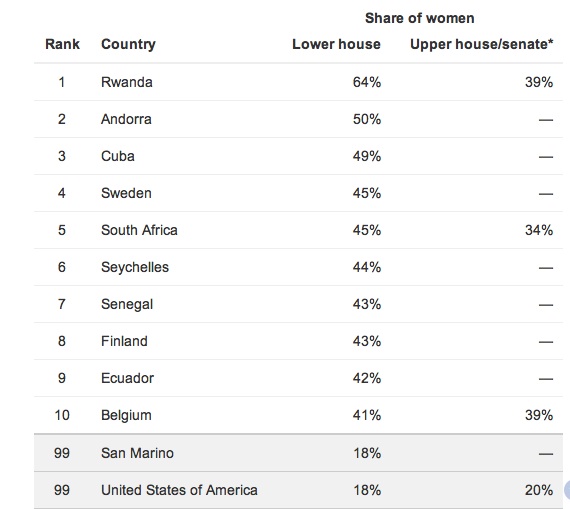
Women Staying Away From Jobs in the Finance Sector

A new report by YouGuv prepared for Bank of American finds that only one in three women even consider working in the “male dominated”  financial world. 1000 girls aged 16-20

A “lack of information from teachers” (21 per cent) and a perceived “sexist culture” (19 per cent) came second and third. The survey was carried out by YouGov for Bank of America Merrill Lynch and North London Collegiate School.

Almost half believed work-life balance would be better in industries other than finance, compared with just 22 per cent who disagreed. This is despite efforts by financial institutions to provide a supportive working environment, including mentoring programmes aimed at women, workshops for those returning from maternity leave and various diversity and inclusion policies.
In 2013, girls’ schools dominated GCSE and A-level league tables but just 19 per cent of applications for financial services graduate jobs came from women. Employers are trying to increase the percentage by recruiting young women before they go to university.
The report urges the financial services sector and education establishments to work together to encourage more young women to consider a career in the field. Just three out of 10 young women said financial careers had been discussed with them at school.

Young Women in Banking

A New Silk Road?

Ana Palacio writes:  

The unraveling of Ukraine has brought to the fore three major foreign policy challenges for the West: the danger of isolating Russia, the conundrum of China’s aloofness, and the pervasive lack of fresh ideas. Surmounting them will require a concerted drive to enhance cooperation and build trust among countries with disparate political systems and national interests. Chinese President Xi Jinping’s Silk Road economic belt could contribute to such an effort.
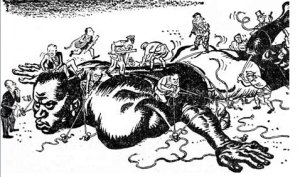
Europe and the United States’ response to the crisis in Ukraine has failed in two respects. First and foremost, it has been anemic, projecting an image of weakness that undermines its ability to reverse Russia’s annexation of Crimea, which has been tacitly accepted, or counter its aggressive behavior toward eastern Ukraine. At the same time, the use of targeted sanctions and diplomatic snubs has contributed to Russia’s international isolation, undercutting the long-term goal of building a functional relationship.

Russia Isolated


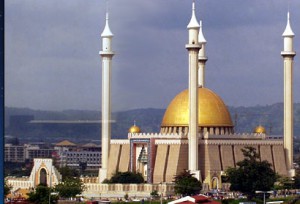
Young Leaders Meet in Abuja before WEF

Over 100 of Africa’s most accomplished young leaders and change-makers met in Abuja prior to the start of World Economic Forum on Africa to share ideas on how they can improve life in their home cities and countries.

Meeting under the theme BOLD Solutions, participants to SHAPE Africa – the annual meeting of Forum’s Global Shapers community – developed a website (www.chibokgirls.com) to tell the story of the kidnapped Nigerian girls to support the efforts of the authorities and the community to bring them home.

Other solutions include the development of: a Global Shaper farm network; an Africa-wide social media initiative to track the multifaceted effects of investing in people; an eco-funding platform, which will rally multinationals to donate funding to entrepreneurs; and the creation of a Global Shapers Business Network, which will act as a common marketplace for African Shapers.

The Global Shapers Community is an international network of young, dynamic and socially engaged leaders between the ages of 20 and 30. The community consists of over 73 Hubs across Africa, with at least one in every country.

In addition to the Global Shapers, Ngozi Okonjo-Iweala, Coordinating Minister for the Economy and Minister of Finance of Nigeria, Jubril Adewale Tinubu, Group Chief Executive of Oando, and Elsie Kanza, Head of Africa at the World Economic Forum, participated in SHAPE Africa. All three offered support and advice to the Global Shapers on how to bring their mission forward.

Abuja

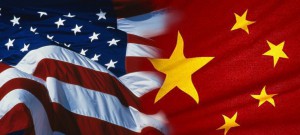
How Big is the Chinese Economy, Compared to the US?

Jeffrey Frankel writes:  When we talk about an economy’s size or power, we are talking about a broad range of questions – and a broad range of interlocutors. From the viewpoint of multinational corporations, how big is the Chinese market? From the viewpoint of global financial markets, will the RMB challenge the dollar as an international currency? From the viewpoint of the International Monetary Fund and other multilateral agencies, how much money can China contribute, and how much voting power should it get in return? From the viewpoint of countries with rival claims in the South China Sea, how many ships can its military buy?
For these questions, and most others involving total economic heft, the indicator to use is GDP at market exchange rates, because what we want to know is how much the renminbi can buy on world markets, not how many haircuts or other local goods it can buy back home. And the answer to that question is that China can buy more than any other country in the world – except the US.

US v China

Chinese E-Commerce Giant Files for Public Offering

Alibaba officially filed plans to offer shares in the US.  Alibaba appears to be very profitable, but did not show the revenue for Alibaba’s main marketplaces, how much the company makes from advertising or who will serve as the company’s new directors after the IPO.

The IPO reflects the growing ambitions in China and abroad of Alibaba, which was founded in 1999 in the eastern city of Hangzhou by a former English teacher named Jack Ma. Alibaba’s first business was a site to connect Chinese suppliers with Western buyers.

The filing showed the company had 231 million active buyers in 2013. A total of $248 billion was spent on Alibaba’s three retail sites in China last year, roughly equivalent to the annual economic output of Finland.

The payment processing Alipay, however, isn’t owned directly by Alibaba, but is instead controlled by a company 46%-owned by Alibaba founder Mr. Ma, according to filings from April. That structure is controversial, since it puts ownership of a company crucial to Alibaba’s business outside of Alibaba’s direct control.

The filing also revealed details about Alibaba’s lesser-known business renting computing time to other companies. Alibaba said this cloud-computing unit recorded $90 million in revenue in the final nine months of 2013.

But the filing said nothing about other questions on the minds of investors, particularly the breakdown of revenue among Alibaba’s primary sites: Taobao, a sprawling marketplace with more than eight million sellers, and Tmall, a destination for Western brands like Apple Inc., Nike Inc.and Gap Inc.   Together, those sites account for roughly 80% of all Chinese online shopping transactions, which stood at 1.84 trillion yuan ($296 billion) last year, according to research firm iResearch.

.Alibaba