Innovation, Technology and the 21st Century

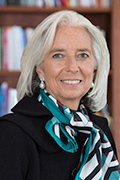
Christine LagardeAs I am just returning from Sydney’s G-20 meeting, I would like to share with you our views on the global economic situation. While unemployment is too high, public and private debt are too high, and global growth is too low relative to potential, we certainly see some economic momentum in the works—global economic growth of 3¾ percent this year, rising to 4  percent next year. This latest pickup of growth is largely due to positive developments among the advanced countries—certainly in the US, but also in Japan and the Euro Area.Innovation, Technology and the 21st Century


IWF

Parental Loans to Pay for College in US

Loans have been handed out liberally, same criteria as the mortgages in the early 21st century.  If your credit is okay, no one looks at your income or your ability to repay.  Of course parents want the best for their children.  But perhaps everyone has to address the prudent course to preparing for the job market.  Playing on people’s wish to do the best for their children or to own a home when they can’t afford one is not fair.  Paying for College

Parent College Debt

The Balancing Act: Sales and the Customer

The trick as promoted successfully by some training firms is to make the salesperson comfortable with his pitch: personalizing the pitch and helping it sit well in her voice and her set of beliefs.  Consider also the customer.  Instead of a bank saying, ‘We lend you money,” they might say, “We help you pay when you don’t have cash on hand.”  Instead of suggesting that a customer save, they might say, “We reduce our fees so you can save.”  Matching a Bank’s Needs with the Customer’s

Customer Satisfaction

Indian Finance’s Most-Powerful Woman Tackles Bad Loans

Arundhati Bhattacharya, chairman of State Bank of India, attends the Annual Bankers’
When she was a village branch manager in eastern India, she was quick to grab a screwdriver to fix power outages. Now, as the most-powerful woman in Indian finance, Arundhati Bhattacharya must tackle the highest bad-loan ratio among India’s 10 largest banks.
Appointed in October as the first female chairman and most-senior executive officer of the country’s largest lender, State Bank of India, Bhattacharya has been combing through balance sheets riddled with 678 billion rupees ($10.9 billion) of bad debt. Some 5.7 percent of total loans at the 207-year-old behemoth are nonperforming, the highest level in at least eight years, the earliest date for which data are available, exchange filings show.
Indian Finances Most-Powerful Woman Tackles Bad Loans

Arundhati Bhattacharya

Breaking Bad for Money Launderers

Our correspondent Andreas Frank points out efforts by the US Financial Crimes Enforcement Network to crack down on money laundering by using the Patriot Act.  Jennifer Shasky Calvery, director of the network, wants to put more muscle behind it.  Calvery noted:  TV watchers know Saul Goodman simply as a sleazy lawyer. But there’s a more formal way to describe the character played by comic actor Bob Odenkirk on the hit series “Breaking Bad.”  Saul Goodman would be a third party money launderer.”

Calvery was illustrating the point that money laundering by third parties is a growing concern at Fincen.  “Third party money launderers are professional money launderers,” Calvery said at an anti-money laundering conference in Miami. “Using their connections, professional expertise, and influence, third party money launderers transfer funds on behalf of others, knowing that the funds are involved in illicit activity.”  She described various schemes that these individuals use to infiltrate banks, including “using false documentation.”

For the uninitiated, “Breaking Bad” is about a meth producer in Albuquerque, N.M. Saul Goodman is the drug dealer’s lawyer. He eagerly creates false documents in order to launder money, and also serves as the show’s comic relief.

“I’ll generate false currency transaction reports out the wazoo,” Goodman exclaims in one Season 3 episode, “as well as the necessary W-2Gs, and a couple of casino managers who will jump at the chance to report false losses. It’s a win-win for everyone!”

Breaking Bad

Financial Tech Companies Prepare for IPOs

Markit was founded 13 years ago in Great Britain.  Its business relies on deriving prices and valuations for difficult to obtain financial data, as well as processing and risk management of over-the-counter derivatives.

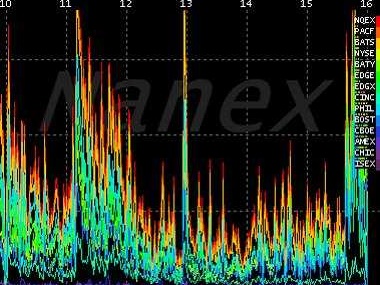
Virtu is a New York based company.  Its prospectus shouldl provide a rare glimpse into the world of a secretive high-speed trading firm. The company, which employs about 150 people, had earnings of about $275m before interest, taxes, depreciation and amortisation last year, up from about $240m a year before, one person added.

The planned listings highlight the growing power of technology and data in financial services.

High Speed Trading

Business Takes Over Failing Infrastructure

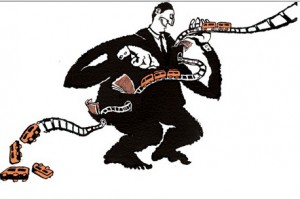
Brazil produces over half of the world’s sugar supply.  But it cannot get its product to market because freight trains are unreliable.  The sugar company Cosan proposes to take over and run America Latina Logistica.  Cosan already owns Rumo Logistics and the merger would create Latin America’s largest railway and logistics company.

Currently the lack of railroads forces companies to ship by truck on potholed roads as shipments are held up in ports.  Mining companies also own their own railroads.

Since infrastructures across the world need repair and updating, the question arises:  Is this a problem for business or government to solve?

Brazil's Railroads

Breaking Up Drug Cartels: Intelligence v Insider Info

The dramatic arrest of the head of the Mexican drug cartel, Sinaloa, which counts for 30% of drugs illegally entering the US can give false hope.  “El Chapo’ Guzman was the country’s leading drug dealer, but for years both the DEA in the US and the Mexican government gave him a pass in return for information.  What are the consequences of these deals in terms of the long term control of drug cartels?  Can control be achieved with information gleaned from sources other than the drug cartels themselves?  It is difficult to say.  But perhaps ending the privileged relationship with Guzman’s organization is a good first step.  Unfortunately a cell phone call did Guzman in.  Let’s hope this does not give the NSA a boost.

by Fernando Llera

by Fernando Llera

Canada Fines Brokerage Firms for Money Laundering

Andreas Frank reports;  Canada’s financial watchdog that supervises money laundering and terrorist financing has issued details of violations committed by a Canadian regulated broker dealer.

Financial Transactions and Reports Analysis Centre of Canada (FINTRAC), a government organization that reports to Canada’s ministry of finance, has found Questrade, a domestic financial services firm guilty of negligence in relation to serious principles in the way it deals with money laundering. As a result, FINTRAC enforced a financial penalty in 2011 to the multi-asset discount broker.

FINTRAC announced full details of the violations committed by Questrade the press statement. The Order states that: “Questrade, Inc., a securities dealer in Toronto, Ontario, was imposed an administrative monetary penalty of $346,140 on October 19, 2011, for committing nine violations of the Proceeds of Crime (Money Laundering) and Terrorist Financing Act (the Act) and the Proceeds of Crime (Money Laundering) and Terrorist Financing Regulations (the Regulations).”

FINTRAC, a government organization, was set up in 2000 to specifically tackle money laundering and terrorist financing related crimes. Canada has a range of financial regulators for brokers, banks and fund managers operating in the financial markets arena. Questrade is a member of the Investment Industry Regulatory Organization of Canada, a self-regulatory organization which oversees all investment dealers.

During FINTRAC’s investigations, Questrade was found to have poor systems and controls in its compliance and anti-money laundering procedures. The major issues according to the briefing issues were:

  • Failure to report a suspicious transaction;
  • Incomplete compliance policies and procedures, failure to develop a written ongoing compliance training program and failure to take special measures for high risk activities;
  • Inadequate practices of ascertaining client identity and confirming the existence of an entity other than a corporation, failure to enter into an agreement or arrangement with an agent or mandatory for the purposes of ascertaining identity, and incomplete record keeping;
  • Failure to take reasonable measures to determine whether a person is a politically exposed foreign person.

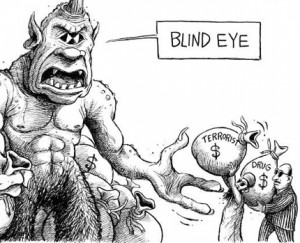
The financial penalty is one of the first issued to a financial services broker for such activities, highlighting Canada’s commitment to safeguarding its financial services sector.

Canada’s financial regulators adhere to state regulations which vary from region to region. In October 2013, the Ontario Securities Commission (OSC) cautioned investors about global FX broker, YouTradeFX, and advised users not to deal with unauthorized brokerage firms.   FINTRAC Penalty  
Brokerage Carelessness