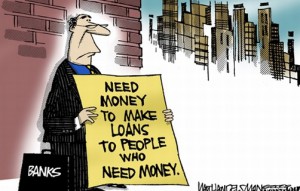
Elizabeth Warren and other dogged US legislators demand a two-tiered regulatory system for banks. The top tier must demonstrate that they can survive as banks, not as a risk free crap table. Small banks, vital to communities, must be held to appropriate standards which make their survival possible. Bank Failures in Brief from the FDIC
Category Archives: News Blog
Luxembourg, Cyprus, Switzerland Fail Tax Transparency Test
Switzerland has been listed alongside well-known tax havens in a new ranking by the Organisation for Economic Co-operation and Development (OECD), showing the country still has work to do on banking secrecy despite recent steps aimed at tackling the issue.
OECD’s Global Forum on Transparency and Exchange of Information for Tax Purposes released ratings for 50 jurisdictions at a meeting in the Indonesian capital.
The forum has rated jurisdictions on how well they comply with rules on tax transparency.
Switzerland, however, failed even to make it past the first stage of a two-stage assessment.
Other countries which also did not make it to the second stage included Panama, the Marshall Islands and Trinidad and Tobago, although OECD’s final judgement on them was harsher than on Switzerland.
It came after Switzerland took steps last month to tackle its long-criticised banking secrecy, including signing an international tax evasion agreement brokered by the OECD and introducing new legislation to increase cooperation on money-laundering.
Swiss authorities have come under pressure from the international community to clamp down on the concealment of illicit funds and on tax evasion, in the wake of the global financial crisis of 2008 and the subsequent euro zone debt crisis.
Despite Switzerland’s failure to complete the process, OECD’s head of tax issues, Pascal Saint-Amans, struck an upbeat note, telling it was now “moving ahead”.
He, however, said the OECD would continue to monitor the country closely to ensure its recent steps “are actually enacted and become law, which is not yet the case”.
Of the jurisdictions that completed the two-stage assessment, 18 were deemed to be “compliant” with the tax transparency rules set out by the forum; many others were considered “largely compliant”; while Austria and Turkey were “partially compliant”.
Four were deemed to be “non-compliant”: Cyprus, Luxembourg, the Seychelles and the British Virgin Islands.
OECD_GF_Ratings_22.11.13
OECD_GF_Background
More Corruption Reports
Bitcoins on Amazon, Gold in the Marketplace, Is Currency Out?
You may be able to use bitcoins on Amazon and Ebay. Will gold be next?
An Indian man in Bangkok’s Chinatown bought two god bracelets on Yaowarat Road in Bangkok for $15,000. In his native Mumbai they are worth $16,500. They can travel in a computer bag or “if you are really worried about customs”, he says pointing at a shop which sells plain golden necklaces, “you buy those and put them around your wife’s neck.” Earlier this year the Indian government imposed quotas and increased taxes on gold imports, but it takes more than that to limit Indians’ love of gold. Although the country’s statisticians report that Indians officially buy a lot less of the precious metal—148.2 tonnes from July to September, a third less than in the same period last year—there has been a surge in gold smuggling. Bitcoins and Gold as a Currency or Commodity Exchange
Do Men Or Women Make Better Money Managers?
Discussions about whether women run money differently from men easily slip into cliché. Women do not like risk. Hedge funds are macho.
Maybe, maybe not. What the evidence shows is that women are hopelessly under-represented at the sharp end of fund management. UK retail funds managed by women at just 5 per cent – but they often get better results than men.
Do men or women make better money managers

We Need More Emirati Women In Financial Services
The private sector needs to follow the UAE government’s example and push for female board members.
Statistics show the Gulf lags behind much of the developed world in workplace gender diversity. This is clearest at the top, just 1.5 per cent of board seats in the UAE are held by women. This drops to 1.2 per cent for companies listed on the Dubai Financial Market and 0.8 per cent for those listed on the Abu Dhabi Securities Exchange.
In workforce terms, the difference between the public and private sectors is marked; women make up 66 per cent of the former but only five per cent of the latter. Getting more women into both the private sector and leadership positions is key to addressing inequality, but will also help meet the Government’s Emiratisation targets.
Finally, it may be good financial news for companies – research suggests companies with more women at management level do better.
We Need More Emirati Women In Financial Services
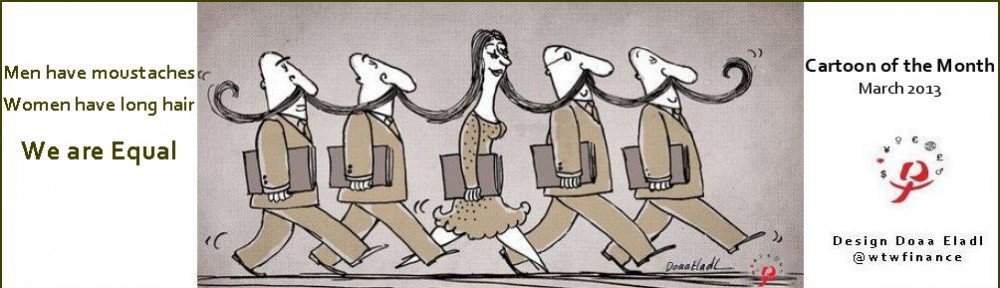
W-T-W Finance Women Integrity Awards:
Doaa Eladl

Algorithms Spike the Market
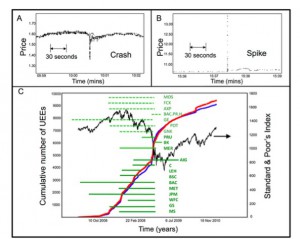
If you’ve noticed that the number of extreme events spikes around the time of the financial crisis, and the stocks most likely to experience them are bank stocks, you’ll see why the researchers are so interested in this hidden market: This pattern suggests the coupling between extreme market behaviors and global instability—”how machine and human worlds can become entwined across timescales from milliseconds to months”—and is also are seen more often before and after the kinds of “flash crashes” that people actually notice. Regulators, though, aren’t keeping track of these events. That’s a problem, not just because of any potential forewarning, but also because trading at that speed creates volatility that makes markets less efficient. How High Speed Trading Impacts the Market
Surprising Economic Trends in the US and the World
The number-one way that the finance industry makes its money is by collecting fees from people in order to manage their money. Pension funds, mutual funds, hedge funds, endowment funds…it seems like every dollar you save gets a hefty cut as it passes through the hands of middleman after middleman. And they can’t all beat the market, can they? But America’s love affair with money managers may be going lukewarm, as more and more investors move their wealth into passive management. Passive management means piggybacking on the wisdom of the market instead of paying one pro big bucks to try to out-guess the other pros. Exchange Traded Funds, offered by companies such as BlackRock and Vanguard, are one of the main passive investment vehicles that have emerged in recent years. Meanwhile, some big pension funds are turning to passive management. This could be the dawn of a new, laid-back financial age. And many other provocative thoughts. Economic Trends That Surprise
Greek Prime Minister Antoris Samaras Asks the Troika to Cool It
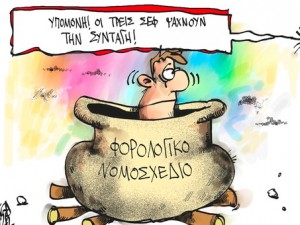
Implementing change too fast risks “reform fatigue” in Greece, the country’s prime minister has warned, in a fresh sign of resistance to pressure from international lenders for further cuts to wages and pensions. In an indirect reference to the troika – the European Commission, the European Central Bank and the International Monetary Fund – Antonis Samaras warned that: “You don’t climb to the top of a mountain vertically. You ascend from one plateau to another. Reform in Greece? OECD News Item
Afghan Opium Harvests at Record High
International banking consultant Andreas Frank writes: Afghan opium cultivation has reached a record level, with more than 200,000 hectares planted with the poppy for the first time, the United Nations says.
The UNODC report said the harvest was 36% up on last year, and if fully realised would outstrip global demand. Half of the cultivation area is in Helmand province. Most of the rise comes from this province, where British troops are preparing to withdraw. One of the main reasons the UK sent troops to Helmand was to cut opium production.
The head of the UN office for Drugs and Crime (UNODC) in Kabul, Jean-Luc Lemahieu, said that production was likely to rise again next year, amid uncertainty over the withdrawal of most foreign troops and the presidential election.
He said that the illegal economy was taking over in importance from legitimate business, and that prices remained high since there was a ready availability of cash in Afghanistan because of aid. “As long as we think that we can have short-term, fast solutions for the counter-narcotics, we are continued to be doomed to fail,” he added.
Mr Lemahieu said there had been some recent successes, including the arrest of leading figures in the drugs industry, but it could take 10-15 years to deal with Afghanistan’s opium crisis, even if policies improved.
The report said the total area planted with poppies rose from 154,000 to 209,000 hectares, while potential production rose by 49% to 5,500 tonnes, more than the current global demand.

The consequences of Afghanistan’s huge opium production have had an effect across society here. There are believed to be more than a million opium and heroin addicts – one of the largest levels in the world – taking advantage of plentiful supplies.
The amount of land given over to opium in 2013 was 209,000 hectares. The potential production from that is estimated to be more than annual global demand, according to the head of the UN office for Drugs and Crime in Kabul, Jean-Luc Lemahieu.
After rising sharply in the years after the Taliban successfully stopped production, the harvest last peaked in 2007 and is expected to continue rising.
Mr Lemahieu said that the rise since 2010 was caused principally by what he called a “hot political market” – uncertainty over the process of transition from US control. That uncertainty will continue with the end of foreign combat operations and the presidential election next year. Meanwhile two northern provinces which had previously been declared poppy-free – Faryab and Balkh – lost that status.
The findings of the latest report reverse a decline in production last year attributed to bad weather and disease. However, cultivation has been rising yearly since 2010 despite government efforts to eradicate the crop. More farmers have been trying to grow the poppy as the price of opium has been rising.
The report describes the capture of “well over 10%” of production by tripling the effectiveness police as an encouraging sign.
Afghanistan produces more than 90% of the world’s opium.
The report calls for an integrated, comprehensive response to the problem. “If the drug problem is not taken more seriously by aid, development and security actors, the virus of opium will further reduce the resistance of its host, already suffering from dangerously low immune levels due to fragmentation, conflict, patronage, corruption and impunity,” it said.
There are clear indications that the war against drugs is lost and the world will drown in a tsunami of drugs. Afghan Opium Survey
Is Quantitative Easing Contagious?
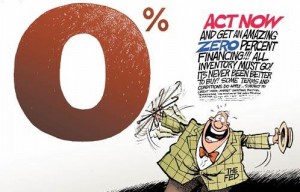
THE European Central Bank’s surprise cut to its interest rate last Thursday is just the latest evidence that the lengthy era of ultra-loose monetary policies is still firmly in place. Since the start of the crisis in 2007, the four central banks of the United States, the United Kingdom, the euro zone, and Japan have injected $4.7 trillion of liquidity into their economies, pushing interest rates to very low levels. The consensus is that these actions have raised GDP by between 1% and 3% and prevented a catastrophic failure in the global financial system. But who have they benefited and is the US economy rebounding or does it just look like it, a superficial bandaide applied to help the markets and big financial institutions? Unconventional monetary policy: Quantitative easing.