EU must take ‘concrete action’ against money laundering

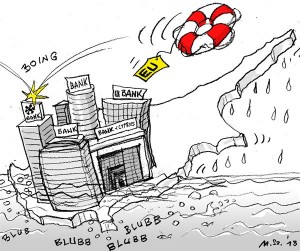
Money laundering is on the EU agenda and it is good news that a deal to clamp down on the practice is within reach – but the proposal falls short in two significant ways, says Oxfam

Nowadays, little prevents corrupt politicians, mobsters, tax dodgers and those financing terrorist activities from hiding their ill-gotten gains in a European bank account. By simply hiding their identity behind an anonymous company, almost no one even raises an eyebrow. Europe’s financial system allows them to launder all their dirty money because banks are not obliged to find out who the real owner is. Once their cash gets into a bank, criminals can move it around the global banking system and keep it out of the tax authorities’ reach…Artikel  EU must take concrete action against money laundering

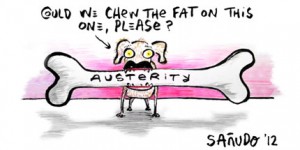
Who Will Defend Austerity?

Austerians have had their worst week since the last time GDP numbers came out for a country that’s tried austerity.  But this time is, well, different. It’s not “just” that southern Europe is stuck in a depression and Britain is stuck in a no-growth trap. It’s that the very intellectual foundations of austerity are unraveling. In other words, economists are finding out that austerity doesn’t work in practice or in theory.  Article  Further comments on correlation and causality.
austerity


Communiqué Meeting of G-20 Finance Ministers and Central Bank Governors

In their joint communiqué, the G20 ministers (whose ranks include ministers from four EU member states – France, Germany, the UK and Italy) “urge all jurisdictions to move towards exchanging information automatically” between tax administrations.

“Financial Inclusion.

16. We welcome the launch of the Financial Inclusion Support Framework. We welcome the upcoming Seminar on “Women and Finance” and the launch of the Women’s Finance Hub hosted by the SME Finance Forum, which will provide best practices and knowledge sharing. We call on the Global Partnership for Financial Inclusion to report on the gaps and challenges in the global environment for SME finance, as well as potential policy responses, by our July meeting. We welcome the Financial Action Task Force’s revised Guidance on Financial Inclusion as an important step in helping to create an enabling regulatory environment for innovative financial inclusion”. ..
G20 Communique_19.4.13

US Supreme Court Limits Lawsuits Against US Corporations

Since 1979, roughly 150 lawsuits have been filed against American and foreign corporations for actions committed around the world. Four local plaintiffs used the ATS to sue Unocal in a federal court in Los Angeles for human-rights violations allegedly committed during the construction of an oil pipeline in Myanmar. A human-rights organisation used it to sue Yahoo on behalf of two Chinese democracy activists for actions committed in China by a subsidiary. ATS suits against DaimlerChrysler and Rio Tinto, among others, are pending. Though most ATS cases have been dismissed or settled, the costs of settlements can be high and the negative publicity damaging.

Multinational companies will therefore cheer the Supreme Court’s unanimous decision in Kiobel v Royal Dutch Petroleum (Shell), released on April 17th. It dramatically limits the ability of plaintiffs to file suit against corporations in American courts for actions committed abroad.  Article

OldShellGame