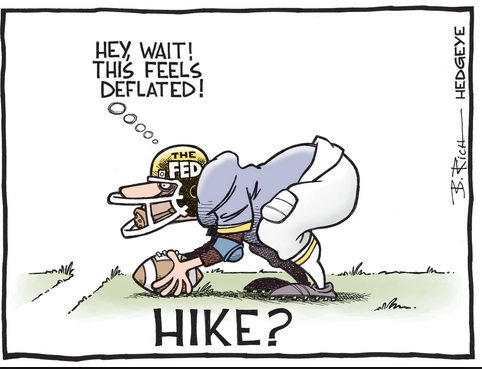
SEC Asks Offenders to Cough Up Individuals

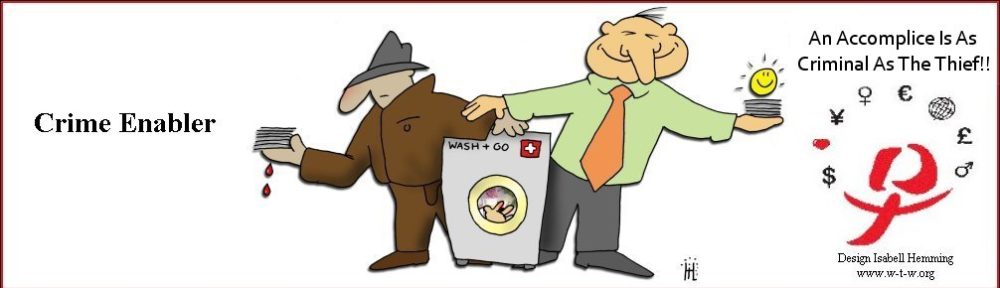
Yves Smith writes:  The Department of Justice may face an early test of its long-overdue policy change, that the government will seek to prosecute individuals, including executives, along with those of corporations. As Sally Yates, Deputy Attorney and author of the memo setting forth the new policy, put it, “We mean it when we say, ‘You have got to cough up the individuals.’”

Private plaintiffs have filed two suits alleging bid-rigging by the 22 primary dealers, adding pressure to an ongoing Department of Justice investigation.

The same analytical technique that uncovered cheating in currency markets and the Libor rates benchmark — resulting in about $20 billion of fines — suggests the dealers who control the U.S. Treasury market rigged bond auctions for years, according to a lawsuit….

The plaintiffs built their case against the 22 primary dealers who serve as the backbone of Treasury trading — including Goldman Sachs Group Inc., JPMorgan Chase & Co. and Morgan Stanley — using data from Rosa Abrantes-Metz, an adjunct associate professor at New York University who has provided expert testimony in rigging cases.

Bear in mind that investigations and litigation is underway, and no charges have yet been proven. However, in the last major Treasury bid-rigging scandal, in 1991, the Fed didn’t bother to wait for the Department of Justice to act.  SEC Says- Cough Up Individual Wrongdoers

Too Big to Jail

Central Bank Independence?

Howard Davies writes:  In 1993, the economists Alberto Alesina and Larry Summers published a seminal paper that argued that central bank independence keeps inflation in check, with no adverse consequences for economic performance. Since then, countries around the world have made their central banks independent. None has reversed course, and any hint that governments might reassert political control over interest rates, as happened recently in India, are met with alarm in financial markets and outrage among economists.
In truth, however, there are many degrees of independence, and not all nominally independent central banks operate in the same way. Some monetary authorities, like the European Central Bank, set their own target. Others, like the Bank of England (BoE), have full instrument independence – control over short-term interest rates – but must meet an inflation target set by the government.

There are differences, too, in how central banks are organized to deliver their objectives. In New Zealand, the bank’s governor is the sole decision-maker. At the US Federal Reserve, decisions are made by the Federal Open Market Committee (FOMC), whose members – seven governors and five presidents of the Fed’s regional reserve banks – enjoy varying degrees of independence.  The Independence of Central Banks


Tspiras and Syriza Can Form Coalition

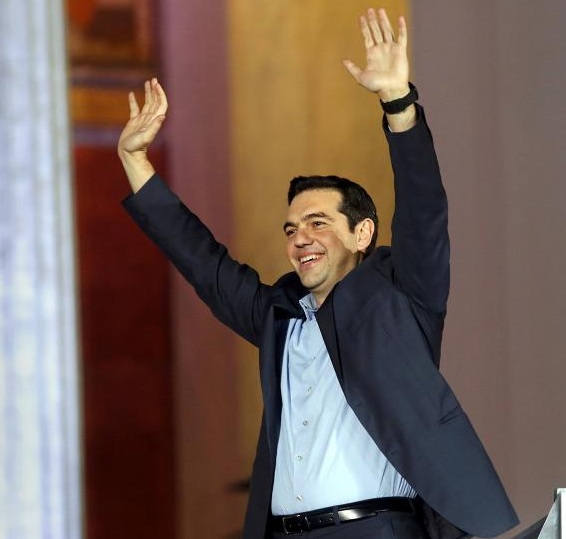
Larry Elliott writes: The fresh dose of deflationary measures in Greece’s new €86bn (£62bn) bailout programme, agreed in July after Tsipras folded under pressure from creditors, will deepen a depression similar in its severity to those that afflicted Germany and the United States in the 1930s.

The Greek economy has contracted by 29% since 2009 and is still shrinking after months of financial turmoil. Yet Greece remains part of a single currency that has emerged bloodied but intact. All the main parties contending the election were committed to continuing with the bailout that Tsipras negotiated in the summer.

Even so, the election will have consequences. Syriza has done well enough to form a workable coalition, thereby avoiding the need for another election and removing one of the hurdles before Greece has the first review of its bailout some time before the end of the year.

Tsipras Can Go Forward

Outlook: Mexico

Dallas Fed reports:

 by Jesus Canas and Emily Gutierrez

Mexico is a country of contrasts, its geography varying from deserts to jungles, mountains to beaches. Such differences extend to the economic characteristics of Mexico’s four regions: the manufacturing north, the agrarian north-central, the service-based central and the energy-producing south.

Such economic specialization has contributed to significantly different levels of development – evident in persistent and often worsening disparities in standards of living.

Mexico’s affluent north is characterized by a large manufacturing base, which sharply diverges from the poverty-stricken south, a hub of energy activity. The central region benefits from the sprawling reach of Mexico City, one of the world’s largest metropolitan areas and the heart of the Mexican economy, while the agriculturally driven northcentral zone makes a much smaller economic contribution.  Outlook Mexico

Big Guys Beat Pao Down

Ellen Pao is not going to pursue an appeal.  In a case that has captivated audiences well beyond the tech industry, Pao filed suit in 2012 against the storied Silicon Valley venture capital firm, where she had been a junior partner. Had the jury found in her favor, she could have won as much as $160 million. Through 24 grueling days in a downtown San Francisco courthouse, she exposed stories of all-male company ski trips and sexual harassment of another partner at the firm.

She also brought up smaller slights: Double standards in how aggressive women are allowed to be and how their success in investments translates into promotions.

Kleiner Perkins came back with a brutal, and ultimately successful, attack on her performance and personality, which they said was just not right for “Team KP.”

While Pao’s story may have helped provoke a broader conversation about gender imbalance and bias outside of the courtroom, in court she lost on all counts.

Ellen Pao’s statement on her decision:

I have decided to end my lawsuit against Kleiner Perkins.

I feel gratified that my actions have encouraged others to speak up about discrimination in venture capital and technology more broadly. I am encouraged that companies are taking more action to quantify and address the disparity of opportunities for women and minorities.

To resolve the lawsuit, I will pay Kleiner Perkins for its legal costs as awarded by the court, although I firmly believe people who bring employment discrimination claims in good faith should not be forced to pay their employer’s legal bills. I will also drop my appeal, since I cannot afford the risk of even more costs to fight against a firm with tremendous financial resources and massive legal and PR armies.

To be clear, Kleiner and I have not reached any agreement to settle this matter. Settlement might have provided me with financial benefits, but only at the great cost of silence. To quote their lawyer, “KP is not interested in a settlement without a non disparagement provision,” meaning I would not be free to speak the truth about my experiences. I refuse to be silent on these important issues.

This battle has been painful for me personally and professionally, and also for my family. It is time to move on. I look forward to continuing the conversation about workplace equality and to building great companies in the technology industry.

Ellen Pao

Greek Elections

Megan McArdle writes:  Greece is having an important election on Sunday, and nobody seems to care.  No one has exhibited any notable enthusiasm for the upcoming vote; some of them hadn’t even decided whether they were going to bother casting a ballot, or if so, who they would be voting for. People seem weary of elections.

Besides, there’s only one real issue in the election: the bailout agreement that was most recently negotiated (after a summer referendum resoundingly rejected the previously proposed bailout agreement).

The anti-establishment vote has few outlets these days.  It’s not clear that Popular Unity is even going to get 3 percent of the vote, the threshold needed to take seats in parliament, and at best, they’ll be a small presence. For that matter, even the Communists are being almost disgustingly reasonable about the whole thing. The biggest concern is that the anti-establishment vote will boost the totals for Golden Dawn, the far-right party which this week took “political responsibility” for the murder of a rapper by one of its supporters. But even a big boost in its vote tally, while worrying, will not put Golden Dawn into the government.

So the only real issue is who is going to implement the deal. This actually does matter, a lot. But it’s not entirely clear which option would be better: New Democracy, which staunchly opposes Grexit, but which wasn’t exactly a model of zealous reform the last time they were in office; or Syriza, whose prior grandstanding ended in the current deal, and also a banking crisis from which the country is still struggling to recover.

Would it be better for Syriza to run things, since after all, they’re the ones who created the latest crisis and negotiated the current deal; they should pay the political price for its results. And if they’re not in the government, then they’ll be in the opposition, where they’ll be free to snipe from the sidelines and whip up voter discontent over painful but utterly necessary reforms.

The other theory is that Syriza needs to take a black eye over the events of the last few months, and that while New Democracy is going to have the same problems implementing reforms that they did the last time they were in office, they’re still better than the alternative.

Though no one seems to think that Syriza would be exactly ideal in the opposition, losing the election would probably throw the party into some disarray, making it harder for them to mount an effect campaign against the program during the critical coming months when the banking system must be recapitalized, and another round of fiscal and structural adjustment must be undertaken in order to demonstrate good faith to the creditors. So perhaps it’s more important to send a message than to keep them inside the tent.

More people predict a victory for Syriza than New Democracy, including some New Democracy supporters.

If Tsipras does win, it will be a pretty amazing testimony to his political skills. He came to office campaigning for a tougher line against Europe, caused a banking crisis, then caved and ended up signing an unfavorable agreement to avoid a Greek exit from the euro. Even a shrunken majority would be a pretty remarkable achievement under those circumstances.

GREEK-ELECTIONS

German Redemption?

For Germany in particular, government and civil society’s welcoming of Syrian refugees continues the country’s quest for redemption from the unspeakable crimes of their grandparents and great-grandparents. The German people’s attempt at redemption is a secular cause played out on a Biblical scale, because the Holocaust was a crime against not only humanity, but against human civilization itself. For religious believers, it was a crime against God. In some sense, “Germany” may never redeem its crimes, but “Germany” is not today’s German people, difficult as that may be for some people to accept.

Germans for decades shied away from international political leadership. Its leaders made of Germany’s economic success and generosity in financing European integration (plus its unyielding political support of Israel) the basis of its international influence. During these decades Germany’s foreign economic generosity was its foreign policy. With the French, Germany organized the complexities of the European Union’s internal contradictions into a vision of Europe’s renewal, the possibilities of resurrection. German money underwrote France’s political leadership. The two countries produced leaders of vision on the scale of history: Konrad Adenauer and Charles de Gaulle; Helmut Kohl and François Mitterrand. Today no other country’s political and business elites, not even those in France, are thinking as deeply as Germany’s about how to move European integration forward in a strategy that combines national interests and Europe’s necessities. Germany’s partner countries want more rather than less German leadership, an astonishing international recognition of redemption. Germany’s willingness to accept large numbers of refugees is only the most recent act of this attempt to prove that the “German problem” is history.

Accepting large numbers of refugees is also good for Germany itself. Along with Europe’s other demographically withered countries, Germany, whose birth rate is among the lowest in the world, needs significant immigration to finance its future, while doubters and racism have rendered it thus far impossible. From the point of view of German interests, Syrians (and many opportunist refugees) are an educated population, willing, indeed desperate, for jobs and acceptance. Ties to the Syrian homeland will remain strong, but gratitude to Germany will be real. America’s experience, despite current electoral posturing, shows that immigration is a boon to national vibrancy. Why not for Germany and Europe as well? Furthermore, a significant Syrian minority population will increase social pluralism, among other things diluting domestic focus on Germany’s Turkish minority.

A few hundred thousand or even a few million new immigrants won’t solve Germany’s or Europe’s demographic problems. But the irrepressible urgency of the current refugee crisis is accomplishing what politics failed to do — lancing a boil, unlocking a self-defeating national stalemate. In contrast, Germany’s reception of hundreds of thousands of asylum seekers fleeing former Yugoslavia’s wars in the 1990s was not an economic necessity, because the demographic deficit was not so evident then. Taking in Croats, Serbs, Bosnians, and others was a political act of redemption and, for Germans themselves, an act of national catharsis. Yet strong internal opposition to immigrants did not abate.

Accepting Syrians inevitably increases the need for German leadership in Europe’s response. Germany’s government, led by the indomitable Mrs. Merkel, is stepping up to the task successfully. (It will accept at least 800,000 asylum seekers in the coming year, far more than any other EU country and probably not the end of what Germany will do.) The trouble with German redemption, however, is that dealing with a problem may not solve it but increase it. I often wondered during years of teaching European politics how long the German Problem would endure, at least in people’s minds. When would redemption be complete? I don’t know the answer, but at a certain distance from the event, history makes such questions irrelevant.

German Redemption

Ending Corruption in Africa?

Duncan Alfreds writes:  Corruption is not the most pressing challenge to venture capital investment in the African tech start-up scene, according to an investor.

“I was born in Naples, Italy, and corruption is equal to Lagos,” Maurizio Caio founding partner of TLcom Capital LLP told Fin24.

Caio is on a drive to invest a minimum of $500 000 in tech start-ups in Africa and he has said that developmental challenges are not an impediment to investment in technology companies.

“There are problems: There are traffic problems, corruption problems, which is what you would say if you invest in Naples. We should be aware of the problems, but not take them too seriously,” he said.

TLcom Capital LLP has examined between 600 and 700 tech companies focusing on lower risk areas where government action might present a revenue risk.

“You need to look at hundreds of companies to actually pick the one that has the potential to demonstrate this experiment that we’re all doing here,” said Caio.

The company, which boasts Harvard graduates, rejects 99% of tech firms based on strict criteria that include a detailed examination of business models.

 “In this round, for this cycle, we need to be very merciless in focusing on the highest potential entrepreneurs to make a point, to demonstrate that there are high returns that are possible,” Caio said.

“We discard a very high number of entrepreneurs because of many problems and, to tell you the truth, corruption is not the biggest problem.”

Meanwhile, Caio’s views differ to Transparency International, which has said corruption is costing Africa.

In a blog post by Transparency International’s Chantal Uwimana in 2014, she said that “illicit financial flows from Africa are quickly draining the continent”.

“The UN Economic Commission for Africa estimates that the annual outflow of illicit finance through trade mis-pricing alone stands at about $60bn, having grown at a real rate of 32.5% in the decade between 2000 and 2009,” wrote Uwimana.

“This estimate stands higher than outflows from other developing regions. Illicit financial flows are a serious threat to Africa’s economic growth and development. This situation needs to stop and it is a global responsibility to stop it,” she wrote.

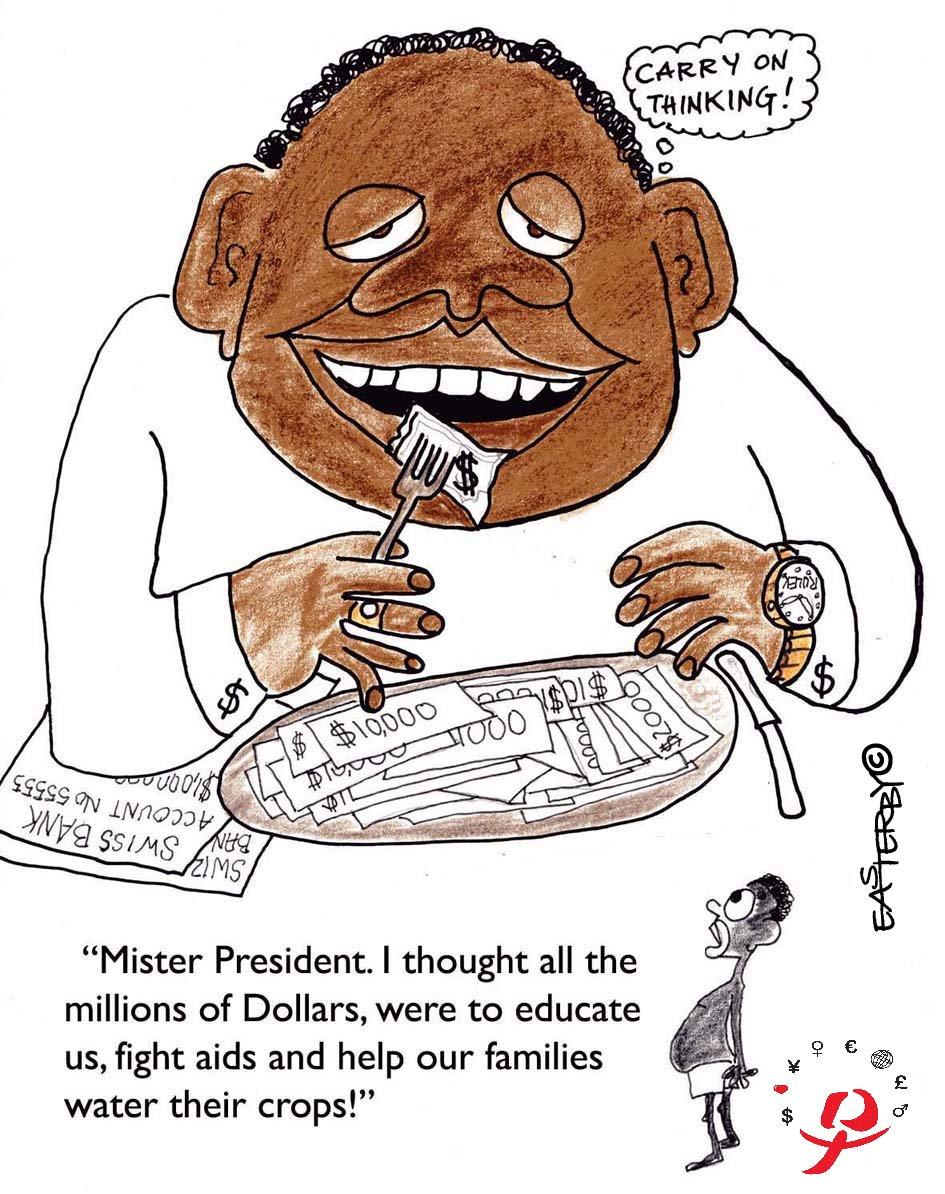
@wtwfinance Designed Derek Easterby

@wtwfinance
Designed Derek Easterby

Iran Opens: US Gets Caviar, EU Gets Everything

Julian Hattem and Devin Henry write:  U.S. companies won’t be rushing in to do business in Iran, even once the terms of the landmark nuclear accord go into effect.

Lawmakers have been unable to kill the terms of the agreement on Capitol Hill, but lingering sanctions and the threat of new action will prevent the vast majority of American companies from setting up shop in Iran — even while their foreign competitors race in.

In fact, except for caviar, carpets and a few other specific areas, the U.S. economic relationship with Iran won’t change much at all.

The nuclear deal lifts sanctions on Iran’s oil and financial sectors in exchange for limits on its ability to build a nuclear bomb.

The vast majority of U.S. sanctions, however, will only be lifted on foreign companies — not American firms.

Once regulators certify that Iran has taken a number of steps to shut down its nuclear program — which won’t happen for a few months — some industries will have a small amount of flexibility.

The most notable is civilian aircraft materials, of which Iran is in desperate need.

 The U.S., in return, will allow imports of Iranian carpets and foodstuffs including caviar and pistachios. Those shipments serve a symbolic purpose but aren’t likely to have a transformational effect on the Iranian economy, analysts said.

In any case, corporate America doesn’t appear to be chomping at the bit to rush in to Iran, which may be in part due to the threat of new sanctions from Congress..

While many American firms will be on the outside looking in at Iran, the deal will lift most United Nations and European Union sanctions on Iran, which could open the floodgates for foreign firms..

The main target of that foreign activity is likely to be energy, though the degree to which American firms get in on the game remains a question mark. 

Federal analysts say the country has up to 30 million barrels of oil in storage and could grow its production by up to  700,000 barrels a day once sanctions are lifted. 

Iran’s oil minister said in May that “we will witness involvement” of American firms once that happens, but even companies bullish on the prospects aren’t moving quickly to confirm their involvement. 

Royal Dutch Shell told The Hill in May that the company is “interested in exploring the role Shell can play in developing Iran’s energy potential,” but a spokesman Wednesday said only that that position still stands. 

Sen. Bill Cassidy (R-La.), a member of the Senate Energy and Natural Resources Committee, said he doesn’t expect many U.S. companies to join the parade to Iran, citing uncertainty about the stability of the country’s legal system and its lax environmental regulations. 

But other countries, Cassidy predicted, are ready to move in when they can. 

“The Chinese are going to be the ones who benefit the most in terms of trade, and then the Russians and then the Germans,” he said. “I don’t think the American companies would be anywhere close to it.”

“This is an incredible deal — if you’re in another country, starting with Iran.”
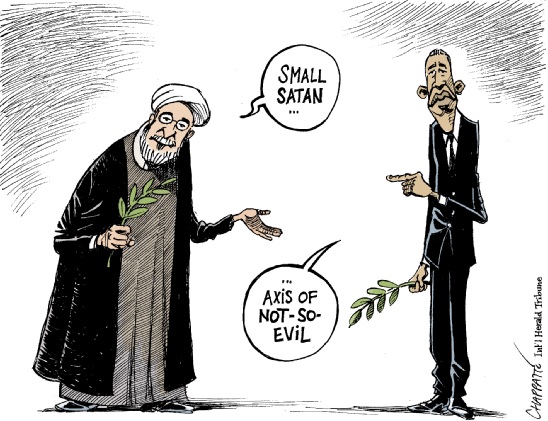
Iran Opens?