Bankers: Don’t Chat for the Record

Matt Levine notes:

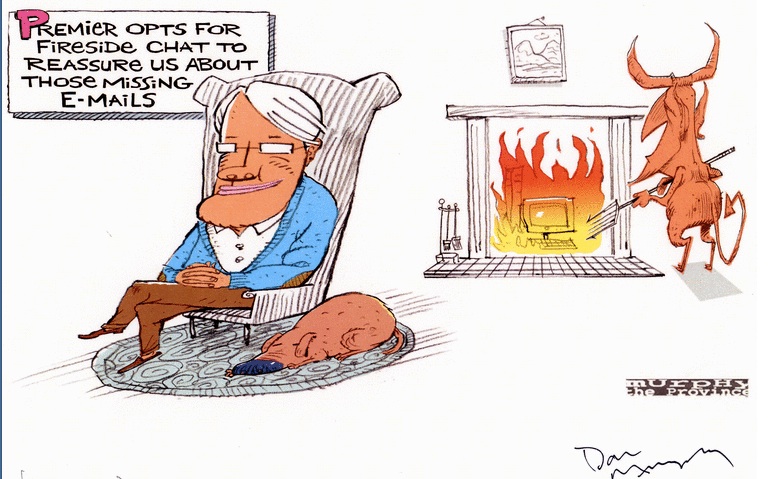
Deutsche Bank, like a lot of big banks, had a culture in which it was viewed as okay to manipulate Libor submissions to help its derivatives positions and/or to make itself look healthier. They were fined $2.5 billion.  The size of the fine was more closely related to the number and dumbness of the electronic chats than it was to any particular economic analysis.

Deutsch Bank accidentally lost some of its chats, which means that, if it paid $X million per embarrassing chat, it probably underpaid. Of course, lots and lots and lots and lots and lots of bad conversations are never preserved electronically, because they happen in person (or on unrecorded phone calls), and it seems weird to worry too much about these lost chats.

WIll Deutsch Bank be further fined for the lost chats?

Libor Chats?

Feminist Alert: Banking Pillow Talk Dangerous

Michael Gillard: The inner sanctum of the Bank of England was penetrated by a “powerful criminal network” linked to money laundering, terrorism, and contract killings, according to the police and MI5 investigation.

Detectives tapped the mobile phone of a Ferrari-driving businessman suspected of laundering money “on a vast scale” for organised crime gangs and reported hearing him receiving secrets from inside the Bank.

Although police warned senior bankers that a mole was passing inside information to a businessman connected to organized crime, the leaker was never identified, no one was sacked, and the businessman remains at large.

The Bank of England is now facing serious questions about how gangsters gleaned Britain’s most closely guarded financial secrets and how the public can be confident no such breach will occur again.

In 1998, detectives reported that they had eavesdropped on a high-rolling young stockmarket speculator receiving highly sensitive information about the bank’s monetary policy committee (MPC).

The committee meets in private each month to set Britain’s base rate of interest, which affects every aspect of the country’s economy, and the confidentiality of its deliberations is sacrosanct. Policymakers are made to sign a “declaration of secrecy” and are subject to “strict purdah rules” before decisions about interest rate changes are announced publicly. It is not suggested that the leak came from a member of the MPC.

But the businessman was believed to be exploiting a sexual relationship with the wife of a Bank of England insider to garner tip-offs about upcoming changes that could be used to gamble on the financial markets.

The threat to national security was deemed so severe that the investigation was swiftly taken over by spies at MI5, and the affair has remained a closely guarded secret for years.

A Bank of England source confirmed that in 1998 it was alerted to sensitive police intelligence that “two people were talking about inside access to the Bank’s information”.

Leaking monetary policy stuff would have been, and still is, a hanging offence,” and an immediate internal inquiry was launched. But it failed to identify where the leak was coming from, so no action was taken and the case was closed.

Listening to Secrets?

Disappearing Domestic Help

A small but growing number of domestic helpers have absconded while overseas with their employers. The names of families and helpers involved have been changed.

Few statistics are available to quantify the situation in Britain, the US and Canada, but families who have experienced it in Britain say police there report it is a common occurrence..

Getting a visa for a domestic helper in Western countries can be difficult, amid fears they will abscond or fall prey to trafficking.

While the process varies from country to country, typically the employer must show a work contract and a significant work history, and the helper must prove strong ties to Hong Kong and their home country to allay concerns.

During the application process, consular staff also advise helpers on their rights, which can include being paid the minimum wage in the country they vis

When a family discovered their helpl was missing, they worried that she may have been injured. One day the help stayed at home while the family went out. But when they returned about 90 minutes later, she was gone.

Police found CCTV footage that showed her walking towards a nearby railway station.

“Then we were angry because we just didn’t see it coming.

“The police weren’t shocked and said this happens a lot.”

In another case, Michael and his wife were caught off guard in 2009 when their helper – who was hired in Hong Kong and moved with them to Dubai – ran away from a London park.

“She wanted to use the toilet and she was never to be seen again,” Michael said. Police told them such cases were common.

Advocacy groups for domestic workers in Hong Kong said they had not come across such cases, while the Immigration Department had no figures on domestic helpers absconding. But foreign consulates in the city do appear to be taking the matter seriously, as reflected in a tough approach to visa issuance.

Philip Kelly, director of the York Centre for Asian Research in Canada, who has studied labour migration trends for Filipino immigrants, said it was rare for helpers “to run away … simply to take advantage of greener pastures or better employment prospects”.

Disappearing Domestic Help

Entrepreneur Alert: Poland’s Hot Video Games

Poland’s new ambassador is a scar-faced hit man armed with two swords and potions against monsters and dragons. His name is Geralt, hero of a Polish role-playing video game bewitching the world.

The cover of The Witcher 3, featuring lead character Geralt.

The Witcher is the brainchild of CD Project Red, one of a growing number of cutting-edge Polish IT firms out to dominate global gaming. It sold four million copies of the game worldwide within two weeks of its May 2015 release. Two earlier instalments in the Witcher series have sold some eight million copies since hitting the market in 2007 and 2011.

 “The Witcher 3: Wild Hunt is one of the best games ever made,” said website Gamespot of the game, which is the top seller in most of the 109 countries where it was released.

 “They created the largest open world in the history of video games and filled it with realistic dialogue and characters that are full of life,” said leading Polish game developer Pawel Miechowski of the game’s creators.  “Plus the graphics are staggering.”  Video Games in Poland

thisispoland

Hong Kong: Political Water Fight

Lead in water   The competition between political parties rushing to test for tainted tap water descended into another fight yesterday in the run-up to the district council elections in November.

A number of Hong Kong’s housing estates found themselves at the centre of a tainted water scandal after tests commissioned by the Democratic Party in June 2015 showed that samples taken from tap water in Kai Ching Estate in Kowloon City contained amounts of lead exceeding WHO standards. Subsequent tests by the government showed water samples from at least two other public estates, in Kwai Chung and Sha Tin, also contained excessive lead.

Water Fight

Greeks Should Begin Producing Again

James Surowiecki talks to eonomist Yannis Ioannides:  There has been a demand for reforms in Greece, but reforms work best when the level of trust is high. The Greek state has a poor reputation among its citizens.  It’s one reason why there is such a high rate of tax evasion.  Opening up the Greek economy would benefit ordinary citizens.  Current regulations serve mainly the wealthy.

Most import, the Greeks have to begin to produce again and export.  Tsipras should focus not on what the Europeans are not going to do, but on what the Greeks can do.  Tsipras should make it easier for young Greeks to find jobs and start businesses.

Tsipras did not run on this platform, but he should lead on it.

Greece Saved?

Caracas Warehouse Seized to Convert to Housing

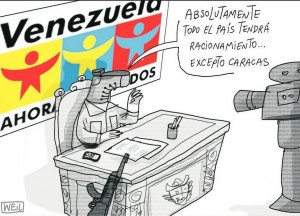
Anatoly Kurmanaev and Andrew Rosati write:  Venezuelan soldiers seized a food distribution center rented by companies including Nestle SA, PepsiCo. Inc and Empresas Polar SA in Caracas as the government looks to boost support ahead of elections.

The companies were given two months to remove equipment and stock at the La Yaguara industrial park, which will be converted to social housing, workers said. Several dozen workers of Polar, the largest Venezuelan food company, remain on the premises in protest against the expropriation.

President Nicolas Maduro in recent months has stepped up attacks on the private sector, which he accuses of profiteering and sabotage, as his popularity wanes ahead of the Dec. 6 congressional elections. He has blamed Polar and other private food companies for the chronic shortages of basic products and spiraling inflation, while maintaining currency and price controls that have made most of national production unprofitable.

Government ‘Terms’

“This is a scare tactic to get private companies to cooperate with the government ahead of the elections: helping them keep the right stores supplied and work on their terms,” Risa Grais-Targow, Latin America political analyst at consultancy Eurasia Group, said by telephone from Washington. “I think the government understands that taking over a company like Polar will create dangerous social dynamics.”

Carmen Arreaza, a 51-year-old elementary school teacher, and a few dozen other government supporters gathered in front of the warehouse to demonstrate support for the expropriation.

The government had first notified the landlord of plans to expropriate the industrial park in 2013, Nestle spokesman Andres Alegrett said by telephone from Caracas on Thursday. Nestle used the facility to dispatch about 10 percent of its products in the country, supplying sweets and drinks to the western side of Greater Caracas, he said.

“We are working to redirect the products to other facilities across the country,” Alegrett said.

It remains unclear whether the companies will keep the merchandise in the affected warehouses, Polar’s planning manager Douglas Vielma said Thursday afternoon.

The La Yaguara industrial park is also being used by U.S. grain trader Cargill Inc., Mexican bottler Coca-Cola Femsa SAB and industrial gases supplier Praxair Inc.

Warehouse Seizure.

Entrepreneur Alert: Iran Open for Business?

If sanctions are lifted, business will go back to normal in Iran.  It will take a year, but if this deal goes through, carpets that will exported again.  This is a half a billion dollar business.  In the past, even if you could figure out how to export, the importer could not find a bank to take your money.  SWIFT, the international money transfer system, could not deal with money to or from Iran.  Practically speaking, transactions have to become routine.

The prospect of doing business in America are tantalizing.

Iran experienced its worse period from 2010 to 2012.  Inflation went through the roof to 40 percent.  Unemployment to 14 percent.

Sanctions limited trade significantly.  From medicine to laptaps, you could buy these goods through smuggling. The prices were exorbitant.

Oil revenues were cut.  Shipping companies could not bring goods into ports.

Businesses are lining up to get into Iran, the biggest untapped market currently.

Iran Opens


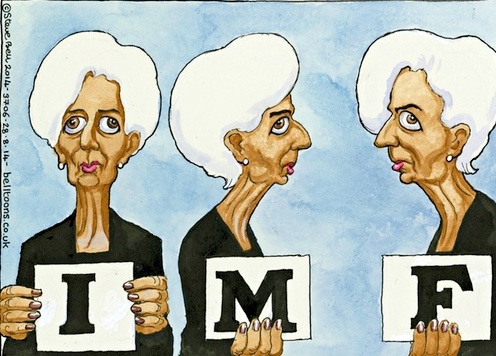
Lagarde Surveys the World

Lagarrde says the world economy is recovering but fragile and “faces some downside risks.”

There is growing acceptance among Greece’s creditors that a restructuring of the country’s debt is inevitable, but only if Greece takes ownership of the bailout program by passing tough budget cuts and deep economic overhauls.

Greece has long bristled under Lagarde’s demands for politically unpalatable structural reforms — and this time is no different. During negotiations earlier this month over Athens’s latest bailout, Greek officials tried to boot the IMF from the so-called troika of creditors that also includes the European Commission and the European Central Bank.

Lagarde said that emerging markets are better prepared for the first Fed rate hike, having learned lessons from the taper-tantrum in May 2013.

She said she was pleased that Yellen has stressed that the timing of the first rate hike depends on the economic data.

Lagarde

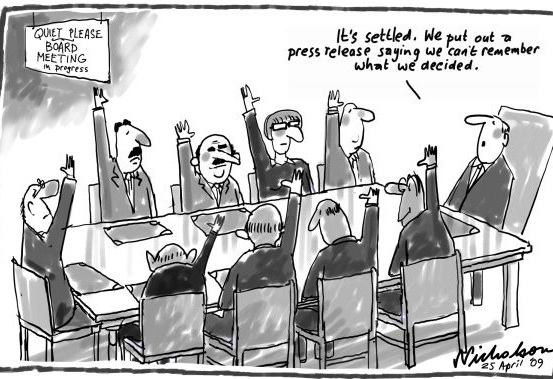
Outside Board Members?

Noah Smith writes:  More than a dozen years ago, the U.S. experienced a rash of high-profile accounting scandals. Now it’s Japan’s turn. Toshiba, one of the country’s largest technology firms and an internationally respected brand, revealed that it had systematically overstated its operating profits to the tune of about $1.2 billion during a seven-year stretch. The company’s chief executive officer, a number of other high-ranking executives and half of the company’s board has resigned.

The Toshiba scandal isn’t the first big case of Japanese corporate fraud to come to light in recent years. In October 2011, CEO Michael Woodford (no relation to the economist of the same name) blew the whistle on accounting fraud at his own company, optical equipment manufacturer Olympus. The fallout from that debacle is still unfolding. 

The first takeaway from these scandals is that there will probably be more of them. The consensus is that they happened because of problems with Japanese corporate culture. In both cases, observers have blamed secretive and autocratic management styles by top executives, as well as the generally hierarchical, closed nature of Japanese business. But the real problem is corporate governance itself. 

In Japanese companies, boards are almost always made up of people who work for the company. This provides a strong incentive for empire building in which managers try to expand market share — and their own perks and privileges — instead of profitability or shareholder value. Basically, Japanese managers can run companies like their own private fiefdoms.  

That style of management looked OK when market share was rocketing upward in the 1970s and 1980s. But since the Japanese economy slowed and international competition intensified, its flaws have taken a heavier toll. Japanese white-collar productivity is horribly low relative to other advanced nations, and its companies have traditionally been far less profitable than those in the West. 

It is worrying to see accounting fraud at a company such as Toshiba. Toshiba is one of Japan’s star performers, an internationalized company that has been disciplined by global competition. 

In the U.S., the accounting scandals of the early 2000s in companies such as Enron and WorldCom resulted in the Sarbanes-Oxley Act, a harsh crackdown that many cite as a reason for the reluctance of companies to list themselves on public exchanges. But in Japan, there is the hope that the response will be a different kind of reform — improvement of corporate governance in general. 

The administration of Prime Minister Shinzo Abe recently introduced a new corporate governance code that requires outside directors on boards and encourages a focus on shareholder value. In parallel to this effort, the government should continue trying to cut ties between Japanese companies and the Japanese mafia. Another thing it should do — which hasn’t, to my knowledge, been proposed — is to stop making entertainment expenses tax-deductible. 

There is the hope that the accounting scandals are a bad sign for the short term but a good sign for the long term. If all goes right, problems that are exposed today will be rooted out tomorrow. 
Who's On the Board?