How Student Loans Adversely Effects College Tuition

Senator Elizabeth Warren has been a vocal, if unsuccessful, advocate for higher-education reform. So far her efforts have either been unrealistic—such as her proposal to reduce student loan interest rates to below 1%—or insufficient, such as her push for student loan refinancing. But in a speech last week, Warren outlined a higher-education agenda that’s ambitious, prudent, and potentially game-changing.

Our national student debt problem has a clear cause: the inflation-outpacing, federally abated rise of college tuition. The Department of Education provides students aid on the basis of their college’s cost of attendance, meaning colleges can raise prices knowing that the federal government will simply increase aid awards.

Warren is likely the most prominent Democrat in recent memory to acknowledge these backwards incentives. “Conservatives are right,” she said. Colleges take advantage of the “availability of guaranteed federal loan and grant dollars” to raise tuition prices. She suggested that most colleges are completely unaccountable, since the federal government’s generosity ensures that “there’s far less pressure to hold costs down or to ensure that their services are worth the price.”

Warren understands that reform must take aim at the problem’s root causes, and that the way to ease student debt burdens is not simply to offer students more funding, but also to change the way we invest in colleges and increase college accountability.

In addition, Warren called for greater accountability from the Department of Education. Noting the department’s frequent failure to respond promptly to data requests and its infrequent testimony before Congress about student debt, she argued that the it must be more forthcoming. Conservatives concerned with government transparency can get behind this proposal, too.

These ideas would certainly help improve the federal government’s return on its investment in higher education. But Warren and like-minded conservatives could go even further. While these proposals would ensure that schools spend their federal aid dollars wisely, it’s worth questioning whether schools should receive a federal guarantee at all. In that vein, Congress might consider making more generous federal aid awards contingent on a school’s graduation and loan-repayment outcomes. Congress could also delink aid awards from the cost of attending a specific college and tie them to an industry-wide cost of attendance, thereby removing the individual subsidy colleges receive.

Warren argued for increasing and making mandatory Pell Grant program spending to give poor students “a real chance at college.” While conservatives might squirm at the prospect of another mandatory spending program, they can certainly support the goal of promoting social mobility through higher education. Moreover, they might note that Congress can also help the poorest students by rededicating funding for programs designed explicitly for students with “exceptional financial need”—such as the Perkins Loans and Federal Supplemental Education Opportunity Grants—that policymakers have slashed in the recent decades.

There’s fertile ground for bipartisan higher-ed reform. Conservative policymakers such as Senator Lamar Alexander and institutions such as the American Enterprise Institute already champion ideas similar to hers. Republicans and Democrats should seize the opportunity.


Cost of Higher Education

Tackling Corruption in Romania

Romania and Bulgaria rank as the most corrupt countries in the European Union. On the birght side,the National Antit-Corruption Directorate in Romania arrested officials in 2014.

In June, the Primat Miinister Victor Ponta was charged with forgery and conflict of interest. This step may be a Catch 22, because it could force his Social Democratic Party to stay away from passing anti-corruption laws in order to keep him out of prison.

Ponta is reported to have received unaccounted consulting fees and forged documents.  It is relatiively small peanuts compared to other corrupt operatives in Romania.  Even if it turns out to be a bad move, it certainly draws attention to the problem of corruption in the country.

Corruption and the Ballot Box


Entrepreneur Alert: Fashion in Saudi Arabia

Sungllasses women are allowed to wear and lacy underwear not seen but enjoyed.  High fashion items rocket in Saudi Arabia.

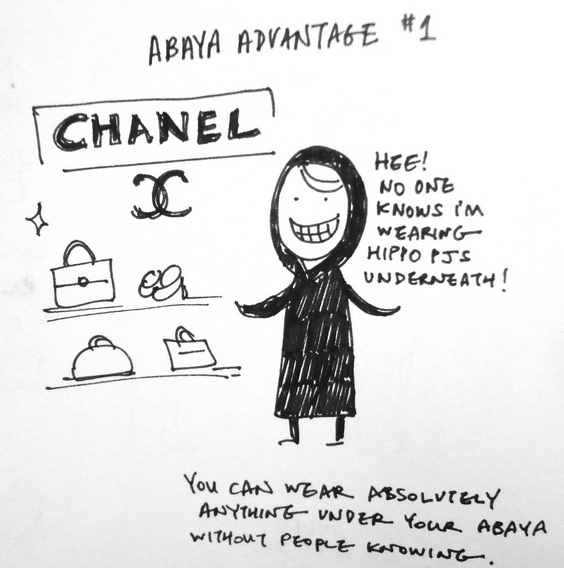
Abayas no longer need be black.  Wahhabi approved abayas include designs and bright colors to fit the occasion.  Flashy shoes and handbags are permitted.

Catwalk shows have now been banned in Saudi Arabia, although men can model clothes.

Is there an entrrepreneurial opportunity here for inventive women who don’t have to skirt Wahhabi laws?

Designer Abayas

Dynastic Women Succeed in South Asia

Indira Ghandi and Benair Bhutto became Prime Ministers because they were part of important political families.

On the ground, women have a tougher time in South Asia than thtey do anywhere else in the world.  According to a report by Save the Children, a British organiation, the Asian subcontinent rates lowers in infant mortality, children’s survival and women’s access to politics.

While Sheikh Hasina, the Prime Minsiter of Bangladesh, is proud of her founder father, she is still spoken off with disdain by Prime Minister Modi.  He remarked, after he said she was tough on terrorism, “despite the fact that she is a woman.”

In Sri Lanka, where a daughter has succeeded a mother, women still find it difficult to go into business and succeed.

Modi came to office without acknowledging his wife, who he was forced to marry as a teenager and has never lived with.  He rushed to his mother’s side when he was elected, but he appears to find women’s presence uncomfortable.

Yet India is a good place for women to find their place in the sun because it is a dynamic and growing country.  Perhaps Modi can use all his talents to help them.

Modi and women

Tsipras’ Choice: Love or Debt Deal?

On this side of the pond we hear plenty about the Greek debt crisis, Tsipras, his finance minister, Lagarde, Merkel, the European Central Bank and drachmas.

But at the heart of Prime Minsiter’s Tsipras’ unwillingness to make a dea with Greek’s creditors is his partner and mate, Tsipras says his partner will leave him if he settles with Greece’s creditors.

Betty Baziana and Tsipras fell in love in grade school.  They have never married.  They have two chidren, one of whom is named after Che Guevera.

When they met, Tspiras was interested in sports, Betty in politics.  She is extremely accomplished:

Peristera Baziana (Betty) received her Dr.-Ing. degree in Electrical and Computer Engineering from the National Technical University of Athens (NTUA), Greece in 2008. Since 2002 she has been a research fellow of the NTUA, while during the period 2000-2002 she was a research fellow of the University of Patras, Greece. Her research interests include optical communications, optical networks architectures and transmission protocols, analytical modeling and optimization, and telecommunication systems simulation. She has more than 35 publications in international journals and conferences with reviewers, related to these fields. Also she has supervised many diploma theses. As a seconded teacher of Informatics, during the period 2014-2015 she has been a laboratory assistant at the School of Electrical and Computer Engineering, NTUA, Greece.

Is Tsipras choice really betwen love and a deal?

Tspipras and Partner

33 Billion Withdrawn from Greek Banks Since October

Three billion euors have been withdrawn in the last week from Greek bank accounts. There are no long lines and no signs of panics.

Tsipras is in Russia meeting President Putin.

Step one might be the withdrawal of Greece from the euro, but not the eurozone.

The outcome of the potential drachma drama is unclear.  ECB provides 3 billion to get through the weekend.

Euro and Drachma


Consistency in US Sanctions?

Julian Pecquet writes:  The State Department (State) is three years late in slapping certain sanctions on Iran, prompting new allegations that the Barack Obama administration is deliberately skirting US law in its quest for a nuclear deal.
Under the Iran, North Korea and Syria Nonproliferation Act (INKSNA), State is supposed to inform Congress every six months of attempts to help the three countries obtain weapons of mass destruction and certain missile technology. The law requires the agency to sanction violators or justify its decision not to.
But the department has fallen way behind in recent years.  Delays have kept on getting longer, with Congress receiving an update on violations committed in 2011 only in December 2014.

The State Department acknowledges the delays but faults a complex web of agency reviews to make sure allegations of violations are substantiated. Republicans, however, are jumping on the report as further evidence of the Obama administration bending over backwards to placate Tehran.

The GAO report is but the latest example of questionable sanctions enforcement that has raised congressional ire in recent months. A panel of experts for the UN’s Iran sanctions committee said that member states have not been reporting international sanctions violations by Iran. That’s despite widespread evidence of continued arms shipments to Syria, Lebanon, Iraq and Yemen in addition to Hezbollah and Hamas.
.
The US ambassador to the UN, Samantha Power, disputed that account in testimony before the House Foreign Affairs Committee on June 16.

“There’s a direct correlation between this administration not wanting to sanction anyone or any violation and their lack of reporting on those violations,” she said. “And it’s sending a signal to the international community that the United States is not serious about any of our sanctions, that if you talk to the right folks at certain agencies and get a pass.”

Effective Sanctions?

Entrepreneur Alert: Turkey’s Rule of Law Slipping

Pinar Tremblay writes:  The World Justice Project’s Rule of Law Index for 2015 reported on June 3 that Turkey has fallen 21 places. In its 2014 report, Turkey had ranked 59th among 99 countries. In 2015, it was ranked 80th among 102 countries. The study came out just a few days before the June 7 elections, and when only a handful of opposition media outlets published the news in Turkish, it caused no uproar.

But the findings of this comprehensive study are crucial:

Turkey worsened in 2014 and again in 2015. The World Justice Project explains its four principles, nine factors and 47 subfactors in gauging the rule of law. All countries are measured individually and then grouped into regions. Turkey is situated in the Eastern European and Central Asian countries. Out of 13 countries in its region, Turkey ranked sixth in 2014, and fell to 12th place in 2015.

Focusing on the data from Turkey, since 2012 the project has observed Turkey doing relatively well in regulatory enforcement and its civil justice system. However, its performance has been struggling on fundamental rights and government accountability. In 2015, Turkey ranked at the bottom, 13th, in its region and 96th among 102 countries in the fundamental rights category

Turkey has deficiencies in the functioning of the auditing system and political interference within the legislature and the judiciary have been reported as the major failures. Nongovernmental oversight by the media or civil society also regressed significantly in 2015.

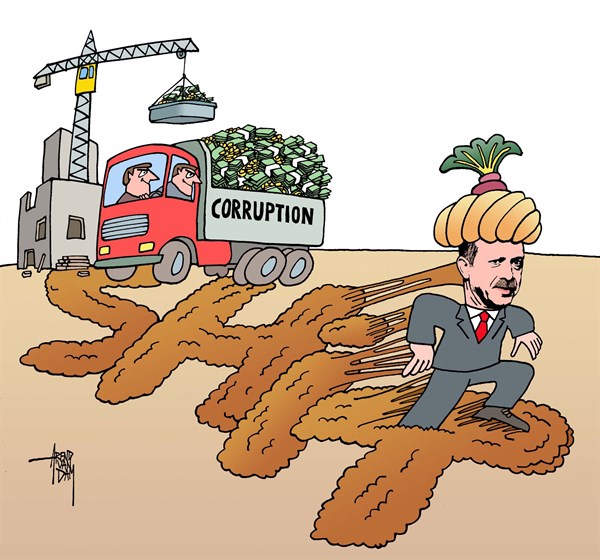
.Though Turkey was rocked by corruption scandals in 2014, it still fares best in the main category, “absence of corruption.”  Lawyers in particular complained that Turkey has a high rate of arrest and trial, but a rather low rate of prosecution because suspects can be arrested and sent to court without adequate evidence. The number of politically charged cases has increased tremendously since the battle to cleanse the bureaucracy of Gulen movement members. There are lists, rumors of lists and more lists coming through, alleging certain people are members of the movement and should be charged.

Metin Feyzioglu, chairman of the Turkish Bar Association said  the major problem is the arbitrary enforcement of the law.  Turkish researchers and scholars have also found similar matters — interference by the government into the judiciary and a lack of independent auditing — to be sore spots in Turkish legal system.  The long suspected truth is that 12 years of AKP rule have not been such a success after all. For example, the UNDP Human Development Report indicates that even during the 1990s, a notorious decade for Turkey, saw higher development rates than the AKP era.

An entpreneur has to ask: is this a good country to do business in?

Corruption in Turkey?


Regulating Wall Street?

Erica Orden writes:  The search to replace New York’s former top financial regulator,Benjamin Lawsky, has attracted the involvement of one of the banking industry’s harshest critics: U.S. Senator Elizabeth Warren (D., Mass.).

In recent weeks, Ms. Warren has placed calls to top staffers for New York Gov. Andrew Cuomo and others assigned to identify a successor to Mr. Lawsky, according to a person with direct knowledge of the search process. Ms. Warren’s advice: Tap Rohit Chopra, the student loan ombudsman and assistant director of the Consumer Financial Protection Bureau, which she helped start up and initially ran.

On Wednesday, the CFPB said Mr. Chopra would be leaving the bureau next week. Neither the bureau, nor Mr. Chopra, in a letter to the Treasury secretary, said what he planned to do next.

A spokeswoman for Ms. Warren didn’t comment on whether the senator has placed calls to the Cuomo administration or others on Mr. Chopra’s behalf, but pointed to a Facebook post from June 1 in which Ms. Warren endorsed the notion of Mr. Chopra succeeding Mr. Lawsky.

“He is smart as a whip, independent, hard-working, and loaded with integrity,” Ms. Warren wrote. “The New York banking superintendent is an important overseer of Wall Street, and I think Rohit would be phenomenal in that role.”

Cuomo and Wall Street

Restructuring Debt

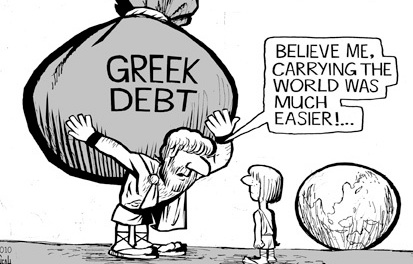
Joseph E. Stiglitz and Martin Guzman write:  Governments sometimes need to restructure their debts. Otherwise, a country’s economic and political stability may be threatened. But, in the absence of an international rule of law for resolving sovereign defaults, the world pays a higher price than it should for such restructurings. The result is a poorly functioning sovereign-debt market, marked by unnecessary strife and costly delays in addressing problems when they arise.

So the question of how to manage sovereign-debt restructuring – to reduce debt to levels that are sustainable – is more pressing than ever. The current system puts excessive faith in the “virtues” of markets. Disputes are generally resolved not on the basis of rules that ensure fair resolution, but by bargaining among unequals, with the rich and powerful usually imposing their will on others. The resulting outcomes are generally not only inequitable, but also inefficient.

Greece’s debt restructuring in 2012 is a case in point. Excessive penalties lead to negative-sum games, in which the debtor cannot recover and creditors do not benefit from the larger repayment capacity that recovery would entail.

The absence of a rule of law for debt restructuring delays fresh starts and can lead to chaos. Sovereign-debt restructurings are even more complicated than domestic bankruptcy, plagued as they are by problems of multiple jurisdictions, implicit as well as explicit claimants, and ill-defined assets upon which claimants can draw.

A new framework should include clauses providing for stays of litigation while the restructuring is being carried out. It should also contain provisions for lending into arrears: lenders willing to provide credit to a country going through a restructuring would receive priority treatment. Such lenders would thus have an incentive to provide fresh resources to countries when they need them the most.

There should be agreement, too, that no country can sign away its basic rights. T

This is particularly important because of the tendency of financial markets to induce short-sighted politicians to loosen today’s budget constraints, or to lend to flagrantly corrupt governments such as the fallen Yanukovych regime in Ukraine, at the expense of future generations.

This means that regulation of sovereign-debt restructuring cannot be based at the International Monetary Fund, which is too closely affiliated with creditors (and is a creditor itself). To minimize the potential for conflicts of interest, the framework could be implemented by the United Nations.

The crisis in Europe is just the latest example of the high costs – for creditors and debtors alike – entailed by the absence of an international rule of law for resolving sovereign-debt crises.

Greek Debt