Fracking: Can it be done with Care?

Mark Drajem and Jim Snyder write:  Hydraulic fracturing has contaminated some drinking water sources but the damage is not widespread, according to a landmark U.S. study of water pollution risks that has supporters of the drilling method declaring victory and foes saying it revealed reason for concern.
The draft analysis by the Environmental Protection Agency, released after three years of study, looked at possible ways fracking could contaminate drinking water, from spills of fracking fluids to wastewater disposal.

“We conclude there are above and below ground mechanisms by which hydraulic fracturing activities have the potential to impact drinking water resources,” the EPA said in the report. But, “we did not find evidence that these mechanisms have led to widespread, systemic impacts on drinking water resources.”  The study was commissioned by Congress and represents the most comprehensive assessment yet of the safety of fracking.

Thomas Burke, the EPA’s top science adviser,said “the number of documented impacts on groundwater resources is relatively low.” Still, it’s not accurate to say that there have been no cases of contamination.

The American Petroleum Institute, an industry trade group, said the study was a validation of the safety of fracking. It said it showed existing oversight from state regulators is working..

“The process of fracking itself is one risk factor. But in fact it’s not the biggest one,” said Mark Brownstein, vice president of the Environmental Defense Fund. “Ongoing physical integrity of the wells and handling the millions of gallons of wastewater coming back to the surface after fracking, over the lifetime of each well, are even bigger challenges.”
Amy Mall, a senior policy analyst for the Natural Resources Defense Council, said the study provides “solid science that fracking has contaminated drinking water across the country.”

Mall said, however, that a lack of cooperation from industry meant EPA lacked key data necessary to fully assess its safety.
Another environmental group, Earthworks, said EPA analysis points to the need for regulation.

The EPA said as many as 30,000 fracked wells were drilled annually between 2011 to 2014, as oil production reached its highest level in more than three decades.
“People in favor of drilling will see this as vindication,” said Rob Jackson, a Stanford University professor who has tested drinking water near fracking sites in Texas, Pennsylvania and other states. “People opposed to it will see this as a whitewash.”
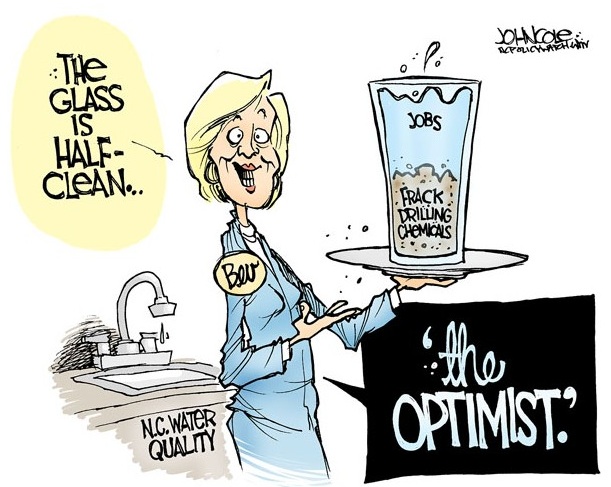

Fracking

Influence of “Never-Ran” Warren

“Never-ran” Warren is fiery and fierce. She made her name nationally through her dogged and fearless attacks on big banks and financial institutions. Outside of the presidential campaign, the Senator can keep that role — the symbolic embodiment of economic populism — and continue to target the financial elite who perpetuate dangerous and abusive inequality. From her pulpit as America’s most popular populist, Warren can hold candidates from both parties accountable.

As a “never-ran,” Warren can speak about the issues she cares about, without worrying about how she’s polling against her opponents. Just recently, she spoke out against the President on his big trade bill, and questioned Hillary’s coziness with Wall Street. That’s not to suggest that Warren, like any politician, ignores polling. But, intensity and impact of such calculations is ratcheted up when you’re actually running for office. If Warren isn’t a presidential candidate, she can be a conscience for all those who are.

Warren can also focus on the Republican coterie — by keeping issues in the debate so they’ll have to address them. At a time when our economy is recovering and corporate profits and elite incomes are growing faster than ever, wages for ordinary Americans are stagnant or declining. This is a real crisis that transcends political parties, and yet the simple fact is that only one party, the Democrats, is really talking about it.

Ordinary conservative voters are concerned about inequality, especially when it comes to their own bank balances and their children’s futures. (Remember, the Tea Party originally rose up in response to government bailouts of big banks, a populist grumbling if ever there was one.) But, mainstream Republican candidates for president aren’t likely to talk about inequality and economic populism. They need pressure, and as a “never ran,” Elizabeth Warren can provide it. As long as she’s out there speaking loudly about inequality, the issue will stay in the national debate — and any serious candidate will be forced to comment.

When Warren said she wasn’t running, she meant it. (Unlike just about everyone else, for whom saying “I’ll never run” is virtually the same as declaring.) Rather, the “Run Warren Run” campaign reflected a true grassroots groundswell of progressive and independent voters inspired by Warren’s populist ideals and tenacity.

In a political system that feels increasingly theatrical — an uneventful show paid for and put on to preserve the power of the monied elites — Elizabeth Warren feels like a breath of fresh air, a fed-up and fired-up truth-teller who seems to be channeling the hearts and minds of average voters from across the political spectrum. As such, Warren is almost too good for politics — and definitely too good for the race for president. That’s why we’re so looking forward to her not running.

Never Ran Warren

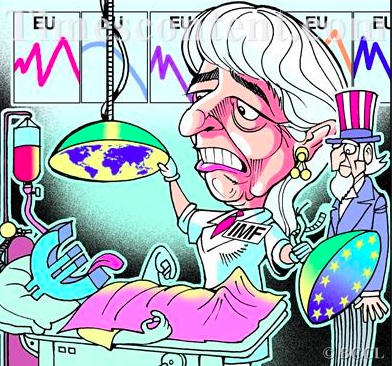
IMF Bulletin to US Fed: Hold Rates Steady

IMF managing director Christine Lagarde said the Federal Reserve should wait to see “more tangible signs of wage or price inflation”.

The IMF believes that “pockets of vulnerability” in the US economy have emerged.

These could cause serious trouble for the wider economy, Ms Lagarde said.

“Deferring rate increases would provide valuable insurance against the risk of disinflation, policy reversal and ending back at zero policy rates,” the IMF’s report said.

And because of the global implications of a rate rise, communication from the Federal Reserve was vital, it added. The fund suggested monthly press conferences from the central bank. Currently they have six a year.

Many Washington watchers have predicted an interest rate rise this year.

But recent economic reports have been mixed, including data showing that the US economy shrank by an annualised 0.7% in the first quarter.

The IMF said this would “unavoidably pull down 2015 growth, which is now projected at 2.5%”. For 2016, the forecast is for 3%.

That is still better than Wednesday’s projection from the think-tank, the OECD, which cut its forecast to 2% for this year.

Ms Lagarde also said commented on the US dollar, saying the IMF believes it is moderately overvalued.

That marks a change compared with a previous assessment.

“Continued over appreciation is a potential risk and should not be discounted,” she said.

Women Make the Money in Male-Dominated North Korea

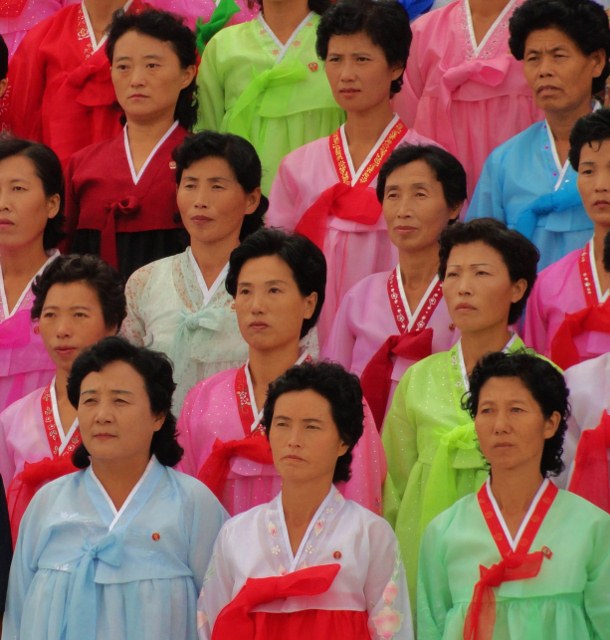
Females earn more than 70 per cent of the income, mainly as traders, in the country

North Korea is a militarised, male-dominated society, but it is women who are making the money as the insular nation allows an unofficial market-based economy to take shape.
Women earn more than 70 per cent of household income in North Korea, mainly as traders in the informal markets that have proliferated in recent years, research by the South Korean government-run Korea Institute for National Unification (Kinu) found.
That is despite women making up only about half of the 12 million economically active North Koreans, experts say.
Women make the money in male-dominated North Korea
North Korean Women

Irrational Man Investing?

Barry Ritholtz writes:  Behavioral economics is grounded in the idea that homo economicus (economic man) fails to account for real-world human behavior. The behaviorists argue that people are not rational; they don’t act narrowly in their own self-interest as profit maximizers. Instead, they are biased and emotional and often fail to make rational judgments about money.

In other words, the traditional starting point of economics is actually false. As a model, it helps conceptualize commerce, but in the real world it can be and often is wrong. This is where the behaviorists come in to show how peoples’ irrationality affects their decision-making. Specifically:

— We get too emotional about the possibility of making lots of money;

— We get too depressed about the risk of losing money;

— Our cognitive processes fool us constantly into believing things that are untrue;

— We have poor impulse control, an inability to think long term and lack patience.

Nowhere does behavioral economics promise to make you as a human being less irrational. At best, its goal is to inform you of your own irrational tendencies.

• Vanguard’s assets under management have at least tripled to more than $3 trillion since the end of the financial crisis. About two-thirds of those assets are in broad, inexpensive passive indices;

• Exchange-traded funds let investors gain broad exposure to almost any asset class in a single purchase at very low cost;

• Asset allocation can now be had for little cost or free via all manner of automated software-based advisers.

Rather than brainwashing investors, behavioral economics has helped create a set of investing alternatives that meet their financial benchmarks and cost very little.  That you may have chosen to ignore these alternatives and plunge into the latest fund of funds or private-equity offering isn’t a failure of behavioral economics; it is your own failure to apply what we now know about investing.

The basic premise of economics is that transactional commerce — the production, distribution and consumption of goods and services — is a key way to understand society. What behavioral economics has done is point out the false assumptions and erroneous conclusions inherent in the dismal science of economics.

Your wetware developed to keep you alive on the savannah, not to make risk-reward decisions in the capital markets. A secret brainwashing machine is unnecessary. You are not wired for investing. You never were. That is a feature, not a bug. But our brains have allowed our species to survive long enough to develop expensive, unnecessary financial products.

It is your job to figure that out. Behavioral economics can help.

Irrational Man

Does the Clintons’ Money Matter?

Daniel Halper writes:  Wealthy Americans who seek to amass political power have always been able to do so with relative ease, as long as they go about it with skill. Until recently, however, it has not been the case (as it is in many countries) that political power has been a precursor to, or a significant factor in, the accumulation of immense wealth.

Peter Schweizer in his important new book, Clinton Cash: The Untold Story of How and Why Foreign Governments and Business Helped Make Bill and Hillary Rich writes: When Hillary entered the Senate, and then the State Department, she became the one who had real power, rather than Bill.”

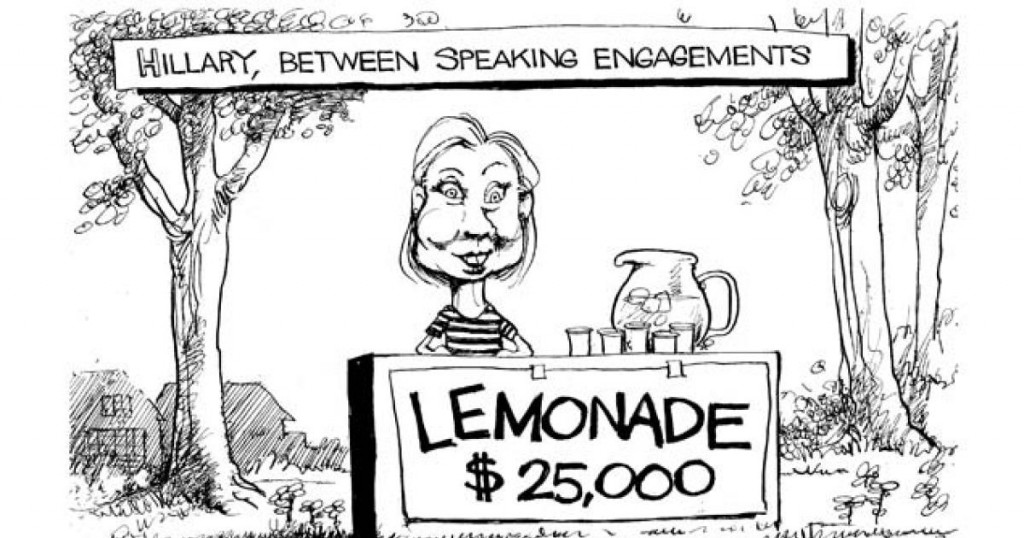
Schweizer sets out to provide a window into just how the former president and former secretary of state (and perhaps future president) left the White House “dead broke,” as Hillary Clinton claimed in a book-tour interview last year, before earning at least $136.5 million in the decade and a half since then.

Bureaucratic or legislative obstacles were mysteriously cleared or approvals granted within the purview of his wife, the powerful senator or secretary of state. Huge donations then flowed into the Clinton Foundation while Bill received enormous speaking fees underwritten by the very businessmen who benefited from these apparent interventions.

Sometimes the money would go directly to Bill Clinton’s personal bank account, other times to the family foundation. There was also the case involving the telecom company Ericsson, which invested in Bill Clinton’s biggest single payday: $750,000 for a 2011 speech in Hong Kong. A week after the speech, “the State Department unveiled its new sanctions list for Iran. Telecom was not on the list.”

There was Hillary Clinton’s push as secretary of state to have Russia buy airplanes from Boeing.   Two months after the American company and the Russians inked the deal, Boeing gave $900,000 to the Clinton Foundation.

Schweizer offers details about a financial windfall after Bill was befriended by those seeking to buy a share of America’s uranium supply and about how the former president helped give prominence and credibility to the strongman in Kazakhstan.

The majority of the examples Schweizer provides are of business conducted in countries ruled by despots. This is because, as he explains, “in places like Germany or Great Britain…business and politics are kept separate by stringent ethical rules and procedures, but in despotic areas of the developing world…rules are very different.”

But there is no definitive proof of any quid pro quo at work in this lawyerly book: Schweizer even allows that in certain instances, it may very well be pure coincidence

There is much talk that Mrs. Clinton would be a pathbreaking president should she win in November 2016. That would surely be true, but it would be as much for her innovations in blurring the lines between political power and personal economic gain as it would be for her gender.

Clinton Money

Greece: Can the Twain Meet?

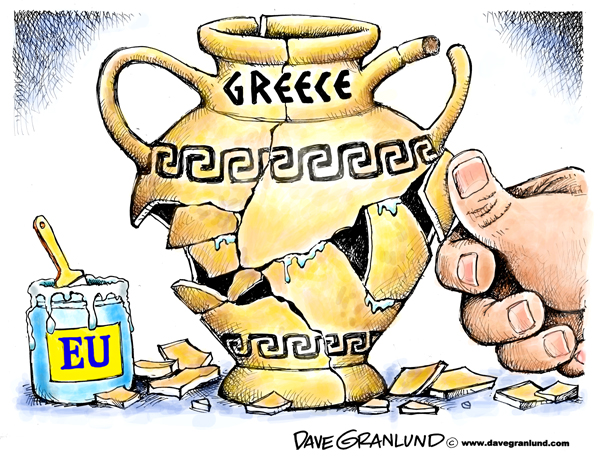
Matt Levine writes:  European leaders are working frantically with the International Monetary Fund to finalize their proposal on how to restructure Greek debt, though differences remain “over whether Greece can hit ambitious budget surplus targets to be included in an agreed text,” as well as over “whether they present their proposal to Mr Tsipras’ government during a meeting or a teleconference.” This being Europe, one official says that there was “at least a meeting of the texts; minds are probably further apart,” which is the opposite of how normal negotiations work.

Meanwhile, as the European leaders’ texts were being so agreeable, boom, Greece submitted its own proposal to its creditors.  “After submitting a complete proposal for a deal last night to institutions, we are not waiting for them to submit their own plan back to us,” Tsipras said. “Greece is the one that submits the plan.”

So to recap: Greece’s creditors have more or less worked out the text of the proposal to submit to Greece, though they don’t agree on what that text means, or on how to deliver it. And Greece has worked out its own unrelated proposal, and plans to ignore the proposal that the creditors have been slaving over, though I guess that would be easier to do by teleconference than in person? Anyway, everything seems super, carry on.

Color-Greece-debt-EU


Tackling Black Carbon

Keith Johnson writes:   President Barack Obama’s administration is taking plenty of heat from environmentalists after opening the Arctic to oil drilling by Shell. But the administration’s polar policy has a less noticed, if potentially very important, flip side: It’s using its leadership of the Arctic Council to launch an offensive to curb emissions of short-lived climate pollutants that pose a particular threat to the melting ice at the top of the world.

Since Obama opened Alaska’s Chukchi Sea to drilling this summer by Shell, greens have excoriated the environmental priorities of a U.S. president who says he wants to make the fight against climate change one of his legacies. Arctic oil and gas exploration, they say, poses not just local environmental dangers due to oil spills and the like, but exacerbates the use of fossil fuels that drive climate change in the first place. Obama even fended off angry questions about the topic Thursday during a Twitter chat on climate change.

But if climate change itself is helping to melt the ice and open the Arctic to drilling in the first place, Obama and Secretary of State John Kerry say they have a plan to cheaply and easily pluck low-hanging fruit and slow down the rate of warming in the far north. It involves an international effort to rein in emissions of “black carbon,” or soot, as well as methane and other so-called short-lived pollutants that drive temperatures higher. While carbon dioxide gets most of the attention in the fight against climate change, black carbon and other short-lived pollutants account for more than 40 percent of global warming.

In recent years, climate scientists have increasingly begun to look at the immediate benefits of tackling black carbon and other short-lived pollutants, such as slowing the rate of rising sea levels or potentially avoiding catastrophic tipping points such as further Arctic melting. Obama and Chinese President Xi Jinping made reductions in hydrofluorocarbons the centerpiece of their countries’ cooperation on climate change in 2013, for example. Now, it has taken center stage at the top of the world.  Tackling Black Carbon

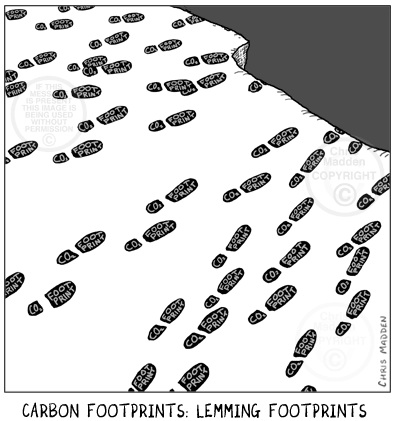
Carbon Footprints


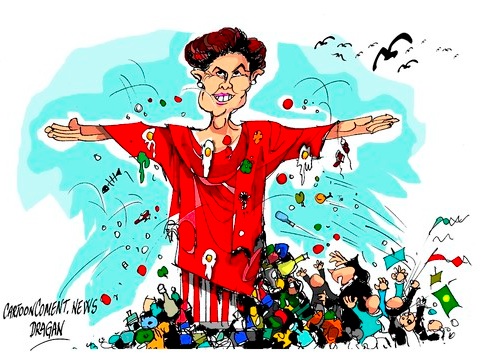
Rousseff Veers to Austerity

Sometimes it takes a big disappointment to cause a big change. Brazil has had two in the past year: First came the economic letdown, as the country went from being the darling of investors after the global financial crisis to slipping toward recession. Then came President Dilma Rousseff’s poor showing at the polls, barely eking out a second term as president. In the aftermath, policies are inevitably starting to shift. Brazil’s longstanding “developmentalist” approach to growth is being discarded. But what will replace it?

Starting in the 1950s, much of Brazil’s economic policy hinged on the policy mix known as developmentalism: protectionism, central planning, and the cultivation of the welfare state to encourage the growth of the internal market. In the late 1990s, the government of Fernando Henrique Cardoso moved away from this approach by privatizing state industries and beginning to open Brazil’s markets. The subsequent center-left governments of Luiz Inácio Lula da Silva and Dilma Rousseff maintained his reforms. But until recently, they also fell back on developmentalist rhetoric and a corresponding tendency to assert the state’s control of the economy.

Today, that’s looking like a step backward. Policies based on the belief that the state should boost growth through strong monetary and fiscal expansion combined with price intervention haven’t worked out for Latin America’s biggest economy, which is heading into its deepest recession in 25 years.

As an International Monetary Fund report published in May pointed out, the new economic team Rousseff chose for her second term is faced with the challenge of restoring policy credibility and bolstering confidence in executive decision-making — this in a context of weakening domestic support and a volatile external environment. Economic growth is expected to recover in the medium term, although its potential will depend on the pursuit of much-needed structural reforms, followed by critical fiscal improvements.  Rousseff Veers to Austerity

ROuseff

Can Mexico’s Floating Gardens Be Saved?

Frederic Saliba writes: The lake at Xohilmilco is the setting of chinampas, the floating vegetable gardens developed here more than 500 years ago. They are one of the last remaining features of the ancient Aztec capital of Mexico-Tenochtitlán, conquered by Spaniards in 1521.

Five centuries on, this network of waterways and artificial islands, a UNESCO World Heritage Site, is threatened by the city’s disorderly expansion and over-exploitation of its water resources. The government of Mexico City has an action plan, financed by France, to save this enormous district of the capital that is also the home of ancestral farming traditions and exceptional biodiversity.

“There is no time to lose,” says resident Claudia Zenteno, pointing with clear frustration at plastic bottles, bags and cans floating in the dark, stagnant water outside her house.

Zenteno, a 50-year-old former accountant turned environmentalist, lives by the lake, in a part removed from the piers and boat tours where the water is regularly cleaned for the 1.2 million tourists who visit every year. “We used to have a wonderful view when we arrived here in 1995,” she says. “It’s a shantytown today.”   Can Mexico’s Floating Gardens Survive

Mexico's Floating Gardens