QE and the Fate of the Yen

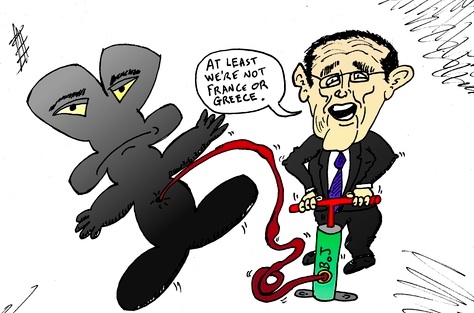
Walter Kurtz writes:  At the end of last October the Bank of Japan annnounced a large stimulus increase which was followed by a sharp decline in the yen. In 2015, however, even though the extraordinary monthly securities purchases are continuing, the declines have stopped as USD/JPY remains range-bound.

In the long run however, further yen weakness seems inevitable. The reason has to do with the sheer relative size of Japan’s quantitative easing. Based on the latest projections, the BoJ’s balance sheet will be above 90% of Japan’s GDP within a year or so. This dwarfs other major central banks’ monetary expansion efforts, including that of the ECB. Furthermore, given the scope and size of this program, it is unclear if the Bank of Japan can ever effectively exit it without a massive disruption to the nation’s economy. While we could see the yen strengthen briefly in the near-term, the currency will remain under pressure for some time to come.

The Yen

Repaying the Greek Debt in Drachmas

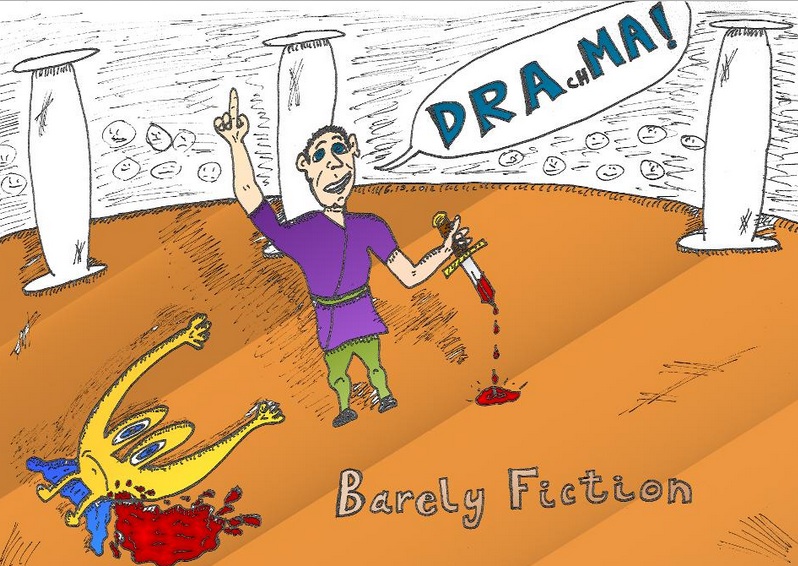
George Friedman writes: The Greek crisis is moving toward a climax. The issue is actually quite simple. The Greek government owes a great deal of money to European institutions and the International Monetary Fund. It has accumulated this debt over time, but it has become increasingly difficult for Greece to meet its payments. If Greece doesn’t meet these payments, the IMF and European institutions have said they will not extend any more loans to Greece. Greece must make a calculation. If it pays the loans on time and receives additional funding, will it be better off than not paying the loans and being cut off from more?

A strategy inspired by Budapest would have the Greeks print drachmas and announce (not offer) that the debt would be repaid in that currency. The euro could still circulate in Greece and be legal tender, but the government would pay its debts in drachmas.

In considering this and other scenarios, the pervading question is whether Greece leaves or stays in the eurozone. But before that, there are still two fundamental questions. First, in or out of the euro, how does Greece pay its debts currently without engendering social chaos? The second and far more important question is how does Greece revive its economy? Lurching from debt payment to debt payment, from German and IMF threats to German and IMF threats is amusing from a distance. It does not, however, address the real issue: Greece, and other countries, cannot exist as normal, coherent states under these circumstances, and in European history, long-term economic dysfunction tends to lead to political extremism and instability. The euro question may be interesting, but the deeper economic question is of profound importance to both the debtor and creditors.  Repaying the Greek Debt

The Triumph of the Drachma

Women Helping Women Make Peace in Colombia

Jacqueline O’Neill writes:  After 50-plus years, 222,000 deaths, $9 billion in U.S. aid, and 34 rounds of negotiations, one of the world’s longest civil wars might finally be nearing its end. The Colombian government and the Revolutionary Armed Forces of Colombia (known by its Spanish acronym, FARC) have agreed to terms for political participation, land reform, mine clearance, and stemming the cocaine trade.

The stakes are enormous. If this process is ineffective, as it’s been in so many countries, the risk is not just that men and women from the FARC will return to the mountains to take up arms. There’s also a high chance that disaffected or underemployed ex-combatants will be recruited by drug traffickers, who added thousands of demobilized paramilitaries to their ranks after the country’s last peace process.

But perhaps the most critical factor for the viability of the coming peace is the inclusion of women in the conversation.

.As a first step, implementers need an accurate picture of how many women are in the FARC, what roles they play, and how their experiences and needs differ from those of their male counterparts.  For over half a century of conflict, Colombian women have filled a wide variety of tactical, recruitment, support, and combat roles in the FARC.

Peace planners also frequently underestimate the extent and nature of women’s participation during conflict. At the end of Liberia’s second civil war in 2003 to 2004, for instance, the U.N. expected to disarm no more than 2,000 women, but ended up working with over 22,000 (missing an estimated 14,000 others).

This will require disseminating information in ways that explicitly target women, using language and imagery that reflects their reality.

Job-training programs to provide ex-combatants with economic alternatives to armed struggle will be essential. During the conflict, many women rose to leadership positions within the FARC. They’re unlikely to desire a return to previous social roles. Yet, globally, jobs envisioned for female ex-combatants are often stereotypically traditional.

The best way to ensure programs are designed in ways that meaningfully incorporate women is to interview former and current FARC members and hear directly from the women themselves. Starting now, the peace process must consult a diverse swath of Colombian women — making sure to include minority Afro-Colombians, for example.

In Colombia, as elsewhere, women in the community can help dictate whether returning fighters are welcomed or ostracized. They can also provide services through civilian groups; share resources like childcare, clothes, and food; and facilitate skills training and education for ex-combatants, which will ultimately ease fighters’ return to society.
Getting this right is critical for both sides at the negotiating table.

Woman warrior in Colombia

Tweaking the Chinese Economy?

In the Economist:  China’s premier is fond of saying that the government has plenty of tools in its toolbox to combat the economy’s slowdown. Rummaging through the kit, the central bank produced a big wrench on Sunday: a 1 percentage-point reduction in the amount of cash that lenders must lock up as reserves. It is the largest cut in Chinese banks’ required reserve ratio (RRR) since late 2008, the nadir of the global financial crisis. It frees up nearly 1.3 trillion yuan ($210 billion) for new lending, money that should help shore up growth. It is likely, however, to also pour fuel on an already-sizzling stockmarket.

Judging by economic data alone, the move comes as little surprise. Nominal growth in the first quarter slumped to 5.8% from a year earlier, the lowest since the first quarter of 2009. Factory production is weak, lending growth has slowed and deflation is beginning to rear its head. China launched its easing cycle last November (it has cut interest rates twice and RRR once since then), and Mr Li has pledged to do more to support growth if needed. Additional policy easing seemed a foregone conclusion after all the sluggish recent data.

But the timing of the cut is something of a surprise. Required reserves play little role in the monetary policies of developed economies. In China, however, they have formed a crucial component of the framework for keeping the yuan steady. In the past, when foreign cash streamed into China via its trade surplus and amid speculative inflows, the central bank printed billions of yuan every month to soak up the flood. That would normally have been expected to cause inflation, but the central bank counteracted the effect by forcing lenders to lock up a large portion of the resulting cash as reserves. At its peak in 2011, China’s RRR reached 21.5%, a level with little precedent in other countries.

While China is still running a hefty trade surplus, speculative flows have become much more volatile. Cash enters the country some months and leaves it other months. With reduced inflows from abroad, the central bank no longer needs to intervene so heavily in the currency market. But it does need to come up with new ways of creating liquidity for the financial system. The most obvious is to normalise monetary policy by cutting RRR. Even with Sunday’s reduction, the ratio for the biggest banks sits at 18.5%—amounting to more than 20 trillion yuan worth of cash. Mr Li’s toolbox is far from empty.

Li Keqiang

To Grexit or Not?

Nikos Chrysoloras and Eleni Chrepa write:  Running out of options to keep his country afloat, Greek Prime Minister Alexis Tsipras ordered local governments to move their funds to the central bank.

With negotiations over bailout aid deadlocked, Tsipras needs the cash for salaries, pensions and a repayment to the International Monetary Fund. Greek bonds fell after the move, pushing three-year yields to the highest since the nation’s debt restructuring in 2012. The order was questioned by local officials and slammed by the leading opposition party.

The decree to confiscate reserves now held in commercial banks and transfer them to the central bank could raise about 2 billion euros ($2.15 billion), according to two people familiar with the decision. The move, reminiscent of step that cash-strapped Argentina has taken over the past decade, shows how time is running out for Tsipras, a point made by European officials who addressed the matter at IMF meetings in Washington in recent days.

A default on the country’s 313 billion euros of obligations and a euro exit would be traumatic for the currency area and plunge Greece into a major crisis.

The new funds may be just enough for salaries and a 770 million-euro payment to the IMF due on May 12, the people said.

The move is a sign of the “dire liquidity situation for the Greek financial system as the government pools all liquidity available,” said Gianluca Ziglio, executive director of fixed-income research at Sunrise Brokers LLP in London. The “next step may be forcing all public-sector entities, including public-sector companies to do the same,” he said.

Greece and its creditors remained at loggerheads with time running out. The sides haven’t even set 2015 budget targets, let alone policies to meet them, an official representing creditors said Monday, asking not to be named as talks aren’t public.

European leaders want Greece to do more to revamp its debt-burdened economy, with progress to be reviewed on April 24 in Riga, Latvia, when finance ministers from the currency bloc meet. European Commission Vice President Valdis Dombrovskis said in an interview in Washington that creditors might need to wait until mid-May to see what

“The situation with Greece needs to be resolved soon,” Cypriot Finance Minister Harris Georgiades said.

Greek officials, including Deputy Prime Minister Yannis Dragasakis, remained defiant saying the government won’t betray its electoral promises and worsen the pain that came from previous austerity measures.

While “so-called” partners, including unidentified IMF officials, want to “blackmail” Greece into adopting measures that would hurt the working class, “we won’t betray the people’s mandate,” Energy Minister Panagiotis Lafazanis said, according to an interview published in Athens-based Real News newspaper.

Greece?

Is Germany’s Current-account Surplus Good?

Stefan RiecherBirgit Jennen writes:  The leaders of Germany’s economy fired back at U.S. criticism of their swelling current-account surplus, arguing it reflects the strength of their companies and the weakness of the euro rather than a lack of domestic demand.

“It would be absurd to discuss whether German competitiveness should be reduced to narrow the current-account surplus,” Bundesbank President Jens Weidmann said in Washington on Friday.

There has been a drumbeat of complaints this month from the U.S. that the surplus, now topping 7 percent of gross domestic product, is a fault line in the global economy and that Chancellor Angela Merkel needs to pare it by stimulating demand at home. Both the U.S. Treasury Department and former Federal Reserve Chairman Ben S. Bernanke have made that case, implying criticism of Germany’s bias towards tight fiscal policy.

“Stronger demand growth in Germany is absolutely essential, as it has been persistently weak,” the U.S. Treasury Secretary Jacob J. Lew said in the department’s semiannual report on foreign-exchange policies, which it published last week.

Bernanke used his recently begun blog to say “in a slow-growing world that is short aggregate demand, Germany’s trade surplus is a problem.” He advised Merkel’s government to act to raise infrastructure spending and wages.

“The fact that Germany is selling so much more than it is buying redirects demand from its neighbors (as well as from other countries around the world), reducing output and employment outside Germany at a time at which monetary policy in many countries is reaching its limits,” Bernanke said.

Also speaking in Washington, Finance Minister Wolfgang Schaeuble blamed the surplus on exchange rates as a declining euro makes products from companies such as carmaker Volkswagen AG cheaper in the international marketplace.

“When I have to defend the surplus, which I do sometimes these days, I point out that the exchange rate contributes to the surplus,” Schaeuble said.

Weidmann said “the depreciation of the euro of course plays a role because German products have become cheaper abroad as a consequence.”

US Looks at Europe

700 Illegal Immigrants Dead in Transit

Foreign Policy reports:  Some 700 people are feared dead after a boat carrying up to 950 migrants bound for Europe capsized off the coast of Libya. The incident is the deadliest accident involving migrants from Africa to Europe yet. Only 28 people have been rescued and only 24 bodies have been recovered. Witnesses say the capsizing may have occurred after hundreds on board all rushed to the same side on the ship to get a better view of a passing Portuguese vessel.

Italian Prime Minister Matteo Renzi has asked has that European leaders discuss irregular migration at a meeting in Brussels. EU foreign policy chief Federica Mogherii saidi that Europe has a “moral duty” to solve the crisis. Pope Francis appealed to the international community “react decisively and quickly to see to it that such tragedies are not repeated.

Libya: A new video from Islamic State-affiliated militants in Libya claims to show the murder of 30 Ethiopian Christian migrants, 15 of whom were shot and 15 of whom were beheaded. The Ethiopian government has not confirmed not that its citizens were the victims. The video featured speeches and interviews with Islamic State members in Syria and Iraq suggesting, close cooperation between the jihadi group their and the Libyan affiliate.

We are trying to trace the money trail on illegal immigration, which often goes from drug dealers to underground contacts in the destination country.

Illegal Immigration

Elizabeth Warren Asks the Right Questions

Elizabeth Warren: Real accountability also requires big changes within our regulatory agencies. In 2013, the Fed and the OCC entered into a $9.3 billion settlement with more than a dozen mortgage servicers who had improperly foreclosed on thousands of homes across the country.[13] Congressman Cummings and I started asking some questions about this, and we stumbled onto a pretty amazing fact. The Fed’s Board of Governors – the ones who were nominated by the president and confirmed by the Senate – didn’t even vote on whether to accept the settlement. A recordbreaking $9.3 billion on the table, and the settlement decision was left to the Fed’s staff. Elizabeth Warren on Financial Reform

Elizabeth Warren

Mellody Hudson: A Most Influential Woman

One of Time Magazine’s 100 Most Influentail People:

Former US Senator Bill Bradley writes:  I met Mellody Hobson when she was a senior in high school at a breakfast for Chicago business elite. Quite frankly, I don’t remember any of the Chicago business elite, but I did remember Mellody because she made such a deep impression.

Mellody is determined, disciplined and enormously curious. I’ve seen her abilities manifested in the boardroom at Starbucks, where we both serve. She’s always very direct. You do not have to wonder what Mellody’s opinion is. She also has a deep commitment to improving financial literacy among moderate and low-income Americans.

From her efforts as president of Ariel Investments to her work in my presidential campaign, Mellody exudes a cheerful confidence that makes people want to follow her. She has said her goals are to do well, surrounded by interesting people, and change the world for the better. Since she’s already doing those things now, just imagine what the next 30 years will bring.

Mellody Hudson


Mules and Smuggling

Metan Gurcan writes:  Mules are known for their tenacity and stamina. Now they have also become “accessories to crime” targeted by the Turkish army. For hundreds of years for the people living in the Turkey-Iraq border’s hard climate and rough terrain, mules have been the primary mode of moving cargo on the ancient trade routes. With the demarcation of the Turkey-Iraq border in 1926, this traditional cross-border trade was re-branded as cross-border smuggling and the mules were made accessories to the crime of smugglling.

Decadeslong socio-economic dynamics clashed with political dynamics recently in disturbing events on the Turkey-Iraq border. Kurdish-origin villagers living there said that near the village of Ortasu, not far from Uludere (also known as Roboski) Turkish soliders killed eight mules.  At Uludere and nearby villages, people demonstrated for three days, but soldiers, armed with a court order, continued to shoot the mules.

Since the end of February there has been significant growth in smuggling on the Turkey-Iraq border.. It has become massive and organized, using mule trains of 200 to 300. To keep psychological pressure on security forces serving the area, the PKK makes good use of smuggling operations and constantly provokes villagers against soldiers. There are also allegations that guns are sometimes smuggled to terrorists strapped under bellies of mules.

The Turkish security sources point to visibly improved living conditions of the villagers along the border as evidence of their allegations. They said that in front of every village tenement there are two or three cars, at least one a luxury model. According to the sources, mules have been shot when clashes broke out after smugglers reacted to the soldiers’ order to halt by opening fire.

HDP Deputy Chairman Aydan Bilgen said the issue is not only about mules. “Borders have become an obstruction to peoples’ interests.”

The solution is simple. The state can legalize this trade, now classified as cross-border smuggling. Local people always point to the existence of a legal crossing point at Habur, which is about 300 kilometers (186 miles) away i Customs officials and security officials posted there can then regulate the cross-border trade and collect taxes. He said, “If the state wants it, this can be done in one day.”

According to a retired military officer who has served in border units and become an expert on smuggling, the people running mules are laborers who make little money. The real profit-makers are the middlemen.

Border operations require a bit of diplomatic soldiering,” adding that no matter what the soldiers do, they won’t be able to stop smuggling. To the contrary, the tougher the soldiers are, the worse their relations with the people of the area will be. The state must target the smuggling barons at the top. He warned, “The state should not tamper with the bread of the people living here. In these parts, people die for two causes: The first is honor and the second is his bread.”

Mules and Smuggling