New US Ambassador to China Fixed on Trade Agreement

The new United States ambassador to China, Max Baucus, said advancing a bilateral investment treaty between the world’s two largest economies will be his top priority.  “While we still have a lot of work to do for concluding the treaty, helping move it forward would be a top priority of mine. I am going to work very hard to make this bilateral investment treaty successful,”Baucus said while addressing members of the American Chamber of Commerce in China.
A member of the Democratic Party, Baucus was appointed to the post by US President Barack Obama in February, succeeding Gary Locke.  When he was in the US Senate, Baucus strongly supported permanent normal trade relations with China and China’s subsequent entry into the World Trade Organization.
China and the US started discussing the treaty in 2008, but talks stalled with China’s insistence on a long list of protection for some sectors.

The US is the world’s top recipient of foreign direct investment, followed by China. Analysts believe a bilateral investment pact will help reshape global investment rules.  “The Sino-US treaty talks and the introduction of the ‘negative list’ approach in the China (Shanghai) Pilot Free Trade Zone show the Chinese government’s determination to reform the regulations for foreign investment,”Zhan Xiaoning, director of the investment and enterprise division at the United Nations Conference on Trade and Development, said.

“China needs to engage in the building of higher global investment rules through participating in high-standard bilateral, regional and multilateral investment pact talks,”Zhan said.  Baucus noted that China is “again at a critical junction”in its development and new challenges have emerged.

“We will use the dialogue to advocate aggressively the things that matter most to the business community, that is, removing investment restrictions, improving (intellectual property rights) protection, increasing transparency, especially in regulatory proceedings, and creating a level playing field for all companies in China,”the ambassador said.
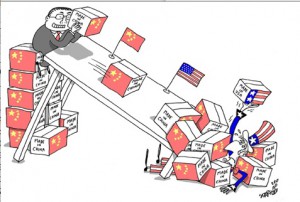
China:US Trade

Can Takeda Pharmaceutical Go Truly International?

The chief executive of Takeda Pharmaceutical struck back against shareholders who are angry about his plan to appoint a foreigner as president, saying the move was necessary for global growth.  Two months ago, a group of more than 100 shareholders and former employees wrote to the board of Japan’s biggest drug maker to protest the ascension of a non-Japanese, Christophe Weber, to the top position of Takeda as akin to “hijacking by foreign capital.” In response, Takeda CEO Yasuchika Hasegawa made an impassioned 30-minute speech at the annual meeting in Osaka, defending his blueprint for overseas expansion.

The founding family behind Asia’s largest pharmaceutical company is up in arms at the present board’s plans to appoint a non-Japanese person as its first foreign president.
A former executive of British pharmaceuticals giant GlaxoSmithKline, 47-year-old Mr Weber is scheduled to be formally installed at a shareholders’ meeting.
But in a boardroom row that has echoes of Michael Woodford’s unhappy – and brief – stint as president of Olympus Corp in 2011, the family that set up Takeda Pharmaceutical Co. has allied itself with former members of the board to oppose the confirmation of Mr Weber as president.

110 members of the Takeda family and former executives have signed a letter of protest to the present board of the 230-year-old company in protest at the approval.
According to the Yomiuri newspaper, their opposition is based on the belief that Mr Weber could sanction the sale of the company to a foreign company and its technologies would be transferred overseas and lost.

To what extent are companies national or international today?  Certainly in the US, foreign nationals run many big companies, presumably because they are the best people available for the CEO job.

Takeda Goes International


US Supreme Court Impacts International Finance


Felix Salmon for Foreign Affairs reporting:  There aren’t many institutions powerful enough to bring a sovereign nation to its knees. Most of those that are wield their power with great care; the rest are dangerous fundamentalists. Last week, the U.S. Supreme Court placed itself — and the rest of the U.S. federal judicial system — squarely in the latter camp when it refused to accept an appeal by Argentina against a lower-court decision. The consequences are certain to be dreadful for Argentina. More broadly, the ruling will make it more difficult for countries to free themselves from the burden of over-indebtedness. It will be very bad for international capital markets. Oh — and it will also diminish national sovereignty.

The case involved Argentina and a group of so-called vulture funds, led by the deep-pocketed and highly litigious hedge fund Elliott Associates, which was demanding repayment in full on old Argentine debt. Elliott had first come to broad public attention in 2000, when it brought — and won — a similar case against Peru. That unprecedented victory against a sovereign government, although worth a mere $90 million, so deeply shocked the international financial community that it prompted the International Monetary Fund to undertake a messy and protracted attempt to create a brand-new sovereign bankruptcy court. The Argentina case is much, much bigger — Argentina owes Elliott over a billion dollars. The total amount that it owes “holdout creditors,” as the vulture funds are more formally known, is some $15 billion. Given that other holdout firms will immediately demand any terms awarded to Elliott, Argentina is not lying when it says that it simply can’t afford to do what the U.S. courts are demanding of it — which is to pay all the holdouts in full. Already the IMF is talking about setting up a bankruptcy court.  A Vulture Fund v Argentina

Vulture Funds Win in US Supreme Court


Two Women in Top 10 Earners of US Corp’s CFOs

Safra Catz of Oracle is at the very top of the list, with a package worth 43 miliion dollars. Catz also serves as co-President of the company. Most of her pay came from stock option grants.  Pamela J. Craig of Accenture is No. 8, with comp worth over 12 million annually. She had retired last year and much of her salary is represented by accelerated vesting of some shares.

Ms. Craig noted that the CFO job is not for the feint-hearted, but if you can collaborate with the CEO and the Board, things can click for you.  She noted that stock options may not be the best incentive for executives.  Stock grants by the board when certain performance criteria are met may be better.

Marcia Dall, CFO of Erie Industries, remarks that women still have a tough time overcoming society’s knee-jerk expectations of women as moms.  “It’s hard when society judges you because you haven’t always been with your children.”

Chief Financial Officers


Demanding Higher Equity Ratios in Big US Banks

Anat Admati and Martin Hellwig, whose seminal book “The Banker’s New Clothes” outlines with clarity why the banks prefer using debt to using equity, make the case for using equity ratios as the criterion for solidity, not the Basel asset percentages. This easily grasped scenario dramatically suggests the implications for the ordinary banking customer and for our country.

If you buy a $100,000 home and put down $3000, if your home’s value increases by $4,000 you will have made a 133% return on your investment. If you funded the home with more equity, say a down payment of $20,000, your return would be only 20%.  If your home decreases in value, it would take only a $4000 decrease to put you underwater.

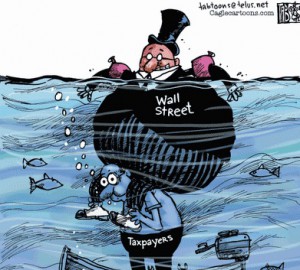
This is the gift to banks given by the Dodd Frank legislation. Depositors are induced to place their money in the bank, where it is safe. Depositors can also go out to third parties with a presumed guarantee of backed up money. The banks do what they want with that money. In the past decades that has involved incredibly risky propositions like securitized mortgages and plays on interest rates.   Federally guaranteed deposits up to $250,000 protect the depositor and the bank. Taxpayers pay for the banks follies, however. In TARP, the taxpayers were left holding the bag. Depositors in Cyprus paid a particularly high price.

The Admati-Hellwig proposal for demanding higher bank equity ratios to make these institutions more secure has been met with fear and scorn by the big banks. The banking lobby courted legislators creating the Dodd Frank bill assiduously to insure that only the Basel ratios would be implemented.

Banks have always argued that they would be forced to lend less if equity ratios were higher.  But this is only marginally so, and seems a small price to pay for the soundness of our banking institutions.

Interestingly, Admati had lunch with President Obama this week. While the President is no master of economics, as he begins to craft his legacy, he may be looking for bold and yet sensible moves that will help the economy.  If explained from the bully pulpit of the Presidency, equity ratios could  bathe the President in a gold aura. Let’s hope so.

Note:  Hillary Clinton, frontrunner for the Democratic Presidential ticket in 2016 is very much a captive of the banks.

Bank Bailouts

European Central Banks Publish Macro Facts on Financial Conditions

MaRs, an internal network for macro-prudential research, was launched in Spring 2010 by the European System of Central Banks, which consists of the 27 European Union (EU) national central banks and the ECB.

The financial and economic crisis that started in summer 2007 has shown that the macro-prudential aspects of financial supervision and regulation need to be significantly strengthened. As a result, in autumn 2010 the EU agreed to establish the European Systemic Risk Board (ESRB), which held its inaugural meeting in January 2011 and has the tasks of identifying and assessing emerging systemic risks, warning about material risks and making policy recommendations on how to contain them. However, considerable gaps remain in the analytical underpinnings of macro-prudential supervision and regulation.  Report

Bank Regulation

Global Summit Paris: Conclusions


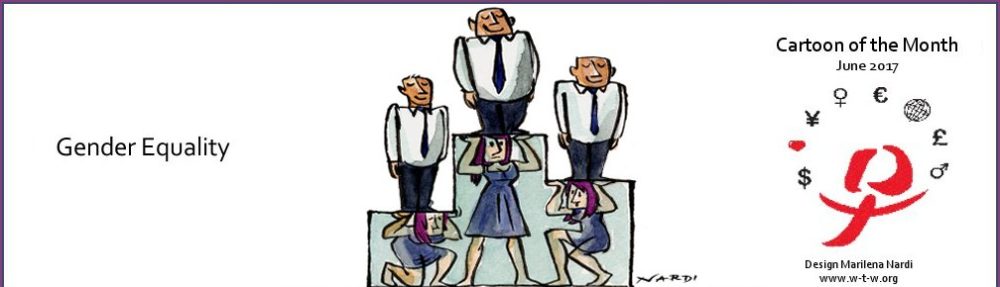
Fed up with platitudes and more than ready for action, hundreds of women threw their weight behind more regulation to force a better gender mix in organisations in polling at last week’s Global Summit of Women.

Women came from 81 countries and from every possible background, but the common cause was all about getting more women into decision making roles — in communities, government and business.

A poll of the audience on the best option for making progress revealed a clear endorsement of quotas, with the host country France already leading the way.  According to a panel of CEOs, which included ex-Telstra Boss Sol Trujillo and Societe Generale head Frederick Oudea, the momentum is growing for more gender balanced organisations — although Trujillo did not believe quotas are the answer.

But it was also clear that the 2011 introduction of quotas in France – with a goal of 40% by 2017 – is having an impact. Women make up about 20% of directors at larger French companies at the moment.

“France has raised the bar for other countries interested in opening up corporate board rooms to women,” according to Irene Natividad, the Summit chair and head of the Washington-based Corporate Women Directors International (CWDI) which released a study on gender on boards at the forum.

The top ten companies globally for women directors did include Australia’s Woolworths, which was better than nothing. But as Natividad pointed out, French companies were the best represented while organisations from rapidly growing economies, such as China, did not fare well.

Quotas are one lever for change but fund manager Joe Keefe, the CEO of Pax Global Funds, said tackling the travesty of just 16% women on Fortune 500 boards rests with shareholders and corporate ranks too.

“Who elects boards? Shareholders. So if you think it’s a travesty but you are investing in funds then you are part of the problem and not the solution – or your money is.”

Pax recently launched a Global Women’s Index Fund which includes about 400 companies with better levels of women in senior roles. Along with shareholder and investor action, pressure to deliver behaviour change in the corporates that dominate the world economy is a priority, Keefe said.

The power to change the rules to make workplaces more equitable lies with corporates, Microsoft France president Alain Crozier said during a debate on whether women can ‘have it all’. He said blending caring and paid work and ensuring women’s careers are not derailed is achievable if the will is there.

“Why aren’t there reporting requirements on gender pay?” one participant asked.

The role of the media in changing norms around women’s leadership and roles was also a focus for a panel discussion. Bloomberg editor-at-large Lisa Kasenaar is running Global Women’s Coverage for the media company which aims to mainstream women as commentators in all coverage.

The media must be encouraged to frame the conversation about diversity and establish role models, Cassandra Kelly said during a discussion on women and boards. She outlined the progress made under Australia’s voluntary regulation regime and the importance of women supporting each other to ensure culture change.

As the conference ended, there was a mixture of hope for change with continuing frustration about the pace of progress and the need to challenge entrenched attitudes that continue to categorise diversity as doing good rather than an economic and human rights imperative around the world.

Gender Pay Equality


Women and Finance at the Said Forum, Oxford

Takeaways.  Some obvious and some not to.

For more than 2,000 years, women have been excluded from the system of money. Often engaged in unpaid labour, usually barred from inheriting wealth, frequently forbidden to have bank accounts, and commonly unable to own property, women in the history of East and West have been effectively left out of the world of investment and credit. Today, the prints of past exclusion can still be seen in laws and practices of developed and developing nations.

Now, however, major institutions throughout the world are working together to create a more inclusive system to promote growth and equality. Power Shift 2014 uncovered exclusionary practices, identified effective reforms, and celebrated champions of change.

!.  Set bigger goals and you’ll surprise yourself 2.  Don’t ask friends for their opinion about your product or service. They’ll never tell you the truth. Just ask strangers.       3..  You need to meet people before you need them, so start building your network now. 4.  Never eat lunch alone; it’s an opportunity to make new connections.          5.  You’ll not be remembered for being a good business woman but you’ll be remembered for being a good mum/sister/friend etc. See yourself as a human first, and a woman second. 6.  Learn how to say No. For example: “I’m saying No to this so I can say Yes to something else.” 7.  You are what you do! Start doing more with what you have. 8.  Women need to introduce more numbers into your business plans. Men’s business plans have more numbers so they look more impressive and most of the reviewers approving the business plans at the banks are also men!       9. Ask for help. Women are notorious for not asking for help when they need it. –

We Can Do It!

Tech Industry Good for Women at the Top

If you were Marissa Mayer of Yahoo, making nearly $25 million for one year’s worth of work — not to mention getting $50,000 in company-paid personal security — the gender pay gap would probably not be a major concern. Women scaling the heights of corporate America tend to have compensation packages that are as jaw-droppingly gigantic as men at a similar level.

On the Equilar list, the technology industry has the most women — Ms. Mayer, Virginia M. Rometty of IBM and Meg Whitman of Hewlett-Packard. Their median pay, $17.6 million, is more than that of the male tech chiefs, who earn $15.9 million. The pay of at least three other women who are high-profile tech executives would have put them on the list had they been chief executives, according to Equilar: Safra A. Catz, president and chief financial officer of Oracle ($43.6 million); Sheryl Sandberg, chief operating officer of Facebook ($16.1 million); and Angela Ahrendts, the new retail chief at Apple. Her salary and bonus have not yet been released, but her equity award alone would catapult her near the top of the list, at $68.5 million.

One reason tech might be better for women on the executive track is that the industry is young and fast-moving, without the entrenched behaviors and prejudices of more traditional businesses.

“Because the industry’s reinventing itself all the time, there’s not a set model about who could or should be successful,” said Susan Wojcicki, the chief executive of YouTube.

That became clear when Yahoo hired Ms. Mayer as chief executive when she was seven months pregnant — a decision that would be hard to imagine in more conservative industries like finance.

Tech jobs generally tend to be more flexible about priorities outside work, especially for high-performing employees the companies do not want to lose. The result is a narrower pay gap in tech, along with other benefits for women. Ms. Wojcicki insists on being home from 6 p.m. to 9 p.m. to be with her four children.  Women CEOs

Women CEOs

China Considers the Regulation of Crowdfunding

China Securities Regulatory Commission (CSRC) is mulling plans to regulate crowd funding, an online financing vehicle, to ward off risks, according to China Business News Monday, a move that will put the brakes on the booming Internet finance industry.

CSRC regulations on peer-to-peer and crowd funding services are expected to be released earlier than those of the country’s banking regulatory commission, as CSRC Chairman Xiao Gang has launched field investigations on the industry.

Xiao visited two Internet finance companies last week, including the Beijing Angel Crunch Financial Information Service Co Ltd, mainly an equity-based online crowd funding platform, according to the report citing an industry researcher.

Equity-based crowd funding as a fledgling business is believed to be another innovative financing tool designed to help start-ups and small businesses to gain a foothold in the capital market. And the attitude of the CSRC on that is positive, the report said.  In the US, the SEC allows equity-based crowdfunding up to 1 million dollars.

Crowdfunding in China