Greek Prime Minister Antoris Samaras Asks the Troika to Cool It

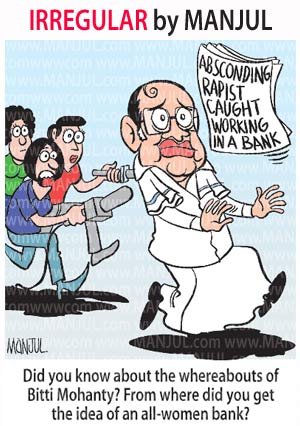
Implementing change too fast risks “reform fatigue” in Greece, the country’s prime minister has warned, in a fresh sign of resistance to pressure from international lenders for further cuts to wages and pensions.  In an indirect reference to the troika – the European Commission, the European Central Bank and the International Monetary Fund – Antonis Samaras warned that: “You don’t climb to the top of a mountain vertically. You ascend from one plateau to another.    Reform in Greece?   OECD News Item

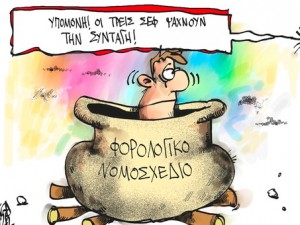
New Taxes in Greece

Afghan Opium Harvests at Record High

International banking consultant Andreas Frank writes:  Afghan opium cultivation has reached a record level, with more than 200,000 hectares planted with the poppy for the first time, the United Nations says.

The UNODC report said the harvest was 36% up on last year, and if fully realised would outstrip global demand.   Half of the cultivation area is in Helmand province. Most of the rise comes from this province, where British troops are preparing to withdraw. One of the main reasons the UK sent troops to Helmand was to cut opium production.

The head of the UN office for Drugs and Crime (UNODC) in Kabul, Jean-Luc Lemahieu, said that production was likely to rise again next year, amid uncertainty over the withdrawal of most foreign troops and the presidential election.

He said that the illegal economy was taking over in importance from legitimate business, and that prices remained high since there was a ready availability of cash in Afghanistan because of aid. “As long as we think that we can have short-term, fast solutions for the counter-narcotics, we are continued to be doomed to fail,” he added.

Mr Lemahieu said there had been some recent successes, including the arrest of leading figures in the drugs industry, but it could take 10-15 years to deal with Afghanistan’s opium crisis, even if policies improved.

The report said the total area planted with poppies rose from 154,000 to 209,000 hectares, while potential production rose by 49% to 5,500 tonnes, more than the current global demand.

The consequences of Afghanistan’s huge opium production have had an effect across society here. There are believed to be more than a million opium and heroin addicts – one of the largest levels in the world – taking advantage of plentiful supplies.

The amount of land given over to opium in 2013 was 209,000 hectares. The potential production from that is estimated to be more than annual global demand, according to the head of the UN office for Drugs and Crime in Kabul, Jean-Luc Lemahieu.

After rising sharply in the years after the Taliban successfully stopped production, the harvest last peaked in 2007 and is expected to continue rising.

Mr Lemahieu said that the rise since 2010 was caused principally by what he called a “hot political market” – uncertainty over the process of transition from US control. That uncertainty will continue with the end of foreign combat operations and the presidential election next year.  Meanwhile two northern provinces which had previously been declared poppy-free – Faryab and Balkh – lost that status.

The findings of the latest report reverse a decline in production last year attributed to bad weather and disease. However, cultivation has been rising yearly since 2010 despite government efforts to eradicate the crop. More farmers have been trying to grow the poppy as the price of opium has been rising.

The report describes the capture of “well over 10%” of production by tripling the effectiveness police as an encouraging sign.

Afghanistan produces more than 90% of the world’s opium.

The report calls for an integrated, comprehensive response to the problem. “If the drug problem is not taken more seriously by aid, development and security actors, the virus of opium will further reduce the resistance of its host, already suffering from dangerously low immune levels due to fragmentation, conflict, patronage, corruption and impunity,” it said.

There are clear indications that the war against drugs is lost and the world will drown in a tsunami of drugs.  Afghan Opium Survey
Is Quantitative Easing Contagious?

THE European Central Bank’s surprise cut to its interest rate last Thursday is just the latest evidence that the lengthy era of ultra-loose monetary policies is still firmly in place. Since the start of the crisis in 2007, the four central banks of the United States, the United Kingdom, the euro zone, and Japan have injected $4.7 trillion of liquidity into their economies, pushing interest rates to very low levels.  The consensus is that these actions have raised GDP by between 1% and 3% and prevented a catastrophic failure in the global financial system.  But who have they benefited and is the US economy rebounding or does it just look like it, a superficial bandaide applied to help the markets and big financial institutions?  Unconventional monetary policy: Quantitative easing.

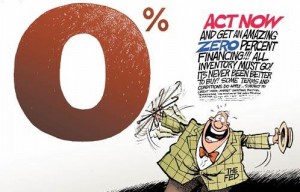
Zero Interest Rates

Global Economy Recovering At Moderate Pace But More Risks Ahead

 The global economy is expected to continue expanding at a moderate pace over the coming two years, but policymakers must ensure that instability in financial markets and underlying fragility in major economies are not allowed to derail growth, according to the Economic Outlook.
Watch the Webcast of the press conférence

For more info please visit: OECD’s latest Economic Outlook 

Lebanon to Clean up Banking System

Our colleague, Andreas Frank, an international banking consultant in Switzerland reports:  The U.S. Department of Treasury Assistant Secretary for Terrorist Financing, Daniel Glaser, called on for the Lebanese state to uproot money laundering, terrorist financing and other forms of illicit finance from the Lebanese financial system.

The Lebanese financial system is a critical asset to the Lebanese people and the basis of the national and regional economy, Glaser said at the Arab Banking Conference.

He pointed out that Lebanon’s ability to retain its its position as an important regional and international financial center requires constant vigilance.

Professionalism and stability, which have been the hallmark of the Lebanese financial system, can be maintained only through the efforts of both the public and private sectors to ensure a hostile environment for terrorists, criminals, narcotraffickers, and sanctioned regimes such as Iran and Syria. Glaser lashed out at Hezbollah during his speech, stressing that working together we can stop illicit financial activities of groups that seek to destabilize the region such as al-Qaida and Hizbullah.

He highlighted the case of the Lebanese Canadian Bank. That scheme involved the laundering of hundreds of millions of dollars in narcotics proceeds through the Lebanese financial system using bulk cash shipments and trade-based money laundering involving used car sales and consumer goods. These drug trafficking proceeds were often funneled to Lebanon through several Lebanese exchange houses that utilized accounts at LCB branches.

The LCB narcotics money laundering scheme is indicative of a broader trend: international criminals are developing increasingly sophisticated means to move funds and obscure the illicit activities and actors involved. The narcotics trafficking exposed by our actions against LCB spanned several continents and involved financial flows of hundreds of millions of dollars across many jurisdictions.

In the case of LCB, Hezbollah benefitted from a global narcotics trafficking network. This should not be surprising given Hezbollah’s involvement in a wide range of illicit activities. These illicit activities, combined with its ties to sanctioned regimes such as Iran and Syria, should call into question all financial relationships with Hezbollah or its agents. And the risks of engaging in such relationships will only increase as more
countries apply sanctions on Hezbollah, which continues to engage in destabilizing military activity in Syria and attacks in Europe.

As Syria continues to be destabilized by horrific acts of violence, leading us to sanction both the Assad regime and al-Qa’ida affiliates, the region faces new and unprecedented economic challenges.  Treasury Department Glaser’s Speech

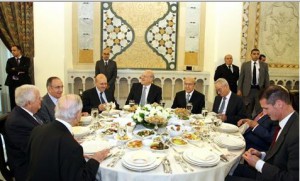
Lebanese Bankers

Bangalore: Finance, Market Access Hinder Women Entrepreneurs

A study, Roadmap 2020 and Beyond, was carried out on 200 women entrepreneurs in the Bangalore.

A study carried out among 200 women entrepreneurs in the city over a two month timeframe, says accessing finance to run their businesses and finding markets to sell their products and services are the two key challenges they face.

While 75% find access to finance a major challenge, access to markets was rated challenging by 90% of the surveyed respondents. Apart from these two attributes, what city businesswomen need most is their family’s support and mentoring.
Finance, market access hinder women entrepreneurs

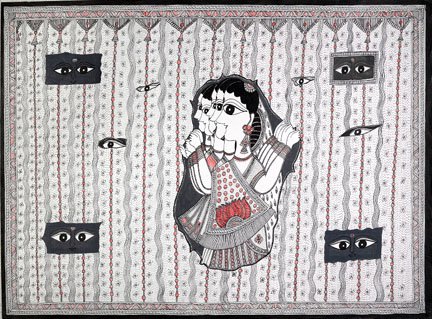
In the past women could only peek through the curtain, now we have joined together and our breaking through the curtainIn this image, the artist Rani Jha states, In the past we could only peek through the curtain, now we have joined together and our breaking through the curtain


Labor Party Implicated in Cooperative Bank Scandal in the UK

Our UK partner, Sarah Pavlou of International Women in Business, called our attention to new breaking news item:  Chairman Reverend Flowers with a background in drugs and interest in porn is left in charge of one of the UK’s major banks, Cooperative.  The bank is going bust.   Questions are being asked why and how he got this position.   There are suspicions that Labour and Reverand Flowers  have been in some form of corrupt relationship.   Former Co-op Bank chair Paul Flowers investigated for expenses claims and suspended from drug charity


Stinking Flowers


Meet Sylvia Porter, Creator of the Personal Finance Column

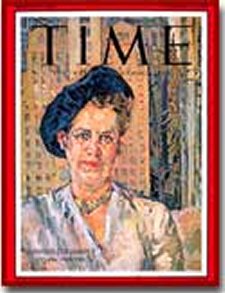
Sylvia Porter in 1974The reveal came on July 20, 1942, when the New York Post’s popular financial column ran under the name of Sylvia Porter. Since starting at the Post seven years earlier, the columnist had hidden behind the gender-ambiguous byline S.F. Porter. At a time when women were banned from the trading floor of the New York Stock Exchange, and kept out of corporate stockholders’ meetings, who would seek out financial advice from someone named Sylvia?
Meet Sylvia Porter, Creator of the Personal Finance Column

Finance columnist Sylvia Porter  visited campus in 1974 when she gave the Commencement address. At the height of her journalism career she had over 40 million people reading her column. She was a leading force who made it possible for women to enter the field of business and financial journalism.
Sylvia Porter