Poverty Among Elderly Women


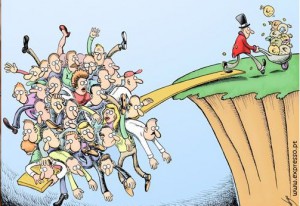
It’s not surprising that women are behind the eight-ball. To some extent, women are doomed to more financial suffering than men: women live longer and earn less. The NWLC statistics, drawn from the census, show just how bad it is for women: 17.8 million women lived in poverty in 2012, 44% of whom lived in extreme poverty. Extreme poverty means “income at or below 50% of the federal poverty level”, which amounts to less than $5,500 a year.

When the economy is bad for women, it’s also bad for children. According to the NWLC, 16 million children lived in poverty in America last year, and 44% of them also lived in extreme poverty. “The poverty rate for female-headed families with children was 40.9%, compared to 22.6% for male- headed families with children,” the NWLC noted.

What is surprising is that the slide into deep poverty is happening so soon, and in such massive numbers, among the elderly. It’s not clear what could have changed between 2011 and 2012 to cause it.  Poverty Among Older Women

Poverty in Old Age

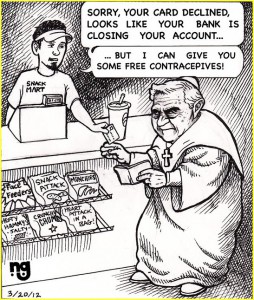
The Vatican Bank More Than Quadrupled Its Profit Last Year

The Vatican’s first step towards financial transparency was rather eye-catching. While Pope Francis wins over Catholic hearts, the Vatican Bank is cashing in.

The Vatican Bank—officially the Institute for Religious Works, or IOR—published its first annual report this morning, an exhaustive 100-page document which lays bare the extent of the Catholic institution’s vast holdings. The numbers are indeed large—the bank’s balance sheet, for example, includes €5 billion ($6.8 billion) with some €769 million in equity alone. But the bank’s profit last year is perhaps what’s most impressive. The IOR raked in a net €86.6 million in 2012, more than four times its €20.3 profit from 2011. Secretive Vatican Bank Publishes First Financial Accounts
IOR_AnnualReport Vatican BankMore:
Fighting Money-Laundering
Cash Payments at the Sistine Chapel 

To Debt or Not to Debt: The US Conundrum

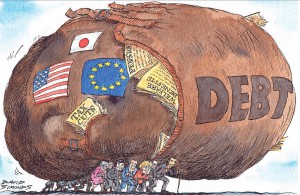
Consider the debt ceiling in the US.  According to Goldman Sachs, without an increase in the ceiling, the Treasury would no longer be able to issue debt from October 17 and would deplete its cash by the end of the month. Much confusion exists about what would happen if the Treasury ran out of cash and could not increase its outstanding debt. The optimistic view is that it could meet its priorities, including debt service, by managing its payments. If so, no default need occur. Jack Balkin of Yale University argues just this. The pessimistic view is that managing its cash flows in such a way would be illegal and possibly impossible – not least because cash receipts fluctuate substantially. But the Treasury, playing a game of chicken, would argue the pessimistic case even if it believed it could cope.

At best, a failure to raise the debt ceiling would necessitate a sharp cut in spending. At worst, the US would default. Analysts at Bank of America Merrill Lynch argue that hitting the ceiling would require the US to balance its budget at once, cutting spending by about 20 per cent, or 4 per cent of GDP. That would push the US into another recession – even if there were no default. The consequences of an actual default, particularly one that lasted for some time, are beyond prediction. Unlike a shutdown, there is no precedent, for good reason. The notion is suicidal. To Debt or Not to Debt, That is the Question  from Martin Wolf in the Financial Times.

Debt

Mirror for Entrepreneurs in TV’s “Breaking Bad”

A terrific TV series ended on September 29th, but is sold on Amazon and Netflix.  For entrepreneurs it is worth a look.  Three things help the show’s star, a chemistry teacher turn an insight into a flourishing business. The first is huge ambition. He is not in the “meth business” or the “money business”, he says. He is in the “empire business”. The second is product obsession. Other dealers might peddle “Mexican shoe-scrapings” on the ground that addicts care little about quality. He produces the king of meth, so pure that it turns blue, and would rather destroy an entire batch than let an inferior product be traded under his brand. The third is partnerships and alliances. He spots talent in a former pupil turned drug-dealer, Jesse Pinkman, and forms a strong working relationship with him. He also contracts distribution to a succession of local gangs so that he can concentrate on the higher-value-added part of the business: cooking and quality control.  How do things turn out?  TV Reflects an Entrepreneur’s Mirror image

Entrepreneurial Essence

Whistleblower Award

SEC AWARDS MORE THAN $14 MILLION TO WHISTLEBLOWER

The Securities and Exchange Commission announced an award of more than $14 million to a whistleblower whose information led to an SEC enforcement action that recovered substantial investor funds. Payments to whistleblowers are made from a separate fund previously established by the Dodd-Frank Act and do not come from the agency’s annual appropriations or reduce amounts paid to harmed investors.

“Our whistleblower program already has had a big impact on our investigations by providing us with high quality, meaningful tips,” said SEC Chair Mary Jo White. “We hope an award like this encourages more individuals with information to come forward.”

The whistleblower, who does not wish to be identified, provided original information and assistance that allowed the SEC to investigate an enforcement matter more quickly than otherwise would have been possible. Less than six months after receiving the whistleblower’s tip, the SEC was able to bring an enforcement action against the perpetrators and secure investor funds.

“While it is certainly gratifying to make this significant award payout, the even better news for investors is that whistleblowers are coming forward to assist us in stopping potential fraud in its tracks so that no future investors are harmed,” said Sean McKessy, chief of the SEC’s Office of the Whistleblower. “That ultimately is what the whistleblower program is all about.”
SEC Whistleblower Award PressRelease
SEC Whistleblower_Award

Whistleblower Awarded

Fiona Woolf Elected Lord Mayor of London

A woman has been elected Lord Mayor of London for only the second time in the institution’s 800-year history.

Fiona Woolf, a partner at London-based law firm CMS Cameron McKenna, will don the ceremonial ermine and tricorn in November as she becomes the 686th head of the City of London Corporation, the Square Mile’s local authority.

Ms Woolf, 65, is an expert in electricity markets and infrastructure. During her 40-year career, the privatisation specialist has worked in Argentina, India and Turkey, and lead the 38-strong team that advised on the privatisation of the National Grid electricity transmission

network in the 1990s.

In 1981, Ms Woolf became the first woman to become a partner at her law firm. Dick Tyler, senior partner at CMS Cameron McKenna, said she had driven the creation of the firm’s global practice in energy markets.

“She was always a trailblazer. Forget the fact that she was a woman,” Mr Tyler said.

One industry expert said she had a “highly commercial, pragmatic” style tempered by the political aspects of working with governments. “She would see all the angles,” the person said.

The Lord Mayor plays a largely ambassadorial role for the City, spending at least three months of a year-long period of office promoting the UK financial services industry in overseas markets.

But the sector remains under considerable pressure over banking reform, Britain’s uncertain future in Europe and the reverberations of the Libor scandal.

Acknowledging the challenges faced by the City, Ms Woolf highlighted its importance to the economy. “Despite all the difficulties, the UK financial, business and professional services sectors continue to play a crucial role in driving jobs and growth in the UK and right across the world,” she said in a statement following her election yesterday.

Ms Woolf, a former president of the Law Society of England and Wales and until this year a member of the Competition Commission, worked with the World Bank on bringing electricity infrastructure to countries emerging from war, including Liberia and Sierra Leone.

As Lord Mayor, she follows in the footsteps of Mary Donaldson, who became the first woman to be elected to the post in 1983. Ms Woolf’s election will shine a light on gender balance in a City that remains male-dominated, particularly at senior levels.

Just 6 per cent of managing directors in the Square Mile are women, and one-fifth of mid- to senior positions are filled by women, according to a survey last year by Astbury Marsden, recruitment agency.

“She might act as a beacon to others, drawing attention to the fact there are more women in the City than in the past,” Mr Tyler said.”

Ms Woolf will succeed Roger Gifford, who headed the UK arm of Swedish bank Skandinaviska Enskilda Bank. Her accession will take

place on November 8, when Mr Gifford steps down at the Guildhall in a ritual known as the silent Ceremony.  from the FInancial Times
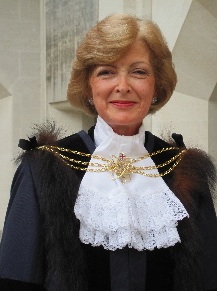
Fiona Woolf

Women Entrepreneurs on the Rise World Wide

The recent Global Entrepreneurship Monitor found 126 million women starting or running businesses, and 98 million operating established (over three and a half years) businesses. Thatʼs 224 million women impacting the global economy — and this survey counts only 67 of the 188 countries recognized by the World Bank.

These entrepreneurs cross the spectrum of micro to high growth — from supporting life to creating wealth. They include hair salon owners, high tech visionaries and everything in between, all making critical economic contributions.  Women-The Driving Force of Entrepreneurial Growth

Women Entrepreneurs

Women Advance in High Tech

New research shows what many have long suspected: women entrepreneurs are poised to lead the next wave of growth in global technology ventures. A report recently released by Illuminate Ventures, a San Francisco Bay Area venture capital firm, shows that women-led technology start-ups generate higher revenues per dollar of invested capital with lower failure rates than industry averages.

•            Efficiency, efficiency, efficiency: The high-tech companies women build are more capital-efficient than the norm. The average venture-backed company run by a woman had annual revenues that were 12% higher than those run by men using an average of one-third less capital.

•            Big Progress in Recent Times: More women are serving as officers of venture-backed companies with successful exits. In 1988, only 4% of the 134 firms that went public in the U.S. had women in top management positions growing to over 41% percent by 2004. Of 2009’s 19 high-tech IPOs, all but two had at least one woman officer.

•            Fewer Failures: Despite often being capital-constrained, women-owned businesses are more likely to survive the transition from raw start-up to established company than the average.

•            Expanded IP Contributions: From 1985 to 2005, the annual number of U.S. female-invented fractional software patents increased 45-fold—three times the average growth rate in that sector.

•            Growing Influence in Start-ups: Women-owned or led firms are the fastest growing sector of new venture creation in the U.S., growing at five times the rate of all new firms between 1997 and 2006— now representing nearly 50% of all privately held businesses.

•            Venture-level Returns: In the past 10 years more than 125 companies with over 200 women founders or officers have achieved IPOs or >$50M M&A exits in the U.S. high-tech sector alone.

•            Diversity Improves Performance: Organizations that are the most inclusive of women in top management achieve 35% higher ROE and 34% better total return to shareholders versus their peers—and research shows gender diversity to be particularly valuable where innovation is key.

•            Financial Bottleneck: In 2008 woman co-founded tech businesses gained less than 7% of venture investment in the high-tech sector and women owners of $1M+ businesses are still twice as likely to use debt versus equity capital as their male peers.

•            Impact of Women Investors: Women now represent over 15% of angel investors and 5%–7% of partner-level high-tech venture capitalists in the U.S. Firms with at least 1 women investment partner are 70% more likely to lead investments in a woman entrepreneur than those with only males.

The bottom line: More than ever before, women are influencing the face of business. They are on the cusp of becoming a leading entrepreneurial force in technology. As the global economy regenerates, new business models are needed to stimulate economic and job growth. Investors seeking to reinvigorate bottom-line performance and to favorably impact the entrepreneurial strength of the U.S. economy would be wise to support strategies that enable high-tech start-ups that are inclusive of women entrepreneurs.    High Performance Entrepreneurs

Women Entrepreneurs to the Top of High Tech