The Thriving Car Industry and Jobs in America

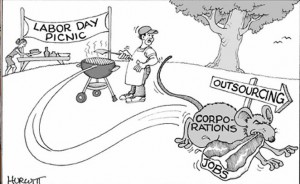
The US needs growth, and we’re getting more of it from cars than perhaps another other industry.

But unpacking this story reveals a more frightening picture of American industry and productivity. In the mid-20th century, a strange and wonderful blip of good fortune for the American middle class, unions concentrated in the manufacturing sector helped millions of American families achieve healthy and rising wages, thanks to collective bargaining and a burgeoning industry that wasn’t yet automated or globalized. But that story is over. It has been replaced by a new American story where one of the country’s most iconic industries scarcely needs more American workers to do all the work it needs.   Does the Car Industry Explain the US Economy_

Jobs USA

Has Quantitative Easing Worked?

It is nearly five years since the U.S. Federal Reserve slid into quantitative easing, the deployment of artificially created money into the bond market. QE and a prolonged period of near-zero interest rates have been the highlights of post-crisis monetary policy. That era is far from over, but it has lasted long enough for a preliminary judgment of monetary policy – especially as the Fed says it is now preparing to “taper” its bond purchases. My verdict: QE could have been worse, and it should have been better.  Quantitative Easing

Quantitative Easing

Why Stiglitz Supports Yellen for the Fed

Nobel prize winning economist Joseph Stiglitz has worked with both Janet Yellen and Lawrence Summers.  Attention must be paid to his advice.  Always a frank speaker, he said after advising Obama that the administration’s bank rescue plan is “either in the pocket of the banks or they’re incompetent.”

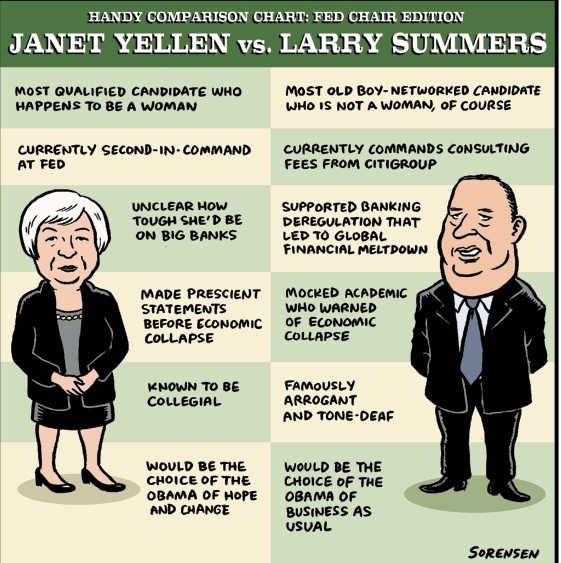
Now he tackles Yellen v Summers.  Stiglitz Supports Janet Yellen for the Fed

Yellen v Larry Summers


Transnational Organised Crime On The Rise In Eastern Africa

Organized criminal activities such as migrant smuggling, ivory trafficking and maritime Elephantpiracy are increasingly pressing threats in Eastern Africa and must be tackled through a range of measures both within the region and in the markets where illicit goods will end up, according to a United Nations report released today.

The report highlights the principal crime threats facing the region as well as their costs to society.

According to the report, more than 100,000 people were smuggled out of the region last year alone, generating over of $15 million for organized criminal networks operating on the maritime crossing from the Horn of Africa. Many migrants are driven in part by high levels of conflict and poverty, and as they try to escape their situation they are vulnerable to abuse, confinement, extortion and rape from smugglers…
Transnational Organised Crime On The Rise In Eastern Africa
UNODC TOC East Africa ReportTransnational Organised Crime On The Rise In Eastern Africa


More Latin American Companies Want Women in C-Suite

Gender diversity on the executive team is becoming a top priority for more firms in the region.

Latin Americahas long lagged other regions when it comes to gender diversity in the C-suite. In 2011, women held only 8 percent of  executive committee positions at companies surveyed in Latin America, compared to 14 percent at companies in the United States and 15 percent in Norway…
More Latin American Companies Want Women in C-suite

Women in C-suite

G20 Tax records will be shared around the world by 2015

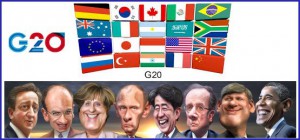
The participants of the Summit focused on investment and creating jobs, among other issues. The G20 Leaders Declaration has been published following the G20 Summit in St.Petersburg.

Tax records will be shared around the world by 2015 as part of a G20 pledge to crack down on individual tax cheats and global corporations with complicated arrangements aimed at paying as little tax as possible.

The topic of taxation in a global economy has become a major political issue of late, as multinational firms like Apple and Starbucks have faced scrutiny over their corporate structures. Further, investigative reports into the use of offshore tax havens by the world’s wealthiest individuals added momentum to the view that governments are getting short-changed of much needed revenue.

G20

Women Are Leaving Wall Street. Why?

A fascinating article by Margo Epprecht analyzes why.  Everyone now understands the game of institutionalized risk and individual rewards. New regulations mean to control risk. Even the smartest man in the room, Jamie Dimon, lost track of his profit and loss statement in the spring of 2012. The attributes that women (and many men who’ve been marginalized by the Wall Street culture) bring to the table; collaborative decision-making, a desire for more information, “common sense,” and high sensitivity to risk—are all traits allegedly in demand. Wall Street excess and its powerful protection of its own interests almost killed the financial system. Yet when it seems most imperative that the culture of Wall Street change, for the sake of the economy even, entrenched interests remain strong and resistant to change.

Reminded of her work habits from the early 1980s, Maryann Keller now laughs. “I thought I was going to die,” she says. “It was so crazy. If you think about it, we had barely any technology. You were literally locked on the phone the entire day.” Keller had to step back from her frenetic pace by the mid-1980s, briefly going into money management before joining Furman Selz for a satisfying dozen years building her expertise and network even further. Married for a second time, and adoptive mother to three grown children, Keller remains deeply involved in business, running her own consulting company, Maryann Keller and Associates, and serving on boards of companies and non-profits. But she thinks Wall Street is now less appealing to women.  “The business has changed,” she muses, “It is not as intellectually challenging as it used to be. It’s more like cage fighting. Long-term investment today means a month; mathematicians convince themselves they can quantify risk in their arcane products that no one can understand; and fee structures are out of line with investor returns. No wonder people are cynical about Wall Street.”    Why Women Are Leaving Wall Street

Leaving Wall Stret

WEF: Global Competitiveness

WEF World Economic Forum

The Report 2013-2014 assesses the competitiveness landscape of 148 economies, providing insight into the drivers of their productivity and prosperity. The Report series remains the most comprehensive assessment of national competitiveness worldwide. WEF_GlobalCompetitivenessReport_2013-14

The report’s Global Competitiveness Index (GCI) places Switzerland at the top of the ranking for the fifth year running. Singapore and Finland remain in second and third positions respectively. Germany moves up two places (4th) and the United States reverses a four-year downward trend, climbing two places to fifth. Hong Kong SAR (7th) and Japan (9th) also close the gap on the most competitive economies, while Sweden (6th), the Netherlands (8th) and the United Kingdom (10th) fall.  


The United States continues to be a world leader in bringing innovative products and services to market. Its rise in the ranking is down to a perceived improvement in the country’s financial market as well as greater confidence in its public institutions. However, serious concerns persist over its macroeconomic stability, which ranks 117 out of 148 economies.
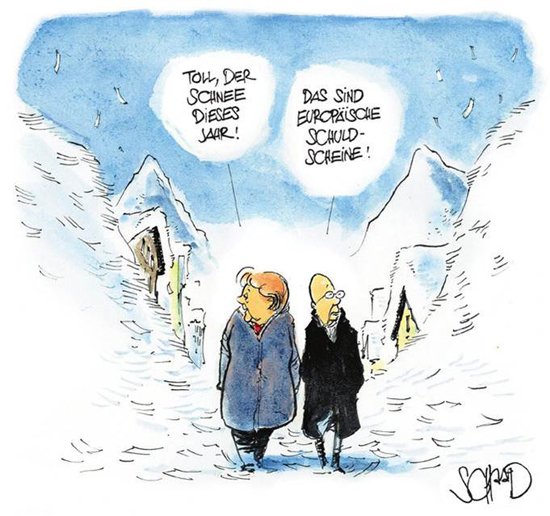


In the cartoon above, Ms. Merkel says to Mr. Schwab (founder of the WEF): “Great, all the snow this year!” Mr. Schwab responds: “That’s not snow, it’s European debt paper!”

WEF