Reducing Illegal Ivory Trade?

It is inconceivable to imagine Africa without its elephants. Yet as poaching reaches critical levels, we are heading ever-closer to that grim reality. We take an in-depth look at why the demand for ivory skyrocketed, how the illegal wildlife trade is a threat to global security and what is being done to save Africa’s elephants from extinction.

Over the next two years, Hong Kong will embark on the world’s largest ivory burn, setting 28 tons of illegally harvested tusks aflame to signal a shift in its valuation of elephants. AsNational Geographic reports, this is actually the latest in a string of public ivory disposals around the world. China crushed six tons of tusks and ivory ornamentson January 6; the United States smashed six tons in November 2013; and the Philippines burned five tons in June 2013, making history as the first “ivory-consuming nation” to destroy almost all of its national stock. Gabon burned its stockpile in June 2012.


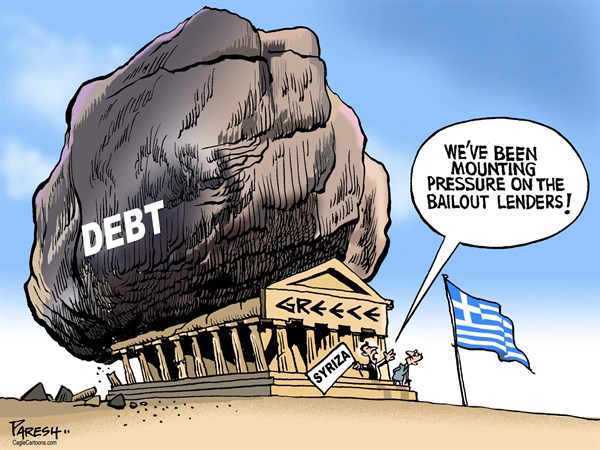
Greek Debt Relief as Important as Pension Reform?

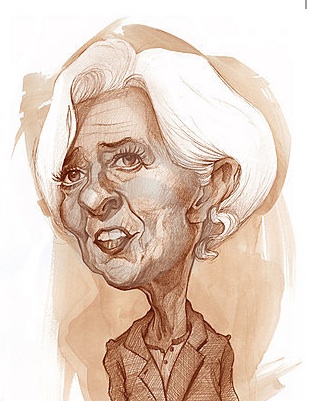
As the first phase of talks between Greece and its creditors draws to an end, International Monetary Fund chief Christine Lagarde stressed that debt relief is as important for Greece as the reforms that creditors are demanding, notably of the pension system.

“I have always said that the Greek program has to walk on two legs: one is significant reforms and one is debt relief. If the pension [system] cannot be as significantly and substantially reformed as needed, we could need more debt relief on the other side.”

She noted, however that Greece’s pension system must become sustainable irrespective of any debt relief that creditors may decide to provide. Plowing 10 percent of gross domestic product into financing the pension system, compared to an average of 2.5 percent in the EU, is not sustainable, she said. She called for “short-term measures that will make it sustainable in the long term.”

As for criticism of the IMF as excessively harsh, Lagarde suggested it was unfair.  “I really don’t like it when we are portrayed as the “draconian, rigorous terrible IMF.” “We do not want draconian fiscal measures to apply to Greece, which has already made a lot of sacrifices. We have said that fiscal consolidation should not be excessive, so that the economy could work and eventually expand. But it needs to add up.”

Apart from pension reform, Lagarde underlined the need for Greece to improve tax collection “so that revenue comes in and evasion is stopped.”

“And the debt relief by the other Europeans must accompany that process.  We will be very attentive to  the sustainability of the reforms, to the fact that it needs to add up, and to walk on two legs. That will be our compass for Greece. But we want that country to succeed at the end of the day, but it has to succeed in real life, not on paper.”

Greek Debt


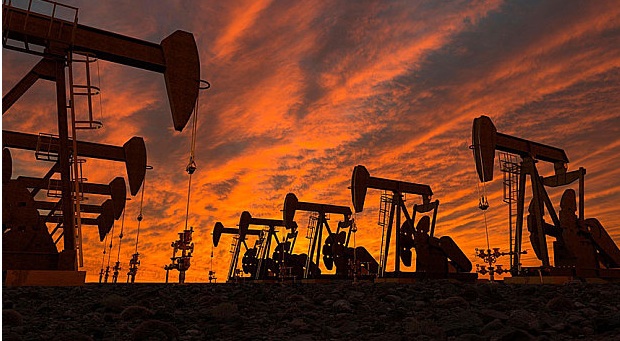
Twilight of Oil?

Christine Lagarde said the Fund stood ready to help struggling countries such as Azerbaijan and Nigeria cope with a renewed drop in oil prices, amid reports that the African nation has sought support from the World Bank.

“Oil and metals prices have fallen by around two-thirds from their most recent peaks, and are likely to stay low for quite some time,  As a result, many commodity-exporting emerging economies are under severe stress, and some currencies have already seen very large depreciations,” said Christine Lagarde.

Ms Lagarde called on policymakers to boost the global “safety net” to cope with future financial shocks.

The managing director called for more co-operation between central banks as well as better planning for countries to access credit in times of stress.

In separate comments on Thursday, Ms Lagarde praised Azerbaijan for taking steps to reassess spending and use its exchange rate as a “buffer”.

However, she said Nigeria was still wasting money on subsidies and suggested that the country’s woes were being exacerbated by the naira’s peg to the US dollar.

Ms Lagarde also sought to calm fears about China, as she said a slowdown in growth would not lead to a “hard landing” for the world’s second largest economy.

She said the transition towards consumption from investment-led growth would “create spillover effects – through trade and lower demand for commodities, and amplified by financial markets”, but that this would lead to more sustainable growth.

As tens of thousands of Greeks took to the streets to protest against government pension reforms needed to meet demands of international creditors, Ms Lagarde said spending on pensions in the country remained well above the European average, but added that reform demands had to be realistic.

Ms Lagarde also said the perception that the IMF was acting in a “draconian” or “terrible” way on reforms was unfair.

“Greece has made a lot of sacrifices; [austerity] should not be excessive but it needs to add up,” she said. “[Greece’s] tax collection system needs to be improved so revenues come in and evasion is stopped and debt relief from other European countries must accompany this process. We want the programme to be a success, but it has to succeed in real life, not just on paper.”

Twilight of Oil?


Failure of Anti-Corruption Measures in Ukraine?

Claims of resigned Ukraine’s Economic Development Minister Aivaras Abromavicius about corruption in the government could indicate failure of introduced reforms, International Monetary Fund (IMF) Managing Director Christine Lagarde said.

“His [Abromavicius’s] recently announced resignation is of concern,” Lagarde stated. “If the allegations that he makes in his resignation are correct, then it is obviously an indication that the anti-corruption measures that were committed to by the government are not yet working.”

Abromavicius announced his plans to resign because he was unable to work effectively. In his resignation letter, the minister named corruption and political pressure as reasons for the decision.

Lagarde noted that Abromavicius conducted “good and solid reforms” in Ukraine, and paid tribute to his effort.

“We have known all along that in relation to corruption, a lot of work needs to be done,” she added.

In March 2015, the IMF approved a four-year $17.5-billion assistance package to Ukraine to help the recovery of its ailing economy. To receive the financial aid, Kiev has committed to complex reforms, including enhanced anti-corruption policies.

Lagarde


Does Europe Need a New Deal?

Thomas PIketty writes:  It will be important for European leaders—the French and Germans in particular—to acknowledge their errors. We can debate endlessly all sorts of reforms, both small and large, that ought to be carried out in various eurozone countries: changed opening hours for shops, more effective labor markets, different standards for retirement, and so on. Some of these are useful, others less so. Whatever the case, however, the failures to make such reforms are not enough to explain the sudden plunge in GDP in the eurozone from 2011 to 2013, even as the US economy was in recovery. There can be no question now that the recovery in Europe was throttled by the attempt to cut deficits too quickly between 2011 and 2013—and particularly by tax hikes that were far too sharp in France. Such application of tight budgetary rules ensured that the eurozone’s GDP still, in 2015, hasn’t recovered to its 2007 levels.  A New Deal for Europe

Will Russia Privatize State Businesses?

Mark Adomanis writes:  You know that Russia is in real trouble when liberal economic policies start getting batted around. This is particularly true of “privatization,” a typically boring and technical term studiously avoided during periods of stability and then suddenly thrust back into the public consciousness during periods of crisis.

In 2009, the last time that oil prices tanked and the government’s coffers became a bit sparse, the Kremlin talked openly about privatizing a number of state-owned companies. Impressive sounding plans were released, and officials mouthed the pieties about “attracting investment” and “improving efficiency.” Nothing came of this campaign (oil prices rebounded quickly enough that the pressure on the state’s finances quickly abated and the state’s economic role actually grew), but it established a precedent that is being repeated.

As the economy experiences a nasty recession and pressure on the government’s budget mounts, the Kremlin is once again mulling the initiation of a large-scale program of privatization.

Both in 2009 and in 2016, the official justification for privatization is familiar: privatization will both raise money to plug holes in the budget and, perhaps even more importantly, will make the economy as a whole more competitive. It’s no secret that government-owned companies almost always lack the incentives needed for long-term profitability.

Compared with private sector peers, state-owned firms tend to have some combination of bloated payrolls, unrelated assets (think golf courses), or suspiciously large capital expenditures.

Gazprom’s capex as a percentage of sales was somewhere between three and four times the level of comparable publicly-traded companies. It’s easy to imagine that more profit-oriented managers would do a better job.

If the government’s main goal is to increase the economy’s efficiency, privatization is an excellent tactic. But, rare indeed is the instance in which a government single-mindedly pursues greater efficiency.

According to the Kremlin’s public statements, privatization is going to achieve the following goals simultaneously: 1) increase the economy’s competitiveness, 2) raise funds to plug the hole in the budget, 3) maintain state control of “strategically important companies,” 4) avoid a “fire sale” in which the government “gives away” valuable assets, 5) limit the involvement of state banks and 6) attract foreign investors.

It is simply impossible to design a privatization scheme that achieves all of these goals simultaneously.

Alternately, the government could drastically limit the involvement of state banks. This would likely improve the quality of management but would significantly depress valuations.

Unless the government significantly changes its stated goals, foreign investors will remain uninterested.

The Russian government needs to decide what it values most highly. Does it want to involve foreigners or keep everything registered in Russia? A properly-structured program of privatization would marginally boost the country’s growth rate and bring in fresh management, but would require such economic de-regulation that, by all accounts, the Kremlin deems unacceptable.

I would expect a reprisal of 2009’s performance — self-satisfied talk of privatization with very little action. The real question is whether oil prices will rebound like they did last time.
 

Brexit Progress?

A draft deal to reform Britain’s relationship with the European Union has fiercely divided the Square Mile, prompting cheers from big business groups and drawing sharp criticisms from sceptical economists and industry leaders.

European Council President Donald Tusk tabled a tentative agreement yesterday for a “new settlement” for the UK in the EU, and in a letter to the leaders of all 28 EU member states, Tusk said his proposals go “really far in addressing all the concerns raised” by Prime Minister David Cameron.

But Tusk added: “This has been a difficult process and there are still challenging negotiations ahead. Nothing is agreed until everything is agreed.”

The circulation of the draft kicks off another two weeks of high-stakes negotiations ahead of a meeting of EU leaders later this month. Cameron has said that he wants to secure a final deal at the meeting, paving the way to hold an in/out vote as soon as June.

TheCityUK and Confederation of British Industry (CBI) welcomed yesterday’s draft, calling it a “milestone” in the reform process, while the Institute of Directors said the proposals were “better than expected”.

Economists and industry leaders, however, slammed the deal, saying it fell short of earlier promises made by the Prime Minister and chancellor George Osborne.

“Britain’s business leaders and finance professionals will remain to be convinced that today’s draft deal is the right formula for a better future in Europe,” said ICAS chief executive Anton Colella.

Quidnet Capital Partners chief executive Richard Tice agreed, telling City A.M.: “There is no genuine reform in any of this. The Prime Minister talks about substantial changes, but this is a restatement of the existing system.”

Osborne wrote in City A.M. last September: “One of the greatest threats to the City’s competitiveness comes from misguided European legislation. A central demand in our renegotiation will be that Europe reins in costly and damaging regulation.”

But Jon Moynihan, former executive chairman of PA Consulting Group, said he saw little in the draft that would curb harmful regulations.  “Even the small set of concessions achieved will either be just ignored by the EU as such agreements have in the past,” Moynihan said. “They are sort of meaningless as far as business is concerned.”

Among the proposals included in the draft is a so-called safeguard mechanism protecting non-euro countries from being discriminated against by the Eurozone.

The draft calls on Eurozone countries to “respect the competences, rights and obligations of member states whose currency is not the euro” and allows the UK to call a summit of EU leaders if it is concerned about punishing Eurozone rules, including those related to financial services. But the draft stops short of allowing the UK and others to veto Eurozone legislation.

“It’s not a mechanism that has any actual impact,” Europe Economics executive director Andrew Lilico told City A.M., calling the measure “completely worthless”.

Should Central Banks Arbitrate the Global Economy?

Michael Haltman writes: The December increase was implemented despite inflation remaining well below the Fed’s target rate of 2% and in the face of a recovery that could be, at best, termed tepid.

At the time some speculated that the Fed needed to raise rates so that they would have the ability to lower them again should the economy weaken. Still others thought that to retain any credibility they needed to make a move.

Neither one of those could be called solid reasoning when making decisions impacting the U.S. economy.

And since the rate hike suggests the counterintuitive track of 2-year treasury note yields courtesy of treasury.gov…

The Federal Reserve has acknowledged that the U.S. economy has slowed down but provided little guidance about when it would raise interest rates again.

The central bank began pulling back its support for the recovery in December and signaled it anticipated increasing its benchmark rate four times this year. But weeks of turmoil on Wall Street have spurred doubts about whether the Fed will forge ahead.

For now, the central bank is standing pat. In a unanimous vote Wednesday, the Fed left the range for its benchmark interest rate unchanged between 0.25 and 0.5 percent. Its official statement emphasized the resilience of the job market despite the weakened recovery and pointed out strength in consumer spending and the housing sector.

So do we feel that the Fed as an institution with HUGE responsibilities, has a firm grasp on accomplishing its mandate?

Is the Federal Reserve, in effect the arbiter of the global financial system is run by academicians with little to no actual experience with business.

The Federal Reserve has no need to innovate or to push the envelope.

Government in effect has no responsibility to a bottom-line or a need to grow in any way other than raising taxes to bring in more revenue or to increase infrastructure to create more jobs.

Either way, whether through taxes or through government growth, the cost is borne by you and I, the taxpayer.

To further compound the problem of government bureaucrats setting policy for businesses and individuals is that I would venture to guess that many if not the majority have little to no actual business experience.

A perfect example might be the government mandated minimum wage of $15 an hour that might sound great to the voter, but will undoubtedly have unintended consequences politicians can’t be bothered with worrying about.

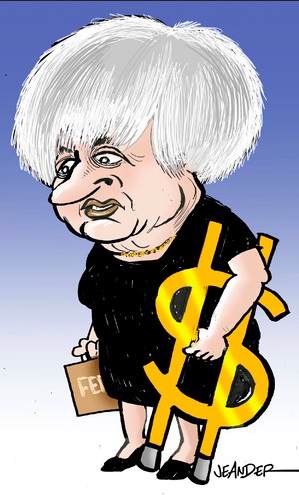
The above mentioned description certainly seems to be the case with Fed Chair Janet Yellen, an appointed government official who has much of the worlds financial future (at least in the near to medium-term) in her hands.

Yellen

Should Central Bank Assets Have a Policy Purpose?

Emily EIsner of the NY Fed writes: The main liabilities of central banks are typically currency (banknotes) and reserves, a form of money that can only be held by banks at the central bank  Banks use reserves to make payments among themselves and to the central bank. In addition, some central banks issue deposits to the government. These accounts function as the government’s “checking account” at the central bank.

Typical Central Bank Liabilities

The Federal Reserve was a central bank that, before the crisis, held mostly currency as its main balance sheet liability. Currency represented 93 percent of the Fed’s liabilities in December 2006, with reserves only 1.5 percent and the Treasury’s general account half a percent. Currency is a sizable liability on most central bank balance sheets in normal times.

Other central banks had a much larger share of their liabilities as reserves before the crisis. One reason to issue a lot of reserves in normal times is to help interbank payments run smoothly; if the supply of reserves is small, banks concerned about running out of reserves at the end of the day may choose to delay payments to other banks, which can create “gridlock.”

As an example, the Norges Bank issued a relatively large amount of reserves before the crisis – 7 percent of its liabilities. Almost 50 percent of the liability side of the Norges Bank balance sheet at the end of 2006 was made up of treasury deposits, and currency represented only 16 percent of liabilities, so its balance sheet looked more like the figure below.

Central Bank Liabilities with a Large Share of Government Deposits

Currency and reserves are “immediate” maturity liabilities, since they can be instantly transferred to other parties for payment. Some central banks also issue term maturity liabilities, either term deposits, which are only available to counterparties that hold a central bank account, or term repos, which are collateralized and available to counterparties beyond depositing institutions. Some central banks have the authority to issue bills. Like Treasury bills, central bank bills are available to nonaccount holders in the secondary market, although some central banks restrict primary issue to account holders. Term liabilities can be issued both to reduce the amount of reserves in the system and to control the central bank’s target interest rate. (This composition is depicted in the figure below.)

Central Bank Liabilities with Term Funding

For instance, the Bank of England (BoE), the European Central Bank (ECB), the Fed, and the Reserve Bank of Australia (RBA) have been fine-tuning term deposit facilities and repo instruments that have longer maturities than overnight. The BoE, the ECB, the Swiss National Bank, and the RBA are among the central banks that have the ability to issue bills, the Fed does not currently have this authority. Central Bank Assets


EU Gives One Billion to Turkey for Refugees

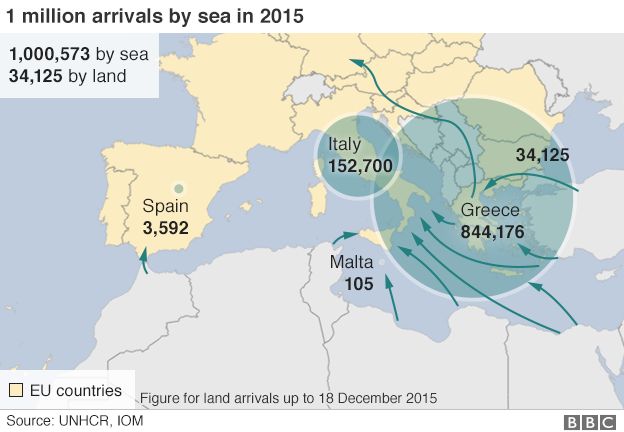
The EU has approved €3bn ($3.3bn; £2.2bn) in funding to help Turkey cope with record numbers of Syrian migrants.

The organisation hopes the fund will lower the number of arrivals into EU nations.

Under the deal, the EU’s executive is contributing €1bn to the fund, while the 28 member states will contribute the rest.

More than a million migrants reached the EU last year by sea, many of them travelling through Turkey.

Turkey is home to nearly three million refugees, most of them fleeing the conflict in neighbouring Syria.

A deal was struck last year between Turkey and the EU, offering Turkey funding and political concessions in return for tightening its borders.

However, financing was only secured on Wednesday after Italy dropped its objections.

Italy had questioned how much of the money should come from EU budgets but the measure has now passed unanimously.

Welcoming the move, European Commission Vice-President Frans Timmermans said: “The money we are putting on the table will directly benefit Syrian refugees in Turkey.

“I also welcome the measures already taken by the Turkish authorities to give Syrian refugees access to the labour market and to reduce the flows.”

Map of arrivals