Lagarde Confident in China Despite Bumps

Lagarde has confidence in China’s economy despite current bumps.

Lagarde said that she’s not concerned about volatility in China’s markets, which have suffered wild swings in recent weeks.

“Having a certain degree of volatility is alright” as the country’s markets mature, Lagarde said at the World Economic Forum.

Lagarde said that if volatility becomes excessive, some intervention by regulators is legitimate and understandable. Investors should have patience during bumpy times, she added.

The benchmark Shanghai Composite has shed nearly 19% since January 1.

Lagarde remains confident that Chinese authorities will be able to guide the country during its transformation from an economy based on investment and exports, to one driven by consumption.

“We believe they will deliver,” she said. “When the authorities actually put their mind [to it … there is] an unbelievable determination and ability to deliver.”

Christine Lagarde, managing director at the IMF, is optimistic about China’s ongoing economic transformation.

Chinese authorities recently made changes to how the country’s currency is managed in order to meet strict IMF guidelines. The changes helped convince the IMF to include China’s yuan in its elite basket of reserve currencies in late 2015. The inclusion was a major vote of confidence in Beijing’s economic reforms.

Jack Lew, the U.S. Treasury Secretary, largely echoed Lagarde on Thursday, saying that he has “been following China very closely” and doesn’t see “the situation today as being so dramatically different” than at the end of 2015.

“It’s bumpy days in the markets, but you do have to look at some of these underlying things in a longer term way,” he said.

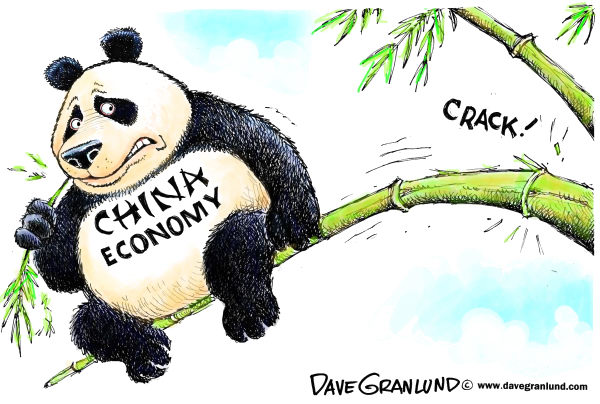
China's Slowdown

Britain and Germany Back Lagarde for Re-Up

Lagarde gets crucial backing for second term.

While Lagarde has been widely praised for her leadership role at the organization, which has coordinated bailouts for countries and monitors reforms globally, developing countries have increasingly opposed an informal arrangement by which a European heads the IMF. The sister organization, the World Bank, has until recently typically been led by an American.

The IMF’s recent downgrade of growth forecasts and Lagarde’s future are on many minds at this week’s World Economic Forum gathering in Davos, Switzerland where she is a prominent presence.

British finance chief George Osborne issued a statement Thursday saying his government nominated her to stay in the post.

“At a time when the world faces what I’ve called a dangerous cocktail of risks, I believe Christine has the vision, energy and acumen to help steer the global economy through the years ahead,” he said.

The German government quickly followed, with a finance ministry statement saying Lagarde “was a circumspect and successful crisis manager during the difficult period after the financial crisis.”

For the IMF post, individual countries normally nominate their preferred candidate before the individual declares their intention to run.

.The World Economic Forum meeting of business leaders and public figures has been overshadowed by turmoil in global markets and geopolitical security issues.

Speaking about China’s economic slowdown, she said the country needed to refine its communication on reforms it was taking and its market policies.

A Chinese market regulator said the concerns over growth were overstated. He said China has no option but to support growth this year, using its large financial reserves if needed.

“We cannot afford to let the growth rate to fall too sharply, because that would ignite a lot of financial problems inside China. So we will have appropriately expansionary fiscal and financial policy this year,” said Fang Xinghai, from China’s Central Leading Group for Financial and Economic Affairs.

Ray Dalio, the chairman of Bridgewater Associates, said the biggest concern was China’s currency. As it weakens, that will weigh on the global economy by hurting trade, among other things.

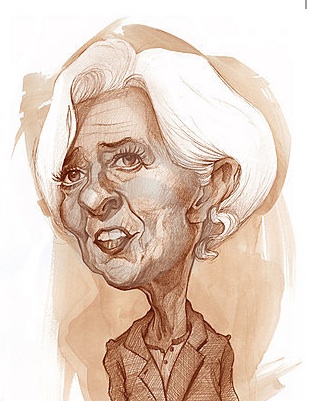
Lagarde

WEF Discussion: Bitcoin, Blockchain and Hacking

The World Economic Forum at Davos is focussed on technology this year and among the first discussions was the possibility of new currencies.

At the annual meeting of the world’s economic titans in Davos, Switzerland, the heads of Morgan Stanley, Deutsche Bank and the International Monetary Fund played down suggestions that digital currencies like bitcoin could soon shake the foundations of the finance industry.

Some aspects of the investment banking industry could be impacted by the march of digitalization and cryptocurrencies — including securities trading and cash transfers.

The discussion came during a World Economic Forum confab whose theme — “the Fourth Industrial Revolution” — centers on the potential of automation and connectivity to revolutionize markets and society.

For bankers, the timing is apt. In 2015, digital currency technologies made unprecedented incursions into the mainstream of the financial world, with top industry players staking out positions in the booming market. Goldman Sachsjoined a $50 million financing round for bitcoin startup Circle Internet Financial. The Nasdaq stock exchange began using a blockchain-based platform to settle trading in private startup shares.

On the flipside, the burgeoning digital currency space remains largely unregulated. Christine Lagarde, head of the International Monetary Fund, told the panel that bitcoin and related currency innovations “could disrupt monetary policy” in the future, potentially posing a “substantial threat to financial stability.”

But at present, Lagarde noted, digital currencies have a relatively puny market value of $7 billion, the equivalent of less than 0.1 percent of the current $12.3 trillion U.S. money supply.

Technological changes beyond bitcoin, however, gave the finance executives some pause. From the digitization of monetary transactions to the increasing importance of security in a connected world, panelists saw deep changes ahead in the way banking operates.

PayPal CEO Dan Schulman, the sole “disrupter” on the panel, emphasized the security risks that financial firms face online. “Everybody’s password has been compromised,” Schulman said. “That’s just the reality.”

“Financial markets are going to be hacked,” he added, echoing fears among financial regulators that increasingly digitized securities exchanges and global banking hubs could become the targets of belligerent parties on the world stage.

The financiers noted that the industry began moving into cyberspace decades ago, long before bitcoin reared its head. “On the stockbroking side, we’re really just trading electrons anyway,” said Cryan, who predicted that physical cash would follow suit within a decade.

But the bank executives didn’t see those seismic changes knocking them from their roosts at the top of the financial pecking order. Panel moderator Gillian Tett of the Financial Times put the question bluntly, asking whether Wall Street could be like “rabbits in the headlines of the train” of blockchain technologies.

“Look at how we actually make money,” answered Gorman, whose company participated in the largest-ever initial public offering with Chinese online retailer Alibaba last year. “Is blockchain going to stop us from bringing Alibaba to market?”

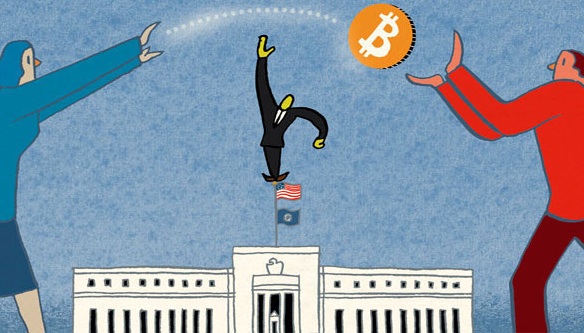
Bitcoins-Currency of the Future?

Soros Fears for the European Union

George Soros on the state of the world and the impact of Orban and Putin on the EU. Interview with Gregor Peter Schmitz.

In Hungary, Orban has won hands down. More disturbingly, he is also winning in Europe. He is challenging Merkel for the leadership of Europe. He launched his campaign at the party conference in September 2015 of the Christian Social Union of Bavaria (the sister party of Merkel’s Christian Democratic Union) and he did so in cahoots with Horst Seehofer, the German party chairman. And it is a very real challenge. It attacks the values and principles on which the European Union was founded. Orbán attacks them from the inside; Putin from the outside. Both of them are trying to reverse the subordination of national sovereignty to a supranational, European order.

Putin goes even further: he wants to replace the rule of law with the rule of force. They are harking back to a bygone age. Fortunately, Merkel has taken the challenge seriously. She is fighting back and I support her not only with words but also with deeds. My foundations do not engage only in advocacy; they seek to make a positive contribution on the ground. We established a foundation in Greece, Solidarity Now, in 2013. We could clearly foresee that Greece in its impoverished state would have difficulty taking care of the large number of refugees that are stuck there. Soros Interview


India to Build World’s Largest Solar Plant

Madhya Pradesh government has inked a pact with IFC, member of the World Bank Group, to set up the world’s largest solar energy plant with a capacity of 750 MW.

The Rewa Ultra-Mega Solar Power Project will be set up in Gurh tehsil of Rewa district over an area of 1,500 hectares at an estimated cost of Rs 4,500 crore.

The project will be the largest single-site solar power project in the world, a release said.

The Memorandum of Understanding (MoU) was signed between Madhya Pradesh Renewable Energy Development Corporation and IFC.

“Successful implementation of the Rewa Ultra-Mega Power project will be a key milestone for Madhya Pradesh’s outstanding efforts and leadership in renewable energy and the Centre’s remarkable vision on solar power,” the state’s Energy Minister Rajendra Shukla said.

IFC, which is working with the Union government to assist in meeting its large-scale solar energy generation goals, is also supporting the state government for the project.

Moreover, IFC will extend its global expertise to structure and implement the transaction to help attract private investments of about USD 750 million.

Madhya Pradesh Urja Vika Nigam Limited (MPUVN) and the Solar Energy Corporation of India have created a joint venture company — Rewa Ultra-Mega Solar Power Limited — to implement the project.

“With this project, India can demonstrate to the world that innovative business models and partnerships to build scale can help achieve challenging goals.

“IFC is privileged to be part of India’s and Madhya Pradesh’s determined approach to build a sustainable future,” IFC’s Regional Director for South Asia Mengistu Alemayehu said.

Solar Power

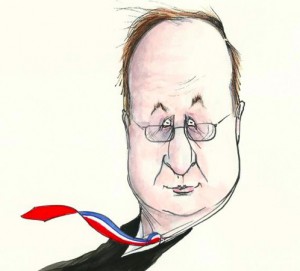
Hollande Declares Economic Emergency in France

French President Francois Hollande pledged Monday to redefine France’s business model and declared what he called “a state of economic and social emergency,” unveiling a 2-billion-euro ($2.2 billion) plan to revive hiring and catch up with a fast-moving world economy.

The measures he proposed, however, are relatively modest, and he said they would not “put into question” the 35-hour workweek. With his country under a state of emergency since extremist attacks in November, Hollande did not seek to assume any new emergency powers over the economy.

In an annual speech to business leaders, Hollande laid out plans for training half a million jobless workers, greater use of apprenticeships, and aid for companies that hire young workers.

Hollande’s Socialist government has struggled to boost long-stagnant French growth or reduce chronic unemployment, which has been around 10 percent for years. His chances of winning a potential second term may hinge on whether jobs pick up before next year’s presidential vote.

Hollande stressed the urgency of updating France’s labor-friendly business model in an increasingly border-free, online economy. The measures included a loosening of France’s rigid working time rules, and a bonus of 2,000 euros to small businesses that hire young people.

He stressed the need to integrate youth from France’s troubled suburbs, including minorities who face job discrimination, into the global economy. High unemployment in France’s North African and African communities is seen as one of the factors driving some youths to violent extremism or the drug trade.

Some measures will be included in draft economic reform laws the government is presenting to parliament in the coming weeks.

Hollande


IMF Looks at Subdued Global Growth

The IMF reports:  In 2015, global economic activity remained subdued. Growth in emerging market and developing economies – while still accounting for over 70 percent of global growth – declined for the fifth consecutive year, while a modest recovery continued in advanced economies. Three key transitions continue to influence the global outlook: (1) the gradual slowdown and rebalancing of economic activity in China away from investment and manufacturing toward consumption and services, (2) lower prices for energy and other commodities, and (3) a gradual tightening in monetary policy in the United States in the context of a resilient U.S. recovery as several other major advanced economy central banks continue to ease monetary policy.

Global Prospects

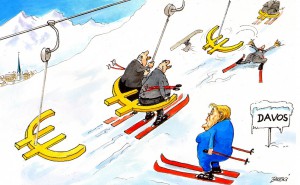
Davos Sober in Face of Global Slowdown and Political Unrest

Simon Kennedy and Matthew Simon write:  As the chattering chieftains of the global economy gather this week in Davos, Switzerland, they’re facing the darkest outlook since the financial crisis tipped the world into recession seven years ago.

The Chinese slowdown and accompanying slide in the yuan are imperiling already sluggish international growth, oil is trading at its lowest level in more than a decade, stocks have suffered their worst January ever, and the prospects for corporate earnings are the most pessimistic in years.

Economic frustrations have driven the rise of populists in the U.S. and France while sowing doubts about the longevity of German Chancellor Angela Merkel and Britain’s membership in the European Union.

China has confirmed its weakest quarter since 2009 and its slowest annual growth since 1990. The International Monetary Fund, meanwhile, cut its estimate for expansion in the world economy this year to 3.4 percent from 3.6 percent.

Meantime, the International Labor Organization predicted that global unemployment will climb this year by almost 2.3 million to 199.4 million, led by emerging markets. PriceWaterhouseCoopers LLC said only about a third of chief executive officers it polled were “very confident” about their companies’ growth prospects.

Also causing some concern is the Federal Reserve’s decision to raise interest rates last month for the first time in nine years even with tame inflation. That’s pushed up the dollar, hurting those emerging markets that boosted borrowing in greenbacks when rates were at rock-bottom.

In developed countries, there is a sense of frustration as once-robust middle classes fall ever further behind the have-lots. The charity Oxfam said on Monday that the richest 1 percent of people on Earth now control more wealth than the rest of the world’s population combined.

Political activity  in the US, the world’s largest economy, which large companies and investors have relied on to drive growth as Europe stagnates and emerging markets underperform is unnerving.

Davos


Children Working in Congo Cobalt Mines

Human rights organisation Amnesty has accused Apple, Samsung and Sony, among others, of failing to do basic checks to ensure minerals used in their products are not mined by children.  In a report into cobalt mining in the Democratic Republic of the Congo, it found children as young as seven working in dangerous conditions.

Cobalt is a a vital component of lithium-ion batteries.  The firms said that they had a zero tolerance policy towards child labour.

The DRC produces at least 50% of the world’s cobalt. Miners working in the area face long-term health problems and the risk of fatal accidents, according to Amnesty.

It claimed that at least 80 miners had died underground in southern DRC between September 2014 and December 2015.

It also collected the testimonies of children who allegedly work in the mines.

Paul, a 14-year-old orphan, started mining when he was 12 and told researchers: “I would spend 24 hours down in the tunnels. I arrived in the morning and would leave the following morning … I had to relieve myself down in the tunnels … My foster mother planned to send me to school, but my foster father was against it, he exploited me by making me work in the mine.”

 UNICEF estimates that there are approximately 40,000 children working in mines across southern DRC.

In response to the report, Apple said: “Underage labour is never tolerated in our supply chain and we are proud to have led the industry in pioneering new safeguards.”

It said that it conducts rigorous audits on its supply chain and any supplier found hiring underage workers is forced to:

  • fund the worker’s safe return home
  • finance the worker’s education at a school chosen by the worker or his/her family
  • continue to pay the worker’s wages
  • offer him or her a job when he or she reaches legal age to work.

On cobalt specifically it added: “We are currently evaluating dozens of different materials, including cobalt, in order to identify labour and environmental risks as well as opportunities for Apple to bring about effective, scalable and sustainable change.”

Samsung said that it had a “zero tolerance policy” towards child labour and that, it too, conducted regular and rigorous audits of its supply chain.

“If a violation of child labour is found, contracts with suppliers who use child labour will be immediately terminated,” it said.

Sony commented: “We are working with the suppliers to address issues related to human rights and labour conditions at the production sites, as well as in the procurement of minerals and other raw materials.”

Child Labor in Cobalt Mines


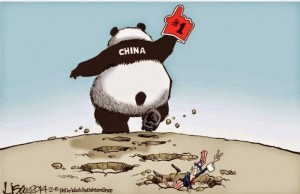
China’s Impact on the World Economy

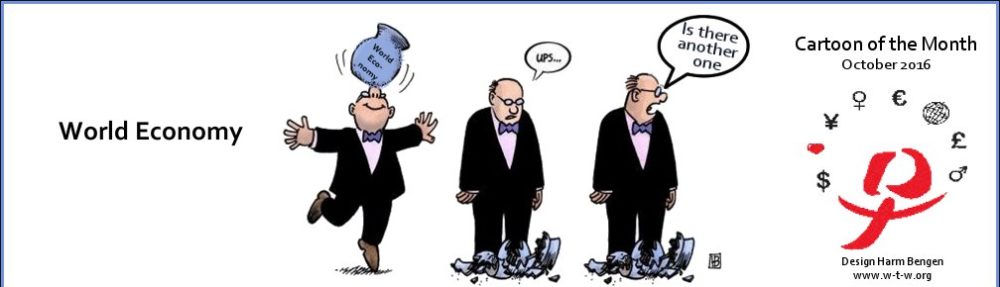
Mohamed a el Erian writes:  The recent decline in China’s currency, the renminbi, which has fueled turmoil in Chinese stock markets and drove the government to suspend trading twice last week, highlights a major challenge facing the country: how to balance its domestic and international economic obligations. The approach the authorities take will have a major impact on the wellbeing of the global economy.

The 2008 global financial crisis, coupled with the disappointing recovery in the advanced economies that followed, injected a new urgency into China’s efforts to shift its growth model from one based on investment and external demand to one underpinned by domestic consumption. Navigating such a structural transition without causing a sharp decline in economic growth would be difficult for any country. The challenge is even greater for a country as large and complex as China, especially given today’s environment of sluggish global growth.

For years, China’s government sought to broaden equity ownership, thereby providing more Chinese citizens with a stake in a successful transition to a market economy. But, like the United States’ effort to expand home ownership in the years preceding the 2008 crisis, Chinese policies went too far, creating a financially unsustainable situation that implied the possibility of major price declines and dislocations.

As a result, the adjustment challenge has grown dramatically. With Chinese companies no longer able to sell a rapidly increasing volume of products abroad and support further expansion of productive capacity, the economy has lost some important growth, employment, and wage engines. The resulting economic slowdown has undermined the government’s capacity to maintain inflated asset prices and avoid pockets of credit distress.

In an effort to limit the detrimental impact of all this on citizens’ wellbeing, Chinese officials have been guiding the currency lower. A surprise devaluation last August has been followed by a number of lower daily fixes in the onshore exchange rate, all intended to make Chinese goods more attractive abroad, while accelerating import substitution at home. The renminbi has depreciated even more in the offshore market.

China’s currency devaluations are consistent with a broader trend among both emerging and advanced economies in recent years. Soon after the global financial crisis, the US relied heavily on expansionary monetary policy, characterized by near-zero interest rates and large-scale asset purchases, which weakened the dollar, thereby boosting exports. More recently, the European Central Bank has adopted a similar approach, guiding the euro downward in an effort to boost domestic activity.

But in pursuing its domestic objectives, China risks inadvertently amplifying global financial instability. Specifically, markets worry that renminbi devaluation could “steal” growth from other countries, including those that have far more foreign debt and far less robust financial cushions than China, which maintains ample international reserves.

This concern speaks to the even more challenging balancing act that China must perform as it seeks to play the role in global economic governance that its economic weight warrants. After all, China is now the world’s second-largest economy (and, by some non-market measures, the largest).

And, indeed, China has lately been showing greater interest in gradually internationalizing its financial system. Notably, it recently succeeded in persuading the International Monetary Fund to add the renminbi to the basket of currencies that determines the value of the Special Drawing Right, the unit the IMF uses in dealing with its 188 member countries.

That step – which places the renminbi on par with the major global currencies (the US dollar, the euro, the British pound, and the Japanese yen) – will enhance public- and private-sector acceptance of China’s currency in the international monetary system. At the same time, it created the expectation – though not the obligation – that China will refrain from aggravating global financial instability.

There will come a time when China’s domestic and international responsibilities will again be relatively well aligned. But that time is not now; and, given the country’s tricky ongoing structural transition, it probably will not come anytime soon.
China's Economy