China: Build It and They Will Come?

Francis Fukuyama writes:  As 2016 begins, an historic contest is underway over competing development models – that is, strategies to promote economic growth – between China, on the one hand, and the US and other Western countries on the other.

Most Westerners are aware that growth has slowed substantially in China, from over 10% per year in recent decades to below 7% today (and possibly lower). The country’s leaders are seeking to accelerate the shift from an export-oriented, environmentally damaging growth model based on heavy manufacturing to one based on domestic consumption and services.

President Xi Jinping’s One Belt component consists of rail links from western China through Central Asia and thence to Europe, the Middle East, and South Asia. The strangely named One Road component consists of ports and facilities to increase seaborne traffic from East Asia and connect these countries to the One Belt, giving them a way to move their goods overland, rather than across two oceans, as they currently do.

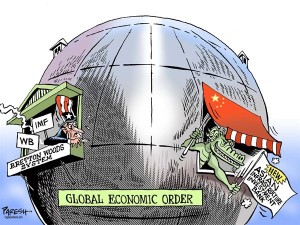
The China-led Asian Infrastructure Investment Bank (AIIB), which the US earlier this year refused to join, is designed, in part, to finance One Belt, One Road. But the project’s investment requirements will dwarf the resources of the proposed new institution.

Indeed, One Belt, One Road represents a striking departure in Chinese policy. For the first time, China is seeking to export its development model to other countries. One belt’s purpose is to develop industrial capacity and consumer demand in countries outside of China. Rather than extracting raw materials, China is seeking to shift its heavy industry to less developed countries, making them richer and encouraging demand for Chinese products.

China’s development model is different from the one currently fashionable in the West. It is based on massive state-led investments in infrastructure – roads, ports, electricity, railways, and airports – that facilitate industrial development. American economists abjure this build-it-and-they-will-come path, owing to concerns about corruption and self-dealing when the state is so heavily involved. In recent years, by contrast, US and European development strategy has focused on large investments in public health, women’s empowerment, support for global civil society, and anti-corruption measures.

China’s infrastructure-based strategy has worked remarkably well in China itself, and was an important component of the strategies pursued by other East Asian countries, from Japan to South Korea to Singapore.

The big question for the future of global politics is straightforward: Whose model will prevail? If One Belt, One Road meets Chinese planners’ expectations, the whole of Eurasia, from Indonesia to Poland will be transformed in the coming generation.

There are important reasons to question whether One Belt, One Road will succeed. Infrastructure-led growth has worked well in China up to now because the Chinese government could control the political environment. This will not be the case abroad, where instability, conflict, and corruption will interfere with Chinese plans.

Indeed, China has already found itself confronting angry stakeholders, nationalistic legislators, and fickle friends in places like Ecuador and Venezuela, where it already has massive investments. The strategy of massive infrastructure development may have reached a limit inside China, and it may not work in foreign countries, but it is still critical to global growth.

The US used to build massive dams and road networks back in the 1950s and 1960s, until such projects fell out of fashion. Today, the US has relatively little to offer developing countries in this regard. President Barack Obama’s Power Africa initiative is a good one, but it has been slow to get off the ground; efforts to build the Fort Liberté port in Haiti have been a fiasco.

The US should have become a founding member of the AIIB; it could yet join and move China toward greater compliance with international environmental, safety, and labor standards.
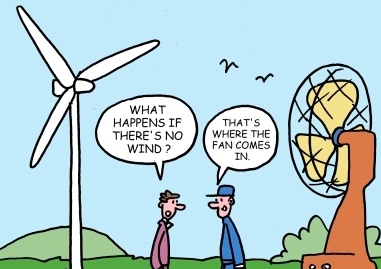
Growth Models?

AIIB: The Great Asian Hope?

Liqun Jin writes:  The recent historic launch of the Asian Infrastructure Investment Bank has been highly anticipated – and rightly so. With the start of operations, the AIIB joined the family of multilateral financial institutions in supporting broad-based economic and social development in Asia. Sound and sustainable infrastructure investment will lead to better development outcomes, improve the lives and livelihoods of Asia’s citizens, and generate positive spillover effects in other parts of the world.

The role and importance of Asia in the international arena have increased, yet the region faces severe infrastructure gaps and thorny bottlenecks. Asia’s infrastructure investment needs have grown exponentially, and the AIIB’s resources, quite simply, will increase the pool of multilateral resources available to help meet them.

The AIIB’s founding members have a clear management vision: We will set a clear and high bar for organizational performance and governance, by upholding openness, transparency, accountability, and independence as its core institutional principles.

In drafting the AIIB’s Articles of Agreement and policy framework, we have worked with a diverse group of international experts to draw lessons from the existing multilateral institutions and from successful private-sector companies. We have held extensive rounds of technical discussions with our shareholders to ensure that the Bank reflects its owners’ goals and aspirations in both its lending activities and internal operations.

AIIB’s unique ownership and shareholding structures reflect the institution’s regional character and provide members with a greater voice in policy direction and decision-making.

AIIB’s specialized geographic and sectoral mandate will enable it to offer niche skills, focused expertise, and concentrated market knowledge, and its organizational structure, staffing flexibility, and efficient decision-making processes will position it to respond with agility to client demand and emerging needs.

AIIB will leverage and mobilize public and private financing, including from institutional investors, and help clients to enhance project “bankability” by promoting transparency, efficiency, and adherence to accepted standards – including environmental and social standards – thereby reducing risk.

AIIB’s reputation and credibility will depend on the caliber of its staff. Our operations will be lean, clean, and green. That means keeping a check on bureaucracy and maintaining a relatively flat organizational structure; managing costs and using modern technology effectively; and avoiding duplication and overlap of functions. The AIIB will build its professional staff gradually, supplementing in-house expertise with specialized consultant skills. Staff positions will be carefully defined to avoid both underemployment and future redundancies.

The AIIB subscribes to the principles of sustainable development in the identification, preparation, and implementation of projects. The management of environmental and social risks and impacts is central to successful development outcomes. We will support our clients in managing these risks appropriately through knowledge, experience, and resources.

AIIB


Entrepreneur Alert: Alternate Energy Sources

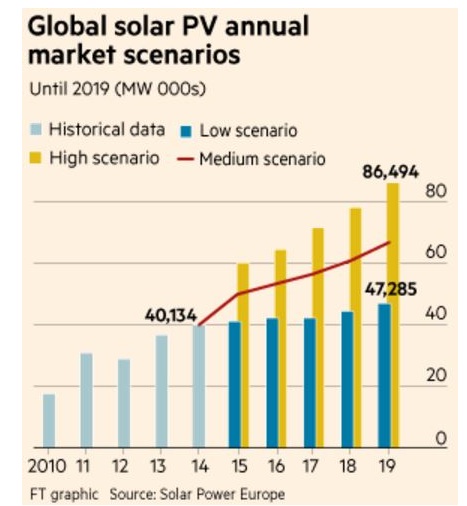
Developing energy alternatives an entrepreneurial opportunity, but financing remains elusive.

The need for more innovation in energy was one of the strongest points of agreement at the Paris talks. Some have suggested that the most important news to come out of the conference was not the final accord, signed with great fanfare by the governments of 195 countries, but the commitments made by governments and wealthy individuals to research and develop technologies that can help the climate.  Energy innovation is a concept that has become almost universally popular — among all from the most traditional of oil companies to the most radical of environmental groups.  For all the rising enthusiasm, though, investing in innovation remains a hazardous and uncertain business in energy, as in other industries.  

Alternative Energy


Entrepreneur Alert: PC Sales

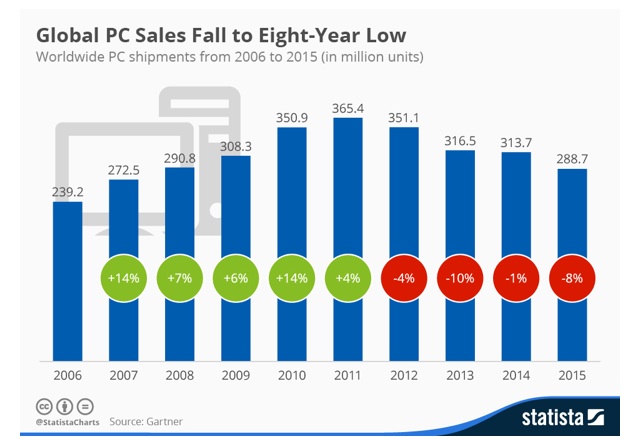
Felix Richter writes:  Worldwide PC shipments hit an eight-year low in 2015 after declining for the fourth consecutive year.

Global shipments dropped by 8 percent to 289 million in 2015, the lowest it’s been since 2007.

The decline of the PC industry started in 2012, around the time when tablet sales really took off. After a brief respite in 2014, when PC sales were virtually flat thanks to the end of official support for the popular WIndows XP and the subsequent upgrade cycle, the market’s decline re-accelerated in 2015 despite the release of Windows 10 in July.

Gartner attributes the weak market performance at least partially to currency effects, which negatively affected sales in EMEA, Japan and Latin America. However, the analysts also see a structural change happening that will lead to fewer people using PCs over the next few years.

Global PC Sales?


Bank Liquidity Crucial?

Taking the risk out of banking: Liquidity requirements versus equity requirements

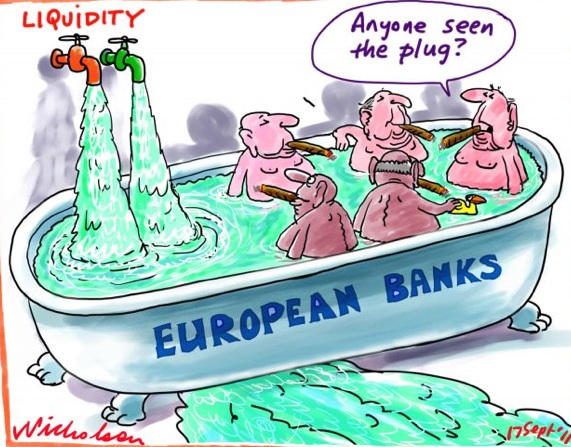
Richmond Federal Reserve writes:  The financial crisis of 2007 – 08 revealed the dangers of banks’ underinvestment in liquid assets or overreliance on high-risk funding sources. At some level, however, liquidity risk is part of a core function performed by banks: maturity transformation. In traditional banking, this means accepting deposits and making loans.

This leads to “maturity mismatch” between banks’ liabilities and assets – many of a bank’s liabilities are short-term and payable on demand to depositors and other creditors, while many of its assets are long-term and illiquid. A bank without enough liquid assets to meet a sudden increase in demand on its liability side may be forced to sell assets quickly at reduced prices or suspend operations. And since some banks act as sources of funding for other banks or financial firms, strain at one institution could cause broader disruptions to the financial system.

While large nonbank financial institutions rely on funding sources other than deposits, the maturity mismatch principle is still the same. Shortterm funding sources, such as commercial paper and repurchase agreement (repos), are rolled over very frequently – sometimes even daily. But if creditors suspect weakness on the part of the bank or the securities underlying a repo, they may choose not to roll over the debt in favor of extending that credit to another institution. This sudden loss of funding could create a scenario similar to a classic bank run.  Report

Bank Liquidity

Should We Use a Social Progress Index?

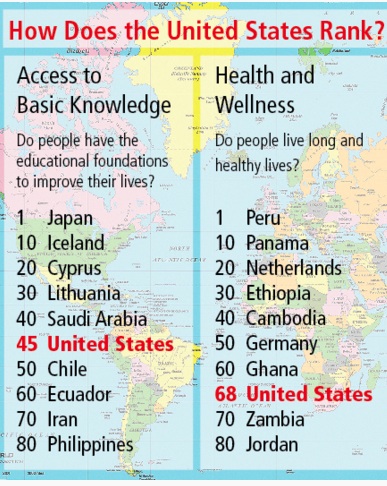
Laura Levis writes:  What are the ingredients of a  healthy, inclusive society—one that offers its citizens opportunity, happiness, and a positive quality of life? According to Lawrence University Professor Michael E. Porter, models of human development based on economic growth alone are incomplete; nations that thrive provide personal rights, nutrition and basic medical care, ecosystem sustainability, and access to advanced education, among other goods—and it is possible to measure progress toward providing these social benefits.

Porter’s 2015 Social Progress Index (SPI)—released in April and developed in collaboration with Sarnoff professor Scott Stern of MIT’s Sloan School and the nonprofit Social Progress Imperative—ranks 133 countries on multiple dimensions of social and environmental performance in three main categories: Basic Human Needs (food, water, shelter, safety); Foundations of Wellbeing (basic education, information, health, and a sustainable environment); and Opportunity (freedom of choice, freedom from discrimination, and access to higher education). Porter considers the index “the most comprehensive framework developed for measuring social progress, and the first to measure social progress independently of gross domestic product (GDP).”

The index, he explains, is in some sense “a measure of inclusiveness,” developed based on discussions with stakeholders around the world about what is missed when policymakers concentrate on GDP (which tallies the value of all the goods and services produced by a country each year) to the exclusion of social performance.

The United States may rank sixth among countries in terms of GDP per capita, but its results on the Social Progress Index are lackluster. It is sixteenth overall in social progress: well below Canada, the United Kingdom, Germany, and Japan in several key areas, including citizens’ quality of life and provision of basic human needs.

About 20 or 30 years ago, for reasons Porter says he cannot completely explain, the rate of progress in America began to slow down. As a society, he points out, Americans slowly became more divided, and important priorities such as healthcare, education, and politics suffered.

Meanwhile, he notes that even though other fast-growing nations such as India and China haven’t been able to attain a level of social progress commensurate with their economic progress either, certain countries such as Rwanda have “knocked the cover off the ball” in terms of social progress. “They went through a genocide, were devastated, and, to bring the society together, there was a consensus, led by the president, that their first job was to re-energize and restock the society and the capacity of their citizens,” he says. For example, the country achieved a 61 percent reduction in child mortality in a single decade, and today, primary-school enrollment stands at 95 percent. Rwanda also ranks high for gender equity, as women constitute a majority of the parliament—partly he says, because a lot of men were killed, but also because the country set out to be a place where women are not just equals, but leaders.

Porter hopes his continuing work on the index will help explain why the United States is “doing poorly” relative to other countries that are doing well.

In terms of progress for the average citizen, Porter warns, the United States is more threatened now, globally and economically, than it has been in generations.

Wellness?

Impact of Lagarde’s Visit to Nigeria

The Nigerian economy has in recent times been battered on all sides. Its major source of income, crude, has lost almost 100 per cent of its value in a little over a year and is not seen to improve soon. The country’s economy has been downgraded by many rating agencies and some have gone as far as removing it from their watch list entirely.

The naira, the official currency of Nigeria, has not been spared the bashing. It has become one of the worst performing currencies on the African continent while the nation’s external reserves meant to be a buffer in stormy times has neared the red alert stage.

These are some of the major challenges the President Muhammadu Buhari-led government has been confronted with since it took the reins of power on May 29, 2015.

Efforts so far put in place by the government have not proved useful in pulling back the economy from the brinks as well as saving the naira from a free fall.

Although the discussions the IMF boss had with President Buhari, the Senate leadership and other stakeholders during the visit appeared harmless on the surface as reported in the media, there was palpable apprehension among stakeholders, many of which are still trying to unravel the real intent of the visit.  Impact of Lagarde Visit on Nigeria

Nigeria


Will the US Fed Return to QE?

Weaker-than-expected market conditions may keep the Federal Reserve from raising rates as much as predicted in 2016 as company earnings and the global economy will remain strained.

Tumbling commodity prices and economic sluggishness may continue to limit profit growth.  Flat to modest gains for U.S. equities ahead as slow U.S. expansion won’t be enough to shake the headwinds from global economic turmoil and the fall in energy prices.

Crude oil’s plunge has fueled a flight from risky assets around the world amid mounting concern that China’s policy interventions won’t revitalize growth. At the same time, the Fed is tightening monetary policy. Two weeks into 2016, the Standard & Poor’s 500 Index has dropped 8 percent, falling for a third straight week to the lowest close since August. The index is off to its worst annual start on record.  Will the Fed keep to its suggestion that interest rates will slowly rise?

US Fed

In December, Fed Chair Janet Yellen and her colleagues on the Federal Open Market Committee elected to raise the benchmark federal funds rate from near zero, where it had been held since December 2008. The median committee member projected the central bank would raise interest rates four times in 2016, according to materials released following the meeting.

Divergence

Jeffrey Gundlach, founder and chief executive officer of DoubleLine Capital, told Barron’s the Fed may be forced to ease again after lifting rates one more time, given the uncertainty in the economy. Investors shouldn’t ignore the divergence between junk bonds and the S&P 500 Index, which is pointing to a bear market, he said.

Even though the labor market continues to recover, earnings momentum has slowed and domestic industrial production has waned. It’s a stock picker’s market, he said, because it’s getting harder to find great value in individual issues and the market as a whole.

The U.S. economy will probably grow by 2 percent this year, Gabelli said, powered chiefly by a stronger consumer. Stock and energy prices will look stronger heading into 2017.

c.