Inside Deutsche Bank

Khadija Sharife reports via linkedin

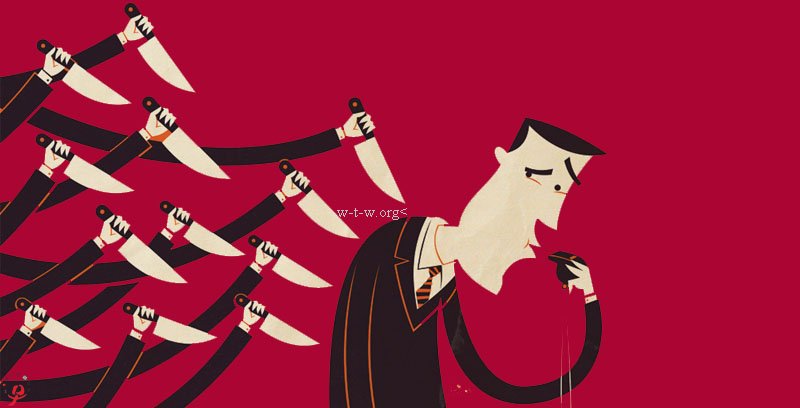
Inside Deutsche Bank is not just an investigative project. We built a new structure from the ground up. Our whistleblowers chose to bear witness, knowing the decision was irreversible and the risks enduring. The target will always be on their backs. But they knew the same is true for non-Western journalists. When they do a great story, they don’t get awards, they get a funeral or a prison sentence.

The whistleblowers choice of journalists to receive the leak was deliberate. They understood the importance of collaboration in a media landscape where Western outlets can dominate coverage through a certain editorial voice or be fiercely competitive. The “Rest” recognise that we, as journalists, may be the only safeguard one another have. And we need our own voices conveying evidence as truth. The Inside Deutsche Bank investigation is coordinated and managed by SA-based Barracuda Media, with data and tech support from the Data and Research Center and coordination support from El Clip, paper trail media and Finance Uncovered. We built a structure to empower a global network of media while addressing the inequalities and constraints facing many majority-world outlets.

We provided financial support, investigative research, data, technology etc to ensure equal access to data was matched by equitable resourcing throughout the process. We chose our partners like DARC, our regional coordinators like Aidila Razak and María Fernanda Cruz Chaves, based on their exceptional abilities as well as the empathy and care that defines them. The investigation was designed so that its value would rest not on the profile of any dominant media brand — that takes reward but leaves risk to those on the frontline — but on the collective strength of every contributing national media outlet, wherever it is based.  You can read more about it here: https://www.inside-db.com

Money Matters – Zukunftsfähige Finanzpolitik
Inside DB: Was das größte Bankenleak der Geschichte über die Deutsche Bank verrät | Khadija Sharife (Inside Deutsche Bank)
MdEP Rasmus Andresen


money-matters.podigee.io

Harm Bengen
www.w-t-w.org/en/harm-bengen
www.harmbengen.de

Women and Trading: The Beginning of Your Financial Revolution

Women and Trading

We live in a challenged yet beautiful time. Today, it is open to you to achieve financial freedom – it depends only on you, your willingness, and your determination to succeed. Yet success comes when it becomes effortless. In this series of Sunday discussions, we will help you step by step to trading knowledge, its fundamentals, and practical skills. Yes, it comes at no cost, and the only promise I ask is this: once you are successful, remember to share 10% for a good cause – your family, neighbor, charity, or whatever makes this world a little better for generations to come.
I thank Dagmar Frank for creating this space and inviting me here.

The Invitation – Where Money Becomes a Byproduct

Money is often the last taboo – we speak about love, health, even death more easily than we speak about our finances. Louise Hay, a woman who transformed her life from an abused teenager to driving her Rolls-Royce while empowering millions, said:

“Money is a wonderful thing. It’s not the root of all evil – it’s the root of all good when used wisely.” – Louise Hay

This space is for those who feel a quiet call inside – a curiosity, a knowing that there must be more to life than living paycheck to paycheck, or depending on someone else’s decisions and waiting for your financial advisor’s call and report.

If you are here, something in you already knows that it is possible. We will help those who are curious, those who feel that call, and those ready to explore what trading could offer.

The aim of this thread is to introduce you to trading and help everyone – the beginner, the struggling trader, or the profitable trader willing to help others rise.

I will share my own story and my choice not to bend behind a huge corrupted institution – UBS Bank – and a 17-year-long battle. Fictitious trading and how it steals prosperity from our children will be another topic.

Blinks of Historical Truth

We, as women – holders of peace, harmony, and balance – are now given an unprecedented opportunity to be completely free. In the eyes of human history, our new liberty is only a blink.

Remember that Amantine Lucile Aurore Dupin (1804-1876) became a writer and created George Sand – driven by necessity to escape an unhappy marriage and support her two children through her writing in Paris. At that time, women even needed a “transvestite pass” from the police to wear trousers.

Helena Blavatsky (1831-1891) had to marry at just 17, since during the 1840s, an unmarried upper-class Russian woman was legally subject to her father’s or family’s authority, making independent travel or living alone nearly impossible. Once married, she immediately for her travels and ultimately became one of the most influential spiritual thinkers of her time.

Women received voting rights only recently – US in 1920, UK in 1928, France in 1944, Switzerland in 1971, Saudi Arabia in 2015.

“The only way to deal with an unfree world is to become so absolutely free that your very existence is an act of rebellion.” – Albert Camus

And as we can only smile now, perhaps can’t even imagine how those events were part of the truly chained life of every woman, so one day will come when we as women and humans will wonder about the old times when money represented a barrier. Since we are now offered a step towards independence – the unlimited, unseen, unthinkable freedom available to all. From your own space, your laptop, quiet concentration, study, focus—and the results will follow.

Why Trading Fits Women

While politics and power may corrupt the feminine nature, trading works differently. The market has rules – success comes when one follows them. Men’s egos crash here; for women, it is more natural to follow. But only few women trade, as it demands extreme strength, concentration, devotion, and determination. This challenge is often painful – like a Phoenix, one has to burn the old self and rise as the best version, without all human flaws – greed, fear, impatience, procrastination.

The Trading Revolution

The old Wall Street with its masculine dominance was transformed by the CME expansion. Behind it stands Leo Melamed (born 1932) – a Holocaust survivor, an American lawyer, Chairman Emeritus at CME Group. He made trading accessible to everyone by removing the main barriers: the expensive investment required to buy a chair on the exchange, and the necessity of being physically present on the trading floor. Through launching Globex, open from 6pm ECT Sunday to 5pm Friday, everything became electronic and the main volumes are now traded remotely. His book “Escape to the Futures” will tell you the real history, the grandeur and brave spirit with which this milestone was made. You may also enjoy his speeches and interviews on his homepage https://leomelamed.com/.

Technical Analysis

In parallel with Melamed’s financial revolution, the world saw the advancement of technical analysis – an X-ray of market behavior. Once properly studied, it allows you to create your own strategy, your unique plan for mastering performance. My journey started with “How to Make Money in Stocks” by William O’Neil, followed by “Japanese Candlestick Charting Techniques” by Steve Nison. The more serious books you read, the stronger your foundation becomes. There are also good courses, most of which are free, and we will expand those sources here too.

Trading is a journey – a lifelong marathon. You can start at any age and continue until your last day. It is an excellent gym for your brain, memory, and concentration. Money is a byproduct that follows once you master it.

Conclusion

“One of the most important of life’s lessons is to learn independence, to understand freedom. This means independence from attachments, from results, from opinions, and from expectations.”  – Brian Weiss, Messages from the Masters: Tapping into the Power of Love

And this is exactly what you need and will achieve by engaging in the trading journey.

Please share your thoughts, experience, questions, and ideas in the Comments. Enjoy your weekend and see you next time.
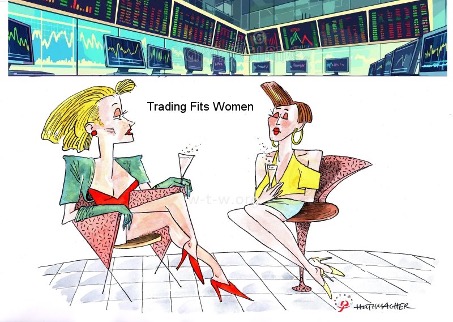
Women and Trading

Cartoon original: Dieter Huthmacher
https://www.w-t-w.org/en/dieter-huthmacher/
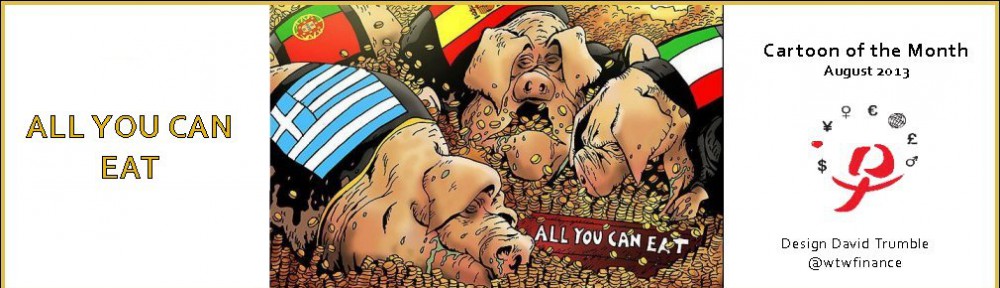
Women and Children Suffer from Corruption

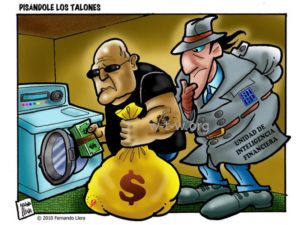
Financial crime, money laundering
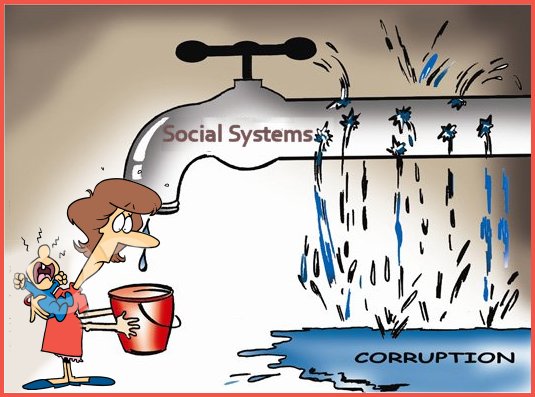
Women and children suffer disproportionately from corruption. They are, in particular, dependent on functioning social systems such as schools, hospitals, kindergartens, streets, etc. W-T-W Women and Finance attempts to explain that corruption takes many different forms, but all involve the abuse of a public or private office for the purpose of personal enrichment.


Corruption causes the welfare state to bleed dry
Money laundering volume: The UNODC (United Nations Office on Drugs and Crime) estimates the amount of money laundered worldwide to be between 800 billion and two trillion U.S. dollars annually.


Social Systems
These funds are missing from social welfare systems. Corruption and money laundering damage and destroy social welfare systems.


The third-largest source of revenue for international organized crime, after drug and arms trafficking, is the illegal timber trade, illegal fishing, and illegal waste disposal.
With catastrophic consequences for our planet.
What is the difference between money laundering (proceeds of “organized crime, OC”) and tax evasion?

What is a secret crime?
Money laundering and serious tax evasion.
Concealment.
Facilitating crimes.


Corruption is a victimless secret crime that takes place in secret. All parties involved are perpetrators, so there is no interest in uncovering the truth. From the very beginning, all perpetrators are intent on concealing their actions and the connections involved. Even after the crime is discovered, the focus remains on cover-ups and denials, as there is no direct victim involvement, as is the case with robbery or burglary, for example.
The difficulties in investigating corruption cases are easy to explain. These are secret crimes committed by a conspiracy to cover up; there are neither victims nor witnesses nor traces at the scene of the crime, and they occur at the intersection of politics and business. This results in “massive problems with the burden of proof.”
The question arises for politicians and the judiciary: “Do we want to investigate and punish, or do we not?” Has corruption already infiltrated government agencies, politics, and legal systems?

How are whistleblowers treated?

Whistleblower, Dooa EladlWhistleblowers, the press, and the public are essential to uncovering corruption. Without whistleblowers, uncovering corruption is often impossible.


To combat corruption, law enforcement agencies rely on informants who bring corrupt behavior to light in the first place. Such informants are also referred to as “whistleblowers.” Without whistleblowers, corruption could not be uncovered, as it is a secret offense known only to those involved and people in their immediate circle. By reporting misconduct within their organization, party, or company, a whistleblower often takes significant personal risks. They may be punished for breaching their duty of confidentiality regarding trade secrets and must expect to face bullying or even the loss of their job as a “traitor” or “informant.”

Crime Enabling

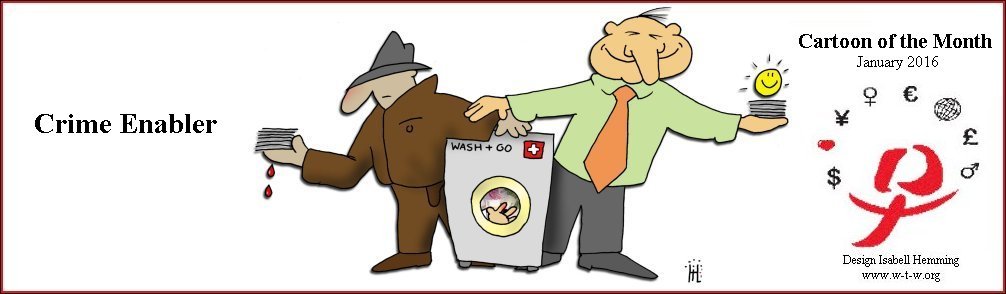
Profit is the primary motive for criminal activity worldwide. “Enabling” means facilitating—and that is precisely what financial institutions and their accomplices, among others, do: they facilitate crime.

The explosive rise in organized crime and money laundering is a consequence of globalization. Organized crime operates without borders, globally, and in networks. Law enforcement, on the other hand, still stops at national borders.

“Crime enabling” means concealing the beneficial owners and the origin of assets obtained through criminal activity. By concealing the origin and owners of the illicit funds, “crime enablers” reduce the risk of detection for the perpetrators to virtually zero. Any potential criminal prosecution is effectively nipped in the bud.

FunFinance Expert Lilah Avatar AI.
Original: — www.w-t-w.org/de/category/artikelserien/
Finanzkriminalität, Geldwäsche

Citi’s Security Unit Was Meant To Probe Misconduct

Employees say it protected the bank instead.
Internal team staffed by ex-law enforcement ‘operates as HR’s internal hit squad’, former executive says .
www.ft.com
After Ardith Lindsey told Citigroup her supervisor sent her threatening messages when she ended their relationship, she was summoned to a meeting. It was not with an HR representative or workplace psychologist. It was with a former prosecutor. Lindsey — who sued Citi over alleged sexual harassment, sexual assault and discrimination in 2023 — was called in by CSIS: Citi Security and Investigative Services, an internal unit of the Wall Street bank populated with former law enforcement officials equipped to tackle the most serious cases of wrongdoing. …
images.ft.com/

Stanford Professor Warns Banking Privileges Fuel Populism and Governance Failures

Stanford UShe traced banks’ protection to the creation of US federal deposit insurance in 1933 and criticised the expansion of safety nets that effectively bail out creditors. International banking rules, including those of the Basel Committee, she said, have been “spectacularly bad” and worsened system fragility, as seen in the 2015 Greek debt crisis.

Admati also cited the 2012 US investigation into HSBC for laundering cartel money, noting that political concerns over financial stability reduced the bank’s fine to “a few weeks of profits.” She urges us all to challenge such systemic failings.niversity professor Anat Admati has warned that the financial sector’s entrenched privileges, weak oversight, and political influence are undermining democratic governance and fuelling populism. Speaking at a political economics conference hosted by Bayes Business School, the School of Policy and Global Affairs at City St George’s, University of London, and the London School of Economics, she argued that “little has changed” since the 2008 global financial crisis.

“Banks are the most powerful lobby in Washington,” said Admati, named one of Time magazine’s 100 most influential people in 2014 for her book The Banker’s New Clothes. “Politicians keep saying banks are friends. No — the problem is bad governance and bad rules. Banks are so coddled they may not even realise it.”

Professor Admati challenged us  to speak out on issues that have such an impact on the lives of so many.

Professor Admati warns us not to coddle our banks

Cartoon: Granger Collection

Tariffs, Trade Wars, and the Price of a Toaster: How Global Spats Empty Our Wallets

There are few things more American than voting with your pocketbook. Sure, we talk about values, character, and leadership—but come election day, it often boils down to one question: Am I paying more for eggs than I was last year?

Enter the humble tariff—an ancient tool of economic warfare that’s recently been dusted off and waved around like a magic wand. The idea? Make imported goods more expensive so consumers are nudged to “Buy American.” The result? We end up paying more for the same stuff we used to grumble about being overpriced before tariffs.

Goldman Sachs economists estimate that roughly 70% of the direct cost of tariffs is eventually passed on to consumers. That’s right. You. Me. Grandma. Even that neighbor who claims they only buy “locally sourced artisanal cheese.” If that cheese arrives in a truck with tires made overseas, it’s going to cost more. And 70% is the low estimate—depending on how much domestic producers hike their prices to “stay competitive,” that figure could go even higher. It’s like a group project where no one else does the work and you’re still the one paying for the pizza.

To be fair, tariffs can be used for legitimate purposes—protecting a budding industry, leveling a playing field, or responding to unfair trade practices. But lately, they’ve been used more like emotional tweets: erratic, impulsive, and surprisingly costly.

In recent years, we’ve seen tariffs wielded as political punishment. Want to punish a foreign country for something unrelated to trade? Slap on a tariff. Want to flex some geopolitical muscle? Tariff. Want to win over Rust Belt voters without passing meaningful legislation? Tariff!

Of course, tariffs don’t exist in a vacuum. In our tightly connected global economy, they reverberate. Countries don’t just take the hit and move on—they retaliate. They impose their own tariffs. Suddenly, it’s not just imported electronics and steel that cost more. Farmers can’t sell soybeans abroad. Factories can’t get the parts they need. Meanwhile, you just want to replace your refrigerator without applying for a small loan.

And politically? It’s a gamble. Sure, a President might think looking tough on China plays well on TV, but when voters are staring down $5 strawberries and can’t afford a new washing machine, all the tough talk starts to sound a bit hollow.

The median voter—who just wants to see prices come down from their COVID-era highs—isn’t amused. Remember all those promises about inflation cooling down post-pandemic? People were expecting relief, not a continuation of the economic pressure that had them wondering if oatmeal was a viable dinner option.

And here’s where the strategy really falls apart: tariffs rarely achieve their intended goal of strengthening the domestic economy. Sure, they can offer short-term protection for select industries. But they also reduce competition, which slows innovation. They reward inefficiency. And they make everything—from phones to dish soap—more expensive for regular people. It’s a bit like setting your house on fire to keep your coffee warm.

On top of that, squabbling with trade partners in today’s digital, interconnected world is like picking a fight with your next-door neighbor when you both have security cameras, microphones, and a Twitter following. It’s messy. It’s visible. And it’s usually not worth it.

Which brings us to the current moment. As we march toward another election, tariffs have once again become a talking point. Some candidates treat them like miracle cures for economic woes—“We’ll bring back jobs! We’ll stop China! We’ll make things cheaper!” The irony is rich: tariffs usually make things more expensive. You don’t protect the working class by making their groceries cost more.

Let’s be clear: global trade is complicated. Not every policy is black-and-white. But using tariffs like fly swatters—lashing out every time the political winds change—is a dangerous game with real economic consequences.

The average voter may not care about trade policy jargon or the nuances of supply chains. But they do care about whether they can afford school supplies, groceries, and a tank of gas. They notice when the cost of everyday life creeps up—especially when no one can explain why.

So maybe it’s time for leaders to take a breath, put down the tariff stick, and remember who really pays the price. Because in the end, the great tragedy of the modern tariff isn’t just that it fails economically—it fails politically, too.

And if the only thing tariffs produce reliably is angry consumers and $40 toaster ovens, maybe we should go back to the drawing board.

Tariff War

Harm Bengen
www.w-t-w.org/en/harm-bengen
www.harmbengen.de

Leaked Letters Give Insight Into Anti-Money Laundering Gaps at Swiss Bank Reyl

This week, a new leak takes us inside Switzerland’s famously secretive financial sector.

According to leaked correspondence obtained by reporters, Swiss regulators have sounded the alarm over a range of practices at the Geneva-headquartered private bank Reyl Intesa Sanpaolo. In particular, the regulators noted a “certain carelessness” when it came to vetting clients for money laundering risks — including those linked to corrupt and autocratic regimes.

The reporting appears to have struck a nerve: On Monday, Reyl’s lawyers confirmed they had filed a complaint under Article 47 of the Swiss Banking Act, a draconian law that criminalizes disclosing information about bank customers. Yet we decided to publish our findings anyway, because we believe they are in the public interest.

In other news, Switzerland’s top court upheld a corruption conviction for Israeli mining magnate Beny Steinmetz, while France moved forward with seizing a villa that belongs to a fugitive former Moldovan politician with a fake Mexican passport.

Meanwhile, Thailand has arrested a woman accused of helping a prominent doctor run a $440-million investment scam that raised funds for non-existent medical centers.

Read on for the latest in crime and corruption.

Anti-Money Laundering Rules: What You Need to Know

May 2024, the EU Legislature adopted Directive (EU) 2024/1640 (the Sixth Anti-Money Laundering Directive, AMLD6), Regulation (EU) 2024/1624 (the Anti-Money Laundering Regulation, AMLR), Regulation (EU) 2024/1620 (the AML Authority Regulation, AMLAR). Together with Regulation (EU) 2023/1113 (the Revised TOFR), adopted on 31 May 2023, these rules complete the adoption of the revised anti-money laundering and countering the financing of terrorism (AML/CFT) package.

The AML/CFT package overhauls the regime under Directive (EU) 2015/849 (AMLD4). On the one hand, it significantly expands the regime with strengthened and new obligations across key areas such as beneficial ownership transparency, due diligence obligations and supervision. On the other hand, it further harmonises the regime through the use of Regulations, which directly apply in the Member States of the Union and the introduction of a new Europea supervisor, the AML Authority (AMLA).

europarl.europa.eu/


Prevention of Money Laundering and Terrorist Financing

FATF Plenary and Working Group Meetings 2025

February 2025
A summary of the issues discussed and decided by the Plenary in February 2025.

The supervision of anti-money laundering by the FIN-FSA follows a risk-based approach. The supervision strategy also covers the prevention of terrorist financing and compliance with financial sanctions. The objective of the strategy is to describe the most important sectors of supervised entities and their respective ways of supervision. At the same time, it is important to note that any supervised entity may become subject to any supervision measure if signs of shortcomings concerning AML obligations are detected in its activities. The strategy is in effect until further notice, and its contents will be reviewed on an annual basis…prevention-of-money-laundering-and-terrorist-financing/

https://grrrgraphics.com/