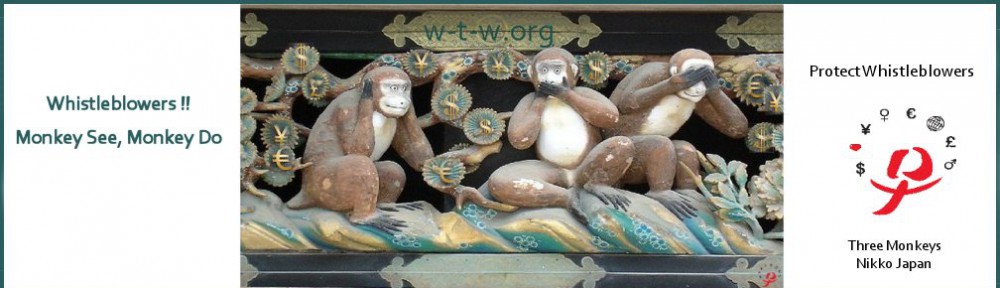
Financial crime, money laundering
 Women and children suffer disproportionately from corruption. They are, in particular, dependent on functioning social systems such as schools, hospitals, kindergartens, streets, etc. W-T-W Women and Finance attempts to explain that corruption takes many different forms, but all involve the abuse of a public or private office for the purpose of personal enrichment.

Corruption causes the welfare state to bleed dry
Money laundering volume: The UNODC (United Nations Office on Drugs and Crime) estimates the amount of money laundered worldwide to be between 800 billion and two trillion U.S. dollars annually.
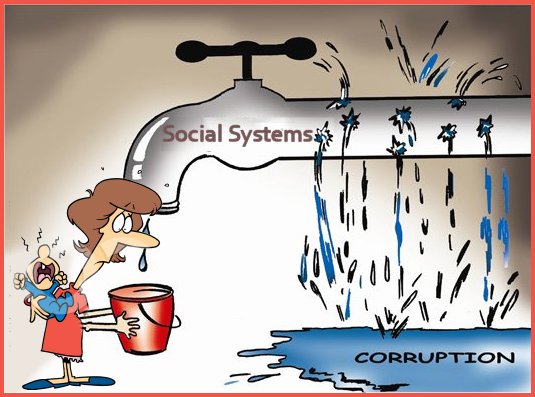
These funds are missing from social welfare systems. Corruption and money laundering damage and destroy social welfare systems.
The third-largest source of revenue for international organized crime, after drug and arms trafficking, is the illegal timber trade, illegal fishing, and illegal waste disposal.
With catastrophic consequences for our planet.
What is the difference between money laundering (proceeds of “organized crime, OC”) and tax evasion?
What is a secret crime?
Money laundering and serious tax evasion.
Concealment.
Facilitating crimes.

Corruption is a victimless secret crime that takes place in secret. All parties involved are perpetrators, so there is no interest in uncovering the truth. From the very beginning, all perpetrators are intent on concealing their actions and the connections involved. Even after the crime is discovered, the focus remains on cover-ups and denials, as there is no direct victim involvement, as is the case with robbery or burglary, for example.
The difficulties in investigating corruption cases are easy to explain. These are secret crimes committed by a conspiracy to cover up; there are neither victims nor witnesses nor traces at the scene of the crime, and they occur at the intersection of politics and business. This results in “massive problems with the burden of proof.”
The question arises for politicians and the judiciary: “Do we want to investigate and punish, or do we not?” Has corruption already infiltrated government agencies, politics, and legal systems?
How are whistleblowers treated?
 Whistleblowers, the press, and the public are essential to uncovering corruption. Without whistleblowers, uncovering corruption is often impossible.
To combat corruption, law enforcement agencies rely on informants who bring corrupt behavior to light in the first place. Such informants are also referred to as “whistleblowers.” Without whistleblowers, corruption could not be uncovered, as it is a secret offense known only to those involved and people in their immediate circle. By reporting misconduct within their organization, party, or company, a whistleblower often takes significant personal risks. They may be punished for breaching their duty of confidentiality regarding trade secrets and must expect to face bullying or even the loss of their job as a “traitor” or “informant.”
Crime Enabling
Profit is the primary motive for criminal activity worldwide. “Enabling” means facilitating—and that is precisely what financial institutions and their accomplices, among others, do: they facilitate crime.
The explosive rise in organized crime and money laundering is a consequence of globalization. Organized crime operates without borders, globally, and in networks. Law enforcement, on the other hand, still stops at national borders.
“Crime enabling” means concealing the beneficial owners and the origin of assets obtained through criminal activity. By concealing the origin and owners of the illicit funds, “crime enablers” reduce the risk of detection for the perpetrators to virtually zero. Any potential criminal prosecution is effectively nipped in the bud.
FunFinance Expert Lilah Avatar AI.
Original: — www.w-t-w.org/de/category/artikelserien/
Finanzkriminalität, Geldwäsche