Making A Better Life Thru Ponzi Schemes

Founded in 2008 by Coral Rose Grant, TSTLC’s stated mission is to help people “live their best lives” and, ultimately, make a career out of teaching others the same.

This week, it is the subject of a major class-action lawsuit led by two former clients, Cheri Lucas and April Fisher—the latter of whom taught classes for TSTLC. Together, the two allege that the company was part of a Ponzi scheme devised by Coral and her husband, Mac, in which they pocketed investor money totaling anywhere from $8 million to $20 million, using it to “live like royalty.”

Charging people hundreds of dollars to help them find the “life of their dreams,” they instead used it to live out their own. The mastermind behind the scheme, the two claim, was a “career fraudster and federal felon” Kevin Trudeau, the “infomercial king” who is serving time in prison for diet books. Coral, they say, not only visited Trudeau in prison, but spent money trying to get him released.

Filed on behalf of “all persons who have entered into ‘coaching contracts’ or ‘investor contracts’ with any of the defendants,” Lucas and Fisher are asking for $30 million total in damages for fraud, theft, and racketeering, as well as gross negligence and deceptive trade.

The claim paints a grim picture of scam, with the master coaches turning clients into players—stripping them of hundreds of thousands of dollars and feeding them lies about “happiness.”

On TSTLF’s website users are greeted by the words “Become a Life Coach” in enormous white letters. Their definition of “living your best life” seems fairly broad. “From a middle aged soccer mom looking to lose a few pounds to an upper level executive looking to negotiate a seven-figure business deal, you will possess the confidence, skill and knowledge required to make you an invaluable resource in the lives of your Life Coaching clients,” their certification page reads. “As a Life Coaching Professional, you can demand anywhere from $75 to $500 per hour.”

Where the breakdown seems to have happened, according to the complaint, is what the Grants’ call a “commission agreement.” Essentially a “coaching contract,” the lawsuit explains it as a “commission percentage or fee” rewarded to coaches who either recruited coaching clients or taught coaching classes themselves. It’s money, they say, that never came.

On top of this, the Grants also “invited people (coaches, members, clients) to become ‘investors,’ i.e. give them flat sums in exchange for non-specific future returns.” Returns that, according to the plaintiffs, never panned out. Instead, Lucas and Fisher said the Grants pocketed the money owed to coaches and the money given by investors.

After spending all of the money that they’d pocketed from investors and commission fees, the Grants allegedly started opening up smaller companies and telling clients to direct their money there. Before doing so, they canceled previous contracts, citing “recent events,” and noting that investors would not be able to collect their money.

If the Grants set out to help people live their best lives, they may have gotten lost along the way. According to the plantiffs’ attorneys, the two went as far as to steal from clients’ life savings. “Coral and Mac Grant took advantage of a lot of people,” they told The Daily Beast. “They took millions of dollars with no intention of giving it back.”

Ponzi Scheme

EU Commission a Weak Manager?

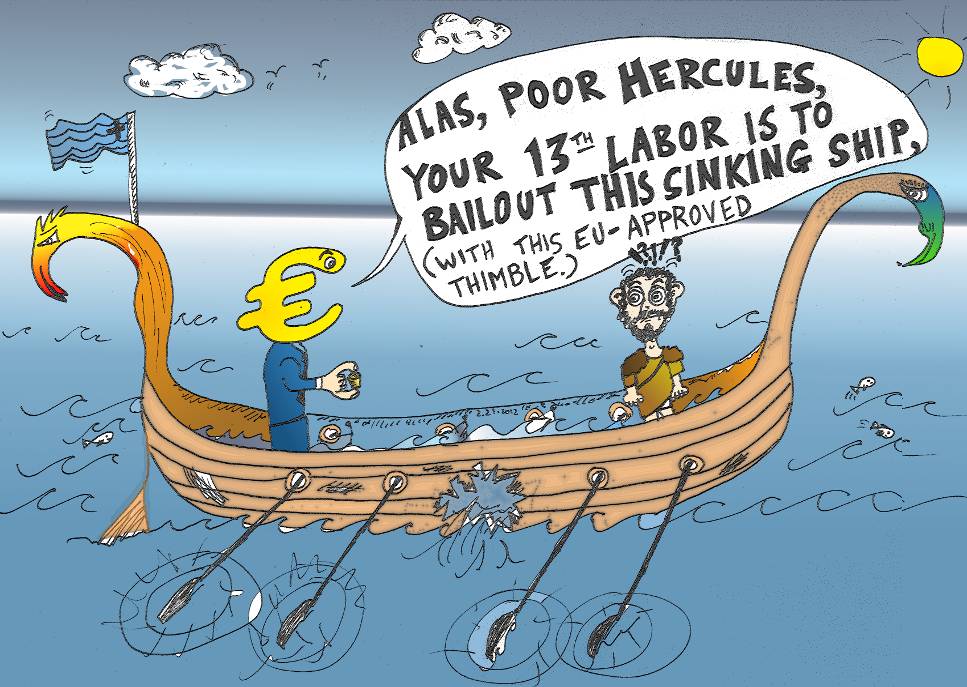
Emmet Linvingstone writes:  The EU’s accounting watchdog blasted the European Commission for its “weak management” of the financial crisis in a report issued into five of the eight bailouts in the European debt crisis, including Ireland and Portugal.

The report by the European Court of Auditors into the bailouts of non-eurozone states Hungary, Romania and Latvia (which has since joined the single currency), and eurozone members Ireland and Portugal, found the Commission had overestimated the strength of public budgets and failed to warn EU leaders of growing fiscal imbalances prior to the crisis.

It also criticized the management of early bailout funds, saying the Commission did not apply similar conditions to countries in comparable economic situations.

The Court of Auditors’ report is one of the first to examine the Commission’s role in assisting member countries, via programs managed by the European Central Bank and IMF. Greece and Cyprus also received sovereign bailouts, which will be the subject of separate reports, and Spain received assistance for its banking system.

Among the more damning conclusions of the report is that the Commission lacked “key documents” when implementing bailout programs and that calculations underpinning the Commission’s recommendations were not rigorously checked.

The Commission’s spokesperson for economic and financial affairs, Annika Breidthardt, said Tuesday that while the report’s findings were being taken seriously, the bailout programs had clearly met their objectives.


The Commission also said that the report did not take “complex institutional settings” into account, in a written response. It said the role of the EU Council, the IMF, ECB and national governments in implementing bailouts was played down.

Bailouts


Central Banks Monetary Policy Explained

The Atlanta Federal Reserve writes:   Economies don’t always perform the way we like. Getting them back into winning form takes careful strategy. That’s why we need a monetary policy. Our nation’s monetary policy is an economic strategy is an economic strategy that influences interest rates and the supply of money and credit. So, why does this matter to you? A good monetary policy promotes price stability and high employment. That means people can find jobs and make better-informed choices about what to spend, and businesses can make better informed decisions too. That helps keep the economy moving in the right direction.

It’s the Fed’s job to come up with that monetary policy. In 1913, Congress created the Federal Reserve to provide a more stable and secure monetary and financial system. The Fed’s role in the economy has evolved over time. Sometimes what has ailed the economy is a sudden need for liquidity. During a financial panic, the public’s demand for cash can catch banks by surprise. And since most of the money the banks hold is tied up in loans, they may find getting their hands on cash difficult. Acting as the lender of last resort, the Federal Reserve can lend money against a bank’s good assets and prevent the financial panic from disrupting the economy. This tool is called “The Discount Window.” In 1977, Congress amended the Federal Reserve Act, stating the Fed’s monetary policy objectives were to maximize employment and maintain price stability.

For more than 100 years, the Fed has used its policies to help our economy run smoothly. To create a monetary policy that will work best for the entire nation, the Fed needs a lot of grassroots information. Where does it come from? From farmers, and real estate agents, and car dealers, and factory owners. All over America, different kinds of main street people share what’s going on in their own businesses with their region’s Federal Reserve Bank. The Reserve Banks gather this information and combine it with economic statistics like inflation measures and employment data. Then, from all over the country, that information heads to Washington DC. Eight times a year, the twelve Reserve Bank presidents, along with the Fed’s Board of Governors, meet in Washington and report on their regional economies and present their economic projections. The Federal Open Market Committee, or FOMC, combines all these detailed views of what’s going on nationwide and studies the whole picture. At the end of each FOMC meeting, the voting members – five of 12 Reserve Bank presidents and the seven Fed governors – cast a vote on setting monetary policy. Decisions on monetary policy are immediately communicated to the public.

To build a healthy economy, the FOMC needs good tools. If the Fed needs to adjust interest rates and affect inflation, it uses open market operations, which is the buying or selling of government securities. Buying or selling these securities expands or contracts the supply of money in the banking system. Raising or lowering the federal funds rate, which is the interest rate banks pay each other for borrowing money that is maintained at a Reserve Bank, also effects the inflation rate. And finally, all banks are required to have reserve requirements: nest eggs set aside and kept at the ready so the economy stays fluid.

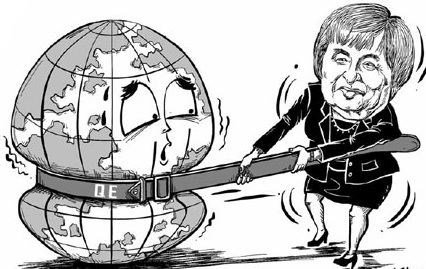
To meet the challenges posed by our last recession, the Federal Reserve developed new tools and communications for the extraordinary circumstances following the financial crisis. One of these is forward guidance, which is the Fed’s descriptions of its likely future policy making. This helps shape the market’s expectations of interest rates. Another tool is quantitative easing, which is a way to inject liquidity into the economy and help keep long-term interest rates low. No matter what tools or policies the Fed is using, we’ll always let you know what’s going on.

Why is all this important? Ultimately, all these factors work together to create an economic strategy that works for each region, making our national economy run smoothly across the board.

US Fed

Returning to an Appropriate Industrial Banking System

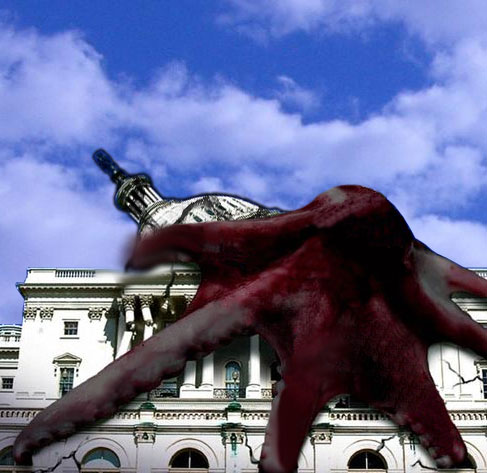
Michael Hudson writes about the meaning of banks and what they are meant to be.  iThe inherently symbiotic relationship between banks and governments recently has been reversed. In medieval times, wealthy bankers lent to kings and princes as their major customers. But now it is the banks that are needy, relying on governments for funding – capped by the post-2008 bailouts to save them from going bankrupt from their bad private-sector loans and gambles.

Yet the banks now browbeat governments – not by having ready cash but by threatening to go bust and drag the economy down with them if they are not given control of public tax policy, spending and planning. The process has gone furthest in the United States. Joseph Stiglitz characterizes the Obama administration’s vast transfer of money and pubic debt to the banks as a “privatizing of gains and the socializing of losses. It is a ‘partnership’ in which one partner robs the other.” Prof. Bill Black describes banks as becoming criminogenic and innovating”control fraud“.

High finance has corrupted regulatory agencies, falsified account-keeping by “mark to model” trickery, and financed the campaigns of its supporters to disable public oversight. The effect is to leave banks in control of how the economy’s allocates its credit and resources.

If there is any silver lining to today’s debt crisis, it is that the present situation and trends cannot continue. So this is not only an opportunity to restructure banking; we have little choice. The urgent issue is who will control the economy: governments,or the financial sector and monopolies with which it has made an alliance.

Fortunately, it is not necessary to re-invent the wheel. Already a century ago the outlines of a productive industrial banking system were well understood. But recent bank lobbying has been remarkably successful in distracting attention away from classical analyses of how to shape the financial and tax system to best promote economic growth – by public checks on bank privileges.   The model for ending casino banks

 Tentacles of the Big Banks


Is Vietnam the New China?

John West writes: Vietnam began its transition from central planning towards a market economy in the mid-1980s with reforms known as “Doi Moi” or “Renovation“. This was not a philosophical choice. With famines ravaging the country, and the loss of Cold War support from the former USSR, the government had to do something to get the country moving.

A long series of policy changes have included opening to international trade and investment, and allowing private property rights and private enterprise. Reform is an ongoing process, with important milestones being a free trade agreement with the US in 2000, and membership of ASEAN in 2004, the World Trade Organisation in 2007, and the Trans Pacific Partnership (TPP) in 2015.

Vietnam also has an education system that delivers impressive results, at least until the high school level, according to the OECD.

Policy reforms have stimulated large flows of foreign direct investment (FDI). Vietnam’s stock of FDI (foreign direct investment) surged from $243 million in 1990 to $82 billion in 2012, representing some 47% of GDP — around the same rate as Malaysia and Thailand, which both started the period at higher levels.

Investors have been attracted by Vietnam’s strategic location near global value chains (GVCs), its lower cost structure than China, and its political and economic stability. Japanese companies have been the leading investors in Vietnam, supported by the Japanese government. Singapore, Korea and Taiwan have also been important sources of FDI. In 2014, Vietnam attracted FDI from world class companies like Samsung, Nokia and LG.

These inflows of FDI have enabled Vietnam to join GVCs for products like garments, shoes, and electronics. The FDI sector contributed 62% of exports in 2014, up from 47% in 2000, and some 18% of GDP in 2014, an increase from 13% over the same period. Trade has doubled to 160% of GDP over the past two decades, reflecting the active trade in parts and components that characterise GVCs.

But despite this excellent performance, Vietnam’s exports are dominated by unsophisticated products with low domestic value added, and limited technological spillover from foreign to domestic enterprises. Domestic manufacturers have proved unable to move along the supply chain to capture higher value. And the potential benefits of FDI have been greatly compromised by widespread tax cheating by multinational companies.

There are good prospects for continued high inflows of FDI in light of Vietnam’s membership of the TPP.  Vietnam

Vietnam


Lagarde Confident in China Despite Bumps

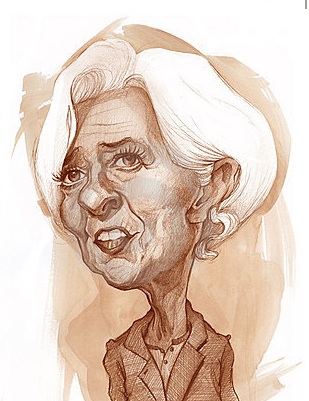
Lagarde has confidence in China’s economy despite current bumps.

Lagarde said that she’s not concerned about volatility in China’s markets, which have suffered wild swings in recent weeks.

“Having a certain degree of volatility is alright” as the country’s markets mature, Lagarde said at the World Economic Forum.

Lagarde said that if volatility becomes excessive, some intervention by regulators is legitimate and understandable. Investors should have patience during bumpy times, she added.

The benchmark Shanghai Composite has shed nearly 19% since January 1.

Lagarde remains confident that Chinese authorities will be able to guide the country during its transformation from an economy based on investment and exports, to one driven by consumption.

“We believe they will deliver,” she said. “When the authorities actually put their mind [to it … there is] an unbelievable determination and ability to deliver.”

Christine Lagarde, managing director at the IMF, is optimistic about China’s ongoing economic transformation.

Chinese authorities recently made changes to how the country’s currency is managed in order to meet strict IMF guidelines. The changes helped convince the IMF to include China’s yuan in its elite basket of reserve currencies in late 2015. The inclusion was a major vote of confidence in Beijing’s economic reforms.

Jack Lew, the U.S. Treasury Secretary, largely echoed Lagarde on Thursday, saying that he has “been following China very closely” and doesn’t see “the situation today as being so dramatically different” than at the end of 2015.

“It’s bumpy days in the markets, but you do have to look at some of these underlying things in a longer term way,” he said.

China's Slowdown

Britain and Germany Back Lagarde for Re-Up

Lagarde gets crucial backing for second term.

While Lagarde has been widely praised for her leadership role at the organization, which has coordinated bailouts for countries and monitors reforms globally, developing countries have increasingly opposed an informal arrangement by which a European heads the IMF. The sister organization, the World Bank, has until recently typically been led by an American.

The IMF’s recent downgrade of growth forecasts and Lagarde’s future are on many minds at this week’s World Economic Forum gathering in Davos, Switzerland where she is a prominent presence.

British finance chief George Osborne issued a statement Thursday saying his government nominated her to stay in the post.

“At a time when the world faces what I’ve called a dangerous cocktail of risks, I believe Christine has the vision, energy and acumen to help steer the global economy through the years ahead,” he said.

The German government quickly followed, with a finance ministry statement saying Lagarde “was a circumspect and successful crisis manager during the difficult period after the financial crisis.”

For the IMF post, individual countries normally nominate their preferred candidate before the individual declares their intention to run.

.The World Economic Forum meeting of business leaders and public figures has been overshadowed by turmoil in global markets and geopolitical security issues.

Speaking about China’s economic slowdown, she said the country needed to refine its communication on reforms it was taking and its market policies.

A Chinese market regulator said the concerns over growth were overstated. He said China has no option but to support growth this year, using its large financial reserves if needed.

“We cannot afford to let the growth rate to fall too sharply, because that would ignite a lot of financial problems inside China. So we will have appropriately expansionary fiscal and financial policy this year,” said Fang Xinghai, from China’s Central Leading Group for Financial and Economic Affairs.

Ray Dalio, the chairman of Bridgewater Associates, said the biggest concern was China’s currency. As it weakens, that will weigh on the global economy by hurting trade, among other things.

Lagarde

WEF Discussion: Bitcoin, Blockchain and Hacking

The World Economic Forum at Davos is focussed on technology this year and among the first discussions was the possibility of new currencies.

At the annual meeting of the world’s economic titans in Davos, Switzerland, the heads of Morgan Stanley, Deutsche Bank and the International Monetary Fund played down suggestions that digital currencies like bitcoin could soon shake the foundations of the finance industry.

Some aspects of the investment banking industry could be impacted by the march of digitalization and cryptocurrencies — including securities trading and cash transfers.

The discussion came during a World Economic Forum confab whose theme — “the Fourth Industrial Revolution” — centers on the potential of automation and connectivity to revolutionize markets and society.

For bankers, the timing is apt. In 2015, digital currency technologies made unprecedented incursions into the mainstream of the financial world, with top industry players staking out positions in the booming market. Goldman Sachsjoined a $50 million financing round for bitcoin startup Circle Internet Financial. The Nasdaq stock exchange began using a blockchain-based platform to settle trading in private startup shares.

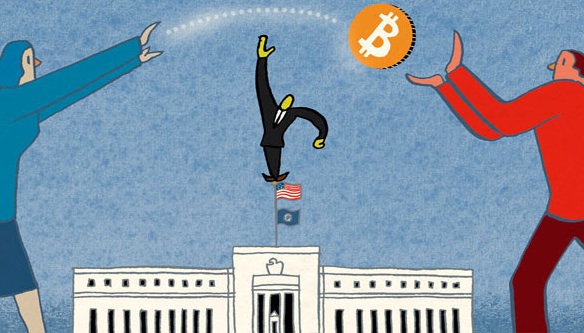
On the flipside, the burgeoning digital currency space remains largely unregulated. Christine Lagarde, head of the International Monetary Fund, told the panel that bitcoin and related currency innovations “could disrupt monetary policy” in the future, potentially posing a “substantial threat to financial stability.”

But at present, Lagarde noted, digital currencies have a relatively puny market value of $7 billion, the equivalent of less than 0.1 percent of the current $12.3 trillion U.S. money supply.

Technological changes beyond bitcoin, however, gave the finance executives some pause. From the digitization of monetary transactions to the increasing importance of security in a connected world, panelists saw deep changes ahead in the way banking operates.

PayPal CEO Dan Schulman, the sole “disrupter” on the panel, emphasized the security risks that financial firms face online. “Everybody’s password has been compromised,” Schulman said. “That’s just the reality.”

“Financial markets are going to be hacked,” he added, echoing fears among financial regulators that increasingly digitized securities exchanges and global banking hubs could become the targets of belligerent parties on the world stage.

The financiers noted that the industry began moving into cyberspace decades ago, long before bitcoin reared its head. “On the stockbroking side, we’re really just trading electrons anyway,” said Cryan, who predicted that physical cash would follow suit within a decade.

But the bank executives didn’t see those seismic changes knocking them from their roosts at the top of the financial pecking order. Panel moderator Gillian Tett of the Financial Times put the question bluntly, asking whether Wall Street could be like “rabbits in the headlines of the train” of blockchain technologies.

“Look at how we actually make money,” answered Gorman, whose company participated in the largest-ever initial public offering with Chinese online retailer Alibaba last year. “Is blockchain going to stop us from bringing Alibaba to market?”

Bitcoins-Currency of the Future?

Soros Fears for the European Union

George Soros on the state of the world and the impact of Orban and Putin on the EU. Interview with Gregor Peter Schmitz.

In Hungary, Orban has won hands down. More disturbingly, he is also winning in Europe. He is challenging Merkel for the leadership of Europe. He launched his campaign at the party conference in September 2015 of the Christian Social Union of Bavaria (the sister party of Merkel’s Christian Democratic Union) and he did so in cahoots with Horst Seehofer, the German party chairman. And it is a very real challenge. It attacks the values and principles on which the European Union was founded. Orbán attacks them from the inside; Putin from the outside. Both of them are trying to reverse the subordination of national sovereignty to a supranational, European order.

Putin goes even further: he wants to replace the rule of law with the rule of force. They are harking back to a bygone age. Fortunately, Merkel has taken the challenge seriously. She is fighting back and I support her not only with words but also with deeds. My foundations do not engage only in advocacy; they seek to make a positive contribution on the ground. We established a foundation in Greece, Solidarity Now, in 2013. We could clearly foresee that Greece in its impoverished state would have difficulty taking care of the large number of refugees that are stuck there. Soros Interview


China’s Impact on the World Economy

Mohamed a el Erian writes:  The recent decline in China’s currency, the renminbi, which has fueled turmoil in Chinese stock markets and drove the government to suspend trading twice last week, highlights a major challenge facing the country: how to balance its domestic and international economic obligations. The approach the authorities take will have a major impact on the wellbeing of the global economy.

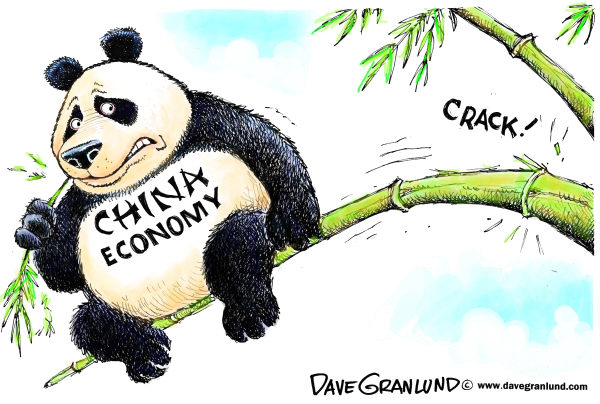
The 2008 global financial crisis, coupled with the disappointing recovery in the advanced economies that followed, injected a new urgency into China’s efforts to shift its growth model from one based on investment and external demand to one underpinned by domestic consumption. Navigating such a structural transition without causing a sharp decline in economic growth would be difficult for any country. The challenge is even greater for a country as large and complex as China, especially given today’s environment of sluggish global growth.

For years, China’s government sought to broaden equity ownership, thereby providing more Chinese citizens with a stake in a successful transition to a market economy. But, like the United States’ effort to expand home ownership in the years preceding the 2008 crisis, Chinese policies went too far, creating a financially unsustainable situation that implied the possibility of major price declines and dislocations.

As a result, the adjustment challenge has grown dramatically. With Chinese companies no longer able to sell a rapidly increasing volume of products abroad and support further expansion of productive capacity, the economy has lost some important growth, employment, and wage engines. The resulting economic slowdown has undermined the government’s capacity to maintain inflated asset prices and avoid pockets of credit distress.

In an effort to limit the detrimental impact of all this on citizens’ wellbeing, Chinese officials have been guiding the currency lower. A surprise devaluation last August has been followed by a number of lower daily fixes in the onshore exchange rate, all intended to make Chinese goods more attractive abroad, while accelerating import substitution at home. The renminbi has depreciated even more in the offshore market.

China’s currency devaluations are consistent with a broader trend among both emerging and advanced economies in recent years. Soon after the global financial crisis, the US relied heavily on expansionary monetary policy, characterized by near-zero interest rates and large-scale asset purchases, which weakened the dollar, thereby boosting exports. More recently, the European Central Bank has adopted a similar approach, guiding the euro downward in an effort to boost domestic activity.

But in pursuing its domestic objectives, China risks inadvertently amplifying global financial instability. Specifically, markets worry that renminbi devaluation could “steal” growth from other countries, including those that have far more foreign debt and far less robust financial cushions than China, which maintains ample international reserves.

This concern speaks to the even more challenging balancing act that China must perform as it seeks to play the role in global economic governance that its economic weight warrants. After all, China is now the world’s second-largest economy (and, by some non-market measures, the largest).

And, indeed, China has lately been showing greater interest in gradually internationalizing its financial system. Notably, it recently succeeded in persuading the International Monetary Fund to add the renminbi to the basket of currencies that determines the value of the Special Drawing Right, the unit the IMF uses in dealing with its 188 member countries.

That step – which places the renminbi on par with the major global currencies (the US dollar, the euro, the British pound, and the Japanese yen) – will enhance public- and private-sector acceptance of China’s currency in the international monetary system. At the same time, it created the expectation – though not the obligation – that China will refrain from aggravating global financial instability.

There will come a time when China’s domestic and international responsibilities will again be relatively well aligned. But that time is not now; and, given the country’s tricky ongoing structural transition, it probably will not come anytime soon.

China's Economy