Clinton Tiptoes Around Taxation in the US

Naomi Jagoda writes:  Democratic presidential candidate Hillary Clinton called for an additional 4 percent tax on people making more than $5 million per year.  Clinton called the tax a “fair share surcharge” that would make sure wealthier taxpayers pay higher tax rates.

“This surcharge is a direct way to ensure that effective rates rise for taxpayers who are avoiding paying their fair share, and that the richest Americans pay an effective rate higher than middle-class families,” a Clinton campaign aide said.

The surcharge would raise more than $150 billion over 10 years.  It is part of Clinton’s plan to build on the principle of the “Buffett Rule” to raise the effective tax rates of the rich.

The Buffett Rule, named after philanthropist billionaire Warren Buffett, would ensure that those making more than $1 million pay at least 30 percent of their incomes in taxes.

Clinton intends to release more proposals that would increase the amount of taxes paid by the wealthy later this week, the aide said.

The former secretary of State also plans to release more proposals that would provide tax relief to the middle class. She has already proposed tax credits for excessive healthcare costs and for family members caring for ailing parents and grandparents.

The campaign of Sen. Bernie Sanders (I-Vt.), Clinton’s main rival for the Democratic presidential nomination, criticized the proposal. as “too little too late.”

Without defining surcharge, and without suggesting a fair tax overhaul, Clinton’s proposal may be meaningless.  Let the dialogue begin, for instance, on whether the first $50,000 of every American’s income go free of tax.  Donald Trump has suggested this.

Tax

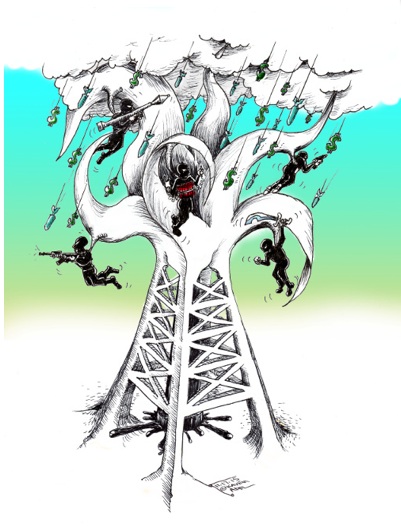
Economics, the Environment and Foreign Policy Conspire to End Oil?

Alexander Bolton writes:  As the price of oil plunges to its lowest point in 12 years — and threatens to drag the broader U.S. economy down with it — lawmakers say Congress should consider helping teetering energy companies with policy fixes beyond the decision to lift the oil-export ban.

Among the proposals under discussion: Expediting the process for exporting liquefied natural gas, and upgrading infrastructure to move energy to market more quickly and cheaply.

Another top priority is loosening environmental and other regulations. But moves in that direction are highly unlikely while a Democrat remains in the White House.

With oil currently below $33 a barrel, some on Capitol Hill are calling for quick action.

Some lawmakers are floating the possibility of taking retaliatory trade measures against Saudi Arabia, which has flooded the market with cheap oil in what some analysts see as a bid to drive America’s growing shale oil industry out of business.


The House version of the energy legislation includes language to expedite natural gas exports.

The Obama administration has proposed nearly 100 regulations for the oil and gas industry, ranging from restrictions on methane and carbon dioxide to limits on operating on federal land.

Legislation passed last month to lift the four-decade ban on oil exports is expected to boost exports by 500,000 barrels a day but so far it has had little impact on prices.

Goldman Sachs has warned that oil may sink as low as $20 a barrel, which would shake financial markets by sinking energy stocks, driving companies into bankruptcies and setting off a round of junk-bond defaults.

Third Avenue Investment, a New York-based fund, last month blocked clients from pulling their money, prompting a sell-off of high-yield bonds and evoking memories of the 2008 meltdown.

Growing tensions between Saudi Arabia and Iran over the execution of a Shiite cleric might have been thought to have boosted prices by raising the specter of regional conflict. But that had little effect on oil prices this past week.

Bankruptcies among oil and gas companies have hit the highest quarterly level since the midst of the 2008 financial crisis, Bloomberg Business reported last month.

Oil and gas companies have laid off more than 250,000 workers and that number could swell in the months ahead.

Saudi Arabia, taking advantage of its low extraction costs, has refused to curb oil production in a bid to expand market share and undercut competitors. This has raised the prospect of the U.S. government taking action to level the playing field for domestic companies.

If the energy industry continues to sink, other proposals will pop up in the energy negotiations due to kick off next week.  There are calls for new infrastructure: the right mix of pipelines, transmission lines, rail, roads,” he said.

The Death of Oil

US Fed: Maintain Full Employment?

J.W. Mason writes:  To the surprise of no one, the Federal Reserve recently raised the federal funds rate — the interest rate under its direct control — from 0–0.25 percent to 0.25–0.5 percent, ending seven years of a federal funds rate of zero.

But while widely anticipated, the decision still clashes with the Fed’s supposed mandate to maintain full employment and price stability. Inflation remains well shy of the Fed’s 2 percent benchmark (its interpretation of its legal mandate to promote “price stability”) — 1.4 percent in 2015, according to the Fed’s preferred personal consumption expenditure measure, and a mere 0.4 percent using the consumer price index — and shows no sign of rising.

US GDP remains roughly 10 percent below the pre-2008 trend, so it’s hard to argue that the economy is approaching any kind of supply constraints. And setting aside the incoherent notion of “price stability” (let alone of a single metric to measure it), according to the Fed’s professed rulebook, the case for a rate increase is no stronger today than a year or two ago.

While the consensus view considers the main job of central banks to be maintaining price stability by adjusting the short-term interest rate, this has never been the whole story.

The conscious planning that confines market outcomes within tolerable bounds is hidden from view because if the role of planning was acknowledged, it would undermine the idea of markets as natural and spontaneous and demonstrate the possibility of conscious planning toward other ends.

The Fed is a central planner. One particular problem for central bank planners is managing the pace of growth for the system as a whole. Fast growth doesn’t just lead to rising prices — left to their own devices, individual capitalists are liable to bid up the price of labor and drain the reserve army of the unemployed during boom times. Making concessions to workers when demand is strong is rational for individual business owners, but undermines their position as a class.

Modern central bankers pay close attention to the somewhat misleadingly labeled labor market, and use low unemployment as a signal to raise interest rates.

So in this respect it isn’t surprising to see the Fed raising rates, given that unemployment rates have now fallen below 5 percent for the first time since the financial crisis.

Indeed, inflation targeting has always been coupled with a strong commitment to restraining the claims of workers. Paul Volcker is now widely admired as the hero who slew the inflation dragon, but as Fed chair in the 1980s, he considered rolling back the power of organized labor — in terms of both working conditions and wages — to be his number one problem.

Volcker’s successors at the Fed approached the inflation problem similarly. Alan Greenspan saw the fight against rising prices as, at its essence, a project of promoting weakness and insecurity among workers.

Testifying before Congress in 1997, Greenspan attributed the “extraordinary’” and “exceptional” performance of the nineties economy to “a heightened sense of job insecurity” among workers “and, as a consequence, subdued wages.”

As Greenspan’s colleague at the Fed in the 1990s, Janet Yellen took the same view.

And when a few high-profile union victories, like the Teamsters’ successful 1997 strike at UPS, seemed to indicate organized labor might be reviving, Greenspan made no effort to hide his displeasure.

While it might look like naked class warfare to deliberately raise unemployment to keep wage demands “subdued” (in the soothing language of the Fed’s public statements), the Fed assures us that it’s really in the best interests of everyone, including workers.

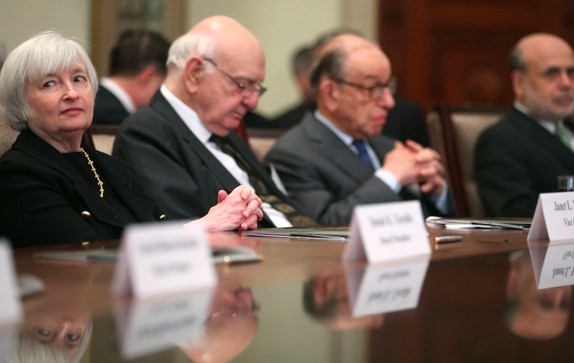
Yellen, Volker, Grenspan, Bernanke

Do Corporate Diversity Programs Help Women?

U.S. companies spend millions annually on diversity programs and policies. Mission statements and recruitment materials touting companies’ commitment to diversity are ubiquitous. And many managers are tasked with the complex goal of “managing diversity” – which can mean anything from ensuring equal employment opportunity compliance, to instituting cultural sensitivity training programs, to focusing on the recruitment and retention of minorities and women.

Are all of these efforts working? In terms of increasing demographic diversity, the answer appears to be not really. The most commonly used diversity programs do little to increase representation of minorities and women. A longitudinal study of over 700 U.S. companies found that implementing diversity training programs has little positive effect and may even decrease representation of black women.

Most people assume that diversity policies make companies fairer for women and minorities, though the data suggest otherwise. Even when there is clear evidence of discrimination at a company, the presence of a diversity policy leads people to discount claims of unfair treatment. In previous research, we’ve found that this is especially true for members of dominant groups and those who tend to believe that the system is generally fair.

All this has a real effect in court. In a 2011 Supreme Court class action case, Walmart successfully used the mere presence of its anti-discrimination policy to defend itself against allegations of gender discrimination. And Walmart isn’t alone: the “diversity defense” often succeeds, making organizations less accountable for discriminatory practices.

In a recent experiment, we found evidence that it not only makes white men believe that women and minorities are being treated fairly — whether that’s true or not — it also makes them more likely to believe that they themselves are being treated unfairly.

We put young white men through a hiring simulation for an entry-level job at a fictional technology firm. For half of the “applicants,” the firm’s recruitment materials briefly mentioned its pro-diversity values. For the other half, the materials did not mention diversity. In all other ways, the firm was described identically. All of the applicants then underwent a standardized job interview while we videotaped their performance and measured their cardiovascular stress responses.

Compared to white men interviewing at the company that did not mention diversity, white men interviewing for the pro-diversity company expected more unfair treatment and discrimination against whites. They also performed more poorly in the job interview, as judged by independent raters. And their cardiovascular responses during the interview revealed that they were more stressed.

Thus, pro-diversity messages signaled to these white men that they might be undervalued and discriminated against.

In another set of experiments, we found that diversity initiatives also seem to do little to convince minorities that companies will treat them more fairly.

Groups that typically occupy positions of power may feel alienated and vulnerable when their company claims to value diversity. This may be one explanation for the lackluster success of most diversity management attempts.

So what can managers do? First, they must appreciate the potential effect of diversity messages on groups that have traditionally been favored in organizations.

Second, managers should know the limits of diversity initiatives for minorities and women.  They must be more than “colorful window dressing” that unintentionally angers a substantial portion of the workforce. Diversity policies must be researched, assessed for effectiveness, and implemented with care so that everyone in the workplace can feel valued and supported.

Diversity and Women

Women Make a Difference

Rachael Jacobs writes:  A cursory review of 2015 reveals a world that’s far from inspiring. Bombings, gun violence, executions, domestic violence and a refugee crisis took centre stage. For these reasons we look to those who might bring light to dark places and use their influence to bring others to a places of hope rather than despair.

Here are five women who are are outspoken and controversial, using their intellect, skills, and tenacity to be highly influential on domestic, international and even intergalactic fronts.

Rose Batty  In 2015 Australia woke up the alarming epidemic of domestic violence. The choice of Rosie Batty as Australian of the Year was as brave as the woman herself, ensuring the issue would be kept at the forefront of our consciousness. Batty gave an articulate voice to the victims who would continue to suffer and be killed throughout the year.

Angela Merkel  The German Chancellor found herself at the forefront of several key world events of 2015. In her self-named “Year of Crises” Merkel showed leadership on the Greek financial saga, becoming the defacto leader of the European Union. Her response to the international refugee crisis gave a million refugees hope that they may be able to begin a new life.  Characterised by patience and compassion, Merkel has attracted deep criticism, even from her own party, for her moral leadership and open-door policy to refugees. As a result, her popularity has fallen.

Amy  Schumer made her mark in 2015 with the release of her first feature film, Trainwreck. Like Schumer herself, her character is unapologetically sexual, oozes attitude and is engaging to watch. She’s a refreshing celebrity who talks openly about dating, food, feminism and the media’s obsession with body.  Schumer has stated she’s not trying to be “likeable”, yet she’s the girl we all want on our team.  (Editor’s note:  When gun violence erupted in a theatre showing her film, Schumer immediately took to the airwaves discussing the irrational use of guns in the US)

Mhairi Black’s maiden speech to the British Parliament went viral, cementing herself and the Scottish National Party as forces to be reckoned with. The new 20-year old member for Paisley and Renfrewshire South was also the youngest person elected to parliament in the past 300 years.  Being from a traditionally Labour Socialist family, her words resonated with many as she declared that “it is the Labour party that left me, not the other way round”. Since then she’s been outspoken against the bombing of Syria and an advocate for women’s economic development. Her age, passion and sharp wit ensure that she’ll be heard for many years to come.

A fictional character, yes, but the scale of her influence is beginning to emerge. Played by little-known actor Daisy Ridley, this protagonist of Star Wars: The Force Awakens is undeniably kick-arse. More than that, Rey signals a departure from the previous episodes that portrayed female heroines as princesses.  She’s a leader to those around her, who are mostly men who are as flawed as they are moral.

Any list, by definition, is exclusionary. Aung San Suu Kyi’s victory, Patricia Arquette’s Oscar speech, and Clementine Ford’s activism against gender-based harassment make them all worthy of this list; 2015 was the year that Malala declared she’s a feminist, Nikki Minaj called out racism in the music industry, and the Matildas became the most successful Australian football team. Ever.

These achievements also highlight that there’s a long way to go in all these fields..The coming years will reveal even more influential women whose achievements must be celebrated.

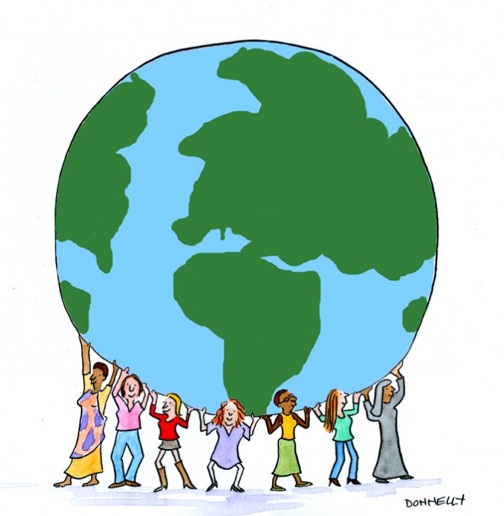
Women holding up world

Eliminating Negligence Concept from Health Care Lowers Costs and Benefits More Patients

What happens when you end medical malpractice lawsuits?

The Danish health system’s treatment of negligence issues offers lessons for policymakers in the United States, where medical harm remains widespread and the mechanisms for addressing it are often cumbersome and adversarial. The Danes’ primary focus is on helping patients who have been hurt by the health care system. Data helps flag offenders.

The U.S. system for compensating injured patients – medical malpractice lawsuits – effectively shuts out patients when the potential damages are small. Proving negligence, the usual standard for winning compensation, is difficult. There are scant incentives for doctors and hospitals to apologize, reveal details about what happened, or report errors that might unveil a pattern.

Denmark offers a radically different alternative.  Alternative responses to patient harm have been tried on a smaller scale. Virginia, for example, has a program designed to compensate for severe neurological childbirth injuries that is similar in some ways to the Danish system.

Common to all these programs is a commitment to provide information and compensation to patients regardless of whether negligence is involved. That lowers the bar of entry for patients and doesn’t pit doctors against them, enabling providers to be open about what happened.

Denmark’s compensation program has been in place since 1992, replacing a lawsuit-based approach much like that in the U.S.  Today, medical injury claims aren’t handled by the Danish court system but by medical and legal experts who review cases at no charge to patients. Patients get answers and can participate in the process whether or not they ultimately receive a monetary award.

Filing a claim is free. Patients are assigned a caseworker to shepherd them through the process. The hospital or doctor is required to file a detailed response, which patients may rebut. Patients have access to their complete medical record and a detailed explanation of the medical reviewers’ decisions. All of this is available for patients and their families through an online portal, which alerts them when there are developments in their claims process.

Overall, about one in three patients who file a claim is compensated. The minimum eligible claim is under $2,000, and the average paid out is $30,000, or about 15 percent of the typical amount awarded in lawsuits against U.S. doctors.

However, it’s estimated that more than seven times as many claims are filed per capita in Denmark, and about four times as many patients per capita receive some award. A claim for a few thousand dollars would not be worth it in the U.S. system because of the high cost of pursuing lawsuits.

The Danish health care system helps patients file medical injury claims by providing an independent nurse with legal training to assist at every hospital.  Danish doctors are known to file compensation claims on behalf of patients, which occurs in about 10 percent of the cases.

The Danish system is not perfect. Although the data collected from claims is freely shared with researchers, injury and error rates are not published so that patients could use them to select providers. By design, there is not communication between the claims and disciplinary systems.

Proposed alternatives to the U.S. medical malpractice system have been strongly opposed by some powerful interest groups, most prominently trial lawyers.


Entrepreneur Alert: One Step Closer to Cars that Run on Water

Scientists at Indiana University have created a highly efficient biomaterial that catalyzes the formation of hydrogen — one half of the “holy grail” of splitting H2O to make hydrogen and oxygen for fueling cheap and efficient cars that run on water.

A modified enzyme that gains strength from being protected within the protein shell — or “capsid” — of a bacterial virus, this new material is 150 times more efficient than the unaltered form of the enzyme.

“Essentially, we’ve taken a virus’s ability to self-assemble myriad genetic building blocks and incorporated a very fragile and sensitive enzyme with the remarkable property of taking in protons and spitting out hydrogen gas,” said Trevor Douglas, the Earl Blough Professor of Chemistry in the IU Bloomington College of Arts and Sciences’ Department of Chemistry, who led the study. “The end result is a virus-like particle that behaves the same as a highly sophisticated material that catalyzes the production of hydrogen.”

Other IU scientists who contributed to the research were Megan C. Thielges, an assistant professor of chemistry; Ethan J. Edwards, a Ph.D. student; and Paul C. Jordan, a postdoctoral researcher at Alios BioPharma, who was an IU Ph.D. student at the time of the study.

The genetic material used to create the enzyme, hydrogenase, is produced by two genes from the common bacteria Escherichia coli, inserted inside the protective capsid using methods previously developed by these IU scientists. The genes, hyaA and hyaB, are two genes in E. coli that encode key subunits of the hydrogenase enzyme. The capsid comes from the bacterial virus known as bacteriophage P22.

The resulting biomaterial, called “P22-Hyd,” is not only more efficient than the unaltered enzyme but also is produced through a simple fermentation process at room temperature.

The material is potentially far less expensive and more environmentally friendly to produce than other materials currently used to create fuel cells. The costly and rare metal platinum, for example, is commonly used to catalyze hydrogen as fuel in products such as high-end concept cars.

“This material is comparable to platinum, except it’s truly renewable,” Douglas said. “You don’t need to mine it; you can create it at room temperature on a massive scale using fermentation technology; it’s biodegradable. It’s a very green process to make a very high-end sustainable material.”

In addition, P22-Hyd both breaks the chemical bonds of water to create hydrogen and also works in reverse to recombine hydrogen and oxygen to generate power. “The reaction runs both ways — it can be used either as a hydrogen production catalyst or as a fuel cell catalyst,” Douglas said.

The form of hydrogenase is one of three occurring in nature: di-iron (FeFe)-, iron-only (Fe-only)- and nitrogen-iron (NiFe)-hydrogenase. The third form was selected for the new material due to its ability to easily integrate into biomaterials and tolerate exposure to oxygen.

NiFe-hydrogenase also gains significantly greater resistance upon encapsulation to breakdown from chemicals in the environment, and it retains the ability to catalyze at room temperature. Unaltered NiFe-hydrogenase, by contrast, is highly susceptible to destruction from chemicals in the environment and breaks down at temperatures above room temperature — both of which make the unprotected enzyme a poor choice for use in manufacturing and commercial products such as cars.

These sensitivities are “some of the key reasons enzymes haven’t previously lived up to their promise in technology,” Douglas said. Another is their difficulty to produce.

“No one’s ever had a way to create a large enough amount of this hydrogenase despite its incredible potential for biofuel production. But now we’ve got a method to stabilize and produce high quantities of the material — and enormous increases in efficiency,” he said.

The development is highly significant according to Seung-Wuk Lee, professor of bioengineering at the University of California-Berkeley, who was not a part of the study.

“Douglas’ group has been leading protein- or virus-based nanomaterial development for the last two decades. This is a new pioneering work to produce green and clean fuels to tackle the real-world energy problem,” said Lee.

Beyond the new study, Douglas and his colleagues continue to craft P22-Hyd into an ideal ingredient for hydrogen power by investigating ways to activate a catalytic reaction with sunlight, as opposed to introducing elections using laboratory methods.

“Incorporating this material into a solar-powered system is the next step,” Douglas said.
 

How Much Does Good Health Care Cost?

Does being poor mean being less healthy? In the United States, the answer is generally yes: Income and health are intertwined, and the richer you are, the healthier you’re likely to be.

Still, the link between poverty and poor health isn’t ironclad. Take Costa Rica, where the poorest 25 percent of people live longer than their counterparts in the U.S., according to ananalysis published this week in the Proceedings of the National Academy of Sciences.

Costa Rica punches above its weight on many measures of health and social welfare. It’s a middle-income democracy with a population of 4.8 million—about the size of Alabama—and a per-capita gross domestic product about one-fifth that of the U.S. In other words, it’s much less wealthy than the U.S. As you would expect, the rich in America enjoy lower mortality rates than do the rich in Costa Rica. But when you look at the other end of the socio-economic scale, the reverse is true.

Why are the poor in one of the world’s wealthiest countries more likely to die at an earlier age than the poor in a small, middle-income country? Lifestyle factors have a lot to do with it. In the U.S., smoking and obesity are far more common at the bottom of the income scale. That’s not the case in Costa Rica.

“Poor people or lower socioeconomic-status people are thinner and less prone to obesity than rich people, while in the U.S., the inverse of that situation is true,” said Luis Rosero-Bixby, a demographer at the Universidad de Costa Rica and lead author of the study. Costa Ricans are more likely to adhere to traditional diets and lifestyles that don’t include junk food or cigarettes. Costa Rica’s health care system is not better than that of the U.S., according to Rosero-Bixby, but it manages to ensure that “the very basic needs are covered.”

While Costa Rica outperforms the U.S. on the health of its poorest, it’s not because the country has greater equality than America. Indeed, the income distribution in Costa Rica concentrates a greater share of wealth at the top, according to the paper. Somehow, though, skewed income doesn’t translate to skewed health outcomes.

The analysis linked census records in both countries with death registries from the 1990s. Matching that kind of data isn’t possible in many places, Rosero-Bixby said, so it’s hard to tell whether the pattern is similar elsewhere. Both countries are, to some extent, outliers. While Costa Ricans are generally healthier and live longer than the country’s income and health spending would predict, the reverse is true in the U.S..


Entrepreneur Alert: Big Banks Back in Small Business Loans?

Big Banks Getting Back in the Business of Making Loans to Small Businesses in US?

Here’s good news for entrepreneurs: Big banks are becoming a tad more generous with small-business loans.

Major banks and institutional lenders have been approving small-business loans at higher rates, while the pace is holding steady at alternative lenders, according to a report this week from Biz2Credit, an online marketplace for small-business loans.

At banks with more than $10 billion in assets and at institutional lenders — including credit funds, insurance companies and nonbank financial institutions — approval rates on small-business loan applications climbed in June, to their highest level since Biz2Credit began tracking them in 2011, the report says.

On the other hand, approval rates at alternative lenders and credit unions were mostly flat. The report was based on an analysis of 1,000 loan applications on the Biz2Credit platform.

“We’ve come a long way,” Biz2Credit Chief Executive Rohit Arora said in a statement. “These are the best numbers for big bank lending since the recession. … It is a good time for entrepreneurs in search of capital.”

This trend is significant because big banks and lenders pulled back from the small-business market during the financial crisis. Alternative lenders stepped in to fill the void in small-business financing, helping create a vibrant, growing market.

That market has started to draw the attention of traditional banks, but Sam Hodges, founder of alternative lender Funding Circle, says big financing companies are, for the most part, still wary of lending to small businesses.


Molly Otter, chief investment officer at Lighter Capital, another alternative lender, says the Biz2Credit report paints an upbeat picture.

“Banks becoming more aggressive in their approvals — I think that is great for business owners.  The more options they have,  the better off their business is going to be, and banks are currently the cheapest form of debt there is.”

  • Big banks approved 22.1% of small-business loan requests in June, up slightly from May and the eighth consecutive monthly increase. By comparison, at the lowest point in June 2011, big banks approved only 8.9% of small-business loan applications.
  • Institutional lenders approved 61.4% of small-business loan applications, which is slightly higher than the rate at alternative lenders. Arora says institutional lenders are now mainstream players in small-business loans and are replacing cash advance companies, whose interest rates he calls “simply too high.”
  • Credit unions approved 43% of small-business loans applications, flat from the previous month. While considered a good option for lower-cost loans, credit unions “continue to lag in small business lending,” Arora says.