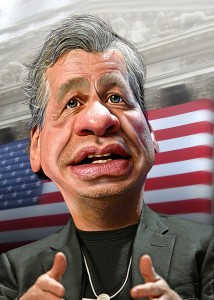
J.P. Morgan Chase & Co. (JPM) has sold $571 million of mortgage bonds in its first foray into the market for issues not backed by the government since 2007, pricing some of the two-part debt at higher-than-expected yields, according to two investors who considered the offering. Article
Category Archives: Corruption
Tax emerges as crucial issue in post-2015 development talks
Tax evasion by multinationals and corrupt leaders has emerged as a key issue ahead of the third substantive meeting of a UN high-level panel to discuss a framework for development after 2015.
The theme of this week’s meeting in the sweltering Indonesian resort island of Bali is global partnership, the orphan child of the millennium development goals (MDGs). Devoid of clear targets, MDG8 talks in general terms about an open, rule-based trading and financial system, dealing with debt burdens, providing access to affordable essential medicines, and increasing access to new technologies. Goal eight also mentions fostering links between the public and private sector to drive better development…article
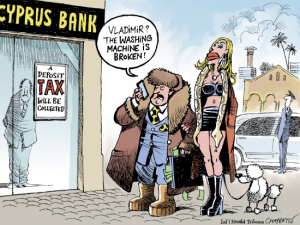
Russian Money Fled Cyprus Even When the Banks were Closed
While ordinary Cypriots queued at ATM machines to withdraw a few hundred euros as credit card transactions stopped, other depositors used an array of techniques to access their money. No one knows exactly how much money has left Cyprus’ banks, or where it has gone. The two banks at the centre of the crisis – Cyprus Popular Bank, also known as Laiki, and Bank of Cyprus – have units in London which remained open throughout the week and placed no limits on withdrawals. Bank of Cyprus also owns 80 percent of Russia’s Uniastrum Bank, which put no restrictions on withdrawals in Russia. Russians were among Cypriot banks’ largest depositors. Article
Director of Anti Corruption Research Center Talks about Russian Dirty Money
“If you’re going to keep your money in a washing machine, you have to be ready for the fact that one day the machine will break, and its contents will be washed away in the sewer,” says Russian Elena Panfilova. Article
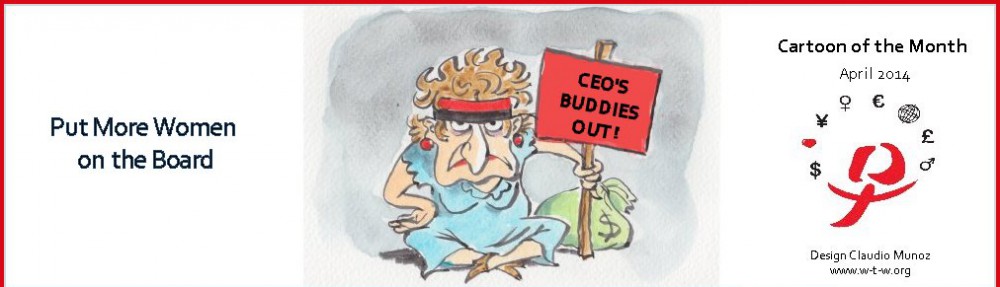
Women’s Role in Anti-Corruption
Gender and corruption is a surprisingly recent issue in anti-corruption scholarship. The first wave of research into the gendered dimensions of corruption focused on whether women are more or less corruptible than men, and whether the promotion of women in public life can be an effective anti-corruption strategy. A second line of enquiry examined the impact of corruption on women as a group, building on the growing evidence that corruption has a disproportionate impact on vulnerable groups in society. Both of these strands of research have already generated a wealth of policy-relevant insights that advance our understanding of the interplay between corruption and gender. Article
Five ways to meet an anti-corruption Millennium Development Goal
The transparency payoff
This week the United Nations is bringing experts and world leaders to Indonesia to debate development priorities beyond 2015, when the Millennium Development Goals expire. Good governance tops the list of what to add to the current eight targets…article
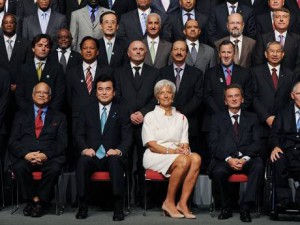
Christine Lagarde is the first woman ever to lead the International Monetary Fund
‘I will not pretend that I am a man’: A week in the company of Christine Lagarde, the first female head of the IMF
This week her flat in Paris was raided by police looking for evidence in an investigation into corruption. She said she was happy for them to search for evidence to clear her name. Or something equally as facile…article
FOLLOW THE MONEY:
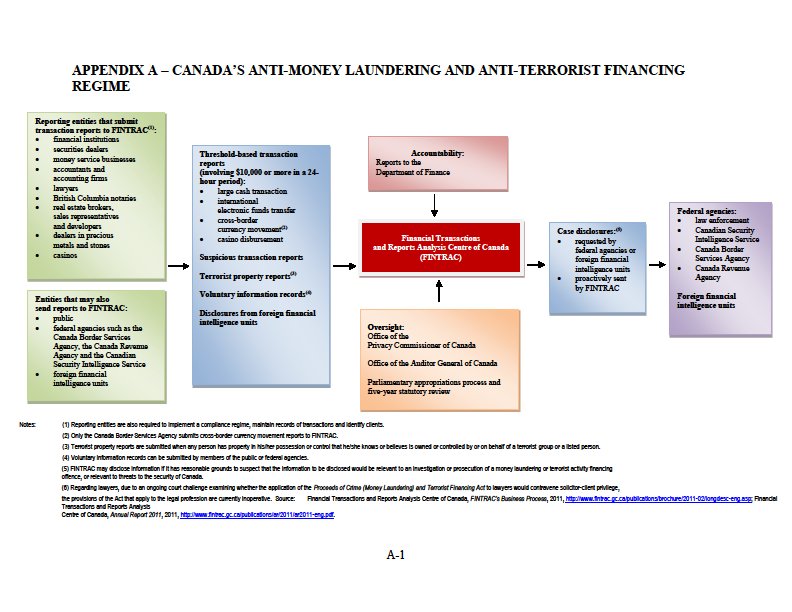
IS CANADA MAKING PROGRESS IN COMBATTING MONEY LAUNDERING AND TERRORIST FINANCING? NOT REALLY
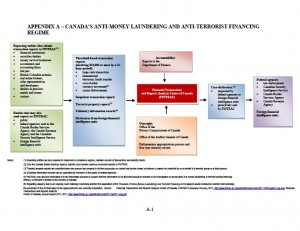
According to the United Nations, money laundering is “any act or attempted act to disguise the source of money or assets derived from criminal activity.” The annual value of global money laundering is estimated to be between US$800 billion and US$2 trillion, while money laundering in Canada in 2011 was estimated to be between $5 billion and $15 billion.
The Standing Senate Committee on Banking, Trade and Commerce (the Committee) began a five-year statutory review of the Proceeds of Crime (Money Laundering) and Terrorist Financing Act in February 2012. In addition to written briefs from those unable to appear in person, the Committee heard from more than 40 witnesses, including representatives from federal, provincial and international departments and agencies, as well as the private sector….Report of the Standing Senate Committee on Banking, Trade and Commerce
FBI Fears Bitcoin’s Popularity with Criminals
A internal report from the FBI expresses some concern that the digital payment system Bitcoin will help criminals hide from authorities ..Report: DOJ_FBI_Bitcoin
..article 
Transparency we can learn from U.S.
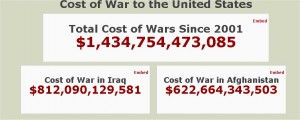
Take a look “Costofwar.com”
“From 2003 through 2012, the United States provided $60.64 billion for the relief and reconstruction of Iraq,” or about $15 million spent per day. Of the $61 billion, $52 billion was allocated from major funds such as the Iraq Relief and Reconstruction Fund (IRRF) and the final $9 billion from additional assistance programs and reconstruction-related oversight expenses. In total over the last 10 years, the nonpartisan Congressional Budget Office calculated at least $767 billion was spent when accounting for total military spending, additional aid and other diplomatic expenses. “Costofwar.com,”a product of the National Priorities Project, puts that figure higher, at about $812 billion, and notes that some projects are yet to be finished. Report Sigir learning from Iraq