Suisse Secrets?

What is Suisse Secrets? Everything You Need to Know About the Swiss Banking Leak.

Pirate Bankster
Some Experts tried to make sure that the bank then received really tough
penalties. But with limited success, even under the Democrats. In
2014-15, after Credit Suisse pled guilty to enabling $20b of tax dodging
by wealthy Americans, James S. Henry joined with Ralph Nader, Andreas Frank
(Germany), Dr Paul Morjanoff Australia), Bart Naylor(DC), and two
Holocaust survivors in an effort to get the US Department of Labor to
ban CS from advising US pension funds. This was under a law that bans
convicted felons from giving such advice unless they get a DOL waiver.

In January 2015 they presented a full day of testimony, offering evidence
of CS chicanery on 4 continents. However, with the help of lobbyists
and lawyers — including Knight Spaulding’s Chris Wray, who had
represented the bank in the tax dodging case, DOL gave CS a 5-year
“waiver.”

Meanwhile, most of its $2.6b fine from Obama’s DOJ was tax deductible
in Switzerland. No one went to jail. CS lost none of its banking
licenses either in the US or anywhere else. Of course CS had also
pocketed at least $25b of gov bailouts in 2008-2011 during the GFC. Nor,
as we learned from the survivors, did it ever fully honor its 1990
commitments to them. So the actual net penalties were pretty slight —
especially on a NPV basis

Sadly for CS shareholders, however, since 2015, the bank has not
performed very well among international banks — partly because it has
acquired such a dodgy reputation

But CS has managed to slither on.

Indeed, it has diversified in some rather disturbing ways that this
OCCRP investigation doesn’t mention — for example, by acquiring 25%
of the high frequency trading platforms now used on Wall Street to
handle 75% or more of trades. 2021 was a record year for high freq
trading, most of which is anonymous – rt up CS’s alley.

Furthermore, in mid 2017, after Trump fired Comey as FBI Director, who
do you suppose he and the US Congress select to replace him — with
overwhelming bipartisan support?

None other than CS’s chief xUS defense attorney, Chris Wray. Not
surprisingly, white collar crime cases by the US DOJ + IRS against major
banks have completely dried up since 2017.

And in 2019 — despite “Suissegate,” “Pandora Papers,” and
“Panama Papers,” plus superb additional work by Dr Morjanoff in
Australia, Andreas Frank in Germany, Khadija Sharife in RSA, + our own
research — CS got yet another 5-yr DOL waiver, this time without even
a hearing.

So now we have the long-run context for the important additional
evidence on display in this latest OCCRP story.

How can we make sure that THIS TIME AROUND it will make a difference?

See more: Suisse Secrets-das-ist-das-leak

Harm Bengen / Business Dresses for Banker
www.w-t-w.org/en/harm-bengen
www.harmbengen.de

Trafficking in Human Beings

Launch of the OSCE publication: “Policy responses to technology-facilitated trafficking in human beings: Analysis of current approaches and considerations for moving forward”

Trafficking in human beings has dramatically changed since it was first recognized as a crime 20 years ago. Today technology is a centerpiece of the human trafficking business model and 75% of sex trafficking victims are advertised online. However, legislation addressing trafficking has not kept pace. Addressing this gap is at the heart of a new study a new OSCE study on policy responses to technology-facilitated trafficking in human beings, which was presented at a virtual launch event held today.

OSCE Secretary General Helga Maria Schmid stated at the opening of the event that “the success of States’ efforts to eradicate human trafficking will largely depend on how prepared they are to tackle technology-facilitated trafficking. The OSCE today shows it has unique expertise to offer on the policies needed to effectively do that.”

Technology is misused in a variety of ways, including to groom and recruit children and vulnerable adults, luring them into exploitative situations, and to exercise power and coercion over victims, controlling or blackmailing them into compliance. The misuse of technology is also a massive facilitator of sexual exploitation through advertising trafficking victims for sexual services, sharing depictions of exploited adults and children, live streaming and forced pornography.

Some companies have developed measures or tools to respond to this problem on their platforms, but overall self-regulation has resulted in fragmented and inadequate adoption of safety measures, inconsistent and slow reporting to authorities, lack of redress for victims and impunity for traffickers.

In short, self-regulation is not working and the explosion of technology-facilitated trafficking requires strong policy and legislative action by governments.

“The current system is broken and not up to the task”, said the OSCE Special Representative for Combating Trafficking Val Richey. “States need to adopt new laws and policies to ensure Internet becomes a safe space and not a safe haven for traffickers and perpetrators.”

The new OSCE study offers policy recommendations to establish strong prevention measures, promote harmonized approaches, and encourage tech industry compliance.  The recommendations also include mandating websites to verify the age of people depicted in explicit material, to have a clear “content removal” request button, and to conduct due diligence and proactive monitoring to identify risks on their platforms.

Policy responses to technology-facilitated trafficking in human beings


See also:
Women Against Corruption / WAC
Organized Crime, Money Laundering and Corruption!
What Does It Mean To Women?

Human Trafficking and Financial Corruption
with Anne Basham

Rodrigo de Matos
www.w-t-w.org/en/rodrigo-de-matos/


Breaking The Connection Between Environmental Crimes And Finance

The report highlights the opportunity to reduce environmental crimes by widening the scope and interpretation of existing Anti-Money Laundering (AML) rules.

Pointing to the limits of such an approach, however, the report highlights the need to go further, and proposes a way forward paralleling anti-slavery and conflict diamond approaches.

A new report published today from Finance for Biodiversity (F4B) points to how to break F4BlogoColor.pngthe environmentally-destructive connection between environmental crimes and legitimate investments. F4B calls on the global financial community, working with regulators and civil society organisations, to take steps to ensure the entire financing value chain is free of environmental crimes.

Environment crime, such as illegal wildlife trade and logging, is now one of the most profitable global criminal enterprises, generating up to almost USD300 billion in criminal gains each year, and creating even more profound damage and cost to the environment and society. Many entirely legal enterprises benefit from such environmental crimes, as do those who finance them.
F4B Breaking Env Crimes Finance Connection_final report 

F4B Breaking Env Crimes Finance Connection_final exec summary-1

Abholzungswort stock abbildung. Illustration von ...

The UK’s Kleptocracy Problem


  • The intertwining of financial globalization
    and deregulation with the post-Soviet The Media-Men List and the Chatham House Rule | The New Yorkertransition has, since the 1990s, created a new international political and economic environment. In this context, the UK’s relations with Russia and Eurasian states are characterized in part by features of transnational kleptocracy, where British professional service providers enable post-Soviet elites to launder their money and reputations.
  • The UK adopts a risk-based approach to anti-money laundering which relies on private sector professionals conducting appropriate checks. However, evidence indicates that the system is effectively risk-insensitive, with banks over-reporting suspicious activity, and thereby creating a deluge of reports for UK authorities to process. Other, non-financial service providers often under-report such activity and are inconsistent in whether they undertake effective due diligence.
  • Failures of investigation and enforcement by the National Crime Agency and other UK state bodies have led to flawed judgments by UK courts, especially regarding post-Soviet elites. Capable and expensive lawyers (hired by members of transnational elites or their advisers) defeat or deter the regulators’ often weak and under-resourced attempts to prosecute politically exposed persons.
  • The provision of aggressive reputation management services by UK professionals includes libel actions, quasi-defamation cases, and the use of public relations agents against journalists and researchers. These services also transplant authoritarian agendas and rivalries to the UK, which has become a leading site of legal action and political conflict between post-Soviet elites.
  • Opportunities for reputation laundering are placing the integrity of a range of important domestic institutions at risk. Philanthropy to UK universities and charities is one method by which post-Soviet elites clean up their reputations – but these donations are processed in secret, and several cases suggest that their due diligence has been flawed. Westminster – and the Conservative parliamentary party in particular – may be open to influence from wealthy donors who originate from post-Soviet kleptocracies, and who may retain fealty to these regimes.
  • This situation is materially and reputationally damaging for the UK’s rule of law and to the UK’s professed role as an opponent of international corruption. It demands a new approach by the UK government focused on creating a hostile environment for the world’s kleptocrats. An effective anti-kleptocracy drive would close legal loopholes, demand transparency from public institutions, deploy anti-corruption sanctions against post-Soviet elites and prosecute British professionals who enable money laundering by kleptocrats.

UK Kleptocracy Problem

kleptocracy.jpg

European Money Mule Action Leads To 1 803 Arrests

Ivestigation reveals money mules were laundering profits from online fraud schemes such Europol Announces DD4BC Busts - BankInfoSecurityas business email compromise and Forex scams.

Today saw the conclusion of the anti-money mule operation EMMA 7, an international action coordinated by Europol in cooperation with 26 countries, Eurojust, INTERPOL, the European Banking Federation (EBF) and the FinTech FinCrime Exchange. The operation resulted in 1 803 arrests and the identification of over 18 000 money mules. It also revealed that money mules were being used to launder money for a wide array of online scams such as sim-swapping, man in the middle attacks, e-commerce fraud and phishing.

Over roughly two and a half months of operations, EMMA 7 saw law enforcement, financial institutions and the private sector, including Western Union, Microsoft and Fourthline, cooperate in a concerted effort against money laundering in Europe, Asia, North America, Colombia and Australia. As well as targeting the laundering of profits through money muling networks, investigators also sought intelligence on the sources of these illicit profits, shedding more light on the size and nature of the criminal economies that money mules serve. 

Results from 15 September – 30 November

  • 18 351 money mules identified;
  • 324 recruiters/herders identified;
  • 1 803 arrested individuals;
  • 2 503 investigations initiated;
  • 7 000 fraudulent transactions reported;
  • €67.5 million prevented losses.

Collaborating in the fight on money laundering

Money laundering explainedPhoto Credit: globalintegrity.org
Australia’s AML/CTF Laws Are Regulated By AUSTRAC

AUSTRAC
is responsible for preventing, detecting and responding to criminal abuse of the financial system to protect the community from serious and organised crime.

Four new ML/TF risk assessments for Australia’s banking sector

Learn about the criminal threats and vulnerabilities facing major banks, other domestic banks, foreign subsidiary banks and foreign bank branches operating in Australia.
https://www.austrac.gov.au/

Risk assessments

Risk assessments examine current money laundering and terrorism financing threats and vulnerabilities in specific parts of Australia’s financial sector.

They are a resource for reporting entities to use to refine internal controls and to meet your reporting obligations, particularly in relation to suspicious matter reporting.

Risk assessments bring together insights from industry with intelligence from AUSTRAC and our partner agencies to provide a comprehensive assessment of ML/TF risks relevant to a specific sector or product.

Crime Symposium

Mr David Lewis, Executive Secretary, Financial Action Task Force (FATF), Paris, France

David joined the FATF in 2015, following posts for the UK Government as Head of the Illicit Finance Unit and Senior Policy Advisor at HM Treasury, and before that as a senior member of the Serious Organised Crime Agency (now National Crime Agency). He has a broad range of other experience including at NGO’s and in the public and private sector, from leading and supporting expeditions in the rainforests of Indonesia, to working on some of the largest initial public offerings and government privatisations, and managing the digital product portfolio of the UK national mapping agency. David has a BA (Hons) from the University of Portsmouth, MSc from Cranfield University and is a Fellow of the Royal Geographical Society.

In his role at the FATF, David is responsible for leading the FATF Secretariat in bringing to bear the combined expertise of governments around the world to fight money laundering, the financing of terrorism and the proliferation of weapons of mass destruction. This includes work to monitor how money is being laundered and terrorist organisations are raising and accessing funds; to develop global standards, best practice and guidance to mitigate new and emerging risks; and to assess the action taken by governments. It also includes providing training and support for officials from FATF member countries and the nine FATF-Style Regional Bodies.

Since 2016, the FATF has been represented in G20 meetings of Finance Ministers and Central Bank Governors, where David supports the President and is the G20 Deputy for the task force. High Level Principles and Procedures

“…the work we do has never been more important to protect financial systems, the broader economy and contribute to safety and security. It is vital that members hold each other to account for robust regimes and that our evaluations are subject to scrutiny.“


Money Laundering. Hanging $100 bills

Pandora Papers

Offshore havens and hidden riches of world leaders and billionaires exposed in unprecedented leak

The Pandora Papers reveal the inner workings of a shadow economy that benefits the wealthy and well-connected at the expense of everyone else.

Millions of leaked documents and the biggest journalism partnership in history have uncovered financial secrets of 35 current and former world leaders, more than 330 politicians and public officials in 91 countries and territories, and a global lineup of fugitives, con artists and murderers.

The secret documents expose offshore dealings of the King of Jordan, the presidents of Ukraine, Kenya and Ecuador, the prime minister of the Czech Republic and former British Prime Minister Tony Blair. The files also detail  financial activities of Russian President Vladimir Putin’s “unofficial minister of propaganda” and more than 130 billionaires from Russia, the United States, Turkey and other nations.

The leaked records reveal that many of the power players who could help  bring an end to the offshore system instead benefit from it – stashing assets in covert companies and trusts while their governments do little to slow a global stream of illicit money that enriches criminals and impoverishes nations.

Among the hidden treasures revealed in the documents:….  icij.org/investigations/

Parliamentary-Intelligence Security-Forum in Budapest

Parliamentary Intelligence-Security ForumParliamentary Intelligence-Security Forum - Parliamentary ...

The Parliamentary Intelligence-Security Forum will help make the world a safer place for everyone through international intelligence and security collaboration between global allies.

 
Mission, Vision, and Value

The Parliamentary Intelligence-Security Forum is the leading international security forum providing expertise and collaboration among Parliamentarians and government officials to increase the United States’ allies understanding of the global threats of radical Islamic terrorism and adversarial nation states, while creating actionable solutions that counter these threats. Parliamentarians, who write the legislation and fund the government, are a critical player in this mission.

VALUE PROPOSITION
Industry experts play a unique role as they offer their perspective and expertise as speakers at each fora throughout the world. They have opportunity to convey their distinct challenges at the fora to build relationships with these global leaders ,as we work together to deter and foil terrorists’ objectives while advancing American business interests.
 

Please join via LIVE-STREAM the Parliamentary Intelligence-Security Forum in Budapest, 6 September. The forum will begin at 9am until 6pm Hungary time. (Washington, DC 3am-12noon)

Thank you for participating as we build a stronger working knowledge and closer collaboration on these critical security issues. 
 
To join via LIVE-STREAM please visit our website www.pi-sf.com 

The full program is below of very premier experts from a broad range of security/technology issues will present at the forum.  

To review the Budapest Program please click on the link below.
mcusercontent.com//INVITE_PROGRAM.pdf

Budapest Parliament, Hungary

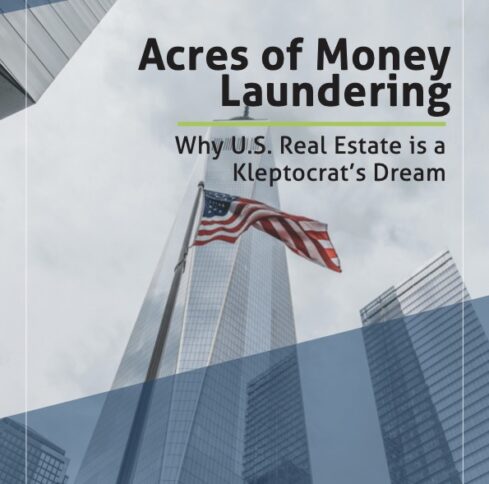
Acres of Money Laundering

Acres of Money Laundering: Why U.S. Real Estate is a Kleptocrat’s Dream 

What do the Iranian government, a fugitive international jeweler, and a disgraced Harvard University fencing coach have in common?

They have all used U.S. real estate to launder their ill-gotten gains. In Acres of Money Laundering: Why U.S. Real Estate is a Kleptocrat’s Dream, Global Financial Integrity GFI dives into the murky world of global money laundering and demonstrates the ease with which kleptocrats, criminals, sanctions evaders, and corrupt government officials choose the U.S. real estate market as their preferred destination to hide and launder proceeds from illicit activities.

To tell the story of why U.S. real estate continues to remain a favored destination for illicit activity, GFI built a database of more than 100 real estate money laundering cases from the U.S., UK, and Canada, reported between 2015 – 2020. The database and accompanying regulatory analysis in this report provide conclusive evidence that the current U.S. regulatory approach, using temporary and location- specific Geographic Targeting Orders (GTOs), has critical shortcomings that will require comprehensive reform before it can adequately address the threats to the U.S. financial system and national security. To provide context to the analysis and recommendations in this report, GFI compares the regulatory developments in the U.S. with ongoing practices, challenges, and developments in the rest of the G7. Analyzing the problem in the U.S. through this prism helps the U.S. see the merits and demerits of possible regulatory approaches in other similarly placed economies and lends weight to GFI’s final recommendations. At the same time, this approach underscores the continued relevance of real estate money laundering as a systemic risk across the G7 and the need therefore for solutions that are more cooperative.

GFI’s key findings on the U.S. include:

  • At a minimum, from cases reported in the last five years, more than US$2.3 billion has been laundered through U.S real estate, including millions more through other alternate assets like art, jewelry, and yachts;
  • Gatekeepers including attorneys, real estate agents, investment advisers, and employees of financial institutions have repeatedly facilitated REML by high net-worth individuals through willful blindness or direct complicity, yet the U.S. remains the only G7 country that does not require real estate professionals to comply with anti-money laundering (AML) laws and regulations;
  • 60.71 percent of U.S. cases involved properties in one or more non-GTO counties, demonstrating the limitations of this location-specific regulatory tool;
  • Well over 50 percent of the reported cases in the U.S. involved politically exposed persons, which is particularly problematic considering the lack of guidance from FinCEN on PEP identification;
  • While commercial real estate featured in more than 30 percent of the cases and generally had significantly higher values than the residential real estate involved, the U.S. is yet to create any reporting obligations for risks in the sector;
  • The use of anonymous shell companies and complex corporate structures continues to be the number one money laundering typology. Eighty-two percent of U.S. cases involved the use of a legal entity to mask ownership, highlighting the importance of implementing a robust beneficial ownership registry under the Corporate Transparency Act.

KEY RECOMMENDATIONS

GFI proposes the following key recommendations for the U.S. real estate sector in line with international best practices and regulatory developments seen elsewhere in the G7:

  • The GTOs, through a new rule-making, should be made permanent, expanded nationwide, and without any dollar threshold;
  • Real estate agents should be required to identify the beneficial owner of a residential real estate purchase, when title agents are not involved in the transaction;
  • FinCEN should issue guidance, red flag indicators, and create reporting requirements for real estate money laundering typologies related to commercial real estate transactions;
  • Legal professionals should be made the lead reporting entity for identifying money laundering risks in commercial real estate transactions;
  • The U.S. should create robust AML/CFT processes targeted at the real estate sector, including but not limited to a risk-based approach identifying and verifying the source of funds and beneficial owner of the client;
  • FinCEN should issue guidance on the definition of PEPs and an advisory highlighting the risk of foreign PEPs to real estate money laundering schemes. Reporting entities should be required to report when a foreign PEP purchases property;
  • Investment advisors should be required to carry out client due diligence, including enhanced client due diligence where required, on all prospective investors in private (real estate) funds;
  • The U.S. should undertake comprehensive gatekeeper reform for the real estate sector, by lifting the exemption given to real estate professionals under the BSA and include real estate agents and legal professionals who are involved in real estate transactions under the definition of ‘financial institutions’;
  • The EB-5 visa investor program needs critical reform on the methods used to identify the source of funds and verify investor identity, including processes to record investors that are PEPs.