Corruption in Health Care in Italy

Corruption in health care in Italy? A boulder. Lawlessness and corruption represent approximately, 5-6% of health care spending (5-6 billion euro). And ‘the picture that emerges from the conclusions of the draft of the final document of the hearings on the NHS, conducted in recent months by the united Commissions Budget and Social Affairs of the Chamber. Numbers were counted, especially in light of the feared cuts to health care.

A report said, numbers manipulation is “a worrying phenomenon that affects not only the efficiency and equity of services, but that undermines the relationship of trust between institutions and citizens, in an essential area for the life of the country where the health. ”

The lack of transparency, according to deputies, “promotes degenerative phenomena of inefficiency and injustice, undermining the roots of the same core values ​​of the NHS.”

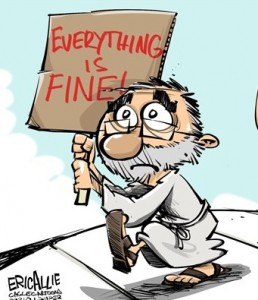
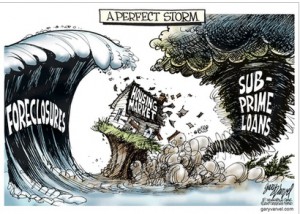
Health Care Costs Manipulated

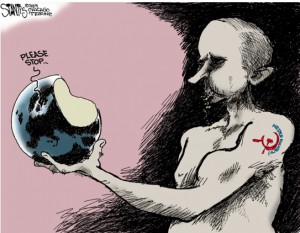
The State of Sanctions Against Russia

EU officials huddled Friday, Sept. 5, in Brussels to finalize the fourth round of sanctions on key Russian economic sectors, including finance, energy, and defense, while U.S. President Barack Obama said that the United States is working to “deepen and broaden” existing sanctions meant to ratchet up financial pressure on Russia.

The EU was poised to expand its earlier sanctions that banned major Russian banks and energy firms from global capital markets.  The latest sanctions, for example, would target Rosneft, Russia’s big oil company. Europe would also aim at the export of sensitive technologies, such as those used for oil exploration offshore and in the Arctic, two priority areas for a Russian state anxious to boost its oil and gas production to compensate for declining output at aging fields.

A last-minute cease-fire agreement may have forestalled Europe’s latest steps to bring pressure to bear on Russia, which it says is responsible for the armed violence in eastern Ukraine. Many observers view the cease-fire skeptically because it does not address the underlying drivers of the conflict between Kiev and Moscow. But European officials said they are willing to give the plan, drafted by Russian President Vladimir Putin, a chance to end five months of sporadic fighting.

More broadly, will Western sanctions, which threaten to choke off much-needed financing for big Russian banks and energy companies,  trigger tough reprisals from Putin?

Putin has long threatened to wield the energy weapon to cow European countries, which are heavily reliant on imports of Russian oil and natural gas, and he threatened to shut off gas exports to Ukraine in May. The energy weapon will become more powerful for Russia as temperatures drop.  Russia’s dominant role in a handful of other key sectors, such as critical metals, could also give it leverage to inflict targeted pain on major U.S. and European manufacturers.

Russian metal exports are a particular vulnerability. Russia is the biggest global supplier of key titanium components used by aircraft manufacturers such as Boeing and Airbus, for example. Reprisals from Moscow could complicate production of a major and lucrative Western exports.

Boeing has been stockpiling Russian titanium parts since March out of concern that the Ukraine crisis might disrupt supplies, the Wall Street Journal reported Aug 7.

The Federal Reserve said airplane-makers in the Pacific Northwest were concerned about metal supplies, in its survey of local economic conditions published eight times a year.  Although titanium is perhaps the most vulnerable supply, nickel and palladium could also be targeted.  Because supply chains often weave through several different companies from raw material to component part to finished product, there may be unrealized dependencies that aren’t revealed until the supply is halted.

Europe’s deepest fear, and Putin’s ultimate ace in the hole, would be to run a reliable play and halt natural gas exports to Europe, as it did in the winters of 2006 and 2009. Europe gets about 40 percent of its gas supplies from Russia.

Cutting off energy flows is a double-edged sword. About half of Russia’s revenues come from energy exports, and Europe is gas giant Gazprom’s biggest export destination. What’s more, Europe has braced itself for the worst.

“Europe could probably sit out a supply disruption for about two months, but then countries like Romania, Bulgaria, Hungary, and Greece would be in trouble again,” said Tim Boersma, a European-gas expert at the Brookings Institution.

Throughout the Ukrainian crisis, Russian officials have promised to keep energy exports flowing to Europe: They want to ensure the $100 million a day in revenue and maintain Russia’s reputation as a dependable energy supplier. But Europe could suffer even if Gazprom and Putin play ball. That’s because Ukraine is in the middle.

About half of Europe-bound Russian gas passes through the country; Russia shut off gas exports to Kiev this spring. As colder temperatures arrive, Ukrainian officials may have no choice but to tap into gas supplies meant for other European countries downstream in order to keep their citizens from freezing, as appears to have happened in 2006 and 2009.
A Result of Russian Sanctions?

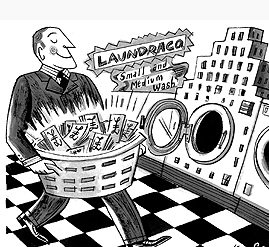
LIBOR Reform?

Federal Reserve Governor Jerome H. Powell on Libor:  My hope is that governments, market participants, and end users can work together to build a stronger foundation for the reference interest rates that are so critical to our financial system. Implementation of these measures is clearly in the interest of U.S. financial stability. I also hope and expect that individual financial institutions will understand that it is also in their private interests. Reference rates are one of the foundations of the financial system, and it is in the interest of everyone, from the residential mortgage holder to the financial institutions that heavily use these rates, that those foundations have integrity and be well constructed and resistant to manipulation.  The problems with LIBOR have undermined the public’s trust in the financial system. In light of the need to regain that trust, I am certain that our reform efforts will meet with the active cooperation of financial institutions in carrying forward these reforms. Reforming London Interbank Overnight Rate 

Libor Reform?


Are the US Markets Broken? Can Transparency and a Functioning Government Help?

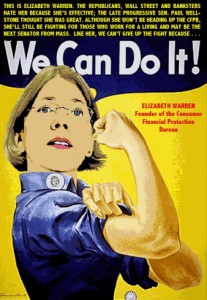
Heather Long writes:  It is a message US Senator Elizabeth Warren has been taking all over the country, and she isn’t afraid to call banks, credit card companies and some employers cheats and tricksters.  “The biggest financial institutions figured out they could make a lot of money by cheating people on mortgages, credit cards and payday loans,” she told a packed auditorium at the Graduate Center of the City University of New York.  The Democrat from Massachusetts even said the market is broken in many regards.  “This is about getting markets to work for real people,” she said.

The biggest applause of the night was on three issues that come up frequently in Warren’s speeches.

1) Financial regulation: Warren was the driving force behind the creation of the Consumer Financial Protection Bureau after the 2008 financial crisis. The agency has returned billions of dollars to Americans who were wronged.  “Traffic works better with traffic lights,” she explained.

In her eyes, a true capitalist system would have transparency so consumers could make informed choices. But in a world of “mice type” with pages and pages of fine print that no one reads or understands, the market breaks down.

2) Reducing student loans: Last summer Warren made headlines for arguing that student loans should have the same interest rates that banks get when they borrow money from the Federal Reserve.  This year she’s pushing to allow people to re-finance their student loans at the historically low rates currently in place.  As she likes to remind people, “Student loans issued from 2007 to 2012 are on target to produce $66 billion in profit for the United States government.”

3) Raising the minimum wage: “No one should work full time and still live in poverty,” Warren said.  She uses her own family story to illustrate how critical it is for workers to make a living wage. Her father had a heart attack when she was 12, and her mother had to go back to work in retail at Sears (SHLD) to support the family. That would be much harder today because a woman working a minimum wage job and trying to support even one child would likely still be in poverty.

Her other big push is for basic worker rights, including allowing workers to talk freely about how much they make and forcing employers that call shift workers in for only a few hours to pay them for at least four hours of work.

“We can’t have a market that functions unless we have a government that functions. That’s the heart of it,”  Warren says.

 Elizabeth Warren


US Spying Operation Unfolds

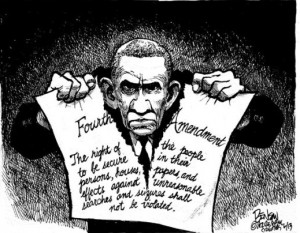
Glenn Greenwald writes: Throughout the last year, the U.S. government has repeatedly insisted that it does not engage in economic and industrial espionage, in an effort to distinguish its own spying from China’s infiltrations of Google, Nortel, and other corporate targets. So critical is this denial to the U.S. government that last August, an NSA spokesperson emailed The Washington Post to say (emphasis in original): “The department does ***not*** engage in economic espionage in any domain, including cyber.”

After that categorical statement to the Post, the NSA was caught spying on plainly financial targets such as the Brazilian oil giant Petrobras; economic summits; international credit card and banking systems; the EU antitrust commissioner investigating Google, Microsoft, and Intel; and the International Monetary Fund and World Bank. In response, the U.S. modified its denial to acknowledge that it does engage in economic spying, but unlike China, the spying is never done to benefit American corporations.   US Spying Operation

Spying USA Style

Is Vice President at Goldman Just a Title to Impress Clients?

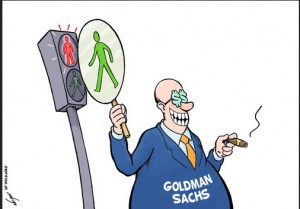
Matt Levine writes on a recent court case involving a vice president who ‘stole’ or ‘took’ Goldman’s ‘proprietary’ or ‘generic’ code from the office.  The banker says he thought the code was generic.  Goldman says that a Vice President’s legal problems are not their concern.  The title is just “too be police.”

From the opinion:  ”


Over a six year period, fifty-three people associated with GSCo were considered for advancement and/or indemnification. Of these fifty-three, Goldman paid the attorney’s fees for fifty-one. Aside from Aleynikov, Goldman refused to pay indemnification and/or advancement for one other person who sought it, also a GSCo vice president. However, of the fifty-one whose fees Goldman paid, fifteen were GSCo vice presidents.

Now the case will go before a jury of twelve people who are to determine:

A jury must determine the interpretive value of Goldman’s extrinsic evidence in resolving the ambiguity in the By-Laws.

Because that is what 12 randomly selected laypeople are particularly good at: determining the interpretive value of extrinsic evidence in resolving ambiguity in corporate documents.

Goldman Sachs, To VP or Not?


Is the EU Facing Facts on the Economy and Putin?

Clive Crook writes:  The EU’s current economic policy is indefensible: The EU has chosen to extend the recession by rejecting available remedies. As far as its foreign and security policy goes, this can barely be said to exist. Europe didn’t make Putin the ruthless outlaw he is, but it provoked him while knowing it was unwilling or unable to deal with the consequences.

Germany’s input to these mistakes has been disproportionate. It isn’t just that the size and strength of Germany’s economy have made Berlin the de facto capital of Europe. It’s also that the errors are characteristically German — postwar German, that is. Germany’s mortal dread of inflation and what can follow has paralyzed Europe’s economic policy; and its overweening desire for commerce with Russia and reluctance to confront threats with force has defanged the EU’s security policy.

Putin Threat to Europe


The End of Secret Corporate Ownership in Delaware?


For years, Senator Carl Levin (D-Michigan) and Senator Charles Grassley (R-Iowa) have sponsored a bi-partisan bill to eliminate anonymous shell corporations only to see their measure go nowhere. This year, their annual Sisyphean effort is getting support from the unlikeliest of places: Delaware.

Pretty odd because Delaware has long been criticized for its welcome embrace of corporate secrecy and, in fact, is one of the targets of the Levin-Grassley bill. The tiny state is perennially at the top of the list of global tax havens and has gained a reputation as place where those with something to hide – embezzlers, arms merchants, money launders, drug dealers and the like – can set up shop, no questions asked. This is thanks to Delaware laws that allow the true owners of a corporate entity to remain a secret.    The End of Shell Corporations in Delaware

The End of the Shell?


Transparency Intl. Calls for Anti-Corruption Measures in Switzerland

Switzerland must make it much harder for the corrupt to hide behind secret companies if the country wants to keep criminal activity out of its financial system, Transparency International Switzerland said today as it launched the “Unmask the Corrupt” campaign in Switzerland.

Currently, Switzerland does not require the identity of the real, living people who ultimately own, control or benefit from a company. This secrecy makes it easier for corrupt foreign public officials and businesspeople to hide the origin of their stolen money from law enforcement, the public and governments who may seek its return. Transparency International believes that Switzerland must collect this information, and make it accessible to law enforcement. Public registers are the best way to do this not least since banks would be required to consult this register when undertaking due diligence on their clients.

“Switzerland needs to extend the scope of its anti-money laundering legislation in order to prevent the corrupt from hiding the proceeds of crime and corruption on its soil. No longer should the corrupt be able to get away with illicit activities, often linked to international organised crime, with the help of Switzerland,” said Eric Martin, Chair of Transparency International Switzerland.

Transparency International Switzerland’s efforts to unmask the corrupt and throw light on company ownership is part of a broader Transparency International campaign that calls on governments worldwide to halt illicit financial flows stolen through the abuse of power, bribery and secret deals.

“For too long, the corrupt have been allowed to hide their ill-gotten gains in foreign countries. This has to stop now in the interest of all countries and their citizens,” warned Cobus de Swardt, Transparency International’s Managing Director.

In Switzerland, the campaign coincides with the parliamentary debate over a bill regarding the implementation of recommendations made by the Financial Action Task Force (FATF).

The recommendations are currently recognised as the international standard for combating money laundering. The Swiss Parliament should not attempt to dilute the current Federal Bill and should also work towards measures to ensure the effectiveness of essential legislation such as a better protection for whistleblowers and a reinforcement of the Swiss penal code for cases of private corruption.

To stop the corrupt from enjoying their ill-gotten gains, Switzerland must also restrict the size of cash payments when buying luxury goods. The ability to spend large amounts of cash without a regulated financial intermediary greatly increases the risk of money laundering.

To make significant progress in unmasking the corrupt, Transparency International Switzerland calls for urgent steps to be taken in the following areas:

• Registers of beneficial ownership need to be created and made public. Bearer shares should either be abolished or shareholders should be required to register or deposit their shares with a financial intermediary.

More concretely, Transparency International Switzerland states that the transparency of legal entities, including for non-listed stock companies issuing bearer shares, needs to be enhanced. It should be clear who the beneficial owners behind the legal entities are. Whoever buys bearer shares of a non-listed public company should be required to identify him- or herself and report the purchase within one month. Trade registers must publicly disclose beneficial ownership. Transparency International Switzerland also calls for the introduction of a statutory reporting requirement to identify shareholders holding more than 25 per cent of shares or voting rights.

• There should also be a limit for cash payments for real estate and luxury products. In the case of cash payments, real estate agents and luxury good sellers should be required to execute due diligence on their customers before selling them property or goods.

It is well known that cash payments are frequently used for money laundering and play an important role in cross-border crime. Therefore, Transparency International Switzerland is calling for a legal limitation of the sums that can be paid in cash. Payments for real estate or luxury goods exceeding 100,000 francs should be settled through a financial intermediary subject to the Swiss Anti-Money Laundering Provisions.

“Switzerland needs to take responsibility and toughen its anti-money laundering legislation. The world’s financial architecture needs to be made more transparent and offshore financial centres should not allow corporate vehicles to be misused by criminals to hide their identity and stolen wealth behind secret corporate structures while enjoying a life of luxury with impunity paid from taxpayers’ money,” said Martin.

Call to End Money Laundering in Switzerland


Are We In Another Bubble?

The only thing about bubbles that’s surprising is that we are surprised.

Anatomy of Bubbles and Crashes

There is no standard definition of a bubble, but all bubbles look alike because they all go through similar phases.

Stage 1: Displacement  All bubbles start with some basis in reality. Often, it is a new disruptive technology that gets everyone excited, although it doesn’t need to involve technological progress. It could come through a fundamental change in an economy; for example, the opening up of Russia in the 1990s led to the 1998 bubble or in the 2000s interest rates were low and mortgage lenders were able to fund themselves cheaply. In this displacement phase, smart investors notice the changes that are happening and start investing in the industry or country.

Stage 2: Boom  Once a bubble starts, a convincing narrative gains traction and the narrative becomes self-reinforcing. As George Soros observed, fundamental analysis seeks to establish how underlying values are reflected in stock prices, whereas the theory of reflexivity shows how stock prices can influence underlying values. For example, in the 1920s people believed that technology like refrigerators, cars, planes, and the radio would change the world (and they did!). In the 1990s, it was the Internet. One of the keys to any bubble is usually loose credit and lending. To finance all the new consumer goods, in the 1920s installment lending was widely adopted, allowing people to buy more than they would have previously. In the 1990s, Internet companies resorted to vendor financing with cheap money that financial markets were throwing at Internet companies. In the housing boom in the 2000s, rising house prices and looser credit allowed more and more people access to credit. And a new financial innovation called securitization developed in the 1990s as a good way to allocate risk and share good returns was perversely twisted into making subprime mortgages acceptable as safe AAA investments.

Stage 3: Euphoria  In the euphoria phase, everyone becomes aware that they can make money by buying stocks in a certain industry or buying houses in certain places. The early investors have made a lot of money.  Even people who had been on the sidelines start speculating. Shoeshine boys in the 1920s were buying stocks. In the 1990s, doctors and lawyers were day-trading Internet stocks between appointments. In the subprime boom, dozens of channels had programs about people who became house flippers. At the height of the tech bubble, Internet stocks changed hands three times as frequently as other shares.

The euphoria phase of a bubble tends to be steep but so brief that it gives investors almost no chance get out of their positions. As prices rise exponentially, the lopsided speculation leads to a frantic effort of speculators to all sell at the same time.

Stage 4: Crisis  In the crisis phase, the insiders originally involved start to sell. For example, loads of dot-com insiders dumped their stocks while retail investors piled into companies that went bust. In the subprime bubble, CEOs of homebuilding companies, executives of mortgage lenders like Angelo Mozillo, and CEOs of Lehman Brothers like Dick Fuld dumped hundreds of millions of dollars of stock. The selling starts to gain momentum, as speculators realize that they need to sell, too. However, once prices start to fall, the stocks or house prices start to crash. The only way to sell is to offer prices at a much lower level. The bubble bursts, and euphoric buying is replaced by panic selling. The panic selling in a bubble is like the Roadrunner cartoons. The coyote runs over a cliff, keeps running, and suddenly finds that there is nothing under his feet. Crashes are always a reflection of illiquidity in two-sided trading—the inability of sellers to find eager buyers at nearby prices.

Stage 5: Revulsion  Just as prices became wildly out of line during the early stages of a bubble, in the final stage of revulsion, prices overshoot their fundamental values. Where the press used to write only positive stories about the bubble, suddenly journalists uncover fraud, embezzlement, and abuse. Investors who have lost money look for scapegoats and blame others rather than themselves for participating in bubbles. As investors stay away from the bubble, prices can fall to irrationally low levels.

Bubble, bubble, toil and trouble