What Does Slowdown in Chinese Manufacturing Sector Mean?

China’s manufacturing sector slowed in August.  The Chinese government’s official purchasing manager’s index, which measures the health of factory activity, fell for the first time in February.

China’s economy has been slowing for several years, but a sharp correction in the real estate markets in recent months has raised questions about a slump ahead.  Growth targets are not being met.  Beijing has been giving mini-sitmuli, including targeted lending in the agricultural sector and promises of more investment in clean energy, hospitals, environmental protection and public housing.

Measures to step up growth like infrastructure investment are expected.  The campaign to root out corruption is moving slowly.  A China analyst suggests that the anti-corruption campaign is a two-sided coin.  Chinese outsiders and foreigners need to see this effort, but it is difficult to inspire government employees to act quickly when they don’t have the usual incentives.

Anti-Corruption in China


EU Threatens More Sanctions Against Russia


The leaders of the European Union have instructed the European Commission and the EU’s diplomatic service to prepare further sanctions to be imposed on Russia, in reaction to its military action against Ukraine.

Herman Van Rompuy, the president of the European Council, said the EU was ready to take “significant further steps in light of the evolution of the situation on the ground”. He condemned the movement of Russian troops and weaponry into Ukraine. Angela Merkel, Germany’s chancellor, said that sanctions would be imposed “if the situation in the last days goes on”.  Merkel also committed money to help rebuild the damaged infrastructure in Ukraine.

The European Council adopted conclusions that called for a ceasefire and urged Russia to implement a peace plan prepared by Ukrainian president Petro Poroshenko, who attended the Council meeting.

Van Rompuy denounced “the presence of Russian armed forces on Ukrainian soil”. José Manuel Barroso, the president of the European Commission, said: “What is happening in the eastern part of Ukraine is war.”

It is unclear whether the mooted sanctions will be an intensification of existing measures affecting exports in the military, energy and the financial sectors, or will extend into new economic sectors.

The Council specifically instructed the Commission to include in its proposals a measure “on the basis of which every person and institution dealing with the separatists groups in the Donbass [region of eastern Ukraine] will be listed”.

Barroso said that at a meeting with Poroshenko he had said that the EU stood ready to provide “an additional €1 billion in loans to Ukraine”.

The EU leaders also discussed the worrying state of the European economy, in light of a very low level of inflation and extremely high unemployment. They agreed that the situation raises “significant concerns”.  “In recent weeks economic data have confirmed that the recovery, particularly in the euro area, is weak,” the conclusions state. The leaders agreed to hold a special summit on jobs and growth in Italy in early October, and a summit of government leaders from eurozone countries following the European Council in late October.

Speaking after the Council, Hollande said the situation was unacceptable. “The diagnosis is unquestionable. It’s a widespread situation, there are some countries in recession, and inflation has reached a historic low everywhere. Therefore there is a European problem, a lack of sufficient demand.”


Ending Crony Capitalism in Hong Kong

Nisid Hajari writes:  When they meet on Sunday, legislators from China’s rubber-stamp National People’s Congress are expected to disregard even modest proposals to open up Hong Kong’s political system. In all likelihood the decision will provoke street protests, drive moderates into the more radical pro-democracy camp and call into question the former British colony’s standing as a global financial center and bastion of free enterprise. And for what? The good of Hong Kong, of course.

Wang Zhenmin, a Chinese law professor who sat on the committee overseeing Hong Kong’s constitution, laid out the case most blatantly on Thursday: the interests of the city’s powerful tycoons had to be safeguarded from unchecked democracy. “If we just ignore their interest, Hong Kong capitalism will stop,” he said. “Democracy is a political matter and it is also an economic matter.”

On the face of it, Beijing’s intransigence makes little sense. Pro-democracy groups proposed a system of open nominations with a much lower threshold — about 5 percent of the voting population. Even if some anti-Communist radical were able to get on the ballot, the chances of him or her winning would still be negligible. In addition, any victor would be sworn into office with an oath that acknowledges China’s suzerainty over Hong Kong; a leader could be ousted for violating it.

Compromise proposals supported by moderates would have entailed even less risk. For example, China could have expanded the nominating committee, adding more members directly elected by the public, while lowering the nominating threshold. Thus the choices available to voters would have expanded beyond a tight circle of pro-Beijing cronies without threatening China’s hold over Hong Kong.

According to Credit Suisse, a few wealthy businessmen now account for 60 percent of the city’s wealth. Those who have prospered most are engaged in sectors such as banking and real estate, where political connections matter. Hong Kong recently topped the Economist’s “crony capitalism index” just ahead of oligarch-ridden Russia. Frustration over Hong Kong’s yawning wealth gap is rising dangerously. While gross domestic product has grown about 50 percent in the past decade, median household income has only risen 10 percent.

The cost of defending the plutocrats is high. A Chinese government has raised doubts about the continued independence of Hong Kong’s judiciary and the city’s commitment to the rule of law, which have been pillars of its success.  Raids this week on high-profile opposition supporter Jimmy Lai were hardly more reassuring. Perhaps leaders in Beijing feel they are defending a principle greater than the pocketbooks of Hong Kong’s elite. They have long feared that showing leniency toward Hong Kong would encourage other disgruntled parts of China, such as Tibet and Xinjiang, to demand greater autonomy.

Sooner or later, Chinese leaders are going to have to get more comfortable with the idea of autonomy in outlying regions.  So far Beijing is failing.

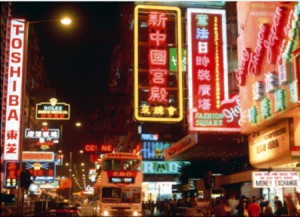
Hong Kong Bright Lights Dim


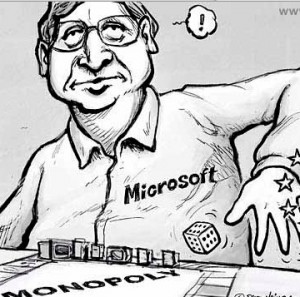
Chinese Anti-Trust Regulator Goes After Microsoft

A Chinese antitrust regulator said on Tuesday that Microsoft Corp has not been fully transparent with its sales data on the software it distributes in China, including information on sales of its media player and web browser software.
Zhang Mao, head of the State Administration for Industry and Commerce, said in Beijing that Microsoft has expressed willingness to cooperate with ongoing investigations.
“After multiple meetings, including at high levels, they’ve expressed a willingness to respect Chinese law and collaborate with investigating officials,” Zhang said.
The Microsoft investigation comes amid a series of antitrust probes into foreign firms in China, including mobile chipset maker Qualcomm and German carmaker Daimler’s luxury auto unit Mercedes-Benz.
The State Administration for Industry and Commerce said earlier this month that Microsoft is suspected of violating China’s anti-monopoly law.
This is in relation to problems with compatibility, bundling and document authentication for its Windows operating system and Microsoft Office software.
“The investigation is ongoing and we will disclose the results to the public in a timely fashion,” Zhang said, adding that the Microsoft probe is one of nine investigations opened this year that include the software, tobacco, telecommunications, insurance, tourism and utilities sectors.
The companies involved in the nine investigations comprise domestic, foreign, State-owned enterprises and trade associations, according to Zhang.
Microsoft China Chief Executive Ralph Haupter did not respond to Zhang’s comments, saying only that more work needs to be done on Chinese information safety protection.
An industry insider said on Tuesday that despite policy barriers, global tech giants can still enjoy great opportunities in China if they can find the right marketing strategy.
Derek Shen, China head of the United States social networking website LinkedIn, said foreign tech companies should understand Chinese requirements when doing business in the country.
“To survive in China, they have to figure out the strengths that are difficult for local rivals to replicate,” he said.  “It is a tough task even for Google, because its technological edge can be quickly overrun by Baidu or Tencent Holdings. Overseas tech giants seem unaccustomed to the Chinese marketing climate.”

Microsoft Not Transparent in China

Are Apologies Enough to Change Big Banks’ Behavior?

Jesse Eisinger writes:  Admitting a problem, as the cliché has it, is the first step to solving it. But with the Justice Department and the Securities and Exchange Commission, admissions of wrongdoing have been the last step. There’s much work to be done to hold giant corporations accountable for their misdeeds.   Do Big Banks’ Apologies Change Behavior

Bankers

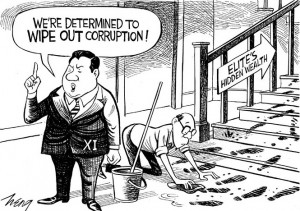
How China Will Take Anti-Graft Campaign Forward

The Chinese media and the Internet are full of speculations on how the top leadership will continue the anti-corruption campaign after putting former security chief Zhou Yongkang under investigation. A former member of the Standing Committee of the Political Bureau of the Communist Party of China Central Committee, Zhou is the highest-ranking official facing investigation for corruption since the launch of reform in the late 1970s. As Chinese often say, Zhou is the “biggest tiger” to be trapped in the anti-corruption net.

Although people have welcomed the probe against Zhou, they are asking what turns will the anti-corruption campaign and the overall political development take now? Will the campaign taper off? And what long-term effects will the anti-corruption campaign leave?  The official press is busy trying to answer these questions. Shortly after Zhou was put under investigation, a commentary on gmw.cn went on to say hunting down a “big tiger” cannot be the ultimate goal of the crackdown on corruption. Instead, the goal should be to use the opportunity to deepen government reforms, and to wipe out bad officials’ influence in ways prescribed by the law. After hunting down Zhou, China still has three major battles to fight.

The first battle is to use the Fourth Plenum of the 18th CPC Central Committee, scheduled for October, to expedite the country’s legal development and strengthen the rule of law. In fact, the natural continuation of the anti-corruption campaign is to design effective institutions to prevent the distortion of law in implementation.
The second battle is to redress the inequality in wealth and status in the market, which can be done through reform of State-owned enterprises, which have de facto monopoly over of natural resources, and make them face effective competition.
The market should be strictly regulated to curb what the author of the article in People’s Daily calls “feudal capitalism”, or crony capitalism. Authorities must make serious efforts, even if they are not more serious than the anti-corruption drive, to encourage “true entrepreneurship” while battling “bureaucratic capitalism” and “barbarian capitalists”.  The third battle has to be fought on the international relations front to earn China a larger space for its peaceful rise.

It is still too early to claim victory over corruption. People could feel disappointed again if there aren’t more effective methods to deal with the problems mentioned above. Therefore, the leadership has to show more tangible results to the people.

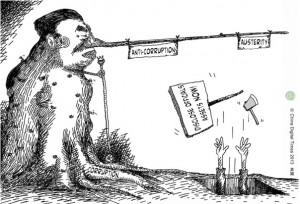
Wiping Out Corruption in China

Money Transfers in Somaliland

Barclays was one of the last major international banks to still accept accounts held by money-transfer operators (MTOs), whose activities are seen in the West as open to abuse. But a record $1.9 billion fine slapped on HSBC by U.S. authorities for conducting business with banks in Mexico and Saudi Arabia with possible links to drug trafficking and terrorism appears to have tipped the balance for Barclays. The profit margins no longer seem worth the reputational risk. Now, ironically, Barclays finds itself in the role of “bad guy” by dint of its slowness in pulling out of the MTO sector.

“At the end of the day, the money will still come in, but at much higher transaction cost and with less transparency,” says Shire, Somaliland’s minister of planning. “So who do you punish by doing this? Is it the pirate, the terrorist, or the poor man?”  Money Transfers in Somaliland

Money Transfers in Africa

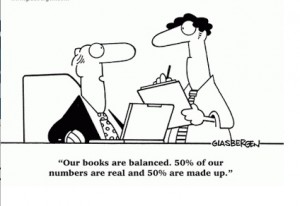
Should Auditors Sign Financial Statements?

An industry group which represents some of the US’s largest investors is urging regulators not to back away from plans to require auditors to sign the financial statements they prepare for companies.

There is an ongoing struggle between the Public Company Accounting Oversight Board, which regulates the accounting industry, and the Securities and Exchange Commission over reforms to auditor disclosure. The PCAOB, and many accounting reformers and investment groups had pushed for this change.

Audit Signatures?


Burger King Latest US Company to Consider Inversion

We continually advocate for a tax code that works for US corporations and US citizens.  Some of our writers have proposed eliminating corporate taxes entirely and taxing only dividends.  Who knows what will work best. But we should have a vigorous and open-minded discussion.


 Burger King Worldwide Inc., the second-largest U.S. burger chain, is in talks to buy Tim Hortons Inc. and move its headquarters to Canada, becoming the latest American company to seek a relocation to a lower-tax country.

Burger King, which is majority-owned by 3G Capital, would create the world’s third-largest fast-food chain by merging with Canada’s bigger seller of coffee and doughnuts, the companies said in a statement. Canada’s corporate tax rate is 26.5 percent, compared with 40 percent in the U.S., according to audit, tax and advisory firm KPMG’s website.

The deal threatens to renew debate over American companies shifting their headquarters internationally in search of a lower corporate tax bill. The trend drew criticism last month from President Barack Obama. His aides vowed that the administration would take action to curtail the practice.

3G Capital will own the majority of the shares of the new company, with the remainder held by other shareholders of Tim Hortons and Burger King, according to the statement. The two chains will operate as stand-alone brands, the companies said.

The combined business would have about $22 billion in sales and more than 18,000 restaurants in 100 countries, according to the statement. The deal is subject to negotiation, and Burger King and Tim Hortons don’t plan to comment further until an agreement is reached or discussions are discontinued.

Between mid-June and late July, when Obama began criticizing deals that cut taxes by relocating outside the U.S., at least five large American companies have announced plans to make such a move, known as an “inversion.” That includes AbbVie Inc. and Medtronic Inc.

Since the start of 2012, at least 21 U.S. companies have announced or completed the deals, comprising almost half the total of 51 such transactions in the past three decades.

Tim Hortons, Canada’s biggest coffee merchant, has about 4,500 restaurants and has been expanding its product lines to boost sales. The Oakville, Ontario-based company’s stock rose 2.8 percent to a record C$68.78 on Aug. 22, the most recent trading day. The restaurant operator posted results this month that beat estimates and said fiscal 2014 profit will top or be at the high end of its target range.

Earlier this month, Burger King reported that revenue fell 6.1 percent to $261.2 million in the second quarter. Same-store sales in the U.S. and Canada rose 0.4 percent. The company has been trying to introduce fewer new items to make its kitchens faster and less complex.

Burger King rose 1 percent to $27.11 at the Aug. 22 close in New York for a gain of 19 percent this year. Its shares rose 4 percent to the equivalent of $28.23 in German trading at 9:44 a.m. Frankfurt time.

The plan to move to Canada follows Burger King’s debut on the New York Stock Exchange in 2012. The chain had been taken private in 2010 by 3G, a New York investment firm, which got $1.4 billion in cash from the public offering and remains the majority shareholder with a 70 percent stake.

U.S. fast-food restaurants are struggling with shaky consumer confidence and steep competition, adding pressure to find ways to alleviate the burden. Burger King has been trying to draw customers with value deals, such as a two-sandwiches- for-$5 offer, as well as some new limited-time fare including chicken fries.
US Companies Invert


Argentina’s Default Spawns Creative Thinking

Matt Levine writes:  The phrase “contempt of court” is a little funny. Normally it just means that, if a judge tells you to do something and you don’t do it, the judge can throw you in jail for contempt. If you are Argentina, on the other hand, and you don’t do what New York federal Judge Thomas Griesa tells you to do, he can’t throw you in jail, because you’re way over there in Argentina, and also a country. So it doesn’t do him much good to find you in “contempt of court,” even if you’ve expressed your actual contempt for the court in the form of personal attacks on him in advertisements and press releases and speeches. What to do?  Argentina’s default

Follow the Money