Cybercrime on the Rise?

Our correspondent Andreas Frank reports cybercrime on the rise.  Summarizing a  Rand Report which we have attached below, Frank notes:

  •  Economic Maturity: The hacker black market mirrors that of other free markets in both evolution and growth. RAND found five key indicators of economic maturity, including sophistication, specialization, accessibility, reliability and resilience.
  • More Profitable than Drug Trade: RAND’s report suggests the cyber black markets are a maturing, multi-billion-dollar economy, with robust infrastructure and social organization. In fact, RAND found the black market can be more profitable than the illegal drug trade. The links to end-users on the black market are more direct and worldwide distribution, being electronic, is trivial.
  • Rise of Twitter: In any traditional market, the yield or scarcity of a product influences its price. RAND found product prices on the illicit market are no different. Traditionally, credit card information was the currency of the black market, demanding high prices, ranging from $20-$40. However, high-profile breaches have created a recent influx of available credit card data. As a result, the scarcity and value of the stolen credit card information is decreasing. At the same time, social media and other online accounts are increasing in value due to scarcity on the market and a greater payoff for cyber criminals. RAND found hacking into accounts like Twitter can generate per-account revenues of $16 to $325+ depending on the account type.
  • Implications for Those Defending: One of the most disturbing and surprising findings from RAND is the increasingly rapid maturity of the market. RAND believes the ability to attack will outpace the ability for companies to defend. Juniper believes we must change the economics of hacking. Using forms of Active Defense like intrusion deception to actively identify, disrupt and frustrate attackers is a very promising approach.   Rand Report on Cybercrime       
  •                                                              Cybercrimes


Ben Ali Family’s Corrupt Grasp On Tunisian Economy

Our correspondent Andreas Frank reports; In Arabic it is called “wasta”, the connections and influence that grease the wheels of the bureaucracy and helps you get ahead. And the family of Zein al-Abidine Ben Ali, deposed president of Tunisia, had plenty of it.

A World Bank report confirmed that the Zine el-Abidine Ben Ali regime, ousted in Tunisia’s bent the rules to their own benefit – cashing in on the country in the process.

Government regulations on businesses, normally used to protect domestic industry from foreign competition or consumers and workers from corporate abuse, were often times instead used in Tunisia to further the private interests of the Ben Ali family, the authors Antonio Nucifora, Caroline Freund, and Bob Rijkers said.

The report underlines the depth of the challenges facing Tunisia today three years after Mr Ben Ali’s regime was overthrown, with many of the same rules of business still on the country’s books.

World Bank researchers analysed previously private tax data provided by Tunisia’s Ministry of Finance and relating to more than 600,000 firms. They found that 220 companies owned by Mr Ben Ali relatives earned 21 per cent of all the country’s private-sector profits between 1996 and 2010, in large part benefiting from rules in their favour.

The Ben Ali family appeared to know which sectors of the market to enter, staying away from businesses where there was too much competition. Moreover, sectors that piqued the interest of Mr Ben Ali’s family members tended to draw more regulatory activity, the report showed.

“It is easier to make money when there are regulations protecting you from competition and even more so when you can create new regulations as needed,” said Caroline Freund, a co-author of the report from the Peterson Institute for International Economics.

Mr Ben Ali’s clan included Sakher el-Materi, who is married to the president’s eldest daughter, Nesrine. In 2004 he bought Enakl, a state-owned car dealership, for about $16m. Soon after the government quadrupled Enakl’s import quota. Mr el-Materi floated 40 per cent of the company in 2009 and netted 53m Tunisian dinars ($33m).

He and his wife had by 2010 amassed ownership or stakes in a total of 36 businesses, including a lucrative shipping operation in the Tunis suburb of La Goulette which he set up after being granted a coveted permit to do so. In addition, he was elected to parliament as a member of his father-in-law’s party.

Companies linked to Mr Ben Ali’s circle on average controlled 6.3 per cent more market share than ordinary businesses, a differential “entirely due to Ben Ali firms sorting into [tending towards] the regulated sectors”, the report stated.

“There is nothing illegal happening here,” stressed Bob Rijkers, a World Bank economist who co-authored the report. “It is just that these laws do not necessarily benefit the public.

Over the years of Ben Ali’s rule, he issued 22 presidential decrees resulting in 73 amendments to the business code. Sometimes they were almost comically shaped to confirm the Ben Ali family’s various business interests. A 2007 rule requiring government authorisation for firms producing cement came as Mr Ben Ali’s brother-in-law established a new company called Carthage Cement.

At the time US diplomats noted in dispatches to Washington accusations that Mr Ben Ali’s circle were able to win advantages and crowd out competitors. Ordinary Tunisians also grumbled suspiciously at Mr Materi’s good fortune.

This concentration of wealth in just a few hands also fuelled broad discontent that would ultimately explode into revolution and the Arab Spring. Mr Ben Ali and Mr el-Materi were forced into exile in 2011.

“We tend to think of corruption more directly as bribes,” said Ms Freund. “But what people were upset about [in Tunisia] was this kind of crony-capitalism that characterises the whole region, and other countries as well”.

Well-connected cliques such as those close to Mr Ben Ali did help drive national growth rates of 4-5 per cent before the Arab Spring, impressing outside observers. Mr Ben Ali earned international praise for his handling of the economy by removing much of the regulations on export-oriented businesses.

“By opening up parts of the economy and giving the red-carpet treatment to foreign investors, he gave an impression of a country that was very open to business and investors,” said Antonio Nucifora, lead economist in the Middle East and North Africa region at the World Bank. “What this did was take away the spotlight from most of the economy which remained protected by barriers to entry, price control regulations.”

Unlike Egypt, Libya or Syria, Tunisia managed to squeeze its way out of a political crisis and avoid a descent into chaotic violence or political repression. Tunisia has since then drawn up a consensus constitution that has not only been lauded by the international community but has calmed political nerves after two assassinations last year nearly derailed the country’s transition.

But Mr Nucifora and his team said Tunisia has yet to unravel the regulatory structure at the heart of the Ben Ali era’s dysfunctional economy, and that business rules and restrictions stifling competition remain in place.

“It would be a mistake to assume that following the departure of Ben Ali and his family the cronyism [has] disappeared in Tunisia,” Mr Nucifora said.

Mr Ben Ali, now in exile in Saudi Arabia, has been convicted in absentia and sentenced to life in prison on charges of corruption, theft and complicity in murder.
World Bank Press Release
All in the Family – State Capture in Tunisia
Related reports
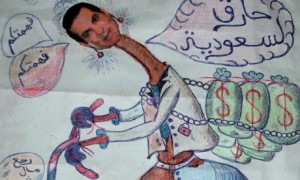
A cartoon displayed in Tunis last year depicts Zine al-Abidine Ben Ali fleeing with stolen dollars as a bird sings ‘bring back the people’s money’. Photograph: Eileen Byrne

If Ukraine Wants Help, Cyber Crime Must Go

Cyber-crime is among the top five most common economic crimes in Ukraine, according to a 2012 study by Ryerson University in Toronto. But for much of the past decade, Ukraine’s record in bringing cyber-criminals to justice has been poor.

Of the roughly 400 people arrested in the country on Internet and banking fraud charges from 2002 to 2011, only eight were convicted, according to Dr. Kshetri’s report.

Some progress has been made since 2009, when the FBI stationed a supervisory special agent at the US Embassy in Kiev to assist with cyber-crime targeting the US, the report adds. And Ukraine has also devoted more resources to its computer crime and fraud enforcement in recent years.  Cybercrime in the Ukraine

Cybercrims

Inconclusive Fight Against Money Laundering In Norway

Our correspondent Andreas Frank reports; Meanwhile, a report commissioned by the Police Directorate (Politidirektoratet) found Norwegian police and prosecutors focus on petty crimes and drug crimes when investigating money laundering, and do not pay enough attention to economic crime.

Swedish law professor Dan Magnusson analysed all the money laundering and illegal goods handling cases closed under the Oslo police district in 2012. “The results of the survey suggest that the tax authorities, trustees in bankruptcy, the prosecution and the police are unable to identify and investigate money laundering,” Magnusson said. “Neither does the court seem to have an ambition to raise money laundering as a crime that should have a general deterrent effect.”

Norway has comparatively few money laundering cases. Part of Magnusson’s survey was to identify if cases had been wrongly classified, skewing the results. His report showed both illegal handling of goods cases misclassified as money laundering, and vice versa, but was most concerned by the fact most cases related to drug crime, not the economic organized crime the legislation is focusing on.

“We are not satisfied with the conclusions the report reaches about a lack of effort in the area of money laundering,” said Torgeir Magnussen, an inspector with the Police Directorate. “It is remarkable that he did not find money laundering in economic crime in the material he has gone through.”

The report covered a third of the criminal handling and money laundering cases in Norway, but excluded cases investigated by the national economic crime unit Økokrim. Magnussen said the directorate will ask the Police University College (Politihøgskolen) to do a similar investigation at Økokrim.
Politi PressRelease 26.3.14
GOV ML Report 26.3.14

How can women work against corruption ? If you see something, say something !!!

Swiss Decide Against Russian Sanctions

Our correspondent Andreas Frank reports; The Swiss federal government decided not to impose sanctions against Russia for its seizure of Crimea, claiming it wanted to find a “balance” between international law and Switzerland’s interests.

“The position of our country is independent of the UN,” Swiss president Didier Burkhalter told a press conference in Bern, saying Switzerland can only use sanctions when they are based upon “international law and the interests of the Swiss”.

“And in this case the rights and the interests play a role… we need to find a balance,” he added, as well as noting that Russian interests in Switzerland were “very large”.

“The federal council has noted the sanctions imposed by the European Union and the United States,” he added.

Burkhalter said some sanctions imposed by the EU would apply to Switzerland, including a ban on the freedom of movement of some Russian nationals as Switzerland is a member of the Schengen group of European countries, which allow passport-free movement between them.

Despite the decision not to impose sanctions, Burkhalter, who is also the country’s foreign minister, said Switzerland would not allow itself to be used by those trying to get round the restrictions already imposed on Russia by the West.

“We do not want to circumvent the sanctions,” said Burkhalter.

He also condemned the Russian annexation of Crimea, saying there was no violation of human rights to justify Moscow’s actions.

Since the beginning of the Ukrainian crisis, Switzerland has tried to tread a fine line between the various parties and in February ordered a freeze on assets held in the country by ousted president Viktor Yanukovych and his son, Oleksandr.

Earlier this month it announced it was looking into suspicions of money-laundering by the former president.

Switzerland has also frozen talks on a trade deal with Moscow and temporarily abandoned a training programme with the Russian military.

However, this year marks the 200th anniversary of relations between Switzerland and Russia and as part of the celebrations Burkhalter is supposed to visit Russia.

No date has yet been fixed.

The majority of Russian gas and petrol is traded in Geneva, and Switzerland is an increasingly popular destination for Russia’s wealthy.

In a March 27, 2013 report from the Swiss Federal Council it is estimated that around 500 companies and some 10,000 employees are active in the commodities sector, which, in addition to trading, also comprises shipping, transaction financing, inspections services and product testing. In 2011 the commodities industry made net receipts from merchanting of 20 billion francs, around 3.5 per cent of Switzerland’s GDP. Switzerland is one of the most important commodity trading centres in the world.
CH_Federal_Council_PressRelease_26.3.14
Swiss Report On Commodities Names Problems But Fails To  Provide Solutions

As the Swiss say: “s Fuenferli und s Weggli ha!”
Get the coins and get the bread».

Get the coins and get the bread

Protecting the Rights of Saudi Men

An Article in the Saudi Gazette Newspaper suggests that we ignore men who are abused by women.  by Saleh Bin Sabaan Makkah daily

A female television broadcaster who is also a women’s rights activist recently spoke about the phenomenon of violence against women in Arab societies. While demanding an end to this phenomenon, she said that female victims of violence suffer from various psychological disorders.

However, no discussions took place on the violence perpetrated by women against men. Is there any organization to count the number of men who have been subjected to violence and harassment from women? Every one of us – both men and women – know that a large number of men have been put behind bars simply because of women. They include murderers, thieves and corrupt officials. There are large numbers of men who have lost their dignity at the hands of women, have become mentally unstable, have committed suicide and have even become addicted to drugs.

Why do we not count these as examples of men who have been victimized by women? I recently read a warning from a women’s rights activist that there has been an increase in the number of men in Arab society who have become victims of assault and harassment at the hands of women. I think that the harassment caused by women is more harmful because it falls into the category of mental harassment.  Women resort to lies, manipulation, conspiracy and tricks that they employ in all occasions and situations. A woman will use words, tears, laughter, fake illness, and whispering to deceive her man. All of these are the sources of her strength. A woman outshines man in this respect because she has more control over her emotions and sentiments than a man does.  If you look at any food channel, you can see that most professional chefs who show their expertise and talent in the art of cuisine are men, even though cooking is supposed to be the duty of women. In general, women suffer from an acute shortage of creativity because they stick to the ground reality. Women are not typically inclined toward adventurism and experimentation. On the other hand, a woman is more dedicated to consumption and materialism. She is content with possessing things and simply keeping them without taking advantage of them. If you have a look at her “treasures” in the cupboards and trays of a kitchen, you will understand my point. For instance, it is futile to assume that she might spend half of the value of kitchenware on buying books.

Saudi Arabian Men

Australia Too Soft On Corporate Crimes

Our correspondent Andreas Frank reports; The Australian Securities & Investments Commission released a 79-page report on “penalties for corporate wrongdoing” that examined penalties in Australia and compared them with those in the US, Britain, Hong Kong and Canada.

ASIC said the white paper would form a significant part of a submission to the government regarding financial wrongdoing penalties, which chairman Greg Medcraft has raised with the government repeatedly in recent months.

A key concern of Mr Medcraft, echoed by the report, is that penalties are often not as large as the proceeds of financial wrongdoing, meaning crooks have an incentive to do the wrong thing.

“The maximum fine that may be imposed may be substantially lower than the financial benefit obtained as a result of the wrongdoing,” the report said.
The maximum civil penalty for individuals involved in financial wrongdoing — including all of insider trading, market manipulation, disclosure and inappropriate advice — was just $200,000.

By contrast, the maximum in Canada was $1.05 million, unlimited in Britain, three times the benefit gained in the US, and the greater of $1.4m or three times the benefit gained in Hong Kong.

The $200,000 maximum had not changed since 1992 when they were enacted under the Corporations Act as they were not adjusted for inflation.

In Australia there are no non-criminal laws relating to “disgorgement” – or the removal of gains made by a person involved in financial wrongdoing – while each of comparison jurisdictions had such laws.

ASIC said disgorgement orders could offer “significant deterrent value” by reducing the likelihood wrongdoers “can consider penalties to be merely a business cost”.
The corporate regulator also highlighted the discrepancies between the maximum civil penalties that could be delivered by different Australian regulatory and enforcement bodies.

The highest civil penalty ASIC could impose under the ASIC Act on an individual was just $340,000, one-tenth of the $3.4m that could be handed down under the Anti-Money Laundering and Counter-Terrorism Financing Act.

The maximum penalty for a company, group or “body corporate” was $1.7m under the ASIC Act and $17m under anti-terrorism and money-laundering provisions.

Under the Competition and Consumer Act an individual could be fined a civil penalty as high as $500,000 and corporations could be fined the greater of the three: $10m, three times the value of the benefits obtained by the wrongdoing or 10 per cent of the company’s annual turnover.

ASIC also noted there were different penalties for the same wrongdoing under different acts.

“If we pursue an individual for providing unlicensed financial services under the Corporations Act, we could obtain at most a criminal fine of $34,000,” the corporate regulator said.

By contrast, a person pursued under the National Credit Act for engaging in “unlicensed credit activity” could be forced to pay up to $340,000 in fines.
ASIC Report

Corruption


Russians Targeted by US Department of Justice

This may be part of what ‘sanctions’ against Russia means.

Victor Lipukhin, formerly a resident of St. Charles, Ill., was indicted yesterday by a federal grand jury in Kansas City, Mo., for attempting to interfere with the administration of the internal revenue laws and filing false tax returns, the Justice Department and Internal Revenue Service (IRS) announced today.  The charges relate to Lipukhin hiding millions of dollars in several Swiss bank accounts held at UBS AG.   Russian’s Target of IRS Related Probes

Head of US Subsidiary of Russian Steel Company


Afghanistan Risks Blacklisting For Corruption

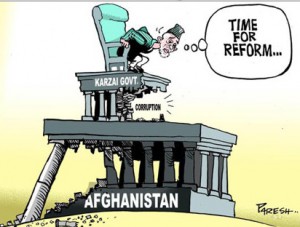
Our correspondent Andreas Frank reports;  If Afghanistan does not do more to combat corruption in its financial sector by June, the country risks being “blacklisted” by an inter-governmental task force — which the U.S. watchdog for Afghan reconstruction (SIGAR) said would would be “devastating” for the sector and the overall economy.

In the most dangerous country in the world for aid workers and where armed insurgents still control large swathes of territory, the reconstruction effort’s number one enemy should be corruption, John Sopko, the special inspector general for Afghanistan reconstruction, said.

Attracting and maintaining foreign investment is vital to sustaining Afghanistan’s economy as U.S. assistance funding – which has totalled over $102 billion so far – declines.

Sopko criticized U.S. government agencies for failing to produce a comprehensive anti-corruption strategy, claiming that unless corruption is specifically targeted and combated it could be the “spoiler” that “will jeopardize every gain we have made over the last 12 years.”

Corruption in Afghanistan’s financial sector presents a particular threat to the country’s ability to attract foreign investment: “Failure to sufficiently reform and regulate the banking sector is putting the country’s immediate future development at risk.”

Sopko reported that the Financial Action Task Force, an inter-governmental body that sets the standards required to combat money laundering, terrorist financing, and other threats to the integrity of the international financial system, recently downgraded Afghanistan’s status based on the country’s lack of progress implementing its much-touted anti-money laundering and terrorist financing action plan.

If Afghanistan continues to fall short on these measures, the FATF could “blacklist” the country as early as June, an outcome the SIGAR chief said would be “devastating” for the country.   Atlantic Council Remarks

Afghan Corruption

California AG Fights Transnational Organized Crime

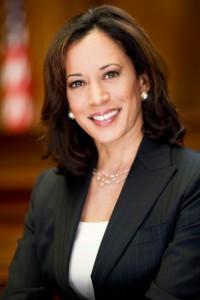
Our correspondent Andreas Frank reports:  International criminal enterprises follow the money, and a report being released Thursday says they are increasingly focusing on California because of its wealth and innovation. The report by California Attorney General Kamala Harris says criminals are turning to cybercrime to target businesses and financial institutions.

It calls California the top target in the U.S. for organizations that often operate from safe havens in Eastern Europe, Africa and China.

California leads all states in the number of computer systems hacked or infected by malware, the number of victims of Internet crimes, the amount of financial losses suffered as a result and the number of victims of identity fraud. The report says the state also is particularly vulnerable to thefts of intellectual property because of its leading role in developing new technologies and mass-media entertainment.

“Not surprisingly, transnational organized crime has tapped into this new criminal frontier,” the report says. “Many of these breaches have been tied to transnational criminal organizations operating from Russia, Ukraine, Romania, Israel, Egypt, China, and Nigeria, among other places.” Hackers are becoming ever more sophisticated. People should have a “multi-layered” type of protection.

California’s gross domestic product of $2 trillion, significant foreign trade activity and border with Mexico also makes the state an easy target for international money-laundering schemes, the report says. It estimates that more than $30 billion is laundered through California’s economy each year.

Some is filtered through legitimate businesses or by using virtual currencies such as bitcoin. But the report says backpacks and duffel bags stuffed with cash have been seized more frequently since Mexico began toughening its money-laundering laws in 2010.Seizures of bulk cash increased 40 percent by 2011 in California, which now leads the nation in the number of currency seizures.

California should alter state law to make it easier for prosecutors to crack down on money laundering, the report says.  The report also recommends that the Legislature change state law to let prosecutors temporarily freeze the assets of transnational criminal organizations and associated gangs before they seek an indictment.

It also calls for the state to devote more money to the state Department of Justice, which Harris leads. That would include $7.5 million to fund five new teams that would target international criminals.   California’s Fight Against Transnational Crime

Kamala D. Harris, California AG