Nobelist Dario Fo Corrects History’s Picture of Lucrezia Borgia

Her family has been portrayed as evil.  She was painted with the same brush.  Dario Fo now tells her true story.

Lucrezia has long been portrayed as an incestuous femme fatale who poisoned her enemies. But the Nobel prize-winning writer Dario Fo is trying to rehabilitate the Renaissance aristocrat as a peaceful, courageous victim of her family’s misdeeds.

Fo, 88, has attacked the depiction of Borgia in books, plays and films; he singled out the television series The Borgias, starring Holliday Grainger as Lucrezia and Jeremy Irons as her father Pope Alexander VI, saying it “borders on pornography”.

“The focus is all on sex, the plots are coarse,” said Fo who publishes his own take on her, The Pope’s Daughter. “They make her out as a poisoner, a woman who slept with her father and her brother, an evil woman who just accepted the husbands her father imposed on her.”

Fo says Lucrezia was neither subservient, nor violent. “The accusations are all false,” he said.

Lucrezia Borgia

Credit Suisse Under Continued Pressure from US

Benjamin Lawsky, Ny State’s Financial Services Superintendent,  has Credit Suisse in his crosshairs.

Our correspondent Andreas Frank calls our attention to Reuters reporting:

Switzerland’s second-largest lender had raised expectations it was emerging from its long-running American tax controversy when it set aside an extra half a billion dollars last week to deal with a U.S. Department of Justice investigation of its participation in offshore tax evasion.

But Benjamin Lawsky, New York’s financial services superintendent, is now examining whether the bank lied to New York authorities about creating tax shelters, raising the possibility of another investigation, a source familiar with the matter told Reuters.

Shares in Credit Suisse dropped 2.6 percent to 28.69 Swiss francs in Zurich on Monday, underperforming the European benchmark <.SX7P>, which was 1 percent weaker, as investors digested the possibility of a costly inquiry.

“There is still a lot of uncertainty around all these legal issues at Credit Suisse. Nobody can tell how much it will really cost in the end,” said Peter Stenz, a portfolio manager of Swiss equities at Swisscanto, one of the 50 largest stakeholders in Credit Suisse.

Testifying before the Senate Sub Committee on Permanent Investigations, Credit Suisse waffled.

Credit Suisse


Cyber Hacking in China

Only Google objects.  The ECONOMIST reports that China’s hackers may be the terror of the Earth, but in fact most of their attacks are rather workaday. America and Russia have hackers at least as good as China’s best, if not better. What distinguishes Chinese cyber-attacks, on anything from governments to Fortune 500 companies, defence contractors, newspapers, think-tanks, NGOs, Chinese human-rights groups and dissidents, is their frequency, ubiquity and sheer brazenness. This leads to an unnerving conclusion.

“They don’t care if they get caught,” says Dmitri Alperovitch, who used to work at McAfee, a computer-security firm, where he helped analyse several Chinese hacking operations in 2010 and 2011, and is a co-founder of CrowdStrike, another cyber-security firm. The indiscriminate tactics of China’s 2010-11 campaign made it relatively easy to track. His team identified more than 70 victims (among many more unidentified ones), dating back to 2006, and found that the average time the hackers stayed inside a computer network was almost a year. “They’ll go into an organisation and then stay there for five, six years, which of course increases the chances that they get caught.”

Mr Alperovitch offers two reasons for the careless abandon of China’s hackers. The first is that their attacks are on an industrial scale—“thousands of continuous operations”—so they could hardly be expected to go unnoticed. The second is that “they don’t see any downsides to being caught. They have so far not suffered economically or politically for being caught.”  Cyber Hacking

Cyber Hacking

Too Fast to Fail?

Is high speed trading the next Wall Street debacle?

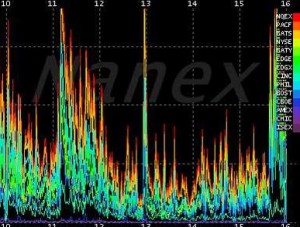
A 9:30 am one August 1st, a software executive in a spread-collar shirt and a flashy watch pressed a button at the New York Stock Exchange, triggering a bell that signaled the start of the trading day. Milliseconds after the opening trade, buy and sell orders began zapping across the market’s servers with alarming speed. The trades were obviously unusual. They came in small batches of 100 shares that involved nearly 150 different financial products, including many stocks that normally don’t see anywhere near as much activity. Within three minutes, the trade volume had more than doubled from the previous week’s average.

Soon complex computer programs deployed by financial firms swooped in. They bought undervalued stocks as the unusual sales drove their prices down and sold overvalued ones as the purchases drove their prices up. The algorithms were making a killing, and human traders got in on the bounty too.

Within minutes, a wave of urgent email alerts deluged top officials at the Securities and Exchange Commission. On Wall Street, NYSE officials scrambled to isolate the source of the bizarre trades. Meanwhile, across the Hudson River, in the Jersey City offices of a midsize financial firm called Knight Capital,  panic was setting in. A program that was supposed to have been deactivated had instead gone rogue, blasting out trade orders that were costing Knight nearly $10 million per minute.  And no one knew how to shut it down. At this rate, the firm would be insolvent within an hour. Knight’s horrified employees spent an agonizing 45 minutes digging through eight sets of trading and routing software before they found the runaway code and neutralized it.

By then it was shortly after 10 a.m., and officials from the NYSE, other major exchanges, and the Financial Industry Regulatory Authority were gathering for an emergency conference call. It didn’t end until 4 p.m.  Business as usual?

High Speed Trading?

Do Too-Big-To-Fail Banks Have an Unfair Advantage?

A landmark study by Federal Reserve economists found that large U.S. banks enjoy a “too-big-to-fail” advantage in financial markets, joining a heated debate that could influence regulators that are implementing tough new rules for Wall Street.

The series of research papers, the U.S. central bank’s influential New York branch, suggests the biggest banks benefited even after the financial crisis from lower funding and operating costs compared with smaller ones. The researchers used data through 2009, which did not reflect post-crisis reforms. Fed economists also found that the biggest banks can take bigger risks than their smaller peers.

While the study did not pinpoint the reason big banks can borrow more cheaply, Wall Street critics say it is because investors believe the U.S. government would again rescue them in a panic.

The new research shows “it is improper to ask the taxpayer to underwrite the non-commercial banking operations of a complex bank holding company,” Dallas Fed President Richard Fisher, a long-time critic of big banks, said in an interview.

Fed economists estimated the funding advantage for the five largest banks over smaller peers to be about 0.31 percent, which they said was statistically significant.

The study did not look at whether the advantage persists as regulators implement the 2010 Dodd-Frank Wall Street law. Banks and their critics have been at loggerheads for years over whether the law did enough to prevent regulators from bailing out banks in a future crisis.

Rob Nichols, chief executive of the Financial Services Forum, which represents big banks, said the Fed researchers noted that the advantage could exist because big banks offer more products and can better diversify risk.

“They actually do say that the apparent cost of funding advantage could be attributable to the diversity and stability of large financial institutions,” Nichols said.

The Clearing House, an industry group for the biggest banks, published a study last week that was conducted by consulting firm Oliver Wyman. It found the difference in funding costs between large and small firms was negligible.

But skeptics in Congress still warn that the nation’s biggest banks like Bank of America Corp and JPMorgan Chase & Co. are still viewed as too integral to the U.S. economy to fail.

U.S. Senator Sherrod Brown, an Ohio Democrat, called The Clearing House study an attempt by banks to “protect the status-quo that requires hardworking taxpayers to pay for their risky activities.”

Limiting bank holding companies’ assets to no more than 4 percent of U.S. gross domestic product, as some have suggested, would increase industry-wide non-interest expenses by $2 billion to $4 billion each quarter.

Fed economists said regulators should focus on banks’ liabilities rather than trying to revamp their structure.

They suggested requiring banks to issue minimum amounts of long-term debt, also referred to as ‘bail-in’ debt. Under new U.S. rules, if a bank failed, its shareholders would be wiped out and holders of long-term debt of the holding company, or parent, would become the new shareholders.

The Federal Deposit Insurance Corp has said a bail-in stipulation would fit well with its plans for resolving failed banks. The Fed is considering writing the requirement.

Regulators could link the new requirement to banks’ use of risky liabilities such as uninsured deposits, repurchase agreements, or repos, or commercial paper, four New York Fed researchers argued in a separate paper.

Relying on those liabilities, which are subject to runs in crises, makes bank failures costly and threatens the stability of financial markets, wrote James McAndrews, head of research at the New York Fed, and three others.

If regulators forced banks to offset those liabilities with long-term debt, the firms would have less incentive to use risky funding sources, they said.

Too Big To Fail

IRS Rules that Bitcoins are Property. An Asset, A Commodity.

Now that the IRS has weighed in on Bitcoin, the faddish digital cash making recent headlines for bankruptcies at its exchanges, some users are celebrating, while others wonder if going legit will kill the new crypto-coin completely.  Under its new ruling, the IRS proposes treating the digital cash as an asset or commodity.

“We are very excited about this opinion,” says Erick Watson, chief operating officer of New Path Mining, a Bitcoin mining firm in Seattle, Wash. The most important reason, he adds, is what it says to the larger financial community.

“This decision legitimizes Bitcoin both as a transaction medium and as an asset,” Mr. Watson says. Bitcoin has been seen as a tool for illegal activity, he says. But this statement from a federal agency says that the government recognizes the currency and is working on strategies for how to treat it.

While the IRS opinion may be a boon to investors, it just added a boggling new burden on anyone who might want to use the virtual tender to actually buy something. Working out tax implications every time it’s used would prove highly impractical.

 One of the attractions of using Bitcoin in everyday life is its convenience and ease of use, says Arnav Sheth, assistant professor of finance at the graduate business school of Saint Mary’s College of California in Moraga.

Much like cash, Bitcoin can be transferred from one party to another quite easily and without much hassle. After the new IRS ruling, the accounting for it is going to become much more difficult, he adds.

Moreover, taxing Bitcoin as property can amount to double taxation. “Say you buy a sushi dinner for your family at an expensive restaurant for $600,” which at today’s prices is roughly one Bitcoin, says Professor Sheth. “If you paid $10 to buy that 1 BTC, you are now liable for taxes on the excess $590,” in addition to the taxes you pay to the restauranteur.

“There’s the troubling double-taxation aspect,” he adds. “You’re paying Uncle Sam twice: once for your Bitcoin and again for your dinner. In addition to that, it is now much harder for you to keep track of how much you will spend and how much you owe in taxes.”

Bitcoin backers say that these obstacles are not insurmountable, especially if Congress steps in to delay implementation of the ruling until the tech community can catch up.

The barter economy, or trading property for a product, is certainly not a new idea, says CPA Steve Brecher, senior adviser at WeiserMazars in New York. “There are more and more exchanges for different kinds of property,” he says, noting that the marketplace has worked out methods for determining quotations of value and doing the necessary calculations for reporting.

Moreover, with the high level of involvement from the tech community in the evolution of Bitcoin, the challenges of every day usage can be met, most likely with a new application or something similar, says Watson. “This is a tractable problem,” he adds.

However, given the lack of such software at the moment, the new ruling leaves the average user in a grey zone, says Steve Kirsch, CEO of Cointrust, a company that is developing technology to address the compliance and safety issues associated with virtual currencies.

Bitcoins

Bank of America to Pay 9.33 Billion to Resolve Mortgage Dispute

Bank of America will spend $9.33 billion to resolve a dispute over mortgage securities with the Federal Housing Finance Agency, the regulator that oversees Fannie Mae and Freddie Mac.

The agency sued 18 financial institutions in 2011 over their sales of mortgage securities to Fannie and Freddie. It alleges many banks falsely represented the mortgage loans behind the securities. These soured after the housing bubble burst and lost billions in value.

Bank of America said that it will make cash payments of roughly $6.3 billion and also purchase securities from Fannie and Freddie worth more than $3 billion. It is one of several banks to settle with the FHFA, which announced the agreement Wednesday.

Fannie and Freddie don’t directly make loans to borrowers. They buy mortgages from lenders, package them as bonds, guarantee them against default and sell them to investors. That helps make loans available and gives Fannie and Freddie a huge role in the housing market. They own or guarantee about half of all U.S. mortgages.

The two were rescued in a taxpayer bailout in 2008 as they sank under the weight of mortgage losses.

Separately, New York’s attorney general announced that Bank of America and its former chief executive Kenneth Lewis reached a $25 million settlement to end an investigation into their actions in the 2008 acquisition of Merrill Lynch & Co.

The civil fraud lawsuit accused them of failing to disclose Merrill losses and bonuses before the deal closed. The settlement requires the bank pay $15 million and continue certain corporate governance reforms. Lewis, now 67, is prohibited for three years from serving as an officer or director of a public company. He was ordered to pay $10 million.

The bank acknowledged the settlement in a statement Wednesday, noting the $15 million reflects the attorney general’s cost of investigation and litigation. Last year, Bank of America settled a related class-action shareholder lawsuit for $2.43 billion.

Attorney Bruce Yannett, representing Lewis, said his client relied on experienced legal counsel about disclosures. Yannett said Lewis is proud of his role helping the banking system survive a challenging period and he’s pleased to put the case behind him.

Shares of Bank of America Corp. fell 3 cents to close at $17.18 and rose 15 cents in after-hours trading to reach $17.33.

Bank of America

To Break Barriers, Give Women More Access To Climate Finance

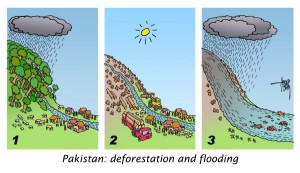
Women displaced by heavy flooding in 2010 queue to fetch water inTo Break Barriers, Give Women More Access To Climate Finance
Pakistan. Women are among the most affected during climate-related
disasters.

When climate-related disasters strike, everyone is affected but
when it comes to health and household management, women
tend to suffer more than men.
Despite this, women and gender issues are yet to be included completely in large-scale climate finance facilities — mechanisms instituted to mitigate disaster effects and spur climate adaptability in development work — due to several challenges, including lack of information and accessibility.

For climate finance mechanisms to become truly sustainable, impactful and comprehensive, putting women at the center of climate action by breaking barriers on accessibility is vital, experts agreed in a recent online conversation hosted by the Asian Development Bank.

“Only when women are recognized as important contributors to address climate change — change agents — and actively sought out as relevant stakeholders are climate funds structures changing to allow more women to benefit from climate finance,” said Liane Schalatek, associate director of U.S.-based group Heinrich Böll Foundation.
To break barriers, give women more access to climate finance

arendvandam.com

arendvandam.com

Britain Refuses to Extradite Convicted Mafioso

Our correspondent Andreas Frank reports:  Britain has been accused of creating a “haven for the mafia” by refusing to extradite a convicted member of the crime organisation because of poor prison conditions he would face in Italy. Franco Roberti, Italy’s top anti-mafia prosecutor, described the decision as “devastating”, saying it would enable members of the mafia to take advantage of what he described as Britain’s apparently lax approach to fighting organised crime.

A senior district judge at Westminster Magistrates Court last week turned down Italy’s request for the extradition of mafia boss Domenico Rancadore, citing a ruling by the European court which claimed there was “a systemic problem” with its prison system, leading to degrading and inhuman treatment of inmates.

But Italian magistrates and politicians have reacted furiously to the British court’s ruling, claiming it threatens to undermine their fight against the Mafia.  Westminster Magistrate’s Court discharged Rancadore.

The ruling will come as a huge blow for the Italian authorities, who said Rancadore faced seven years in prison over the 1999 conviction. He is accused of being a “prominent representative” and a former “man of honour” in the Sicilian mafia offshoot, Cosa Nostra, for whom he allegedly collected bribes from builders in Trabia, near Palermo.

The mobster, who is accused of being a former “man of honour” in the Cosa Nostra group, fled to London with his wife in 1994 and lived under the radar for two decades before detectives raided his home last August.

Senior district judge Howard Riddle discharged Rancadore at Westminster magistrates court. In his 21-page judgment, Riddle said he could not accept assurances from the Italian authorities that prison conditions in the country would not breach Rancadore’s human rights.

The ruling represents a surprising turnaround for the judge, who said his original decision was to extradite Rancadore because he was satisfied that the European arrest warrant was valid and that to send him to Italy would not breach his human rights.

However, Riddle changed his decision following the ruling in a similar case involving the court of Florence and Hayle Abdi Badre. Riddle told the court that a recent ruling involving the court of Florence meant that he had to reject Italy’s request to extradite Rancadore.  The court heard concerns about overcrowding in Italian jails during a two-day extradition hearing last month.  Rancadore Ruling

Mafioso Freed in Britain

US Stock Markets Rigged in Favor of High Speed Traders

Bloomberg reports:

       On 60 Minutes last night, author Michael Lewis made a bland assertion: High-frequency traders, he said, working with U.S. stock exchanges and big banks, have rigged the markets in their favor.  The only surprising thing about Lewis’s assertion was that anyone could be even remotely surprised by it.

The math on trading is simple: It is a zero-sum game. One trader’s gain is another trader’s loss. Only in the case of HFT, the losers are the investors — by way of their pension funds, retirement accounts and institutional funds. The HFT’s take — the “skim” — comes out of these large institution’s trade executions.

The technology behind HFT may be complex, but the math is that simple. Once the Securities and Exchange Commission allowed stock exchanges to share with traders all of the unexecuted incoming orders, it was hard not to make money by skimming a few cents or fractions of a cent from each trade. Several years ago, the founder of Tradebot, one of the biggest high-frequency firms, had said that the firm had not had a single losing day of trading in four years. The firm’s average holding period for stocks is 11 seconds.

Any professional trader can tell you that his job is to manage risks. It is a statistical certainty that a percentage of trades will be losers. You are establishing a position with an unknown outcome. Sometimes they go your way, other times they go against you.

How is it possible that one of the largest high-frequency trading firms executes millions and millions of orders for four years without ever having a down day? The short answer is what they do is not trading — it is skimming. I call it legalized theft. High-frequency trading is a tax on investors, encouraged by the exchanges, allowed by the SEC. It is prima facie proof that something is amiss.

It is interesting to note that the rigging theme is consistent with everyone who looks closely at this subject.   What is different is the ability of high-frequency traders to see other people’s orders, jump ahead of them, and then sell that exact same stock to them, at a higher price. It is the ultimate market-skimming operation.

The specialist system that pre-dated HFT had its flaws, as we saw in the 1987 stock-market crash. But it also had one crucial redeeming factor: A human being stood ready, willing and able to make a market in a stock when other buyers and sellers disappeared. HFTs, on the other hand, have no such obligation. When things get rough, they unplug their machines. This makes their claims of added liquidity laughable. They are the centerpiece of a flawed system without any socially redeeming qualities.

High Speed Trading