Lawsky Gets Tough

The New York State Financial Services chief understands that even fines that seem humungous to the ordinary citizen are for financial institutions just “the cost of doing business.”  Unless some of these financial officers go to jail, business is going to continue as usual.   But Lawsky has his eyes wide open.

  • At the center of New York Department of Financial Services chief Ben Lawsky’s concerns are Ocwen’s relationship with Altisource Portfolio Solutions and its home-auction website subsidiary Hubzu.
  • “Hubzu appears to be charging auction fees on Ocwen-serviced properties that are up to three times the fees charged to non-Ocwen customers,” writes Lawsky’s office. In other words, when Ocwen chooses Hubzu to market a property, the fee is 4.5%, but when Hubzu competes for business in the open market, it’s 1.5%.
  • “The relationship between Ocwen, Altisource Portfolio, and Hubzu raises significant concerns regarding self-dealing. In particular, it creates questions about whether those companies are charging inflated fees through conflicted business relationships, and thereby negatively impacting homeowners and mortgage investors.
  • Speaking Thursday on the Home Loan Servicing Solutions earnings call, Ocwen boss Bill Erbey says Lawsky’s hold on the purchase of $2.7B in MSRs from Wells Fargo has put a freeze on all MSR deals in the market.      Lawsky
French Tax High Speed Trades. Should the US?

There are pros and cons to the French high-frequency tax, but some variation may be desirable.  A properly-structured high-frequency tax would cap the value of speed—to end the race to spend billions to save milliseconds.  It also would charge traders to tease information out of investors.  But it should exempt participants who contribute beneficially to the markets–like market makers that are registered with an appropriate national securities exchange.  Taxing may be easier to effect in the US than getting the SEC to act.

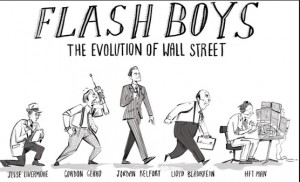
Flash Boys Evolution

City of Providence, RI Sues to Stop High Speed Trading Manipulation

The city of Providence, RI, USA claims Bank of America and the New York Stock Exchange among others rigged securities markets to divert billions of dollars from buyers and sellers of shares to themselves.

One defendant in today’s complaint, Virtu Financial Inc., a high-frequency trader that delayed its initial public offering, has received inquiries from the office of New York’s attorney general, Eric Schneiderman, according to a person familiar with the matter. Schneiderman announced last month that he’s investigating high-frequency traders.

Last month, U.S. Attorney General Eric Holder promised Congress a full investigation into whether high-frequency traders violated laws against trading on inside information. The FBI has said it’s looking into whether firms that engage in high-speed trades get an improper jump on other investors by using information about their trading to make profits.

Providence claims the exchanges, the biggest brokerage firms and a group of high-speed trading firms allowed some traders to gain access to non-public data about investors’ trades. The scheme allegedly included electronic front-running, in which high-frequency traders learned of bids and offers, made transactions at better prices and then profited from the investors that made the original orders.

Providence named as defendants 14 brokerages, 16 securities exchanges and 12 high-speed traders.  “Public investors are entitled to be treated fairly and honestly by brokers and exchanges,” Providence said in its complaint. “In addition to destroying trust in the U.S. capital markets, the misconduct alleged herein has siphoned off billions of dollars from private and public pension funds and individual retirement accounts that millions of Americans depend on.”

The Case:  City of Providence, Rhode Island v. Bats Global Markets Inc., 14-cv-02811, U.S. District Court, Southern District of New York (Manhattan).

 High Speed Trading

US Taxpayers Pick Up Tab for Overseas Shelters

Senators Carl Levin and John McCain are fighting hard to retrieve these monies:

U.S. taxpayers would need to pay an average of $1,259 more a year to make up the federal and state taxes lost to corporations and individuals sheltering money in overseas tax havens, according to a report.

“Tax haven abusers benefit from America’s markets, public infrastructure, educated workforce, security and rule of law -– all supported in one way or another by tax dollars -– but they avoid paying for these benefits,” U.S. Public Interest Research Group said in the report released today, the deadline for filing 2013 taxes.

“Instead, ordinary taxpayers end up picking up the tab, either in the form of higher taxes, cuts to public spending priorities, or increases to the federal debt,” it said.

In total, the U.S. loses $150 billion in federal revenue and another $34 billion in state revenue annually because of money parked in tax havens, the Boston-based consumer advocacy group concluded.

That’s almost 5 percent of total federal revenue. The U.S. is projected to raise $3.032 trillion this year, up from $2.775 trillion for fiscal year 2013, according to the Congressional Budget Office.

U.S. PIRG released the report as it tries to increase pressure on lawmakers to change how companies pay taxes on income credited to foreign subsidiaries.

The largest U.S.-based companies have accumulated $1.95 trillion outside the U.S., up 11.8 percent from a year earlier, according to securities filings from 307 corporations reviewed by Bloomberg News.

Together, they added $206 billion to their stockpiles of offshore profits last year, leaving earnings in low-tax countries until Congress gives them a reason not to. Three multinational firms — Microsoft Corp., Apple Inc. and International Business Machines Corp. — added $37.5 billion, or 18.2 percent of the total increase.

Overseas Shelters

New Jersey Couple Launder Pizza Cash

Andreas Frank reports:  The U.S. Attorney’s Office claims that owners of an iconic pizza shop were cooking more than just slices: they were also cooking the books.

Charles and Mary Bangle appeared in a federal court in Camden, New Jersey, to face charges of conspiracy to evade income taxes, income tax evasion, and making false statements to the IRS. Charles Bangle was also charged with multiple counts of “structuring” in order to avoid reporting requirements.

The Bangles are the owners of four Manco & Manco pizza shops (the shops were formerly called Mack & Manco but the name was changed in 2011 after Mary and her husband bought the business from her parents).

According to the indictment, Manco & Manco raked in nearly $4.5 million per year in cash sales alone. And since the business was geared towards those vacationing at the shore, most of the cash came in at peak tourist season. The feds allege that the Bangles used a series of maneuvers in order to avoid reporting nearly $1 million. As a result, the Bangles allegedly failed to pay $336,273 in federal income tax.

The indictment alleges that the Bangles took advantage of the fact that the pizza shops were cash based and skimmed money from the business. That money was deposit into the couple’s personal account at TD Bank. To avoid detection, the feds allege that the couple purposefully deposited less than $10,000 with each visit to the bank. By law, banks are required to report cash deposits which total more than $10,000 in any single day. The reporting requirement is meant to help the government track large transactions and prevent money laundering. One of the ways to get around the law is to break down large transactions into smaller ones, sometimes called structuring. While making cash deposits of less than $10,000 is not illegal under 18 U.S.C. § 5324(a), it is a violation if you structure transactions to avoid reporting requirements.

That’s exactly what the feds say the Bangles did. The indictment outlines bundles of transactions which the Bangles allegedly structured to avoid detection, most of which occurred in 2010 and 2011.

US Indictment

Pizza Converted to Cash

Oil and Money in Indian Elections

Sanjay Bohra reports:  Former BJP leader Jaswant Singh, who rebelled against the party to contest Lok Sabha election from Barmer, has claimed that Rajasthan chief minister Vasundhara Raje was instrumental in the party’s decision to deny him the ticket.  Ms Raje, according to many people in Rajasthan, did it so out of personal animosity between the two leaders. However, others think the decision was part of big change in the BJP’s social engineering under its prime ministerial candidate Narendra Modi to shift banking on traditional Rajput, Bania, Brahmin votebanks to OBCs. Thus, Ms Raje chose Col. Sonaram as he belongs to the most influential political OBC community in Rajasthan.

The battle between Mr Jaswant Singh and Col. Sonaram or Ms Raje is not about winning the Lok Sabha election. The once sleepy town of Barmer is now buzzing with economic activities thanks to oil and gas discovery a decade ago. Big bucks followed as demand for real estate boomed and the discovery was followed by an announcement that a refinery would be set up in the area.
Just to put things in perspective, the Rajasthan government receives approximately `5,000 crores per annum in sales tax and royalty from the sale of crude oil.

Politicians have purchased land in anticipation of a refinery being built. Land acquisition was a big issue during the Assembly elections, in which Col. Sonaram was a key player as he had opposed the Rajasthan government’s move to shift refinery site from Lilala to Pachpadra. The land in Lilala was to be acquired from farmers, who demanded `1 crore per bigha for land that had no takers a few years ago and was available dirt cheap. If refinery shifts to Pachpadra, it means those who bought hundreds of acres in Lilala, in anticipation of a refinery being built there, now stand to lose big bucks. Besides, who wouldn’t like to control the flow of money through various contracts?

Barmer, India

Impact of Lobbying

Andreas Frank reports:   The enormous power and destructive influence of financial markets became apparent after the global economic collapse of 2008.

This event revealed a need for bringing the sector under democratic public ownership; failing that, stronger regulations for financial markets at the very least. But political will has been lacking on both counts. The sector enjoys massive financial resources and successfully translates them into political influence.

The EU’s financial industry spends more than €120 million per year and employs over 1,700 lobbyists to work in the EU institutions, according to new research by transparency campaigners.   Financial Lobby Power

Financial Lobby

Bank of America Fined $773 Million for Credit Card Ad-Ons

Bank of America was ordered by the Consumer Financial Protection Bureau to refund $727 million to consumers who were deceived by the bank’s marketing of credit card payment protection programs and others who were charged for credit monitoring services they never fully authorized. This makes the bank the fifth major credit card issuer to be financially penalized for these types of credit card practices.

The CFPB issued a consent order that showed over 1.4 million consumers were deceived by the marketing of two credit card payment protection programs. These products, called “Credit Protection Plus” and “Credit Protection Deluxe,” allowed customers to request the bank cancel some credit card debt in the event of certain hardships like disability and involuntary unemployment, or certain life events such as retirement or entering college.  The CFPB found that the telemarketing practices used in selling these products were misleading. This took place between 2010 and 2012.

Bank of America must provide approximately $268 million in refunds to the more than 1.4 million customers affected by these deceptive marketing practices.

In addition, Bank of America enrolled consumers in programs to monitor their credit and alert them to potentially fraudulent activity. These programs were known as “Privacy Guard,” “Privacy Source,” and “Privacy Assist.” The bank began charging customers fees and interest without or before they received proper authorization from consumers.

Bank of America must pay $459 million to roughly 1.9 million customer accounts, representing approximately 1.5 million consumers who enrolled in the credit monitoring products and were charged while the bank did not perform all of the promised services.

“We have consistently warned companies about illegal practices related to credit card add-on products,” said CFPB Director Richard Cordray.   “Bank of America both deceived consumers and unfairly billed consumers for services not performed. We will not tolerate such practices and will continue to be vigilant in our pursuit of companies who wrong consumers in this market.”

Federal regulators have been cracking down on deceptive credit card practices and marketing from many of the biggest card issuers in the United States in recent years.

JP Morgan Chase, Discover, Capital One and American Express have also been recently fined for deceptive ad-ons.

Getting Out of the Credit Card Mess

HP Pays for Bribing Polish Police

Our correspondent Andreas Frank calls attention to some of the mess Meg Whitman has to clean up at Hewlett Packard. Polish prosecutors alleged that a local executive with U.S. firm Hewlett-Packard Co. paid bribes worth over $500,000 in exchange for help winning contracts to supply computer equipment to the Polish police headquarters.

Poland’s Interior Minister Bartlomiej Sienkiewicz said HP would make an announcement later on Wednesday acknowledging its Polish unit had been involved in “corrupt activities”. A spokeswoman for HP declined to comment.

Polish officials said dozens of people had been charged as part of an industry-wide investigation of corruption dating from 2007 to 2009, among them representatives of major information technology (IT) companies, government officials and former police officers.

The minister said Poland had cooperated on the investigation with the U.S. Federal Bureau of Investigation (FBI) and the Securities and Exchange Commission (SEC).

The U.S. Foreign Corrupt Practices Act makes it illegal for U.S. companies to pay bribes to officials with foreign governments to win business. Firms found to have violated the act have in the past been ordered to pay multi-million-dollar settlements.

Polish prosecutors said their case centered around a former government official who was initially in charge of IT with the national police headquarters, and later became head of the IT Projects Center, a state agency at the Polish Interior Ministry.

Zbigniew Jaskolski, a spokesman for the Appellate Prosecutors’ office in Warsaw, which handles major cases, said the official gave favorable treatment for firms, including HP, which were bidding for IT contracts with the police headquarters that were worth a total of $39.71 million.

In exchange, the executive in HP’s Poland unit, who is no longer with the company, gave the official a payment of $529,500 as well as computer, audio and video equipment worth $36,400, Jaskolski said.

The Appellate Prosecutors’ office named the former government official as Andrzej M., and the former HP executive as Tomasz Z., without giving their full last names in accordance with the Polish law.

The former HP executive also promised the same official a bribe worth $827,400 in exchange for including in the tender documents provisions which favored bidders designated by the executive, Jaskolski said. Both the former executive and the former official have been charged with offenses which carry prison sentences of between two and 12 years, he said.

Polish Police

State Senator Arrested for Involvement in Arms Trafficking

Well-known California democrat legislator Leland Yee was indicted along with 28 others for various crimes, including corruptions and conspiring to traffic in firearms, local authorities reported.

The Senator, who until recently was running to become the democrat candidate for the election of California Secretary of State, was accused by a San Francisco Grand Jury last Friday, April 4.

Leland Yee was arrested along with 28 others on Wednesday, March 26 in series of raids carried out by different agencies led by the FBI, accused of accepting bribes and corruption, among other charges, and is linked with the delivery of at least $42,800 dollars in campaign contributions an FBI agent gave to one of his assistants.

Besides these accusations, the democrat Senator has been accused of participating in official acts in exchange for $70,000 which were given to him by undercover FBI agents.

Yee, who is 65 years old, plead not guilty to these accusations and was set free after bail was set at $500,000 dollars; however, if he’s found guilty, he might face a sentence of over 100 years in prison and over half a million dollars in fines.

After the accusations against Senator Yee were revealed, various representatives of the Democratic Party in California have asked him to resign, according to a series of emails sent to Reuters.

Rhys Williams, spokesman of democrat leader Darrel Steinberg wrote that “Senator Steinberg renews his demand for Senator Yee to resign, and to resign immediately.”

The California State Senator, who was suspended with pay since he was arrested, is the third California legislator to be arrested in 2014.

Democrat legislators Ron Calderon and Rod Wright, accused in two different charges of accepting bribes, corruption, money laundering and other charges, have severely damaged the organization of their party in California, which has lost two thirds of the legislative majority in the Senate in a single electoral year.

Lee will plea that he was entrapped by the FBI.

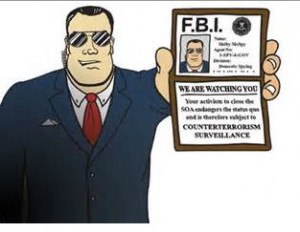
FBI Entrapment?