A brave employee called the federal inspectors and in a raid, they found diseased body parts cut away from carcasses and federal approval stamps home-made for Rancho Feeding Corp. in Petaluma, California. Earlier this year, a dusty little slaughterhouse in Northern California was ground zero for one of the biggest meat recalls in years. The story of how millions of pounds of bad meat — products the U.S. Department of Agriculture called “unfit for human food” — made it out into the world and triggered a criminal investigation is one of staggering deception and cancerous cows,
Category Archives: Corruption
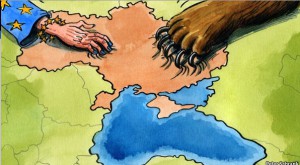
Lessons for Ukraine from Poland
Erik Berglof, chief economist for the European Bank for Reconstruction and Development, comments on Ukraine’s position visa vis the EU. He notes that Poland was a corrupt as Ukraine is now when the Iron Curtain first came down. Now Poland is three times richer than Ukraine and Poland’s income gap with Western Europe is smaller than it has been since 1500.
Since the EU’s GDP is eight times greater than Russia’s it somewhat surprises that their trade relations continue. Because both Poland and Ukraine are neighbors and enmeshed in industrial networks with Russia, exports continue. The difference. The EU has helped Poland.
The painstaking approximation of EU rules and regulation that helped Poland become a normal European country by the late 1990’s would offer Ukraine the prospect of taming its own demons of bribery, cronyism, and nepotism.
An Indian State Proposes to Sell Iron Ore Mines
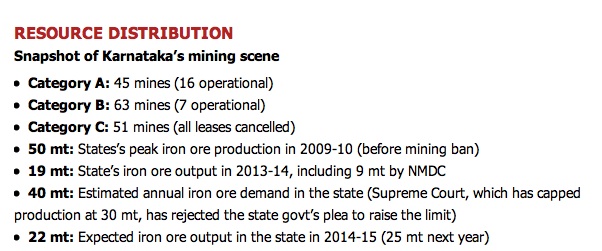
Malash Kulkarni writes: In a court order on April 18, 2013, iron ore mines in the state of Karnataka south of Mumbai were classified in three categories. “C” signified large scale violations of the mining rules. Fifty-one mines in this category had their leases cancelled and are up for sale to end-users. End-users have the capacity to make use of the ore by breaking it through chemical reduction processes to final products which include pig iron, sponge iron and steel, but exclude pellets and the extraction of minerals and gangue.
The auction of mines is likely to benefit ‘end-users’ like JSW Steel, Kalyani Steel and BMM Ispat, which do not have captive iron ore mines and depend on e-auction of iron ore for their raw material requirements. As new mining leases are unlikely to be given out in the state in the near future, auction of mines could give steel mills a big opportunity to acquire the natural resource.
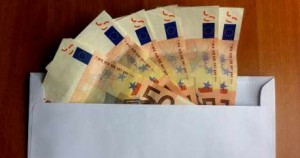
Italian High School Students Learn to Identify Corruption in Society
Students investigated crimes in their municipalities and were able to understand how the illegalities are addressed and experienced by ordinary citizens. This “Laboratory of legality and corruption ” was not just a study, but also data collection and analysis that starts from their home towns. people they meet or with whom they will deal as they grow up. The field study consisted of the questionnaires , and through qualitative analysis, and also conversations with the interviewees.
Throughout the initiative , students were tracked by experts. Alberto Vannucci , a political scientist and professor at the University of Pisa, Mario Palazzi deputy public prosecutor at the Prosecutor’s Office of Rome and the colleague the Attorney Latin Daria Monsurrrò , the lawyer Guido Lombardi and the journalist of La Repubblica, Federica Angeli showed how corruption and bribery are presented by the press.
Five small Atlases of Corruption were prepared and will be distributed and stored as archive material. This is because the students prepared such accurate and precise material. These students know how to fight corruption, because they know how to amass the facts. The corrupt few cannot thrive in a society where everyone understands what’s at stake.
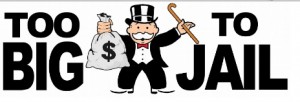
Elizabeth Warren Gets It: Bankers Aren’t Too Big to Jail
Joshua Green reports;
Initially, Warren appeared to follow the Hillary Clinton’s script in the Senate. But at a Banking Committee hearing on Wall Street oversight, it was clear that Warren’s convictions were not going to be muffled like Clinton’s. The hearing was a typically somnolent affair until her turn came to question the regulators testifying before the committee. Warren devoted the five minutes allotted her to the seemingly abstruse topic of banking settlements, such as the $1.9 billion fine the British megabank HSBC (HBC) agreed to pay the Justice Department after it was accused of laundering money for drug cartels (among other things).
In a short preamble, Warren admonished the regulators for not being more aggressive in taking big banks to trial, explaining how this harms the public interest. “If a party is unwilling to go to trial, either because they’re too timid or because they lack resources,” she said, “the consequence is they have a lot less leverage in all the settlements that occur.”
She continued: “We face some very special issues with big financial institutions. If they can break the law and drag in billions in profits, and then turn around and settle, paying out of those profits—they don’t have much incentive to follow the law. It’s also the case that every time there’s a settlement and not a trial, it means that we didn’t have those days and days and days of testimony about what those financial institutions have been up to.”
Warren was interrupted by applause from the gallery—something seldom heard at Banking Committee hearings. But her most effective line came afterward, in the question she posed to the regulators: “Can you identify when you last took [one of] the Wall Street banks to trial?”
Amazingly, none could. And the excuses proffered as to why they couldn’t reinforced Warren’s claim that banks that are “too big to fail” have also become “too big for trial.” “We have not had to do it as a practical matter to achieve our supervisory goals,” stammered Thomas J. Curry, the comptroller of the currency.
Eventually the Senate will have to legislate. And the next big fight may well be over whether to break up the big banks. An unlikely coalition of politicians and regulators on the left and right who favor this option has lately begun to take shape.
Dark Money Colors Political Campaigns in US
Pro Publica reports:
To see how easy it is for a dark money group to ignore the Internal Revenue Service, look no further than the loftily named Government Integrity Fund.
The Fund, an Ohio nonprofit, spent more than $1 million in 2012 on TV ads attacking Ohio Sen. Sherrod Brown and praising his Republican opponent, Josh Mandel. The group spent most of its money on politics — even though IRS rules say nonprofits like the Fund aren’t allowed to do that.
The Fund’s return highlights the ways such nonprofits, known as dark money groups because they are not required to disclose their donors, can skirt IRS rules designed to limit their political activities. Such groups are playing an increasingly prominent role in elections, spending more than $256 million on election activity in 2012.
Dark money groups can spend money on politics as long as they can persuade the IRS that their primary purpose is social welfare. This can lead to quite creative accounting on tax forms, with groups describing ads that should qualify as political under IRS rules as “education” or “issue advocacy.”
Unraveling what the Government Integrity Fund spent in 2012 wasn’t possible until recently because the group didn’t file its tax return until January of this year, when it was two months overdue. The long wait highlights one of the major problems with regulating dark money groups and their spending: The IRS typically doesn’t look at these groups until a tax return is filed, often more than a year after an election has been decided.
Even with the return in hand, several aspects of its operations remain confusing.
In one spot, the group says $4.6 million of its $5.2 million in expenditures were made as grants “and similar amounts paid.” But it doesn’t identify which groups received the grants, as the IRS requires, or what the “similar amounts paid” might have gone toward. At the end of the form, the group says only $1.1 million went toward grants — again, without saying who received the grants — with the rest of the $4.6 million going to its sister super PAC and what it classifies as “public education.”
The group offers no details on what the $1.5 million attributed to education included — mathematically, though, it would have to include the ads it bought related to the Brown-Mandel race.
Experts scoffed at the idea that the ads qualified as education.
“There’s no way you can claim these are education. If this is public education, then everything is public education,” said Donald Tobin, a law professor at Ohio State University who specializes in the intersection of tax and campaign finance law. “These are clearly designed to be political ads to benefit or oppose a candidate. And that’s not social welfare activity.”
It’s an open question how vigorously the IRS, which doesn’t comment on individual taxpayers like the Fund, will pursue groups for irregularities. The agency has revoked the nonprofit status of only one social welfare nonprofit, a liberal group, and its affiliates since the Supreme Court’s Citizens United decision in 2010 paved the way for dark money groups to pour hundreds of millions of dollars into outside election ads.
Experts on nonprofits say the IRS has taken an even more hands-off approach since top officials admitted the agency had targeted applications from conservative groups for extra scrutiny, sparking a scandal and investigations.
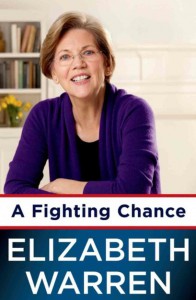
Elizabeth Warren: A Fighting Chance
Is this a platform for a Presidential campaign, public policy or both?
Elizabeth Warren’s new book advocates for the disappearing middle class in America.
An unlikely political star tells the inspiring story of the two-decade journey that taught her how Washington really works–and really doesn’t As a child in small-town Oklahoma, Elizabeth Warren yearned to go to college and then become an elementary school teacher–an ambitious goal, given her family’s modest means. Early marriage and motherhood seemed to put even that dream out of reach, but fifteen years later she was a distinguished law professor with a deep understanding of why people go bankrupt. Then came the phone call that changed her life: could she come to Washington DC to help advise Congress on rewriting the bankruptcy laws? Thus began an impolite education into the bare-knuckled, often dysfunctional ways of Washington. She fought for better bankruptcy laws for ten years and lost. She tried to hold the federal government accountable during the financial crisis but became a target of the big banks. She came up with the idea for a new agency designed to protect consumers from predatory bankers and was denied the opportunity to run it. Finally, at age 62, she decided to run for elective office and won the most competitive–and watched–Senate race in the country. In this passionate, funny, rabble-rousing book, Warren shows why she has chosen to fight tooth and nail for the middle class–and why she has become a hero to all those who believe that America’s government can and must do better for working families.
One World Against Racketeering
Our correspondent Andreas Frank notes a ruling by the US Court of Appeals in the cast of the European Union against RJ Reynolds, a tobacco company. The lower court threw out the case because the racketeering was done in Europe. The appeals court found: the alleged scheme began with the smuggling of illegal narcotics into Europe by Colombian and Russian crime groups, with euro-denominated proceeds from the sale of those drugs then “laundered” by money brokers.
Importers would allegedly use these proceeds later to buy RJ Reynolds cigarettes via wholesalers, with payments and shipments shielded from government scrutiny. Brokers using funds derived from the importers would then allegedly repeat the cycle.
The EU accused the RJ Reynolds entities of essentially directing the scheme from the United States, using U.S. mails and wires and frequent travel by employees to Colombia.
In dismissing the case, Garaufis said RICO did not apply because the scheme was centered on foreign crime groups operating outside the country.
Judge Leval in the Appeals Court said that standard could create “illogical” results, such as immunizing people from RICO liability for murders and kidnappings in the United States simply because they were done in conjunction with a foreign enterprise. “Surely the presumption against extraterritorial application of United States laws does not command giving foreigners carte blanche to violate the laws of the United States in the United States,” he wrote.
“We conclude that RICO applies extraterritorially if, and only if, liability or guilt could attach to extraterritorial conduct under the relevant RICO predicate,” Leval added.
The 2nd Circuit took more than two years to decide the case, having heard oral arguments on February 24, 2012.
Bitcoin Site Silk Road Indictments
Our correspondent Andreas Frank writes: Prominent bitcoin entrepreneur Charlie Shrem has been indicted by a federal grand jury in New York on charges of funneling cash to the illicit online marketplace Silk Road.
Shrem, known as one of the digital currency’s most visible promoters, is accused of conspiring with a Florida man, Robert Faiella, to sell more than $1 million in bitcoins to the users of Silk Road despite knowing that it would be spent on illegal uses like drug trafficking
The indictment came after plea bargaining talks with federal prosecutors in Manhattan ended. Shrem, the former vice chairman of the Bitcoin Foundation, and Robert Faiella, who the U.S. said operated an underground Bitcoin exchange called “BTCKing,” are accused of engaging in a scheme to sell Bitcoins to users of Silk Road for illegal purchases.
Shrem, who was also the chief executive officer of a Bitcoin exchange company called BitInstant, and Faiella were first arrested in January and have been free on bond. They’re charged with two counts of operating an unlicensed money transmitting business, money laundering conspiracy and willfully failing to file suspicious activity reports with banking authorities, according to the indictment.
The case is the latest to be brought by Manhattan U.S. Attorney Preet Bharara’s office stemming from a probe of Silk Road, a sprawling and anonymous black market bazaar. Ross William Ulbricht was charged in October with running Silk Road under the alias “Dread Pirate Roberts,” and in December, Bharara charged three more former Silk Road employees with helping run the website. All have pleaded not guilty.
Shrem and Faiella face as long as 20 years in prison if convicted of the most serious charge of conspiracy.
Is Art a Good Investment?
It depends who paints the painting. The artist or his impersonator.
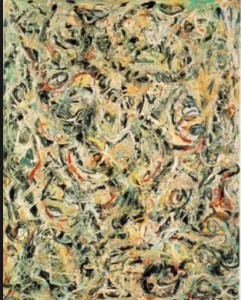
The United States has indicted a forger and his accomplices for fraud and evasion of taxes. The hundred year old Knoedler Gallery in New York closed as part of this disclosure. One humorous piece of the proceedings is the statement that the artists copied — Jackson Pollock, Mark Rothko and Barnett Newman, were easy to copy.
“The defendants earned more than $33 million from the scheme to create and sell the Fake Works. To conceal the illegal nature and origin of the proceeds from the scheme, Jose Carlos Bergantinos Diaz and Jesus Angel Bergantinos Diaz, the defendants, and Rosales worked together to launder the proceeds by transferring the proceeds through foreign and domestic bank accounts that they controlled.
In addition, as set forth below, to increase the amount of proceeds he kept from the unlawful scheme, Jose Carlos Bergantinos Diaz, the defendant, unlawfully impeded and obstructed the Internal Revenue Service (‘IRS’) by hiding millions of dollars in his unlawful income from the IRS and by knowingly failing to report the existence of the foreign bank accounts that he controlled or maintained an interest in, as required by law.
Finally, in an effort to hide his role in the unlawful scheme, Pei Shen Qian, the defendant, lied to agents of the Federal Bureau of Investigation about his role in the fraud. In particular, during an interview with FBI agents investigating the scheme, Qian falsely claimed, among other things, that he did not recognize Rosales’s name; that Qian was unfamiliar with the names of certain artists (including artists whose names Qian had repeatedly and fraudulently signed on paintings QIAN created, in order to trick purchasers into believing those artists had created the paintings); and that Qian had never attempted to create paintings mimicking the style of certain abstract expressionist artists.”