Misuse Of A Girl’s Bank Account

When lottery email scam turns into murder!

A gang of five, who used to cheat people through lottery email, killed one of their own “aged 15-17 years”. The gang was using the girl’s bank account for collecting money. How did the bank allow a minor girl to operate the account? Where were the KYC norms?

With banks becoming ‘hyper active’ in creating awareness about not to share bank account numbers and passwords with anyone, the criminal minds are, more often, found using ‘lottery’ route to dupe people. Unfortunately, the loss in such lottery scam messages is not limited to money alone. As the recent incident from Pune points out, these criminals even killed their own accomplice as she wanted to leave the gang.

According to a report from Mid-Day, on 7th May the police found body of 17-year old Rani Singh in a red suitcase abandoned at Talegaon railway station near Pune. Police arrested three people, Rahul Ravindra Barai, Ershan Ali Khureshi and Santosh Jugdar from Mumbai and after the probe found that they, including Rani belonged to a five member gang and were involved in cheating people. “Recently, Singh, the victim who was also a member of the gang, had told them that she planned to leave the group. Angry with her for defecting, the trio killed her on the orders of the gang leader,” the report says.
When lottery email scam turns into murder

Hundreds Of Billions Of Pounds Laundered Through UK Banks Each Year

Andreas Frank reports: Hundreds of billions of pounds of international criminal money is laundered through banks and their subsidiaries every year, according to the National Crime Agency’s latest analysis of the serious and organised crime threats faced by the UK.

The analysis has suggested that high transaction volumes, the developed financial services industry and political stability have made the UK’s financial system particularly attractive to money launderers.

The NCA said that most proceeds of UK serious and organisedhttp://www.frank-cs.org/cms/images/70_Pointer.jpg
crime were laundered through UK banks, wire transfer companies and other regulated businesses, including money service businesses.

National Crime Agency director general Keith Bristow said: “To relentlessly disrupt serious and organised crime as effectively as possible, we need to take informed decisions about how law enforcement co-ordinates and targets its resources. This assessment is the most detailed and broad-ranging crime threat analysis ever produced by law enforcement.

“The assessment, and the response to it, is owned by the whole of law enforcement, including police forces and other national agencies, as well as Whitehall departments, local government, industry partners and the third sector. It helps us maximise our collective impact in order to cut serious and organised crime.”

One of the key themes of the coming year is an increase in the use of denial-of-service attacks, and technology ransom demands. The UK’s networked systems are said to be at particular risk and this economic crime is expected to continue over the next three years.

Currently, says the NCA, organised crime accounts for economic losses of around £24bn per year. Cybercrime has increased over the past two decades and represents increasing threats.

The report says: “Over the last two decades, the internet and digital communications technology have steadily increased their penetration into all sectors of UK society and business. More and more government and public services are going online and it is likely that attempted cyber attacks against government services will increase.

“In much the same way as criminals – including serious and organised criminals – have in the offline world, they identify and exploit any advantage they can to perpetrate their crimes.”

The NCA said that a handful of cybercrime risks would have the most impact over the three-year period, and said that the threat of data hauls, denial of service attacks and network disruption were all likely to increase.

Note: Mr. Frank commends the UK for undertaking this study and for facing a serious problem which remains unaddressed in most of the civilized world.
NCA National Strategic Assessment of Serious and Organised Crime 2014

Rodrigo de Matos  www.w-t-w.org/en/rodrigo-de-matos/ http://rodrigocartoon.weebly.com/

Rodrigo de Matos

Corruption Reports


Medicare Fraud Money Pumped Into Cuban Banks

Our correspondent Andreas Frank writes:  A Miami man has been arrested in an unprecedented money-laundering case that alleges some part of $238 million gained from Medicare fraud was secretly pumped into the Cuban banking system.  Caribbean Transfers. is suspected of bankrolling a Florida check-cashing business that prosecutors say cashed checks for Medicare fraud offenders and transferred the dirty dollars through Canada to Cuba.

The revised indictment alleges that as much as $238 million in stolen Medicare proceeds were laundered in the scheme, but it does not say how much was believed to have ended up in Cuba’s national bank. The indictment further alleges that the Perez brothers laundered some of those dollars through Caribbean Transfers’ bank accounts in Canada and other locations.

The initial indictment, which made national headlines, alleged that $70 million in tainted Medicare profits were laundered by 70 healthcare operators through the Naples check-cashing business of Oscar L. Sanchez, who has pleaded guilty and is serving a 4 ½-year prison sentence.

Prosecutor Ron Davidson has alleged that about half of that amount was transferred through Canada into Cuba, and described Caribbean Transfers as a sort of offshore Western Union. The company, which closed its doors in 2012, claimed it specialized in remittances to Cuba, the Dominican Republic and other countries.

Caribbean Transfers, meanwhile, has claimed that it did nothing wrong but acknowledged that money from the Medicare fraud had “contaminated” its legitimate remittances to the island.

Caribbean Transfers has not identified the remittance company, but sources close to the investigation say it was La Bamba, which also cashed checks. La Bamba owner Juan René Caro is serving 18 years in prison for making false reports of money transfers.

Caribbean Transfers said it does not operate in the United States, but added that the money from the Miami remittance company “contaminated” its own legal transfers of money to the island.

“Our company does not steal, does not defraud and does not move the money of fraudsters to Cuba. What we do is to transfer the money of families to Cuba,” the statement said. “You can ask the more than 150,000 clients who have received our service of remittances to Cuba if at any time they have not received the assistance that is sent to them.”

The statement said that the documentation needed to prove that the accusations against Jorge Perez de Morales are false is being prepared and that it will be presented “before the proper authorities” when it is ready.

Cuban Banks

Boardroom Justice?

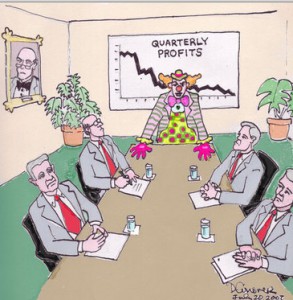
Lucy P. Marcus writes:  There is a real danger that corporate leaders, making decisions that seem correct behind closed doors, end up being tone-deaf in a soundproof room. It is clear that board members are often deeply disconnected from the world’s economic and social realities.
Consider executive pay packages. Board remuneration committees can explain them logically with complex formulas to justify them, and yet often they are completely out of line with common sense.
Board members need to rethink what they are doing in those rooms, and here individual directors’ guiding principle should be the “veil of ignorance” proposed by the political philosopher John Rawls in his 1971 treatise A Theory of Justice. Rawls proposed the veil of ignorance as a way to derive principles of social justice to which anyone who did not know in advance their identity and position in society would consent.
How would the veil of ignorance work in a boardroom? Board directors’ role is not simply to ensure return on investment; it is also to make decisions with due consideration for the community, employees, suppliers, consumers, and even the overall economy. The decisions made in that room have an impact beyond the company, so it is not just shareholders who hold board members accountable for their choices.
In order for board directors and senior executives to make judicious decisions, they cannot think only about whether they will directly benefit. As in Rawls, if we imagined that we did not know who we are or where we stand in society – whether we are rich or poor, male or female, young or old, CEO or shop-floor worker – our decisions would be more ethically grounded. The veil of ignorance changes the nature of the discussion on almost every issue, from executive pay, wage discrepancies, and working conditions to long-term strategy, succession planning, and much more.
Many issues that should be viewed through the veil of ignorance fall into the categories of environmental sustainability, social equity, and corporate governance. For example, if we didn’t know whether we would be working long days at a fast-food counter or overseeing the entire organization, we would think differently about compensation structures and the ever increasing gap between the most senior management and the most junior staff members. If we didn’t know whether we would be working on a factory floor in Bangladesh or in a shiny head office in the United States, no one would disavow responsibility for the health and safety of Bangladeshi workers.
The list goes on. If board members were making choices from behind the veil of ignorance –not knowing their position in the company – they would want everyone to have opportunities to implement change or be entrepreneurial. Not knowing whether they were male or female, they would ensure pay equity and better policies concerning parental leave and child care.
Likewise, knowing that they might be the customer would make them look differently at cost-cutting measures that weaken product testing and consumer protection. If they believed that they might live in a community affected by an oil spill, they would want robust, not minimal, environmental safety standards, and they would not seek to circumvent the rules.
There is a danger of taking this thought experiment too far. Getting caught up in factoring in all of the different perspectives would cause decision-making to gravitate toward the lowest common denominator, with outcomes that achieve very little for anyone. That is not the point. The point is to step outside of one’s comfort zones, distance oneself from the voices around the table that sound just like one’s own, and remember that board members are responsible for the direct and indirect impact of their decisions.
There is no doubting corporate directors’ responsibility for the growth and success of the company. But that responsibility also requires being thoughtful individuals who can see the bigger picture. Investors are more attuned than ever to companies’ social and environmental impact, and they are increasingly concerned about whether the companies in their portfolios are good corporate citizens.
If directors remind themselves each time they enter the boardroom why they are there, and pause for a moment to consider how their views would be affected if they did not know who they were, they would make better decisions for the company and for the entire system in which it operates. In this sense – and only this sense – ignorance in the boardroom is the right approach.

Closeted Boardrooms


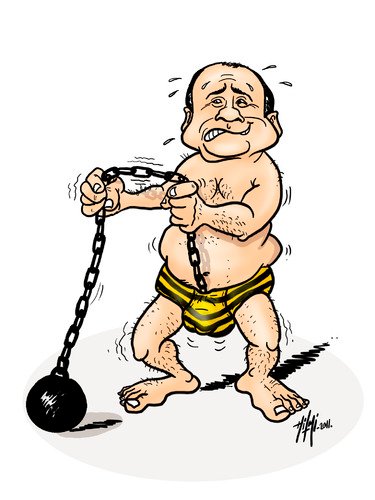
Silvio Berlusconi’s links with Italian organised crime confirmed

Silvio Berlusconi – Italy’s former Prime Minister and one of the world’s most recognisable politicians – did business with the mafia for nearly two decades.

That is the conclusion of the country’s Supreme Court of Cassation in Rome. The billionaire tycoon, nicknamed the Teflon Don, worked with Cosa Nostra, the Sicilian Mafia, via his conduit and former senator Marcello Dell’Utri after judges sentenced Dell’Utri to seven years for mafia association.
Silvio Berlusconis links with Italian organised crime confirmed

Hilmi Simsek

Hilmi Simsek

Shadow Banking’s Impact in China

In the US , it was shadow banking that brought the economy down in 2008.  Securitized mortgages with meaningless ratings were bought by banks without a second thought.  When Bear Sterns crashed, it took banks with it.  Jamie Dimon of JP Morgan Chase may have gotten a “Stay Out of Jail” card because he bought Bear Sterns in response to a US government request.

Can the banks and the core economy operate without engaging shadow banking?  And do they want to?

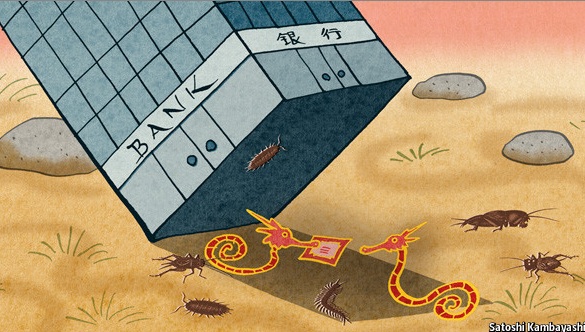
The Economist has taken on shadow banking this week, and points out one significant difference between China and other countries.  Shadow banking institutions are regulated by the same agency that supervises banks, the China Banking Regulatory Commission (CBRC). This means the CBRC can tell not only whether shadow banking institutions are themselves are wobbly, but also how any wobbles would affect banks.  The CBRC and other regulators have recently strengthened oversight of shadow banking , requiring clearer accounting and limiting dealings with banks.  Shadow banking in China

Shadow Banking in China

Swiss Money Manager Sings to Avoid Criminal Charges in US

Our correspondent Andreas Frank writes:  Swisspartners Group, a Zurich-based money-manager, resolved a U.S. criminal tax probe by paying $4.4 million for helping American clients use secret accounts to evade taxes. In return, the government agreed not to prosecute the firm, citing its “extraordinary cooperation.”

The agreement resulted from Swisspartners’ voluntary production of the files for about 110 U.S. taxpayer clients, according to the Justice Department and Manhattan U.S. Attorney Preet Bharara.

From about 2001 to about 2011, according to a Justice Department statement, Swisspartners helped its U.S. clients open and maintain undeclared foreign bank accounts, which allowed them to avoid paying taxes in full.

“Swisspartners avoided criminal charges “as a direct result of its decision to self-report misconduct”, U.S. Attorney for the Southern District of New York, Preet Bharara said.

Swisspartners Group voluntarily took steps in 2008 to stop helping U.S. clients evade income taxes, according to papers filed today Manhattan federal court. Four years later, the firm, although not under investigation, reported its conduct to U.S. officials, according to the government agreement.

Swisspartners Group acknowledged it knew some U.S. clients were maintaining undeclared foreign bank accounts with its assistance in order to evade taxes.

Swiss Songbird

The firm has agreed to continue to cooperation with American prosecutors for at least three more years. If the government determines the firm has violated terms of the agreement it can face prosecution, according to the agreement.

As part of the accord, the money manager will forfeit $3.5 million, representing the fees it earned for the services, and $900,000 in restitution, according to court documents.

The Swisspartners deal, called a non-prosecution agreement, includes four Swisspartners entities: Swisspartners Investment Network AG, Swisspartners Wealth Management AG, Swisspartners Insurance Company SPC Ltd. and Swisspartners Versicherung AG. The agreement “does not apply to any other subsidiaries of Swisspartners Investment Network AG or any individuals” not named.

Insurance company subsidiaries of Swisspartners based in the Cayman Islands and Liechtenstein were also parties to the non-prosecution agreement with U.S. authorities, suggesting U.S. investigators may also be looking at the role of foreign insurance companies in helping Americans to evade taxes.

Related Reports: frank-cs.org

No Banker Too Big To Jail

US Department of Justice:

The U.S. Justice Department is pursuing criminal investigations of financial institutions that could result in action in the coming weeks and months, U.S. Attorney General Eric Holder said in a video, adding that no company was “too big to jail.”

The comments, made in a video posted on the Justice Department’s website on Monday, came as federal prosecutors push two banks, BNP Paribas SA and Credit Suisse AG , to plead guilty to criminal charges to resolve investigations into sanctions and tax violations, respectively, according to people familiar with the probes.

While Holder did not name any banks, he said he is personally monitoring the ongoing investigations into financial institutions and is “resolved to seeing them through.”

Too Big to Jail

Thailand Facing Trade Sanctions Over Human Tracking

In a few weeks, Thai diplomats and officials will be hard pressed to explain the kind of progress, if any, the country has made in addressing the issue of human trafficking.  A United States government report, on the Trafficking In Persons (TIP), could potentially affect bilateral relations between Thailand and the US and will be released next month.

US law requires that its State Department rate nations across the world with regard to human trafficking. Countries rated in tier one fully meet minimum standards while tier two nations do not meet the minimum standards but are making an effort.

Tier three countries, on the other hand, do not meet the standards and are not showing any signs of trying to make a meaningful effort. What concerns many Thai officials is that tier three countries, which could very well include Thailand, face the threat of sanctions by the US government.

At the discretion of the US president, Thailand has received a waiver from such punishment and allowed to remain in tier two for past two years. But time is up and Thailand is hard pressed to show that progress has been made.  Judging from the previous report, in which Thailand was accused of slow progress in prosecuting trafficking-related cases, there is a real chance that the country could be rated down.

A few days ago, a US Congressional panel reminded us how bad Thailand’s performance and image is with respect to poor treatment of the Rohingya. The hearing in Washington DC was on “Effective Accountability: Tier Rankings in the Fight against Human Trafficking Lessons”.

Representative Chris Smith, chairman of the House Subcommittee on Africa, Global Health, Global Human Rights, and International Organisa-tions, listened to testimonies about how Thai government officials were involved in the trafficking of Rohingya.  Smith is not just another lawmaker. He is the author of the landmark law, the Trafficking Victims Protection Act of 2000, that created this three-tier system of reward and punishment for countries that do not comply with the requirements.

Human Trafficking


India’s President Describes Money Laundering As A Global Menace

Andreas Frank reports: President Pranab Mukherjee today asked Enforcement Directorate President Pranab Mukherjeeto achieve greater efficiency and cooperate with concerned international agencies to expedite steps to bring back “stolen assets spirited abroad”.
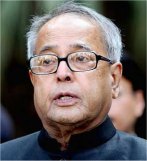
Mukherjee made this veiled reference to blackmoney during the second ‘Enforcement Day’ function organised by the Enforcement Directorate (ED).

The meeting was attended by President of the Financial Action Task Force (FATF) Vladimir Nechaev and Federal Office of Justice Swiss Confederation Mario Michel Affentranger among others.

“The Directorate should aim to work out modalities with international partners so that action with regard to restoration of stolen assets spirited abroad is expedited,” he said and asked it to interact with multilateral fora like FATF, the Eurasian Group on Combating Money Laundering and Financing of Terrorism (EAG) and the Asia Pacific Group on Money Laundering (APG).

He said the cooperation needs to be optimally utilised by the ED for bilateral exchanges and follow up with counterpart enforcement agencies for better mutual cooperation on Anti Money Laundering (AML) and Countering the Financing of Terrorism (CFT).

He also called for an international cooperation to tackle cross-border money laundering and terror financing so that a more “business friendly” legitimate investments flow into the country.

“Effective measures against Money Laundering and Terror Financing are essential in today’s global economic and security environment, and these are rightly being addressed on priority by most countries.

“Such measures also foster a more business friendly setting and facilitate legitimate investments and financial flows,” the President said at the function which was also attended by Revenue Secretary Rajeev Takru.

The President said India too has put in place a strong Anti Money Laundering legislation, the Prevention of Money Laundering Act (PMLA) to counter the menace.

“I also had the privilege of introducing in Parliament the Amendment Bill 2011 of the PMLA, through which, our nation strengthened the money laundering legislation, in line with the Recommendations of FATF,” Mukherjee said while recalling his days as the Union Finance Minister.

He drew attention about the presence of Affentranger and said it underlines the growing bilateral cooperation on law enforcement matters between Switzerland and India, as also the partnership between the counterpart agencies.

“Money laundering is a global menace, and law enforcement agencies of all countries have to cooperate to fight it,” he said.

India has been pressing Switzerland to give details of some Indians having money in the banks in that country but the Swiss authorities maintain they would be furnishing details of cases only after 2012 when Direct Tax Avoidance Treaty came into effect.

Switzerland does not cooperate in the matter of stolen data:

Swiss ambassador to India Linus Von Castelmur said his country could not cooperate in the matter as it related to stolen data, days after finance minister P Chidambaram sent a fresh letter to Switzerland pressing authorities to share information on Indian account holders in the HSBC Geneva list,

Swiss authorities had written to the finance ministry recently refusing to share data on the HSBC list. Following this, the FM had sent another letter – the third in four months – requesting Swiss authorities to expedite the matter.

The HSBC list had been given to India by French authorities who had obtained it from a disgruntled employee of HSBC. Switzerland has recently passed a law easing norms for sharing information of Swiss bank account holders with other countries. However, it does not cover stolen data.

Speaking at a function organized by Enforcement Directorate, Castelmur said, “We still have this position in our law that says that so-called stolen data cannot be used. I know India has not been stealing these data and they were given to Indian government by another European government but at the very beginning there was an act of robbery and obviously that is something that is disturbing.”

He said there has been stiff resistance in Swiss parliament on the issue of sharing of information on stolen data and though the matter was moving forward India would have to be patient. “Talking about taking time in India, you must be sympathetic to that because when I look sometimes to the speed, the pace of Indian judges and tribunals, I am sure you will give us another couple of months, even years,” he said.

Interestingly, tax authorities in India have already realized Rs 200 crore in taxes from account holders mentioned in the list and most accounts have been investigated.
GOV_Mukherfjee_Speech_1.5.14

Save India From Corruption