How International Crime Networks Connect

Our correspondent Andreas Frank reports:  The multi-billon dollar illicit trade of commodities (from cocaine to blood diamonds, weapons and human beings) has many complexities, from creating or extracting the product to moving the product to international markets to delivering payments.

The return cycle is equally complex, including the types of payments used to acquire the commodities, from cash to weapons and other goods the seller may need. This cycle relies on a specific group of individuals who act as facilitators in connecting different facets of the criminal and/or terrorist networks of state and non-state actors.

In order for transnational criminal pipelines and networks to function, different parts of the network need to communicate with each other and be able to supply mutually beneficial services and commodities to each other.

  • The fixers, or links, between different parts of the network, provide this vital service connecting different facets of the criminal and/or terrorist networks of state and non-state actors.
  • Local fixers, often members of the local elites and/or entrenched diaspora communities, help move the illicit product from production in conflict zones, criminalized states or territories not governed by the state, to the internal market.
  • Super fixers, those with broader international connections, can then move the product to the international market and provide some financial services. However, they rely on shadow facilitators to acquire the more complex and sophisticated equipment, often weapons or high technology components that are not readily accessible through normal market channels.

How International Crime Networks ConnectThe shadow facilitators usually deal with more than one criminal or terrorist network, providing rare and valuable services to multiple actors who may even be in conflict with each other. As the Viktor Bout case shows, if one provides good enough services that are highly specialized, one can arm multiple sides of the same conflict and greatly increase one’s profits in the process.

Because shadow facilitators’ international contacts and structures are so specialized, difficult to replace and operate for multiple groups, targeting them by law enforcement and intelligence communities should be a high priority. The Drug Enforcement Administration (DEA), in particular, has focused on this group. The high profile cases of the Viktor Bout and Monzer al-Kassar, two of the world’s most elusive and powerful brokers in recent decades, show that operations can be undertaken and prosecuted successfully.

The impact in both cases was significant. Viktor Bout’s arrest and conviction crippled and grounded an air fleet that was supplying weapons, across Africa, including Somalia, and seeking inroads into Latin America. The cost of replacing items outside that network was possible but costly both financially and in time.

Almost four years after his arrest (he was convicted in November 2011) no one has successfully put the pieces of the enterprise back together. In the Al-Kassar case, the network also collapsed. In both cases, there are indications that other individuals have picked up pieces of the network, but in neither case has capacity emerged to offer anything like the full range of services these two super facilitators did.

However, much of the conventional strategy for combating Transnational Organized Crime (TOC) relies on conceiving of illicit networks as hierarchical organizations with a strong top-down structure. Rather than focusing on the links (individuals providing specific services) mutual usefulness to each other of different small, relatively flat networks that overlap and rely on many of the same specialists, the focus remains on kingpins.

Targeting fixers is not a silver bullet but is one of the most efficient methods for weakening and disrupting illicit networks.

How International Crime Networks Connect


How the Swiss Outmaneuvered the DOJ, IRS, and the Fed

American papers are full of Credit Suisse’s guilty plea to criminal charges. Our correspondent Andreas Frank looks at the real situation.  Credit Swiss was spared from going out of business by the intervention of the Swiss government with a trade-off deal and the alleged specter of an incalculable systemic risk for the world’s financial system triggered by the bank’s failure which could cause a cascading effect on other banks.

The survival of Credit Swiss was mainly the result of political deals. This could explain the Swiss government’s ostensibly mute reaction to the Credit Swiss guilty plea for aiding and abetting tax evasion.

In a press release the Swiss Federal Council concluded “that the “agreement allows the legal disputes to be resolved without a formal indictment and is binding on both parties.” “What is also particularly important is that there will be no licence withdrawals with this solution and the use of emergency legislation is not an issue.”

Finance Minister Eveline Widmer-Schlumpf said the terms of the deal were acceptable as they did not require the Swiss government to violate its national banking secrecy laws. “It is important that a solution has been found within the scope of the Swiss legal system,” she told a news conference.

As part of the deal, Credit Suisse will not have to reveal client names or put in a position where it could be forced to violate Switzerland’s bank secrecy laws. To allow that, the Swiss government would have had to pass an emergency law, Widmer-Schlumpf said.

What really happened:  Because the US can not sign treaties with Switzerland which are in violation with Swiss law, they cannot demand the names of account holders.  Nor can they explore the names of the holders of  beneficial accounts.  Switzerland has emerged as the world’s largest trading hub, although they do not have ports, have no commodity sources and do not have a large industrial base.  Why has Switzerland gone to the top of the list.  It offers a high degree of secrecy.  It offers a high degree of secrecy despite the plea of Credit Suisse.  Secretive commodities investors are amassing physical assets like oil wells, oil and gas pipelines and offshore drilling projects in the US.

It is the lack of transparency that the Credit Suisse settlement overlooked. Now the consequences of secrecy will spread, potentially causing even greater harm in the US.

Swiss Law

Nexus between Credit Suisse and Swiss Ukraine Crisis Sanction

Our correspondent Andreas Frank writes:  US Attorney General Eric Holder met with Eveline Widmer-Schlumpf, his counterpart from Switzerland, as investigators cracked down on Swiss banks that help US customers avoid paying taxes.

Widmer-Schlumpf was accompanied by State Secretary Jacques de Watteville as well as representatives of the Federal Department of Foreign Affairs and the Federal Department of Justice and Police. The talks with Mr. Holder focused on the current US programme to settle the tax dispute for category 2, 3 and 4 banks, as well as the ongoing US criminal investigations concerning category 1 banks domiciled in Switzerland.

Switzerland is committed to ensuring with the US authorities a fair and balanced procedure in accordance with the principle of proportionality in order to prevent Swiss banks from being treated worse than other banks.

US officials were tight-lipped about the content of the meeting between Holder and Eveline Widmer-Schlumpf, but confirmed that the US probe into the Credit Suisse bank was discussed.

The day the Swiss negotiated with the DOJ “a fair and balanced treatment of Credit Swiss”, Switzerland added 15 individuals to a list of people who are subject to business restrictions and travel bans because of their involvement with the crisis in Ukraine, a move that follows the expansion of European Union sanctions.

Swiss authorities said financial institutions in the Alpine country could no longer do business with Russian Deputy Prime Minister Dmitry Kozak, Russian military head Valery Gerasimov and the leaders of separatist groups that have seized buildings in eastern Ukrainian. The expansion means 48 people are now subject to restrictions.

Europe and the U.S. announced new sanctions in late April in response to Russia’s actions in Ukraine. EU sanctions focus on individuals but U.S. sanctions also target banks and other companies.

The Swiss announcement is a reversal of the Swiss Federal Council’s March 26 decision not to impose sanctions against Russia for its seizure of Crimea, claiming it wanted to find a “balance” between international law and Switzerland’s interests.

It is obvious that pledges given by the DOJ to the Swiss in the Credit Swiss case tipped the balance in favour of Switzerland joining the EU sanctions.

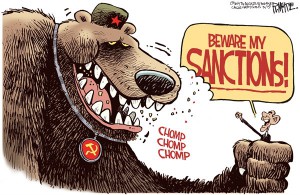
Sanctions

What the Credit Suisse Guilty Plea Means

Our correspondent Andreas Frank is an expert on shadow banking and Credit Suisse.  His most recent report can be found here.

Here is his most recent report and documentation.  Mr. Frank writes:

In a sign that banking giants are no longer immune from criminal charges, despite concerns that financial institutions have grown so large and interconnected that they are too big to jail, federal prosecutors demanded that Credit Suisse’s parent company plead guilty to helping thousands of American account holders hide their wealth.

As part of a deal with the Justice Department, the Swiss bank met the demands, agreeing to one count of conspiring to aid tax evasion in a scheme that “spanned decades.” Credit Suisse, which has a giant investment bank in New York and whose chief executive is an American, will also pay about $2.6 billion in penalties and hire an independent monitor for up to two years.

The rebuke from federal prosecutors as well as from the Federal Reserve and New York’s state banking regulator, Benjamin M. Lawsky, is intended as a blow against overseas tax dodging and the shadowy world of Swiss bank secrecy. The deal also signals a shift in prosecutors’ tactics. It is the most prominent bank to plead guilty in the United States since Drexel Burnham Lambert in 1989, and the largest to do so since the Bankers Trust in 1999, a bank a fraction the size of Credit Suisse.

Credit Suisse has done what no other bank of its size and significance has done in over two decades: plead guilty to criminal wrongdoing.

For Credit Suisse, other than the fines and the reputational stain of being a felon, the implications are likely to be limited. The bank may lose some clients but is otherwise expected to survive largely unscathed. The plea deal also enables it to move beyond a case that had prompted a congressional hearing and had thrust the bank into an international squabble over tax dodging. If the bank had continued to fight the case, it would have been indicted, calling into question its very existence.

Credit Suisse Handling Clients

Credit Suisse Pleas Criminal Guilt. Too Big To Jail.

Credit Suisse AG has pleaded guilty to helping wealthy Americans evade taxes in offshore havens, and the Swiss bank has agreed to pay U.S. authorities $2.6 billion in penalties, the Justice Department has announced.

For the big banks, these fines are simply the cost of doing business.

Attorney General Eric Holder told a news conference in Washington on Monday that the Swiss bank had “engaged in an extensive and wide-ranging conspiracy … to help tax cheats dodge U.S. taxes.”

Holder said the conspiracy spanned decades and involved bank employees destroying records in an effort to hide the truth and that the destruction of evidence continued after the Justice Department launched its investigation in 2010.

The conspiracy charge was filed in a criminal information, which is a charging document that can only be filed with a defendant’s consent and which typically signals a guilty plea.  The penalties will be paid to the Justice Department and to regulators.  Citing an unnamed source, The Wall Street Journal says that Credit Suisse’s Dougan and Chairman Urs Rohner will retain their jobs as part of the settlement.

Credit Suisse is not the first bank to make such a settlement. In 2009, UBS agreed to pay $780 million to U.S. authorities and to identify the names of its U.S. account holders. In 2013, Switzerland’s Wegelin & Co. paid $57.8 billion after pleading guilty to aiding tax evasion.

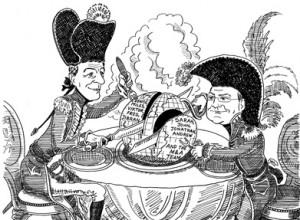
Too Big to Jail

Wildlife Crime Worth $ 8-10 Billion Annually

Andreas Frank reports: Urging the international community to “come together at the highest political level” to halt the escalation of wildlife and forest crime, the United Nations crime chief said today that the $8-$10 billion reaped annually from this “ruthless trade” ranks it alongside the trafficking of human beings, arms and drugs in terms of illicit profits.

“The rate of poaching is such that a number of iconic and lesser known species risk being wiped out over the next decade – and we will all bear responsibility for those losses,” warned Yury Fedotov, Executive Director of the UN Office on Drugs and Crime (UNODC), at a special event taking place in Vienna on the margins of the 23rd session of the Commission on Crime Prevention and Criminal Justice.

Mr. Fedotov stressed that the illegal wildlife trade – broadly considered poaching and other illicit exploitation of the world’s wild flora and fauna – needed to be recognized everywhere for what it is: a very serious transnational organized crime requiring effective legislation and criminal justice systems. The London Conference that took place in February 2014 had added to the political commitments expressed in Paris, Gaborone, Marrakesh and Bishkek in 2013.

“We must now translate our resolve into concrete action and channel this momentum into the General Assembly,” he said.

Stemming this tragedy is a shared responsibility, said Mr. Fedotov, explaining that UNODC is working with Governments and partners, such as the International Consortium on Combating Wild Life Crime (ICCWC), to improve legislation, strengthen law enforcement and criminal justice systems that can investigate, prosecute and sentence criminals in source countries and end-markets, and forge closer international cooperation.

In addition, UNODC will soon launch the Global Programme for
Combating Wildlife and Forest Crime, which would deliver regional and national assistance to support law-enforcement responses, put in place legislation to address this crime, strengthen investigative, prosecutorial and judicial capacities, as well as combat the related issues of money-laundering and corruption. It will also support States in their efforts to introduce livelihoods to affected communities.

Mr. Fedotov stressed however that law enforcement alone cannot eliminate wildlife crime, and he underlined the need to tackle the underlying development dimension. “Education and public awareness campaigns are needed to reduce the demand for protected fauna and flora, together with efforts to promote sustainable livelihoods for communities in source countries, where poverty and their lack of economic opportunities drive many to engage in this criminal enterprise,” he said.

Mr. Fedotov said he hoped that more countries would implement the UNODC Wildlife and Forest Crime Analytic Toolkit developed with ICCWC to assess countries’ preventive and criminal justice responses to wildlife and forest crime, following the example of Gabon, Nepal, Bangladesh and Peru.

Other initiatives of UNODC include the recent “Be a responsible traveller” campaign jointly launched with the UN World Tourism Organization (UNWTO) to curb demand for wild animals, exotic plants and endangered wood products.
UNODC_PressRelease_13.5.14
Wildlife CrimeIs the last Siberian Tiger Corrupt
Reports on Corruption


Goldman Warns: “Too Big To Jail.”

The US has not yet had the guts to insist on an admission of criminal guilt from the big banks, but they are close to just such a plea with Credit Suisse and BNP Paribas.

At the annual meeting of Goldman Sachs in Irving, Texas, the CEO expressed concern about the impact of criminal pleas on the economy.  Of course, the minute Bear Sterns bought a mortgage company, that grew geometrically to feed its bundlers in New York, Goldman followed suit.  In Texas, of course.

Too Big to Jail

Engaging Shareholders in Active Ownership

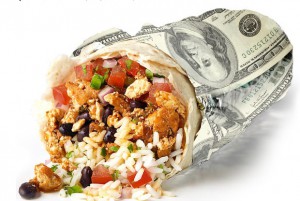
The long-term health of pension plans, and the retirement security of participants and families who rely upon them, are threatened by conflicts of interest on Wall Street and in the boardroom, a corporate backlash that seeks to weaken the accountability of executives to shareholders, and outright corporate fraud.  Advisory groups who are not named as fiduciaries for pension funds have cropped up to help the share.  CtW Investment organized a vote against excessive compensation for the executives of Chipotle and won.  Yet this may be a pyrrhic victory because the Board does not have to abide by the vote.

Executive Pay

Criminals Launder $140 Billion A Year Through Sports Betting

Andreas Frank writes: The report, compiled by the ICSS
ICSS and the Sorbonne University in Paris, said that 80% of global sports betting was being carried out on illegal markets, placing it beyond the reach of regulators and investigators.  Manipulation takes place in a growing sports economy, which now accounts for 2% of the global GDP.   The transnational sports-betting market is estimated with wagers worth between €200 – 500 billion, more than 80% of which is illegal.

Criminals are using betting on sports events to launder $140 billion each year, exposing a lack of effective regulation that allows match-fixing to spread.

The findings assume:  Asia and Europe represents 85% of the total legal and illegal market.  Europe makes up 49% of the legal market, whilst Asia makes up 53% of the illegal market.  Legal sports betting currently delivers only €4 billion of official tax revenues for countries.  More than 8,000 legal operators offer sports betting – 80% are in territories with a low rate of tax and few inspections.

The internet has led to an unprecedented expansion of sport betting offers, with online betting now representing 30% of the global market.  The sports betting market has been transformed into a multi-billion dollar industry with betting exchanges, live betting, betting on more low-profile events and derivative betting formulas, as well as higher return rates for bettors.

Soccer and cricket were identified as the sports most threatened by criminals seeking to rig the gambling market but tennis, basketball, motor racing and badminton were also affected, according to the report.

A number of soccer leagues have been hit by match-fixing scandals in recent years and three Pakistani cricketers were jailed for a plot to deliberately bowl no-balls during a test match against England at Lord’s in 2010.

Practical solutions will help combat match-fixing and illegal betting.  These include creating a sports betting tax to finance investigations into match-fixing and illegal betting.  Players, coaches and administrators must be prohibited from betting on competitions and matches within their sport.

Protecting the Integrity of Sport Competition – The Last Bet for Modern Sport
SportbettingCorruption Reports