SEC Awards $875,000 to Two Whistleblowers

The Securities and Exchange Commission announced a Whistleblower Award of $875,000 to be divided equally between two individuals who provided tips and assistance to the agency in bringing enforcement actions.

W-T-W.org encourages individuals to step forward when they see corruption.  In the US, since 2011 when the Dodd-Frank Act authorized the program.  A total of 8 people have received awards so far.  If you see something, say something.

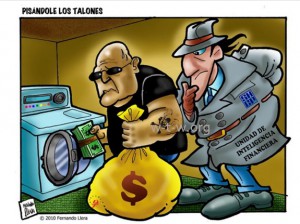
Artist Fernando Lllera

Artist Fernando Lllera

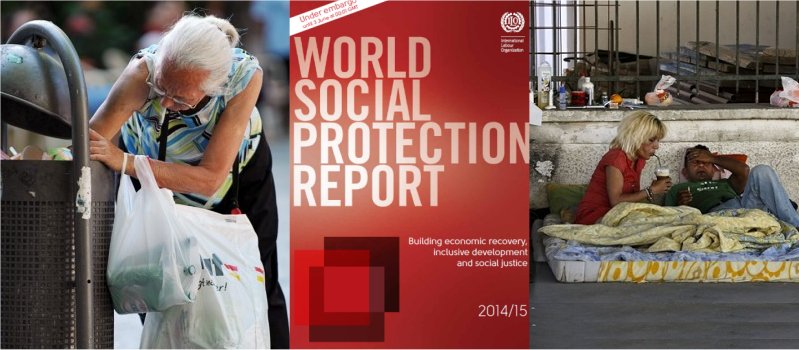
ILO: World Social Protection Report 2014-15

The International Labor Organization ILO has voiced its concern about the impact of austerity on social protection, saying that measures aimed at offsetting the effects of the crisis have will have long-term detrimental effects on the bloc’s economies.

In its 357-page World Social Protection report published on Tuesday, the Geneva-based UN offshoot warned that “together with persistent unemployment, lower wages and higher taxes, these measures have contributed to increases in poverty and social exclusion, now affecting 123 million people in the European Union, 24 percent of the population, many of them children, women, older persons and persons with disabilities.”..
ILO report warns of austerity ‘inflicting intense human suffering
World Social Protection Report 2014-15

World Social Protection Report 2014-15Corruption-reports


Chinese Optimistic About New Swiss Transparency Policy

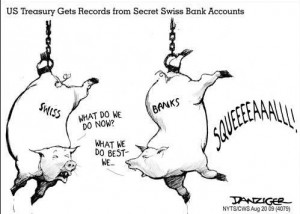
Emma Dai writes in the China Daily:  A decision by Switzerland to hand over details of secret bank accounts in the country to other nations will benefit China’s ongoing anti-corruption campaign, financial specialists say.  The Swiss pledged on Tuesday to provide details of foreign bank accounts, marking a breakthrough in the global crackdown on tax evasion.
The Financial Times reported that Switzerland committed itself to signing a new global standard on automatic exchange of information. The move is being viewed as a decisive break away from traditional Swiss protection of banking clients’ privacy.
“The move will definitely help anti-corruption efforts in China, as Switzerland is the world’s largest offshore financial center,” said Shen Minggao, head of China research at Citibank.  “It will become much easier for the Chinese authorities to collect information on overseas accounts relating to corrupt officials.”

The Swiss policy change pledge was made at a meeting of the Organization for Economic Cooperation and Development in Paris.  The declaration was signed by more than 40 countries, including other member countries of the OECD and G20 nations.  It requires the collection and exchange of information on bank accounts and the beneficial ownership of companies and other legal entities such as trusts.

The policy change by the Swiss authorities will contribute to international anti-corruption cooperation efforts.  Late Philippine president Ferdinand Marcos had billions of dollars in secret Swiss bank accounts, and imprisoned former Taiwan leader Chen Shui-bian also had deposits in Swiss banks.  Improving transparency may be a global trend.

Transparency?

IMF Chief Says Banks Haven’t Changed Since Financial Crisis

Our correspondent Andreas Frank writes: The head of the International Monetary Fund has warned that a persistent violation of ethics among bankers and rising inequality pose a major threat to growth and financial stability.

Christine Lagarde told the audience at the inclusive capitalism conference that six years on from the deep financial crisis that engulfed the global economy, banks were resisting reform and still too focused on excessive risk taking to secure their bonuses at the expense of public trust.

She said: “The behaviour of the financial sector has not changed fundamentally in a number of dimensions since the crisis. While some changes in behaviour are taking place, these are not deep or broad enough. The industry still prizes short-term profit over long-term prudence, today’s bonus over tomorrow’s relationship.

“Some prominent firms have even been mired in scandals
that violate the most basic ethical norms – Libor and foreign exchange rigging, money laundering, illegal foreclosure.”

Lagarde warned the too-big-to-fail problem among some of the world’s largest financial institutions was still unresolved and remained a major source of systematic risk, with implicit subsidies of $70bn in the US, and up to $300bn in the eurozone.

In a speech littered with quotations from Winston Churchill to Pope Francis and Oscar Wilde, Lagarde said international progress to reform the financial system was too slow. “The bad news is that progress is too slow, and the finish line is still too far off. Some of this arises form the sheer complexity of the task at hand. Yet, we must acknowledge that it also stems from fierce industry pushback, and from the fatigue that is bound to set in at this point in a long race.”

Lagarde told that rising inequality was also a barrier to growth, and could undermine democracy and human rights.

“One of the leading economic stories of our time is rising income inequality, and the dark shadow it casts across the global economy,” Lagarde said.

Borrowing from Oxfam research, she noted that the world’s richest 85 people, who could fit into a single London double-decker bus, control the same wealth as the poorest half of the global population of 3.5 billion people.

Options to address inequality include more progressive tax systems and greater use of property taxes, she said.
“We must recognise that reducing inequality is not easy. Redistributive policies always produce winners and losers. Yet if we want capitalism to do its job – enabling as many people as possible to participate and benefit from the economy – then it needs to be more inclusive. That means addressing extreme income disparity.”

Lagarde compared the rising awareness of social responsibility tied into the financial system with the world’s expanding environmental consciousness. “Just as we have a long way to go to reduce our carbon footprint, we have an even longer way to go to reduce our ‘financial footprint’. Yet we must take those steps.”
IMF Lagarde Speech 27.5.14
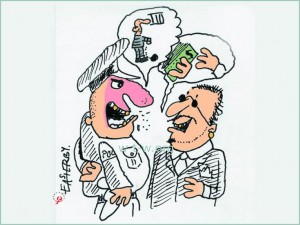
Derek Easterby
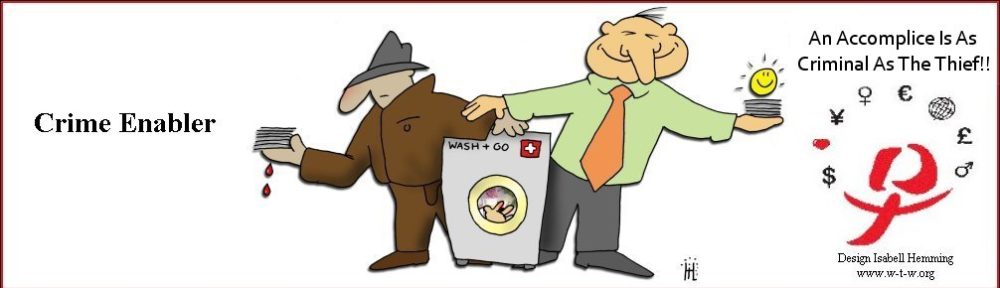
Derek Easterby

Should Growth Cease to be the Goal?

George Monbiot writing in the Guardian:  Economic growth is an artifact of the use of fossil fuels. Before large amounts of coal were extracted, every upswing in industrial production would be met with a downswing in agricultural production, as the charcoal or horse power required by industry reduced the land available for growing food. Every prior industrial revolution collapsed, as growth could not be sustained(3). But coal broke this cycle and enabled – for a few hundred years – the phenomenon we now call sustained growth.

It was neither capitalism nor communism that made possible the progress and the pathologies (total war, the unprecedented concentration of global wealth, planetary destruction) of the modern age. It was coal, followed by oil and gas. The meta-trend, the mother narrative, is carbon-fuelled expansion. Our ideologies are mere subplots. Now, as the most accessible reserves have been exhausted, we must ransack the hidden corners of the planet to sustain our impossible proposition.

On Friday, a few days after scientists announced that the collapse of the West Antarctic ice sheet is now inevitable, the Ecuadorean government decided that oil drilling would go ahead in the heart of the Yasuni national park(5). It had made an offer to other governments: if they gave it half the value of the oil in that part of the park, it would leave the stuff in the ground. You could see this as blackmail or you could see it as fair trade. Ecuador is poor, its oil deposits are rich: why, the government argued, should it leave them untouched without compensation when everyone else is drilling down to the inner circle of hell? It asked for $3.6bn and received $13m. The result is that Petroamazonas, a company with a colourful record of destruction and spills(6), will now enter one of the most biodiverse places on the planet, in which a hectare of rainforest is said to contain more species than exist in the entire continent of North America.

The UK oil company Soco is now hoping to penetrate Africa’s oldest national park, Virunga, in the Democratic Republic of Congo(8); one of the last strongholds of the mountain gorilla and the okapi, of chimpanzees and forest elephants. In Britain, where a possible 4.4 billion barrels of shale oil has just been identified in the south-east(9), the government fantasises about turning the leafy suburbs into a new Niger delta. To this end it’s changing the trespass laws to enable drilling without consent and offering lavish bribes to local people.  These new reserves solve nothing. They do not end our hunger for resources; they exacerbate it.

The trajectory of compound growth shows that the scouring of the planet has only just begun. As the volume of the global economy expands, everywhere that contains something concentrated, unusual, precious will be sought out and exploited, its resources extracted and dispersed, the world’s diverse and differentiated marvels reduced to the same grey stubble.

A Sign of Growth

Private Equity Funds Uses Debt to Become Oligarchs

Simon Johnson comments on a recent book by Eileen Appelbaum and Rosemary Batt.  He notes that only the very big funds can use debt to skew returns for insiders primarily because only they can raise the capital needed to buy well-established companies that are rich in fixed assets, and thus in potential collateral. Smaller private-equity funds typically buy into younger, smaller companies without such fixed assets, and the leverage in those deals is commensurately less.

Regulators have recently woken up to the incentives for excessive leverage in this sector – and to the risks that such leverage poses to lenders and the broader economy. Not surprisingly, big private-equity firms seem determined to ignore or otherwise circumvent new restrictions. As the policy debate on this issue heats up, one hopes that all participants will become better informed by reading Private Equity At Work.

Oligarchs

Pfizer Acquisition of Astra Zeneca on Hold

The decision ends a month-long public fight between two of the world’s biggest pharmaceutical companies that sparked political concerns on both sides of Atlantic over jobs and corporate tax maneuvers.

Our US correspondents have raised the question of corporate taxes.  Clearly part of Pfizer’s interest in this merger is to move its headquarters to gain tax advantages.  Over and over we see American companies, who did 80 per cent of their business in the US, locating headquarters in countries that offer tax relief.

Is it time to ask whether we should remove corporate taxes altogether and just tax dividends.  Pressure to make the company look good often leads to these tax-motivated moves.  If taxes were not part of this calculation, would the government get more revenue of the holders of a company’s equity?  Worth asking, we think.

 US Corporate Tax Strategy

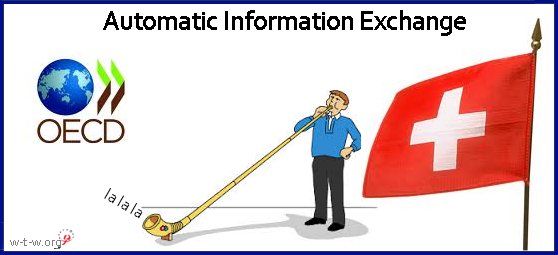
The Swiss and the OECD Automatic Information Exange

Two days after the Credit Swiss plea agreement, the Swiss Federal Council issued a statement making it clear what it thinks “the new global standard for the automatic exchange of information in tax matters” should look like.

The Swiss Federal Council is basically following the opinion of the Swiss Bankers Association (SBA) which was published on November 29, 2013.

Switzerland wants to portray itself in the domestic Fingerzeig
and international media as a clean, well-regulated and transparent financial centre that has broken with the historic haven for thieves and abusers.

However the Swiss Federal Council statement tells a different story. The Swiss statement is yet more evidence of what has been called a “circle the wagons” strategy, when under pressure from a world that’s moving forward, give ground only inch by inch, if at all, hold on to secrecy where possible – and particularly exploit the weaknesses of weaker and more vulnerable countries.

Multilateral negotiations with intransigent countries like Switzerland and Singapore are always more fruitful than bilateral. The Swiss government therefore plans to stick to a bilateral approach to AIE and engage in “cherry picking”

Switzerland wants to make sure it has maximum leverage over vulnerable developing countries and tries to exclude developing countries from AIE for as long as possible.

The Swiss government is not expecting any external resistance to this strategy of cherry picking. Neither the OECD nor the G20 have made a clear statement in favour of a multilateral approach to AIE. Nor have they asked for the inclusion of developing countries in such a multilateral approach. Nor have LIC/LDC (Low income countries/Low developed countries) governments made it clear that they wish to be included.

It can be expected that Switzerland, likely with the silent support of other rich nations, show what all this is really about: countries with which there are close economic and political ties will cooperate to not hurt each other economically, but that less fortunate countries of the world won’t benefit from this international drive against large-scale tax evasion.

In joining the OECD ministerial agreement, Switzerland and Singapore are suggesting that both countries would put an end to banking secrecy. In reality both countries are trying hard to cement the status quo which benefits their economies as well as international organized crime and money launderers.
Federal Council Press Release
The Swiss And The OECD Automatic Information Exange

Barclay’s Fined for Manipulating Gold Prices

Unrepentant after Libor, Barclay’s has continued to make money however they can regardless of the law.  Anthony Jenkins, Barclay’s CEO, says the high risk, high reward culture has to change. There is nothing new under the sun.  On 27 July 2012, the Financial Times published an article by a former trader that stated that Libor manipulation had been common since at least 1991.

Banks arrive at the gold fix through matching buy and sell orders during a twice-daily telephone call. Miners, jewellers and central and commercial banks use the price fix to trade gold.  FCA report.

The FCA and several other regulators, including Bafin in Germany and the U.S. Commodity Futures Trading Commission, have indicated they are looking at the gold fix.  In years gone by, seats at the gold and silver fixing tables were a mark of distinction for a bank. But now, most banks do not want to be involved.

“A firm’s lack of controls and a trader’s disregard for a customer’s interests have allowed the financial services industry’s reputation to be sullied again,” said Tracey McDermott, the FCA’s Director of Enforcement and Financial Crime.

Gold Price Manipulation


Drug Dealing on Bitcoin Sites

Our correspondent Andreas Frank writes:  Steven Sadler, 40, pleaded guilty to using the online black market Silk Road to sell a swath of illegal drugs in a Seattle federal courtroom on Thursday. With the help of his one-time girlfriend, Jenna White, Sadler used the Silk Road name “Nod” to peddled 3,721 grams of cocaine, 1,375 grams of heroin, and 119 grams of methamphetamine, according to court documents.

When law enforcement raided his home on July 31 of last year, Sadler had more than a kilogram each of cocaine and of heroin, and more than 400 grams of methamphetamine.

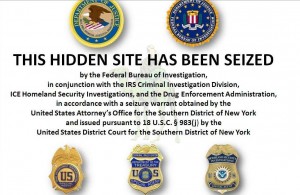
After operating for the better part of three years, the FBI shut down Silk Road and arrested its alleged owner, Ross Ulbricht, last October. Investigators say the site had hundreds of thousands of users and facilitated millions of illicit transactions.

Sadler’s guilty plea is the third from a high-profile Silk Road dealer within the last four weeks. On April 24, Cornelis Jan Slomp, a 22-year-old from the Netherlands, accepted guilt for being “the world’s largest drug-trafficking vendor on Silk Road,” as prosecutors put it. Slomp used the nickname “SuperTrips,” and he primarily sold MDMA and ecstasy pills. On May 13,Angel William Quinones, 34, a partner multi-millionaire Dutch drug dealer Cornelis Jan “SuperTrips” Slomp pleaded guilty.

Unlike Slomp, Sadler’s plea agreement does not indicate that he is expected to cooperate with law enforcement in any other Silk Road investigations. Sadler has, however, already spent months helping federal investigators build a case against Silk Road’s owner, who used the pseudonym “Dread Pirate Roberts.”

For Sadler’s guilty plea, the government agreed to drop four of the five counts on the indictment, leaving him with just one count of conspiracy to distribute heroin, methamphetamine and cocaine. Sadler faces anywhere from five to 40 years in prison and a fine of up to $5 million. His sentencing is scheduled for Sept. 4.

Silk Road Seized