Nuns Force Chase to Produce Report on Scandals

The Sisters of Charity of Saint Elizabeth demanded that JPMorgan produce a report for its shareholders on the scandals it has been involved in.

JPMorgan was finally able to satisfy the nuns when they agreed to write such a report.  It should make thrilling reading.

JPMorgan had initially said that the nuns request, backed by several other shareholders, was materially false and misleading.  The SEC, JPMorgan and The Nuns  

Unfortunately the dual role Dimon holds will not be divided until he steps down.

 The Nuns Beat Jamie Dimon

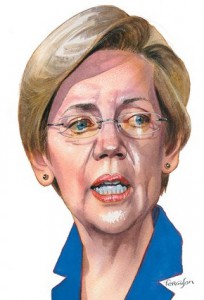
What Elizabeth Warren Represents in the US?

Warren possesses a knack for earthy articulation of the liberal-populist worldview matched by no one else in American public life today. Videos of her speaking to supporters and donors, or decimating slow-witted cable hosts, go “viral” and get millions of views from liberals who’ve been desperate for years to hear a prominent Democrat talk the way she does. This is part of what she said in what is perhaps her most famous clip, from September 2011:

I hear all this, you know, well, this is class warfare, this is whatev…. No. There is nobody in this country who got rich on his own. Nobody. You built a factory out there? Good for you. But I wanna be clear. You moved your goods to market on the roads the rest of us paid for. You hired workers the rest of us paid to educate. You were safe in your factory because of police forces and fire forces that the rest of us paid for…. You built a factory and it turned into something terrific or a great idea, God bless. Keep a big hunk of it. But part of the underlying social contract is you take a hunk of that and pay forward for the next kid who comes along.

We live in an age when hedge fund managers and Wall Streeters complain of class warfare against them, and when, as Harvard professor Lawrence Lessig’s important research has shown, all but a small proportion of political campaign contributions are made by “the tiniest fraction of the one percent.”1 It’s been years since a high-profile politician has spoken like Warren and not only survived but flourished. Warren has aroused populist tendencies in parts of the liberal base and probably emboldened other senators and members of the House to speak more directly on class issues.   New Populism in America

Warren

Netanyahu Warns About Homegrown Organized Crime

Correspondent Andreas Frank comments:  Prime Minister Benjamin Netanyahu vowed to put a halt to organized crime in Israel, following a mid-day hit the previous day near the crowded Tel Aviv boardwalk. “We have recently witnessed several severe actions by organized crime. We are determined to uproot this severe phenomenon and we give full backing to the Israel Police to use existing and new means against organized crime,” Netanyahu said Sunday morning at the start of the weekly cabinet meeting. HOMEGROWN ORGANIZED CRIME A PROBLEM FOR ISRAEL

Crime in Israel

Financial Task Force Lists High Risk Jurisdictions

Our correspondent Andreas Frank reports:  FATF STATEMENT ON HIGH-RISK AND NON-COOPERATIVE JURISDICTIONS

Conclusions:  The Financial Action Task Force (FATF) issued an updated statement identifying jurisdictions with strategic deficiencies in their anti-money laundering and counter-terrorism financing (AML/CTF) regimes. This statement lists those jurisdictions in two categories and effectively replaces any earlier statements regarding those jurisdictions.

    1) Jurisdictions where FATF members and other jurisdictions have been asked to apply countermeasures to protect the international financial system from ongoing and substantial terrorist financing and money laundering risks emanating from the jurisdictions Iran and Democratic People’s Republic of Korea (DPRK).
    2) Jurisdictions listed for having strategic AML/CTF deficiencies that have not made sufficient progress in addressing the deficiencies or have not committed to an action plan developed with FATF to address key deficiencies: Algeria, Ecuador, Ethiopia, Indonesia, Myanmar, Pakistan, Syria, Turkey, Yemen.

Major changes to the last FATF statement on high-risk and non-cooperative jurisdictions (18.11.2013):

Two African Countries – Kenya and Tanzania – made significant progress to improve their AML/CFT regimes and are no longer on the list of “High-Risk and Non-Cooperative Jurisdictions”. Kenya and Tanzania are now identified in the FATF document, “Improving Global AML/CFT Compliance.

Afghanistan and Cambodia are jurisdictions which are not making sufficient progress, the FATF said.

Jurisdictions no longer subject to the FATF’s on-going global AML/CFT compliance process Antigua and Barbuda, Bangladesh, and Vietnam.

The FATF kept the classification of Iran as a high-risk and non-cooperative jurisdiction and called on its members and other jurisdictions to apply counter-measures to protect the international financial system from the on-going and substantial money laundering and terrorist financing (ML/TF) risks.

The FATF failed to explain how the international banks will be able to transfer safely the billions of dollars

provided by the partial lifting of the Iran sanctions.      Frank-cs.org   Report on Countries

 Doing the Laundry

Russian Bank Cleanup

Our correspondent Andreas Frank reports:  Russia’s central bank has withdrawn the licences of two small Moscow-based banks, as part of its widening campaign to clean up the banking system and crack down on money laundering.

Russia has more than 900 banks, mostly small, and many are suspected of servicing the shadow economy. Since taking up her position as central bank head last year, Elvira Nabiullina, has made it clear she wants to tighten banking supervision and shore up large-scale capital flight to boost the flagging economy.

The central bank it had withdrawn Eurotrust bank’s licence because of a failure to meet obligations to its creditors and depositors, and to create sufficient reserves to cover potential losses on loans.

LINK Bank also failed to create provisions against risk and both banks were involved in “dubious operations”, such as money laundering, the central bank said in a statement.

Both banks are part of Russia’s system of retail deposit insurance, under which the state guarantees small savings if a bank fails. Last year, the withdrawal of Master Bank’s licence cost the state about 30 billion roubles ($890 million).  CBR Eurotrust Statement

Russian Banks

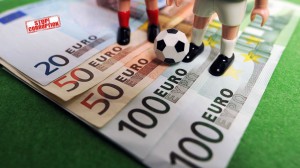
Allianz Buys 8.33% Stake in Bayern München For EUR110M

Allianz SE Tuesday said it is buying an 8.33% stake in FC Bayern München, thereby
extending its partnership with the premier league soccer club across town.
Allianz, Europe’s biggest insurer by revenues, said it would buy the stake for EUR110 million ($149.97 million), as part of a capital increase at the soccer club.
FC Bayern intends to use the capital from the Allianz investment for the repayment of debts and for launching a youth football center of excellence. The naming rights, including an option, for the FC Bayern München stadium, the Allianz Arena, have been secured long term until 2041.
Allianz Buys 8.33 %Stake in Bayern München For EUR110M

Money and  SportWarum steigt eine Versicherung beim Fussball ein?


Russia’s Central Bank Revokes Licences From Two Moscow Banks

Russia’s central bank has withdrawn the licences of two small Moscow-based banks, part

Банк России

Банк России

of its widening campaign to clean up the banking system and crack down on money laundering.

Russia has more than 900 banks, mostly small, and many are suspected of servicing the shadow economy. Since taking up her position as central bank head last year, Elvira Nabiullina, has made it clear she wants to tighten banking supervision and shore up large-scale capital flight to boost the flagging economy.

The central bank it had withdrawn Eurotrust bank’s licence because of a failure to meet obligations to its creditors and depositors, and to create sufficient reserves to cover potential losses on loans.

LINK Bank also failed to create provisions against risk and both banks were involved in “dubious operations”, such as money laundering, the central bank said in a statement.

Both banks are part of Russia’s system of retail deposit insurance, under which the state guarantees small savings if a bank fails. Last year, the withdrawal of Master Bank’s licence cost the state about 30 billion roubles ($890 million).
CBR Eurotrust Statement
CBR_LinkBank_Statement

Russia's Central Bank Revokes Licences From Two Moscow Banks

Chinese Tax Haven Clients

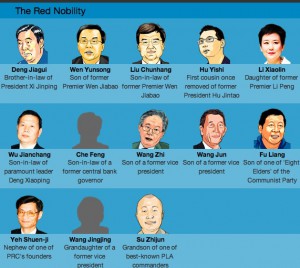
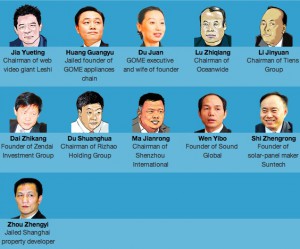
The International Center for Investigative Journalism Reporting:  The ICIJ is back in the spotlight once again, this time revealing “nearly 22,000 tax haven clients from Hong Kong and mainland China. Among them are some of China’s most powerful men and women — including at least 15 of China’s richest, members of the National People’s Congress and executives from state-owned companies entangled in corruption scandals.”  The source of this treasure trove of data is secret.  All ICIJ says on the matter is that “In November, a mainland Chinese news organization that was working with ICIJ to analyze the offshore data withdrew from the reporting partnership, explaining that authorities had warned it not to publish anything about the material. ICIJ is keeping the identity of the news outlet confidential to protect journalists from government retaliation.” But where the data comes from is largely irrelevant.  China’s Tax Haven Clients  

Red Nobility

 China's Elite Part II

Why Liechtenstein?

Combating Financial Crimes  Liechtenstein Policy Statement

Combating and preventing money laundering, terrorist financing, corruption, organized crimes and tax evasion are a major focus of Liechtenstein’s financial center policy. Liechtenstein banking secrecy offers no protection to criminals and through the use of domestic and international legal mechanisms, financial secrecy is lifted in cases of suspected criminality. Liechtenstein has prevention and punishment systems to combat money laundering and terrorist financing.

Liechtenstein has made many comprehensive reforms in the regulation of its financial sector over the last ten years. Its initial reforms concentrated on anti-money laundering efforts. More recently, the government of Liechtenstein signed a landmark Tax Information Exchange Agreement (TIEA) with the United States and numerous other countries and concluded negotiations of an Anti-Fraud Agreement with the European Union. The United States government acknowledges Liechtenstein to be a trusted and effective collaborator in combating a wide range of financial crimes, including money laundering, terrorist financing, and tax fraud and recent reforms guarantee that Liechtenstein will provide the United States and others with a markedly increased range of cooperation on tax matters.

In addition to compliance with the highest international standards set by the Financial Action Task Force (FATF) in the fight against money laundering, Liechtenstein authorities also actively take part in the international dialogue on the further development of common standards. Milestones in the fight against money laundering and terrorist financing include:

  • Liechtenstein is a State Party to the Convention of the Council of Europe on Money Laundering, Search, Seizure, and Confiscation of the Proceeds from Crime (1990)
  • Implementation of the 1st EU Money Laundering Directive (1995)
  • Due Diligence Act enters into force (1997)
  • Total revision of the Liechtenstein Mutual Legal Assistance Act (2000)
  • Establishment of the Liechtenstein Financial Intelligence Unit (2001)
  • Mutual Legal Assistance Treaty with the United States and adoption of the “Counterterrorism Package” (2002)
  • Tightening of the Law on Professional Due Diligence in Financial Transactions (Due Diligence Act) (2004)
  • Establishment of the Liechtenstein Financial Market Authority through enactment of the Financial Market Authority Act (2004)
  • Implementation of the 2nd EU Money Laundering Directive (2005)
  • Partial revision of the Mutual Legal Assistance Act (2008)
  • Implementation of the 3rd EU Money Laundering Directive (2008)
  • Signing of a Criminal Law Convention on Corruption and a Second Additional Protocol to the European Convention on Mutual Assistance in Criminal Matters (2009)
  • Liechtenstein is a member of the Group of States against Corruption (GRECO), the monitoring body established by the Council of Europe to improve the capacity of countries to prevent and combat corruption (2010)

Yet, there are twice as many businesses as citizens in the country, which collaborates closely with Switzerland.  If the US tax authorities are scrutinizing Swiss financial institutions, can Liechtenstein be far behind?  Why Liechtenstein 

Liechtenstein

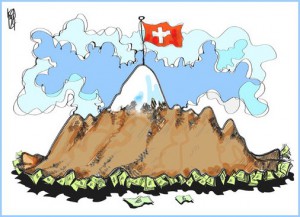
For the First Time, Swiss Asset Manager Charged with Hiding US Taxpayers’ Assets

Peter Amrein, a Swiss asset manager, indicted on charges that he assisted U.S. taxpayers in evading millions of dollars in taxes owed by hiding money in offshore trusts at multiple Swiss banks.

Offshore companies and trustees enable money laundering and tax evasion, according to the US senate hearings 2006, 2008, and 2009.

The “Amrein” case clearly demonstrates the the use of sham “foundations”,  and other entities formed in countries such as Liechtenstein, to conceal taxable assets from the IRS.  Reported by Andreas Frank for w-t-w.org.
Download: US Amrein Indictment 6.2.14
Peter Amrein, a Swiss asset manager 

www.koufogiorgos.de

www.koufogiorgos.de