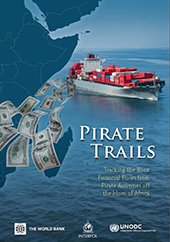
Pirate Trails: Tracking the Illicit Financial Flows from Piracy off the Horn of Africa

Piracy Money CycleMore sophisticated than you thought

A new study reveals how Somali piracy is financed
Ransoms Total Over US$339 Million, Says new research

Washington, November 1 — Between US$339 million and US$413 million was taken in ransom from the hijacking of ships off the coast of Somalia and the Horn of Africa between 2005 and 2012, according to a report released today. The study – carried out by the World Bank, the United Nations Office on Drugs and Crime (UNODC) and INTERPOL – reveals that much of the ransom money was used to fuel a wide range of criminal activities on a global scale.

PIRACY remains a concern for ships passing the Horn of Africa, The Piracy Money Cycle
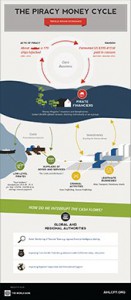
even though the number of incidents has plummeted since 2011, when armed protection was beefed up on board many large vessels. The topic grips the public imagination. Witness the success of “Captain Phillips”, a film in which a vessel captained by the actor Tom Hanks is hijacked by Somalis. Yet the pirate economy is poorly understood. A report*, to be released on November 4th by the World Bank, the UN and Interpol sheds new light.
A new study reveals how Somali piracy is financed

Pirate Trails World Bank UNODC Interpol reportPirate TrailsMore Corruption Reports
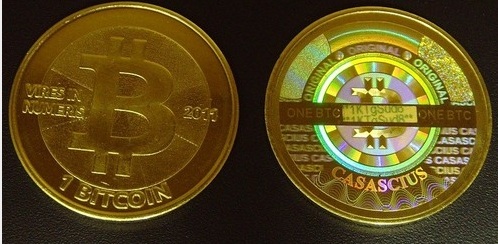
Bitcoins: Currency or Commodity?

If you buy 3 barrels of grain and take it to Duane Reade and buy goods worth  3 barrels of grain, does this differ from a Bitcoin transaction?

Digital currency is coming. Banks fully expect money to become digital, with some betting that virtual currencies like Bitcoin will become mainstream.

This is cheery news for folks fighting drug trafficking, terrorism, corruption and organized crime. Cash has been recognized as crucial to funding illegal activity. Five hundred Euro banknotes are known as “the bin Laden” for its role in financing terrorism. It’s nearly impossible to trace bribes and stolen public funds when they disappear in briefcases of hundred dollar bills. Bitcoins Future     The Future of Money

Bitcoin Currency

2000 Money-Laundering Case Involving Panama Based Jewelry Stores

US Rewards international AML Efforts2000 Money-Laundering Case Involving Panama Based Jewelry Stores

The U.S. signed an agreement with Panama that will result in the sharing of more than $36 million in forfeited assets from a 2000 money-laundering case involving Panama-based jewelry stores.

It marks the first time the U.S. shared assets with Panama, and it’s the second-largest sum of forfeited assets ever shared by the Justice Department with a foreign government, the department said in a statement.

“For more than 12 years, the assistance of the Panamanian authorities has been consistent, reliable, and broad-ranging,” said James Cole, deputy attorney general, in the statement.

The assets being shared result from an investigation into a jewelry store, operating in the Colon Free Trade Zone in Panama. It was found that the owners washed massive amounts of profits derived from narcotics trafficking through Speed Jewelers and another jewelry business, Argento Vivo SA.

The confiscated property will be used to strengthen the ability of the Republic of Panama to combat money laundering and the seizure of illicit goods in criminal investigations and prosecution ,” said the U.S. statement .

DOJ Panama PressRelease

2000 Money-Laundering Case Involving Panama Based Jewelry Stores

Blackstone GSO Ensures Credit Default Swap Trigger

GSO Capital Partners LP provided a loan to Spanish gaming operator Codere SA (CDR) in June with terms that gave it a guaranteed return on credit-default swaps, outmaneuvering sellers of the protection.

The unit of Blackstone Group LP (BX) structured the loan in a way that would lead to a payout on swaps it held, according to three people with knowledge of the situation who asked not to be identified because the discussions were private. The contracts were triggered on Sept. 18 after Codere delayed an interest payment by two days to comply with the loan terms. GSO held 25 million to 30 million euros of the swaps, meaning it may have made at least 11.4 million euros ($15.6 million), according to one of the people and data compiled by Bloomberg.  No Lose Codere Trade

Codere Gaming

Digital Human Watch

Problems with the UK and US surveillance programs are representative of a broader, global issue. Given how intrusive digital surveillance can be, all governments should review their practices and update laws to ensure protection of all users’ data, regardless of their citizenship or location, Human Rights Watch said.

The US and UK’s actions also call attention to the ways governments are increasingly pressing Internet and telecommunications companies to help monitor online activity. Internet users trust companies to store and transmit the most intimate details of their daily lives. These companies have a responsibility to safeguard user privacy and avoid contributing to governments’ misuse of surveillance powers.   Digital Human Rights

Digital Human Rights

Will Switzerland Be Known for Watches, Cheese and Chocolate

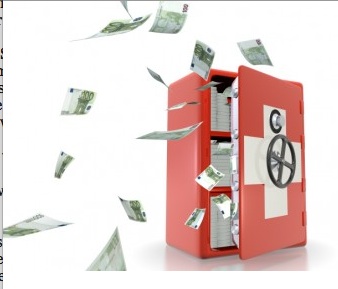
Banks in Switzerland are under pressure.  Agreements make non-compliant accounts difficult.  Distinctions between tax evasion and tax fraud have been erased.  Swiss banks have to establish banks in foreign countries for deposits from that country.   Fees once charged to customers can no longer be, and how far back customers can go to retrieve unauthorized fees has not been established.   Booz Report

Switzerland of the Future

Wall Street Pays PhDs to Persuade the Courts and Congress

How much of a difference can one academic make? Last September, a federal court knocked down a proposed regulation concerning “position limits,” a provision of Dodd-Frank designed to limit the role of speculators in inflating the price of commodities like oil, wheat and aluminum. To understand how this came about, follow the path of the University of Houston’s Craig Pirrong, who plays a Zelig-like role in the story of how this rule—hated by both the big speculators and the private exchanges in which commodities are traded—came to face delays, legal setbacks and now an uncertain future.

While numerous studies have demonstrated, and even Goldman Sachs has conceded, that excessive speculation on crude oil has boosted the price of gasoline at the pump by billions of dollars for consumers, the impetus for reform can be traced to the record spike in gas prices in June of 2008. The following month, a congressional hearing was called on the role of speculators. That’s when Professor Pirrong’s assault began on what would later become part of Dodd-Frank.

In his testimony, Pirrong said that “speculation is not the cause of high prices for energy products” and that there is “no evidence” to the contrary. In fact, there is an abundance of research, including a 2006 report from the Senate Homeland Security Committee, about the role of speculators in driving up the price of energy products like crude oil. Nevertheless, Pirrong pressed on, advocating against action on speculation in a report for the libertarian Cato Institute, in an opinion column for CNN Money, and in comments to major media outlets like the Financial Times.   The Nation Reports

A Professor Testifies

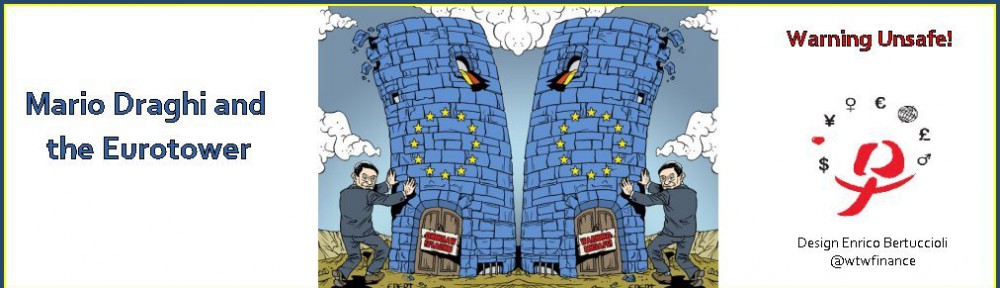
Wall Street Banks “Unsafe”?

Regulators were caught off guard when JPMorgan traders gambled away $6.2 billion of depositors’ funds in wildly risky and illiquid derivative trades in an outpost in London. On August 14 of this year, the U.S. Justice Department announced criminal indictments against two of the traders involved in the matter, the infamous London Whale case, alleging they hid the extent of the losses.

Until the Glass-Steagall Act is restored by the U.S. Congress, until prosecutors rid Wall Street of its serial wrongdoers parked in the executive suites, it’s best to pay careful attention.  Are Wall Street Banks Unsafe?

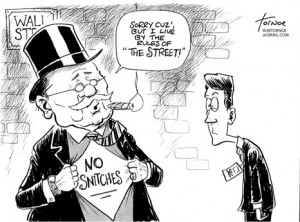
Rules of the Street

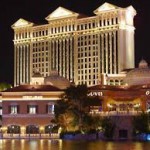
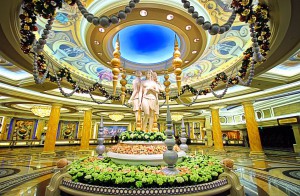
Caesars Palace Under Money Laundering Investigation

Caesars Entertainment Corp. (CZR) disclosed that federal Caesars Palace2
regulators, continuing a crackdown on money laundering at casinos, are investigating the unit operating its flagship property in Las Vegas.

US authorities have been increasingly focused on anti-money laundering policies and procedures, with a particular focus on the gaming industry.

In August, Las Vegas Sands Corp. (LVS) agreed in a nonprosecution deal to pay $47 million and change its policies to resolve a federal criminal investigation over noncompliance with a law that requires casinos to report suspicious customer transactions.

After the gambling industry received a stern warning from the Justice Department, casino executives had vowed to beef up their antimoney-laundering procedures.
CZR_SEC_8-K_Filing_

More Information on Frank-CS Caesars Palace

Will Swiss Banks Service Only the Country’s 8 Million Citizens?

An Italian judge ruled on Tuesday that Raoul Weil, the ex-UBS banker wanted in the United States over allegations of helping Americans dodge taxes, must remain in custody while awaiting possible extradition, a judicial source said.  The decision was taken by a judge of the Court of Appeal in Bologna, where Weil, a Swiss citizen and former head of UBS’s global wealth management business, was arrested by Italian police on Saturday.  Dealings with UBS were spelled out in detail in US Senate hearings in 2008.  If the US is going to go after assets hidden in other countries, will legitimate revenue at last go into the coffers of the country of origin?

Swiss Banks