JP Morgan Admits to Manipulative Conduct in the London Whale Trades

The US CommodityFutures Trading Commission issued a release detailing the settlement with JP Morgan on the London Whale Trades.

JPMorgan, which admits the specified factual findings in the Order including that its traders acted recklessly, is directed, among other things, to pay a $100 million civil monetary penalty.  “In Dodd-Frank, Congress provided a powerful new tool enabling the CFTC for the first time to prohibit reckless manipulative conduct,” said David Meister, the CFTC’s Director of Enforcement. “As this case demonstrates, the Commission is now better armed than ever to protect the market from traders, like those here, who try to ‘defend’ their position by dumping a gargantuan, record-setting, volume of swaps virtually all at once, recklessly ignoring the obvious dangers to legitimate pricing forces.”  JP Morgan Admits Manipulative Conduct in London Whale Trades
Shame on You

Board of Directors Impact on Executive Compensation

James Surowiecki writes pungent columns on finance for the New Yorker.  This week he discusses one of the crucial topics in the inequality debate:  the ratio of the compensation of CEO salary to the median income of employees.  He argues that the SEC’s new rules for transparency are not a solution.  He looks carefully at how Boards of Directors. who are supposed to supervise corporate governance, fall into geometric increases of executive salaries. Economists at the Wharton School explain the situation in detail in an article. Board of Directors and Executive Compensation

Obscene Executive Compensation

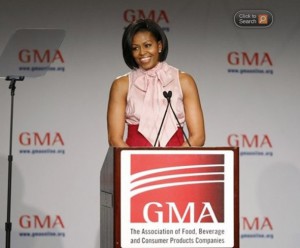
In US, Filings Against GMA Non-Disclosure in Campaign Contributions

In Washington State, a proposition to say “Yes” to banning genetically modified goods to being fought by the Grocery Manufacturers Association.  This is fine and good and correct in a democracy.  But in releases from the GMA and the Washington State Attorney General, and in court papers filed by the state, it is clear that over 7 million dollars contributed to the “No” campaign were not transparent donations.  The actual donors were hidden by the umbrella GMA.  This violates US and State campaign disclosure laws.

It is our guess that the importance of this proposition on the Washington ballot was made more urgent by California’s support of the ban.  US GMA Complaint 16.10.13    GMA No-522 PressRelease 16.10.13  PDC Contributions No-522 16.10.13

Hidden Political Donations

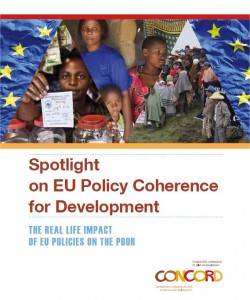
Lax EU Compliance Cost Third World $100BN

Tax avoidance by companies in the European Union is costing developing countries billions of dollars in lost tax revenues each year.

The Concordeurope report finds that in developing countries, between $859 billion and $1.138 trillion of illicit financial flows escaped developing countries in 2010 alone. Illicit financial flows includes the proceeds from both illicit activities such as corruption (bribery and embezzlement of national wealth), criminal activity, and the proceeds of licit business that become illicit when transported across borders in contravention of applicable laws and regulatory frameworks (most commonly in order to evade payment of taxes).

Approximately half this money (US$ 429.5 to US$ 569 billion) represents profit-shifting by transnationals, resulting in a loss to developing countries of at least
US$ 100 billion a year in tax revenue. Recent research also shows that just under one in every two dollars of large corporate investment in developing countries is now
being routed from or through a tax haven.

Concord_EU_Report Lax  EU Compliance Cost Third World $100BN

From Siberia to China to the US: The Long Reach of Money Laundering

Further details of the illegal lumbering going on in Russia’s Siberian forests led to a US raid of Lumber Liquidators in Virginia.  As W-T-W has repeatedly pointed out, criminal evasions of the law impact disproportionately on women and children as currencies are diverted from schools and public institutions.  Legitimate lumber businesses in the US cannot compete with the underworld.  Environmental Groups in US Target a Money Laundering Web

Original reporting from frank-cs.org

Criminal Lumber


Women and Finance Worldwide – NO to Slavery

Nearly 30 million people around the world are living as slaves, according to a new index ranking 162 countries.

The index was compiled by Australian-based rights organisation Walk Free Foundation using a definition of modern slavery that includes debt bondage, forced marriage and human trafficking.

The world has not changed, the ruthless just got smarter.

Thirty million people are slaves, half in India – survey

Summary: GlobalSlaveryIndex_2013

Report: GlobalSlaveryIndex_2013
Check your country

Modern Slavery WorldwideMore about Corruption

Robert Reich: Inequality for All, A Film

ROBERT REICH in Inequality For All: Of all developed nations today, the United States has the most unequal distribution of income and wealth by far. And we’re surging towards even greater inequality. One way of looking at and measuring inequality is to look at the earnings of people at the top versus the earnings of the typical worker in the middle.

The typical male worker in 1978 was making around $48,000, adjusting for inflation, while the average person in the top one percent earned $390,000. Now fast forward. By 2010, the typical male worker earned even less than he did then. But at person the top got more than twice as much as before. Today, the richest 400 Americans have more wealth than the bottom 150 million of us put together. Now think about it. Four hundred people have more wealth than half the population of the United States. Interview with Robert Reich

Income Inequality

International Trade in Lumber Transnational Organized Crimes?

At the Commission on Crime Prevention and Criminal Justice (CCPCJ) in April 2013, the heads of two United Nations bodies had called on countries to recognize wildlife and forest crimes as a serious form of organized crime and strengthen penalties against criminal syndicates and networks profiting from such illegal trade.

If wildlife and forest offences were treated as serious transnational organized crimes the above acts could be treated as predicate offences. The buyers in China and the US could be accused of Money Laundering.

Today, rogues cut down timber in Siberia and sell the timber to China.  China may or may not refine the timber, which is then sent to the US.  Prices for this lumber in the US are lower than any legitimate businessman can charge.  So the tainted lumber is undercutting legitimate businesses.

Publicly available information from NGOs’ reports and press articles can be prolific sources for suspicious ML/FT activities.

The act – which carries criminal penalties of up to $500,000 per violation – was amended in 2008 to include wood types to curb illegal logging.

Liquidating the Forests. Hardwood Flooring and Organized Crime

Corruption in the Siberian ForestsMore: Hardwood Flooring and  Organized Crime


Catherine Austin Fitts’ Book on Dillon Read

Fitts writes:  We are so financially entangled in the federal government and large corporations and banks that we cannot see our complicity in everything we say we abhor. Our social networks are so interwoven with the institutional leadership — government officials, bankers, lawyers, professors, foundation heads, corporate executives, investors, fellow alumni — that we dare not hold our own families, friends, colleagues and neighbors accountable for our very real financial and operational complicity. While we hate “the system,” we keep honoring and supporting the people and institutions that are implementing the system when we interact and transact with them in our day-to-day lives. Enjoying the financial benefits and other perks that come from that intimate support ensures our continued complicity and contribution to fueling that which we say we hate.

This important book is not available on Amazon, Abe Books or the New York Public LIbrary.  Online Book

Catherine Austin Fitts