Women and Children Suffer from Corruption

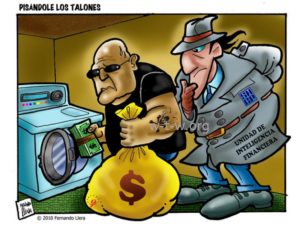
Financial crime, money laundering
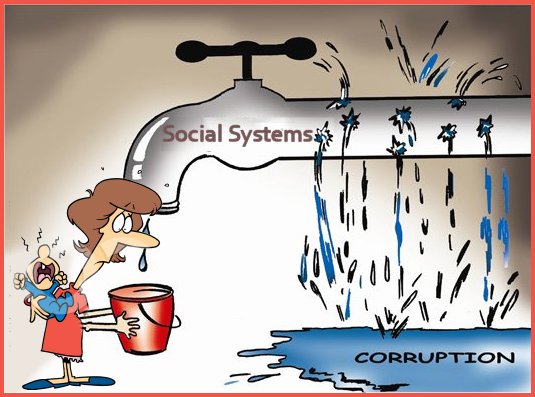
Women and children suffer disproportionately from corruption. They are, in particular, dependent on functioning social systems such as schools, hospitals, kindergartens, streets, etc. W-T-W Women and Finance attempts to explain that corruption takes many different forms, but all involve the abuse of a public or private office for the purpose of personal enrichment.


Corruption causes the welfare state to bleed dry
Money laundering volume: The UNODC (United Nations Office on Drugs and Crime) estimates the amount of money laundered worldwide to be between 800 billion and two trillion U.S. dollars annually.


Social Systems
These funds are missing from social welfare systems. Corruption and money laundering damage and destroy social welfare systems.


The third-largest source of revenue for international organized crime, after drug and arms trafficking, is the illegal timber trade, illegal fishing, and illegal waste disposal.
With catastrophic consequences for our planet.
What is the difference between money laundering (proceeds of “organized crime, OC”) and tax evasion?

What is a secret crime?
Money laundering and serious tax evasion.
Concealment.
Facilitating crimes.


Corruption is a victimless secret crime that takes place in secret. All parties involved are perpetrators, so there is no interest in uncovering the truth. From the very beginning, all perpetrators are intent on concealing their actions and the connections involved. Even after the crime is discovered, the focus remains on cover-ups and denials, as there is no direct victim involvement, as is the case with robbery or burglary, for example.
The difficulties in investigating corruption cases are easy to explain. These are secret crimes committed by a conspiracy to cover up; there are neither victims nor witnesses nor traces at the scene of the crime, and they occur at the intersection of politics and business. This results in “massive problems with the burden of proof.”
The question arises for politicians and the judiciary: “Do we want to investigate and punish, or do we not?” Has corruption already infiltrated government agencies, politics, and legal systems?

How are whistleblowers treated?

Whistleblower, Dooa EladlWhistleblowers, the press, and the public are essential to uncovering corruption. Without whistleblowers, uncovering corruption is often impossible.



To combat corruption, law enforcement agencies rely on informants who bring corrupt behavior to light in the first place. Such informants are also referred to as “whistleblowers.” Without whistleblowers, corruption could not be uncovered, as it is a secret offense known only to those involved and people in their immediate circle. By reporting misconduct within their organization, party, or company, a whistleblower often takes significant personal risks. They may be punished for breaching their duty of confidentiality regarding trade secrets and must expect to face bullying or even the loss of their job as a “traitor” or “informant.”

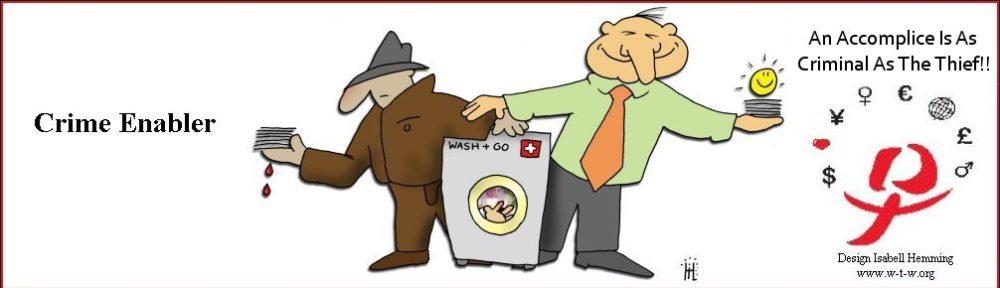
Crime Enabling

Profit is the primary motive for criminal activity worldwide. “Enabling” means facilitating—and that is precisely what financial institutions and their accomplices, among others, do: they facilitate crime.

The explosive rise in organized crime and money laundering is a consequence of globalization. Organized crime operates without borders, globally, and in networks. Law enforcement, on the other hand, still stops at national borders.

“Crime enabling” means concealing the beneficial owners and the origin of assets obtained through criminal activity. By concealing the origin and owners of the illicit funds, “crime enablers” reduce the risk of detection for the perpetrators to virtually zero. Any potential criminal prosecution is effectively nipped in the bud.

FunFinance Expert Lilah Avatar AI.
Original: — www.w-t-w.org/de/category/artikelserien/
Finanzkriminalität, Geldwäsche

Citi’s Security Unit Was Meant To Probe Misconduct

Employees say it protected the bank instead.
Internal team staffed by ex-law enforcement ‘operates as HR’s internal hit squad’, former executive says .
www.ft.com
After Ardith Lindsey told Citigroup her supervisor sent her threatening messages when she ended their relationship, she was summoned to a meeting. It was not with an HR representative or workplace psychologist. It was with a former prosecutor. Lindsey — who sued Citi over alleged sexual harassment, sexual assault and discrimination in 2023 — was called in by CSIS: Citi Security and Investigative Services, an internal unit of the Wall Street bank populated with former law enforcement officials equipped to tackle the most serious cases of wrongdoing. …
images.ft.com/

Stanford Professor Warns Banking Privileges Fuel Populism and Governance Failures

Stanford UShe traced banks’ protection to the creation of US federal deposit insurance in 1933 and criticised the expansion of safety nets that effectively bail out creditors. International banking rules, including those of the Basel Committee, she said, have been “spectacularly bad” and worsened system fragility, as seen in the 2015 Greek debt crisis.

Admati also cited the 2012 US investigation into HSBC for laundering cartel money, noting that political concerns over financial stability reduced the bank’s fine to “a few weeks of profits.” She urges us all to challenge such systemic failings.niversity professor Anat Admati has warned that the financial sector’s entrenched privileges, weak oversight, and political influence are undermining democratic governance and fuelling populism. Speaking at a political economics conference hosted by Bayes Business School, the School of Policy and Global Affairs at City St George’s, University of London, and the London School of Economics, she argued that “little has changed” since the 2008 global financial crisis.

“Banks are the most powerful lobby in Washington,” said Admati, named one of Time magazine’s 100 most influential people in 2014 for her book The Banker’s New Clothes. “Politicians keep saying banks are friends. No — the problem is bad governance and bad rules. Banks are so coddled they may not even realise it.”

Professor Admati challenged us  to speak out on issues that have such an impact on the lives of so many.

Professor Admati warns us not to coddle our banks

Cartoon: Granger Collection

Tariffs, Trade Wars, and the Price of a Toaster: How Global Spats Empty Our Wallets

There are few things more American than voting with your pocketbook. Sure, we talk about values, character, and leadership—but come election day, it often boils down to one question: Am I paying more for eggs than I was last year?

Enter the humble tariff—an ancient tool of economic warfare that’s recently been dusted off and waved around like a magic wand. The idea? Make imported goods more expensive so consumers are nudged to “Buy American.” The result? We end up paying more for the same stuff we used to grumble about being overpriced before tariffs.

Goldman Sachs economists estimate that roughly 70% of the direct cost of tariffs is eventually passed on to consumers. That’s right. You. Me. Grandma. Even that neighbor who claims they only buy “locally sourced artisanal cheese.” If that cheese arrives in a truck with tires made overseas, it’s going to cost more. And 70% is the low estimate—depending on how much domestic producers hike their prices to “stay competitive,” that figure could go even higher. It’s like a group project where no one else does the work and you’re still the one paying for the pizza.

To be fair, tariffs can be used for legitimate purposes—protecting a budding industry, leveling a playing field, or responding to unfair trade practices. But lately, they’ve been used more like emotional tweets: erratic, impulsive, and surprisingly costly.

In recent years, we’ve seen tariffs wielded as political punishment. Want to punish a foreign country for something unrelated to trade? Slap on a tariff. Want to flex some geopolitical muscle? Tariff. Want to win over Rust Belt voters without passing meaningful legislation? Tariff!

Of course, tariffs don’t exist in a vacuum. In our tightly connected global economy, they reverberate. Countries don’t just take the hit and move on—they retaliate. They impose their own tariffs. Suddenly, it’s not just imported electronics and steel that cost more. Farmers can’t sell soybeans abroad. Factories can’t get the parts they need. Meanwhile, you just want to replace your refrigerator without applying for a small loan.

And politically? It’s a gamble. Sure, a President might think looking tough on China plays well on TV, but when voters are staring down $5 strawberries and can’t afford a new washing machine, all the tough talk starts to sound a bit hollow.

The median voter—who just wants to see prices come down from their COVID-era highs—isn’t amused. Remember all those promises about inflation cooling down post-pandemic? People were expecting relief, not a continuation of the economic pressure that had them wondering if oatmeal was a viable dinner option.

And here’s where the strategy really falls apart: tariffs rarely achieve their intended goal of strengthening the domestic economy. Sure, they can offer short-term protection for select industries. But they also reduce competition, which slows innovation. They reward inefficiency. And they make everything—from phones to dish soap—more expensive for regular people. It’s a bit like setting your house on fire to keep your coffee warm.

On top of that, squabbling with trade partners in today’s digital, interconnected world is like picking a fight with your next-door neighbor when you both have security cameras, microphones, and a Twitter following. It’s messy. It’s visible. And it’s usually not worth it.

Which brings us to the current moment. As we march toward another election, tariffs have once again become a talking point. Some candidates treat them like miracle cures for economic woes—“We’ll bring back jobs! We’ll stop China! We’ll make things cheaper!” The irony is rich: tariffs usually make things more expensive. You don’t protect the working class by making their groceries cost more.

Let’s be clear: global trade is complicated. Not every policy is black-and-white. But using tariffs like fly swatters—lashing out every time the political winds change—is a dangerous game with real economic consequences.

The average voter may not care about trade policy jargon or the nuances of supply chains. But they do care about whether they can afford school supplies, groceries, and a tank of gas. They notice when the cost of everyday life creeps up—especially when no one can explain why.

So maybe it’s time for leaders to take a breath, put down the tariff stick, and remember who really pays the price. Because in the end, the great tragedy of the modern tariff isn’t just that it fails economically—it fails politically, too.

And if the only thing tariffs produce reliably is angry consumers and $40 toaster ovens, maybe we should go back to the drawing board.

Tariff War

Harm Bengen
www.w-t-w.org/en/harm-bengen
www.harmbengen.de

Leaked Letters Give Insight Into Anti-Money Laundering Gaps at Swiss Bank Reyl

This week, a new leak takes us inside Switzerland’s famously secretive financial sector.

According to leaked correspondence obtained by reporters, Swiss regulators have sounded the alarm over a range of practices at the Geneva-headquartered private bank Reyl Intesa Sanpaolo. In particular, the regulators noted a “certain carelessness” when it came to vetting clients for money laundering risks — including those linked to corrupt and autocratic regimes.

The reporting appears to have struck a nerve: On Monday, Reyl’s lawyers confirmed they had filed a complaint under Article 47 of the Swiss Banking Act, a draconian law that criminalizes disclosing information about bank customers. Yet we decided to publish our findings anyway, because we believe they are in the public interest.

In other news, Switzerland’s top court upheld a corruption conviction for Israeli mining magnate Beny Steinmetz, while France moved forward with seizing a villa that belongs to a fugitive former Moldovan politician with a fake Mexican passport.

Meanwhile, Thailand has arrested a woman accused of helping a prominent doctor run a $440-million investment scam that raised funds for non-existent medical centers.

Read on for the latest in crime and corruption.

Anti-Money Laundering Rules: What You Need to Know

May 2024, the EU Legislature adopted Directive (EU) 2024/1640 (the Sixth Anti-Money Laundering Directive, AMLD6), Regulation (EU) 2024/1624 (the Anti-Money Laundering Regulation, AMLR), Regulation (EU) 2024/1620 (the AML Authority Regulation, AMLAR). Together with Regulation (EU) 2023/1113 (the Revised TOFR), adopted on 31 May 2023, these rules complete the adoption of the revised anti-money laundering and countering the financing of terrorism (AML/CFT) package.

The AML/CFT package overhauls the regime under Directive (EU) 2015/849 (AMLD4). On the one hand, it significantly expands the regime with strengthened and new obligations across key areas such as beneficial ownership transparency, due diligence obligations and supervision. On the other hand, it further harmonises the regime through the use of Regulations, which directly apply in the Member States of the Union and the introduction of a new Europea supervisor, the AML Authority (AMLA).

europarl.europa.eu/


Prevention of Money Laundering and Terrorist Financing

FATF Plenary and Working Group Meetings 2025

February 2025
A summary of the issues discussed and decided by the Plenary in February 2025.

The supervision of anti-money laundering by the FIN-FSA follows a risk-based approach. The supervision strategy also covers the prevention of terrorist financing and compliance with financial sanctions. The objective of the strategy is to describe the most important sectors of supervised entities and their respective ways of supervision. At the same time, it is important to note that any supervised entity may become subject to any supervision measure if signs of shortcomings concerning AML obligations are detected in its activities. The strategy is in effect until further notice, and its contents will be reviewed on an annual basis…prevention-of-money-laundering-and-terrorist-financing/

https://grrrgraphics.com/

Chang Is Finally Convicted In Mozambique Hidden Debt Scandal!

A New York court found former Mozambican finance minister Manuel Chang guilty of fraud and money laundering in the $2-billion scandal.

dailymaverick.co.za reports. Former Mozambican finance minister Manuel Chang was convicted in a Brooklyn, New York court on Thursday, 8 August 2024, for his role in the $2-billion “hidden debts” fraud, bribery and money laundering scheme in his country in 2013 and 2014.

A federal jury found him guilty of one count of conspiracy to commit wire fraud and one count of conspiracy to commit money laundering. He faces a maximum penalty of 20 years in prison on each count. A federal district court judge will determine his sentence. It is not yet clear if he intends to appeal.

The jury reached its verdict after three weeks of trial and three days of deliberation.

“Today’s verdict is an inspiring victory for justice and for the people of Mozambique, who were betrayed by a corrupt high-level public official whose greed and self-interest sold out one of the poorest countries in the world,” said Breon Peace, US Attorney for the Eastern District of New York.

“Chang now stands convicted of pocketing millions in bribes to approve projects that ultimately failed, laundering the money and leaving investors and Mozambique stuck with the bill.”

Chang’s conviction has also been hailed as a victory for South African justice – but also an indictment of the executive – as it was the climax of a protracted legal process which began with his arrest at Johannesburg’s OR Tambo International Airport in December 2018 and wound through the South African courts for almost five years.

The Gauteng Division of the High Court in Johannesburg twice overturned orders by two different South African justice ministers that he should be extradited to Mozambique. But advocates representing the Mozambican NGO Fórum de Monitoria do Orçamento (FMO) – Forum for Monitoring the Budget – argued that he would very likely escape justice in Mozambique, and so in November 2021 the Johannesburg court ordered him to be extradited to the US. This decision was later confirmed by the Supreme Court of Appeal and the Constitutional Court, and Chang was finally extradited to the US in July 2023.

“While serving as finance minister of Mozambique, Manuel Chang obtained $7-million in bribe payments in exchange for signing guarantees to secure more than $2-billion in loans,” said principal deputy assistant attorney-general Nicole Argentieri, head of the US Justice Department’s criminal division. “

The loans were supposed to finance the purchase of tuna-fishing vessels and maritime patrol boats as well as maintenance facilities supplied by the Privinvest Group, a United Arab Emirates-based shipbuilding company, to three Mozambique state-owned companies, Proindicus, Ematum and MAM. But the New York court heard that Chang and his co-conspirators at Privinvest and in Credit Suisse and VTB banks, which loaned the US$2-billion, diverted more than US$200-million of the loans to pay bribes to Chang and others.

“Not only did Chang’s abuse of authority betray the trust of the Mozambican people, but his corrupt bargain also caused investors – including US investors – to suffer substantial losses on those loans,” Argentieri said. Prosecutors said investors lost money because the loans from Credit Suisse and VTB bank were sold onto investors including some Americans. It was this defrauding of US citizens which decided the US on prosecuting Chang and seeking his extradition from South Africa.

“Chang now stands convicted of pocketing millions in bribes to approve projects that ultimately failed, laundering the money and leaving investors and Mozambique stuck with the bill,” Argentieri said

The New York court heard that of the US$200-million in bribes, Privinvest paid Chang and other Mozambican government officials more than US$150-million to ensure that the Mozambican state-owned companies Proindicus, Ematum and MAM entered into the loan arrangements and that the government of Mozambique guaranteed those loans.

“The loans were subsequently sold in whole or in part to investors worldwide, including in the United States. In so doing, the participants defrauded these investors by misrepresenting how the loan proceeds would be used,” the US Justice Department said. “Ultimately, Proindicus, Ematum and MAM each defaulted on their loans and proceeded to miss more than $700-million in loan payments, causing substantial losses to investors.”

The jury convicted Chang on one count of conspiracy to commit wire fraud and one count of conspiracy to commit money laundering. He faces a maximum penalty of 20 years in prison on each count. “A federal district court judge will determine any sentence after considering the US Sentencing Guidelines and other statutory factors,” the US Justice Department said in a statement.

It also noted that in a separate case in October 2021, Credit Suisse AG and CSSEL (together, Credit Suisse) had admitted to defrauding US and international investors in the financing of an $850-million loan for the Ematum project.

“CSSEL pleaded guilty to conspiracy to commit wire fraud and Credit Suisse AG entered into a deferred prosecution agreement with the criminal division’s fraud section and money laundering and asset recovery section (MLARS), and the US Attorney’s Office for the Eastern District of New York.

“As a part of the resolution, Credit Suisse paid approximately $475-million in penalties, fines and disgorgement as part of coordinated resolutions with criminal and civil authorities in the United States and the United Kingdom.”

The case acquired the moniker of “hidden debts” because the Mozambique government concealed the US$2-billion in loans from parliament and international creditors, including the IMF, which withdrew its support when it found out.

Nicole Fritz, former head of the Southern Africa Litigation Centre and of the Helen Suzman Foundation – which joined the litigation to have Chang extradited to the US – hailed his conviction.

“The US verdict can’t stand as anything but an indictment of the SA justice system. It is true that SA ultimately extradited Mr Chang to the US, but this was only after much to-ing and fro-ing about whether to do so,” she told Daily Maverick.

“At different points, the SA government indicated that they would choose instead to extradite him to Mozambique where he would almost certainly have been guaranteed immunity. It was only the intervention of Mozambican civil society, and the solidarity of SA civil society, through the courts that ensured he was transferred to the US.

“It is worth noting that the period between his arrest in Johannesburg in 2018 and his extradition to the US in 2023 far, far exceeds the time in which it took the US to mount a jury trial and secure a conviction. “Whatever else that tells us, it should shame our criminal justice system for the endless delays we suffer in securing any relatively high-profile convictions.

“It should also be noted that while Chang’s conviction is an important outcome in the fight against impunity for political leaders in southern Africa, his conviction and corresponding actions — such as that against Credit Suisse — do much more to set to rights US investors than the primary victims of this scheme — the people of Mozambique who are made that much more impecunious by having to shoulder the repayments of this criminal, fraudulently obtained loan.

“Again, it is to SA’s discredit that we looked initially to stifle what little possibility of justice existed for the people of Mozambique by seeking to facilitate Chang’s return to Mozambique. But that is entirely in keeping with the ethos of the Zuma administration and Michael Masutha, his minister of justice.”

Mozambique NGO the Centre for Public Integrity also welcomed Chang’s conviction, noting: “ Chang becomes the first former member of the Mozambican government to be convicted abroad for corrupt practices while a member of the government.”

It noted that Chang was initially charged with three crimes, but one was dropped on the eve of the start of the trial – the charge of conspiracy to commit securities fraud.

In South Africa, the Chang extradition case became a great test of the power of justice to prevail over political interests. Two justice ministers, Michael Masutha, in then-president Jacob Zuma’s Cabinet, and then later Ronald Lamola, in President Ramaphosa’s Cabinet, ordered him to be extradited to Mozambique, largely, it seemed, because of the fraternal relations between the ANC and Mozambique’s Frelimo government.

But in 2019 Advocate Max du Plessis, appearing in the Gauteng Division of the High Court in Johannesburg case for the Helen Suzman Foundation – as a friend of the court – argued that the South African government was obliged to put law before politics, including foreign politics, by extraditing him instead to the US.

He insisted that even the most political decisions “are not immune from legal challenge. Nor does the field of international relations provide a cloak which shields such decisions from judicial scrutiny.”

He quoted Judge Kate O’Regan saying in a different case: “There is nothing in our Constitution that suggests that, in so far as it relates to the powers and obligations imposed by the Constitution upon the executive, the supremacy of the Constitution stops at the borders of South Africa.”

(Elizabeth Williams via AP)

Global Military Spending Surges Amid War

SIPRI for the media

Global military spending surges amid war, rising tensions and insecurity

Total global military expenditure reached $2443 billion in 2023, an increase of 6.8 per cent in real terms from 2022. This was the steepest year-on-year increase since 2009. The 10 largest spenders in 2023—led by the United States, China and Russia—all increased their military spending, according to new data on global military spending published today by the Stockholm International Peace Research Institute (SIPRI), available at www.sipri.org


Photo: Shutterstock