Rousseff Veers to Austerity

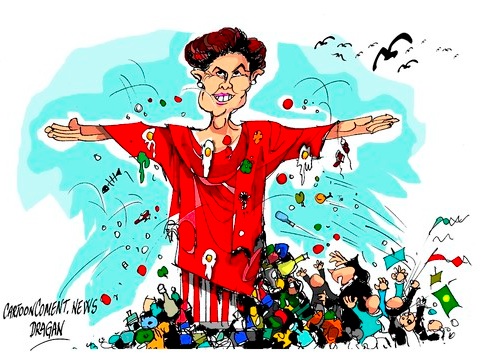
Sometimes it takes a big disappointment to cause a big change. Brazil has had two in the past year: First came the economic letdown, as the country went from being the darling of investors after the global financial crisis to slipping toward recession. Then came President Dilma Rousseff’s poor showing at the polls, barely eking out a second term as president. In the aftermath, policies are inevitably starting to shift. Brazil’s longstanding “developmentalist” approach to growth is being discarded. But what will replace it?

Starting in the 1950s, much of Brazil’s economic policy hinged on the policy mix known as developmentalism: protectionism, central planning, and the cultivation of the welfare state to encourage the growth of the internal market. In the late 1990s, the government of Fernando Henrique Cardoso moved away from this approach by privatizing state industries and beginning to open Brazil’s markets. The subsequent center-left governments of Luiz Inácio Lula da Silva and Dilma Rousseff maintained his reforms. But until recently, they also fell back on developmentalist rhetoric and a corresponding tendency to assert the state’s control of the economy.

Today, that’s looking like a step backward. Policies based on the belief that the state should boost growth through strong monetary and fiscal expansion combined with price intervention haven’t worked out for Latin America’s biggest economy, which is heading into its deepest recession in 25 years.

As an International Monetary Fund report published in May pointed out, the new economic team Rousseff chose for her second term is faced with the challenge of restoring policy credibility and bolstering confidence in executive decision-making — this in a context of weakening domestic support and a volatile external environment. Economic growth is expected to recover in the medium term, although its potential will depend on the pursuit of much-needed structural reforms, followed by critical fiscal improvements.  Rousseff Veers to Austerity
ROuseff

Can Mexico’s Floating Gardens Be Saved?

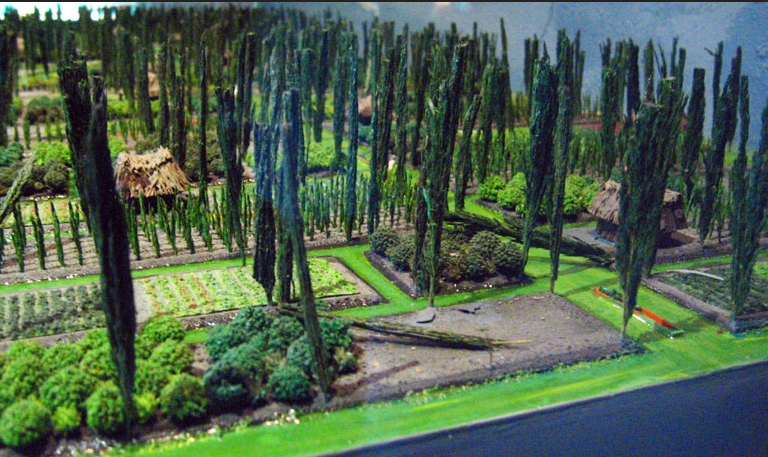
Frederic Saliba writes: The lake at Xohilmilco is the setting of chinampas, the floating vegetable gardens developed here more than 500 years ago. They are one of the last remaining features of the ancient Aztec capital of Mexico-Tenochtitlán, conquered by Spaniards in 1521.

Five centuries on, this network of waterways and artificial islands, a UNESCO World Heritage Site, is threatened by the city’s disorderly expansion and over-exploitation of its water resources. The government of Mexico City has an action plan, financed by France, to save this enormous district of the capital that is also the home of ancestral farming traditions and exceptional biodiversity.

“There is no time to lose,” says resident Claudia Zenteno, pointing with clear frustration at plastic bottles, bags and cans floating in the dark, stagnant water outside her house.

Zenteno, a 50-year-old former accountant turned environmentalist, lives by the lake, in a part removed from the piers and boat tours where the water is regularly cleaned for the 1.2 million tourists who visit every year. “We used to have a wonderful view when we arrived here in 1995,” she says. “It’s a shantytown today.”   Can Mexico’s Floating Gardens Survive

Mexico's Floating Gardens

Chinese Currency On the Rise?

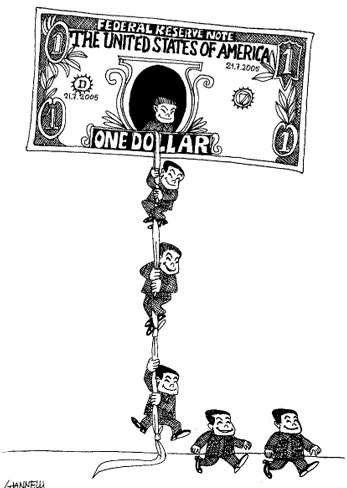
Stephen Greenville writes: The renminbi is still some distance from being an ‘international currency’, but it is moving fast in that direction, passing some important waypoints over recent months.

It’s not exactly clear what being an ‘international currency’ means, but one aspect is whether the currency is included in the IMF’s notional currency, the Special Drawing Rights.  China is pushing strongly on this. Central bank governor Zhou Xiaochuan made the case at the recent IMF meeting. Since then capital controls have been eased further, especially for outgoing capital flows, but Governor Zhou notes the lessons of the 1997-98 Asian crisis – that completely unregulated capital flows, with their surges and ‘sudden stops’, have caused great disruption. China intends to retain enough controls to avoid these pitfalls.

In practical terms, being included in the SDR basket is no big deal, but there would be considerable prestige involved, symbolising China’s arrival at the epicentre of international transactions (the SDR currently includes just four currencies: the US dollar, the euro, the UK pound and the Japanese yen). The US is looking for more reform before the renminbi is included.

The pressure to have the renminbi included will continue when the ‘SDR basket’ comes up for its regular five-yearly reappraisal at the end of this year. The present focus is on capital account openness, but this is not the only criterion. The currency must also be ‘freely available’, which for China might mean a much deeper domestic bond market with greater foreign participation, as suggested here.

The IMF has also changed its tune on whether the renminbi is undervalued (‘manipulated’), giving China extra international competitiveness. Again, the US is resisting this assessment, with the US Treasury maintaining that the strengthening has not been ‘as fast or as much as is needed’.

This debate, however, has lost its fervour. The Chinese current account surplus is now 2% rather than the 10% recorded in 2007; foreign exchange reserves are no longer growing; and the yuan has appreciated by 30% over the past decade. More recently it has maintained its value against an appreciating US dollar, which means it has lost competitiveness against just about everyone else.

Even one-time renminbi warrior Ted Truman (a long-serving senior official at the US Treasury and the Federal Reserve) not only accepts that the renminbi is no longer ‘manipulated’, but also that if the US pushes too dogmatically on this issue (as is being done by his colleague at the Peterson Institute, Fred Bergsten), the US might have to acknowledge that its quantitative easing policies have also had the effect of enhancing US international competitiveness.  Chinese Currency

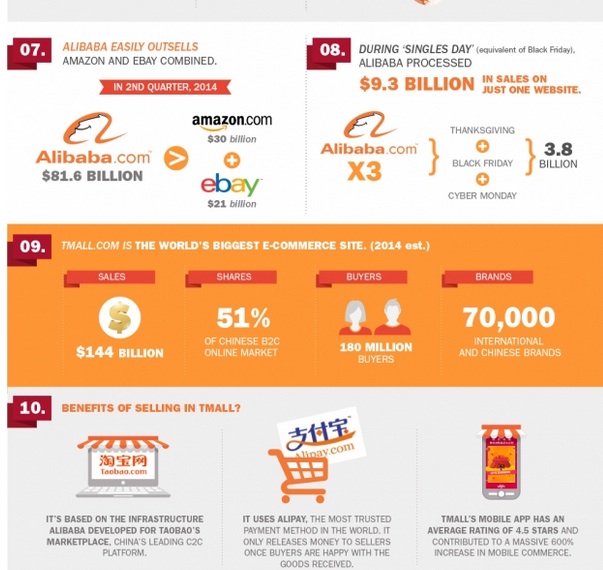
E-Commerce in China

Jack Ma founded Alibaba with 18 other people in 1999. Mr. Ma was an English teacher prior to forming Alibaba.

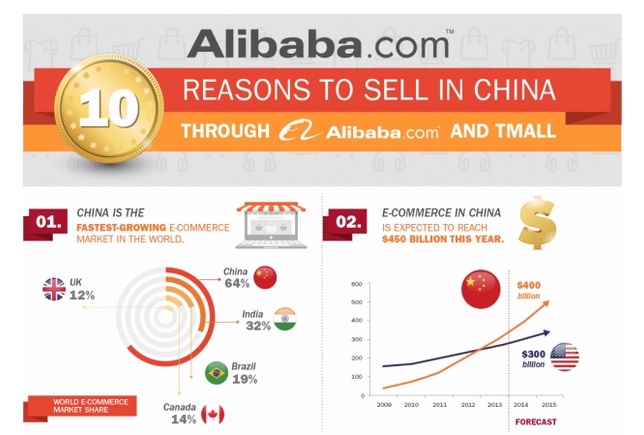
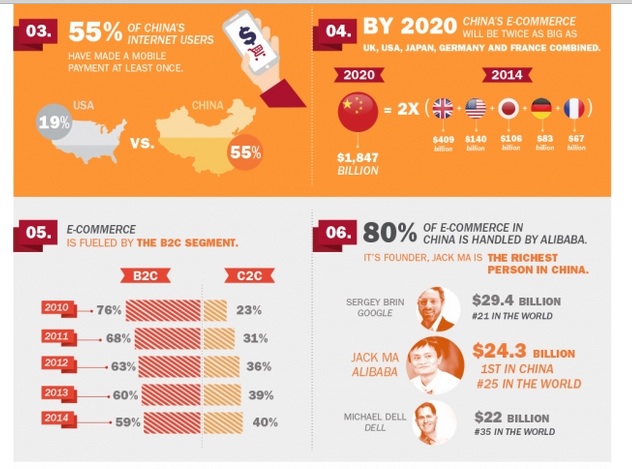
His goal was to help small businesses use technology to sell more effectively in the domestic Chinese market and internationally. From these humble beginnings and with such a clear, precise goal, Alibaba has grown exponentially. And today, Alibaba handles 80% of the e-commerce in China.

E commerce 1e commerce 2E commerce 3

Entrepreneur Alert: Women Discover Scarves

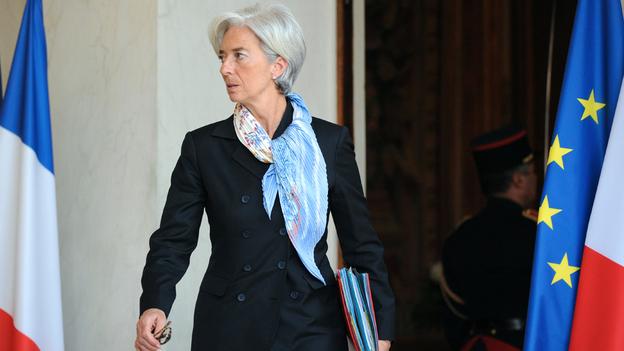
Nancy Diehl writes:  When International Monetary Fund managing director Christine Lagarde goes to the G8 summit in June, she may well be wearing a scarf – a fashion accessory that she’s become known for, and one that’s been drawing more and more attention.

In fact, the BBC recently identified scarves as a “new power symbol” for women.

True, just as some men choose amusing ties to enliven monochrome suits, many women who work in an atmosphere that requires conservative business apparel will wear scarves to add a fillip of colour and distinction.

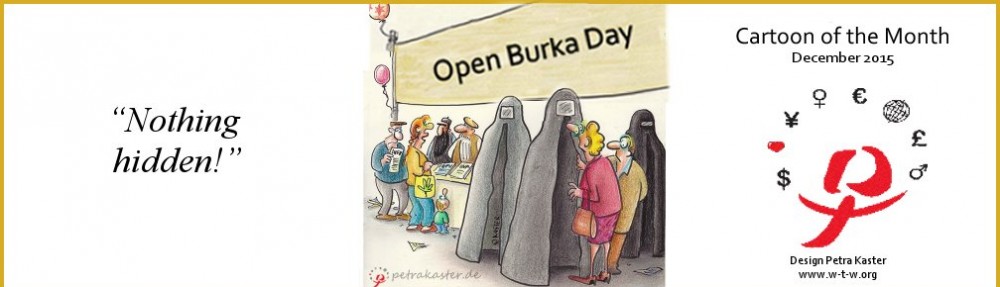
The scarf is the most simple form of adornment: a single piece of cloth. For this reason, it’s one of the most versatile clothing accessories, used for centuries across a variety of cultures, for a range of purposes.

Many Muslim women wear headscarves for modesty, while women of a certain age favour scarves with a triangular fold to protect expensive or elaborate coifs.

The British firm Jacqmar produced designs with propaganda-themed slogans. One design mimicked a wall with posters urging citizens to “Lend to Defend” and “Save for Victory”.

But in Western culture, the scarf is most prominently known for its use as a fashion accessory, one that first gained widespread popularity in the 19th century.

The fichu is a typical 18th- and 19th-century style that can be seen as the forerunner of modern scarves. A piece of fabric worn draped on the upper chest and usually knotted in front, it provided modest covering but was also an opportunity to add an especially fine textile – sometimes lace edged or embroidered – to an ensemble.

Lightweight, finely woven silk and cashmere shawls from India were one of the first fashionable scarf styles. Empress Joséphine – the first wife of Napoleon – had an extensive collection (thanks to her husband’s travels), and the style persisted through much of the 19th century, spawning cheaper imitations fabricated in other parts of Europe, notably France and Paisley, Scotland.

Certain labels are particularly associated with high style in scarves. Ferragamo, Fendi and Gucci – all originally esteemed leather goods houses – now produce desirable scarves.

But for prestige and polish, Hermès represents the pinnacle of scarf culture.

Limiting the number of designs they offer each season has maintained Hermès’s mystique. The company’s focus on craftsmanship helps justify their reputation and high prices; Hermès takes pride in the impressive number of colours in each design, the hand-printing process and the fineness of their silk, positioning their output as artisanal creations.

In contemporary fashion, scarves continue to serve the same functions as those earlier fine linen fichus and paisley shawls; they denote connoisseurship and sophistication.

French Economy, Industry and Employment minister Christine Lagarde leaves the Elysee Palace on April 21, 2010 following the weekly cabinet meeting in Paris.     AFP PHOTO / LIONEL BONAVENTURE (Photo credit should read LIONEL BONAVENTURE/AFP/Getty Images)

Tsipras: For Whom the Bell Tolls…

Greek Prime Minister Tsipras writes in Le Monde (translation by w-t-w.org):  The Greek people made a courageous decision. They dared to challenge the one-way street from the rigorous austerity of the Memorandum, in order to claim a new agreement. The Greek people paid a high price for these mistakes. In five years, unemployment has soared to 28% (60% for young people), and average income fell by 40%, while Greece, according to Eurostat statistics, has become the State of the Union European (EU) having the highest social inequality index.
Worse, despite the blows that have been brought to the social fabric, the program failed to restore the Greek economy’s competitiveness. Public debt has soared by 124% to 180% of GDP. The Greek economy, despite the great sacrifices of his people, is still trapped in a climate of uncertainty caused by ongoing non attainable goals of the doctrine of the financial equilibrium, which obligate to stay in a vicious circle of austerity and recession.

The main aim of the Greek government in the last four months is to end this vicious circle and to this uncertainty. A mutually beneficial agreement that will set realistic targets in relation to surplus while reintroducing the development agenda and investment – a definitive solution to the Greek case – is now more necessary than ever. Moreover, such an agreement will mark the end of European economic crisis that erupted there seven years, ending the cycle of uncertainty for the euro area.

Today, Europe is able to take decisions that will trigger a strong recovery of the Greek and European economy by ending scenarios of a “Grexit” (Greek exit). These scenarios prevent the long-term stabilization of the European economy and are likely to undermine confidence at any time both citizens and investors in our common currency.
However, some argue that the Greek side does nothing to move in this direction because it comes to negotiations with intransigence and without proposals. Is that the case?

Tsipras continues in this vein and ends with the caution from John Donne as quoted by Ernest Heminway:  For whom the bell tolls, but does not get to: “If a clod be washed away by the sea, Europe is the less.”

Picture 230

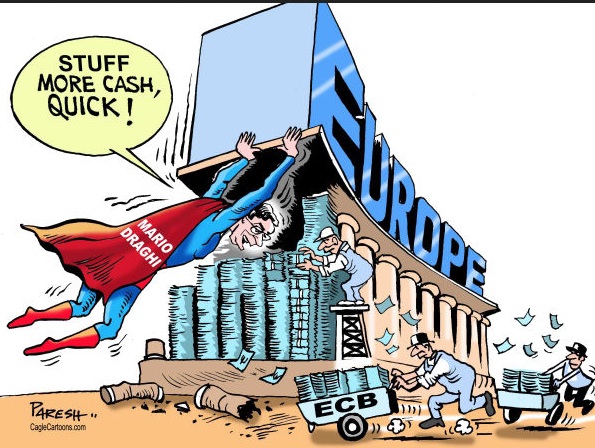
ECB Focus: Jobs and Growth

Jean Pisani Ferry writes:  The topics chosen by the European Central Bank for its annual forum in Sintra, Portugal, at the end of May were not deflation, quantitative easing, or financial stability. They were unemployment, productivity, and pro-growth reforms.  The eurozone lacks both growth momentum and resilience to adverse shocks.

The European Commission now expects growth in the eurozone to reach 1.5% in 2015 and 1.9% in 2016. That certainly looks good in comparison to the near-stagnation of recent years. But, given the combination of massive monetary support, a now-neutral fiscal stance, a steep fall in oil prices, and a depreciated euro, it is the least we could expect, and it will bring per capita GDP back only to its 2008 level. The fact that leaders and pundits are hailing this brighter outlook indicates just how diminished our expectations have become.

Until recently, fiscal austerity and the euro crisis could be blamed for poor economic performance. Not anymore. Although growth may exceed the Commission’s forecast, there are reasons to be concerned about the eurozone’s growth potential.

In order to strengthen that potential, central bankers can only advocate economic reforms; it is governments that are responsible for adopting them. And critics point out that repeated exhortations could prove counterproductive. After all, central banks are quick to rebut monetary-policy suggestions from governments in the name of independence. Why should governments behave differently?  Jobs and Growth in the EU

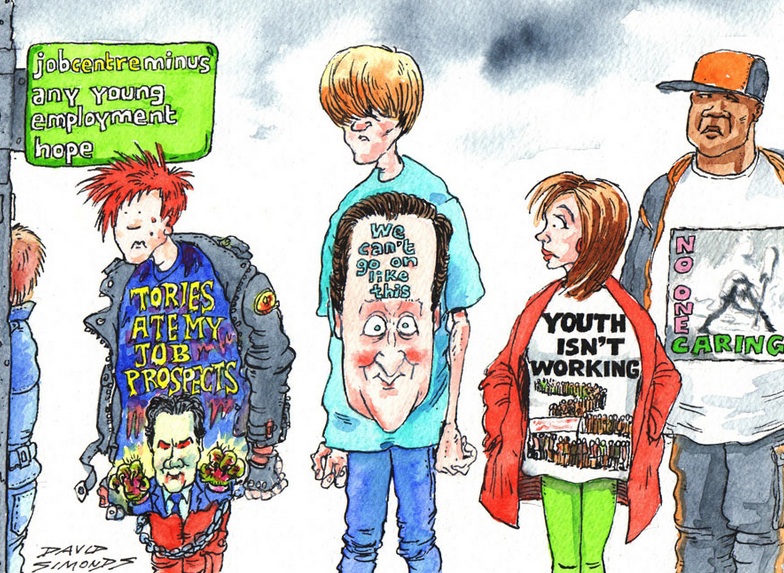
Jobs

ECB: Jobs and Growth

Nouriel Roubini writes:  A paradox has emerged in the financial markets of the advanced economies since the 2008 global financial crisis. Unconventional monetary policies have created a massive overhang of liquidity. But a series of recent shocks suggests that macro liquidity has become linked with severe market illiquidity.

Policy interest rates are near zero (and sometimes below it) in most advanced economies, and the monetary base (money created by central banks in the form of cash and liquid commercial-bank reserves) has soared – doubling, tripling, and, in the United States, quadrupling relative to the pre-crisis period. This has kept short- and long-term interest rates low (and even negative in some cases, such as Europe and Japan), reduced the volatility of bond markets, and lifted many asset prices (including equities, real estate, and fixed-income private- and public-sector bonds).

And yet investors have reason to be concerned. Their fears started with the “flash crash” of May 2010, when, in a matter of 30 minutes, major US stock indices fell by almost 10%, before recovering rapidly. Then came the “taper tantrum” in the spring of 2013, when US long-term interest rates shot up by 100 basis points after then-Fed Chairman Ben Bernanke hinted at an end to the Fed’s monthly purchases of long-term securities.  Unconventional Monetary Policy

ECB Issues?

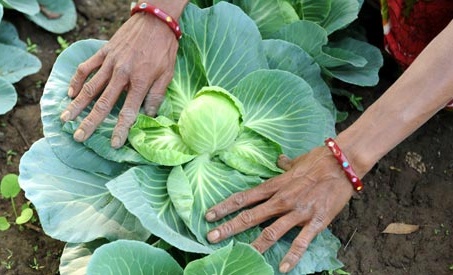
Entrepreneur Alert: Organic Farming, the Future?

Ankita Rao writes:  With the introduction of chemicals such as urea, phosphate and pesticides as well as new farming technologies and irrigation systems, this fertile northern Indian state quickly became the seat of the country’s agricultural revolution in the 1970s and 1980s. And farmers like Singh, now a vibrant 69-year-old with a snow white beard, started to see their harvests multiply.

But alongside this burst of prosperity came the harrowing side effects of pouring chemicals into the ground: People’s health deteriorated rapidly, as did water and soil quality, and neither the government nor consumers took action. In the past decade, however, farmers like Singh have taken matters into their own hands and returned to the chemical-free, organic farming practices they used before fertilizers showed up.

Punjab now has approximately 1,500 hectares of certified organic land, and India has emerged as a global leader in organic farming, with 600,000 certified producers. The countries with the second- and third-largest outputs are Uganda and Mexico,
Motivated by growing international demand, the Indian government has encouraged the shift toward organic.

At the beginning of 2013 the government launched a nationwide organic certification program to help India increase its organic exports. During the year, organic exports rose 7.73 percent, and the country produced 1.24 million metric tons of organic produce.

While government interest in organic is largely market driven, for independent farmers in Punjab, the choice is about more than the economics; it’s about grappling with the legacy of the Green Revolution, an agricultural overhaul that began in the 1940s and reached the state more than 50 years ago.

India’s Green Revolution began in 1967, when then–Prime Minister Indira Gandhi took 18,000 tons of hybrid Mexican wheat seeds to Punjab. At the time, starvation plagued much of the country, and the introduction of high-yield seeds and chemical fertilizers resulted in a massive increase in the production of wheat, rice and pulse. India produced 50.8 million tons of food grain in 1950; by 1990, that output jumped to 176.3 million tons, creating a surplus.

But the Green Revolution also brought a host of problems. Rice fields, introduced in Punjab during the overhaul, required heavy irrigation and threatened the state’s water supply. Farmers poured dangerously high levels of government-subsidized phosphate and urea into the soil and water to grow more food.

Punjab’s public health crisis became public knowledge in the 1990s after the discovery of toxic chemicals in the state’s soil and waterways. The region now has the highest cancer rate in the country, and J.S. Thakur, a researcher at the Post Graduate Institute of Medical Education and Research in Chandigahrh, has linked these chemicals to premature aging, skeletal issues and threats to children’s health. Organic farming may be a requirement now.

Healthy and Beautiful like a Georgia O'Keefe

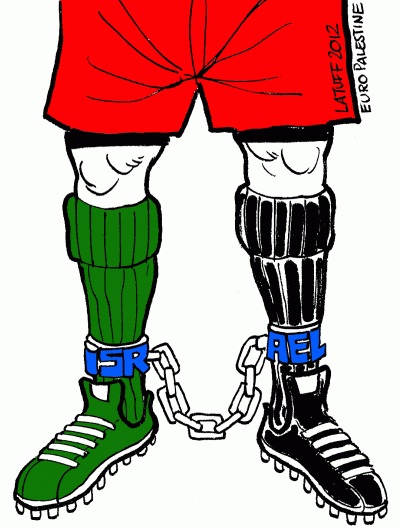
Leveling the Playing Field in Soccer

The U.S. investigation of corruption in soccer’s governing body is moving to a new phase that will bring criminal charges against more people.

How the case develops hinges in part on the fate of nine FIFA officials and five sports marketing executives charged in a racketeering and bribery indictment unsealed May 27, said Richard Weber, chief of the IRS Criminal Investigation Division. The prosecution, which has garnered worldwide attention, came two days before FIFA re-elected its embattled president, Sepp Blatter, 79, for another four-year term

The IRS joined the Federal Bureau of Investigation and U.S. prosecutors in Brooklyn, New York, in building a case alleging sports-marketing executives paid more than $150 million in bribes and kickbacks over 24 years for media and marketing rights to soccer tournaments.

Prosecutors charged Jeffrey Webb and Jack Warner, the current and former presidents of soccer’s governing body for North America, Central America and the Caribbean, or Concacaf. They secured guilty pleas from Charles Blazer, 70, the group’s former general secretary; Jose Hawilla, a Brazilian sports marketing executive, who agreed to forfeit $151 million; and Warner’s two sons, Daryll and Daryan.

Blazer admitted he participated in several bribery schemes involving soccer tournaments, including the World Cups in 1998 and 2010, according to court records. He took a $750,000 cut of a $10 million bribe to support South Africa’s host bid for the 2010 World Cup, according to the criminal charges he admitted.

The IRS entered the case in 2011 when a Los Angeles-based agent, Steven Berryman, began a tax investigation of Blazer, Weber said. Blazer lived in a Trump Tower apartment, flew on private jets, dined at the world’s finest restaurants and hobnobbed with celebrities and world leaders.

His blog, “Travels with Chuck Blazer and his Friends,” featured pictures of Blazer with Hillary Clinton, Nelson Mandela and Prince William, among others. Blazer, now fighting cancer, drew the IRS into FIFA, Weber said. In late 2011, the IRS joined the FBI, which was separately probing FIFA.

Weber said that investigators traced financial records from 33 nations and obtained most of them through treaty requests.

HSBC, Barclays, Standard Chartered are studying transactions to ensure proper procedures took place.

“When you’re talking about a $150 million-plus racketeering and money-laundering case, where you have to trace the bribe and kickback case through multiple accounts and intermediaries and offshore corporations and official ownership, it’s a maze of documents and a significant jigsaw puzzle that has to be put together,” Weber said.

“When you’re dealing with so many countries and so many different players, it is reasonable to spend a few years on a case like this,” he said.

The case is U.S. v. Webb, 15-cr-00252, U.S. District Court, Eastern District of New York (Brooklyn).
FIFA Indictments