Cutting Rates?

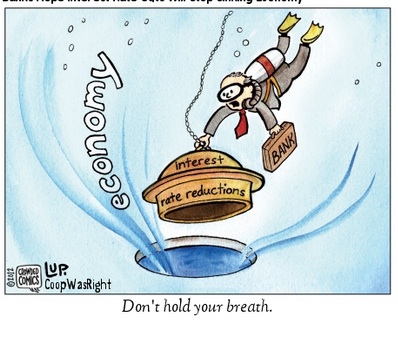
Charles Duxbury writes:   A flickering revival in the Swedish inflation rate fizzled out in April, piling pressure on the central bank to cut interest rates to new record lows.

The Swedish statistics agency said the consumer price index fell 0.2% compared with April last year. That was below the 0.1% rise forecast of analysts.

The Swedish krona dived against the euro, which rose to 9.31 kronor from 9.25 kronor.

The central bank stands ready to act, even between scheduled meetings, to make monetary policy still more expansionary if the inflation outlook warrants it.

The Swedish central bank, the world’s oldest, already has a benchmark interest rate of minus 0.25% and has launched a bond-buying program.

The ECB bond-buying program is good for Sweden’s already fairly bright growth prospects in that it is helping the eurozone, a vital market for Swedish goods, to recover from a drawn-out downturn. But the program has also pushed down the value of the euro against the likes of the Swedish krona, making goods entering Sweden cheaper and choking off a vital source of inflation.

Rebecca Howard and Lucy Cramer writeL  New Zealand’s central bank is now set to cut interest rates due to weak inflation and tough times for dairy farmers, with some economists calling for a reduction as early as June.

The view marks a dramatic shift: as recently as late April the majority of economists predicted the Kiwi central bank would remain on hold at 3.5% for the foreseeable future, making it something of an outlier in a region where interest rates have been coming down.y.

Annual inflation rose just 0.1% in the three months ended Mar. 31 and the central bank forecasts it won’t move toward the middle of the range until September 2016.  Recent numbers, including weak first-quarter wage inflation data and softer-than-expected retail card spending, has added to view rate cuts might be coming.

Do we need a new approach to economic analysis?
Rate Cuts?

Will Big Banks Plea to Crimes?

Hugh Son, Dakin Campbell, Greg Farrell and Tom Schoenberg write The U.S. Justice Department is seeking criminal guilty pleas from the parent companies of banks that are poised to admit to rigging foreign-exchange markets, said people briefed on the negotiations.Four global banks — Citigroup Inc., JPMorgan Chase & Co., Barclays Plc and Royal Bank of Scotland Group Plc — plan to plead guilty in coming days to antitrust violations related to manipulating currency rates, people familiar with the matter have said. Some of the pleas will be made by the banks’ holding companies instead of individual units, two people said on Tuesday.At least two of the banks sought to make their pleas from overseas subsidiaries, only to have the Justice Department counter that the admissions should come from their main banking units, according to a person briefed on the talks. They are discussing a compromise in which the holding companies would make the pleas, and that would be consistent with other banks, the person said.

 UBS Group AG, the fifth bank that these people have said will reach a settlement, will take a different path: The Justice Department is poised to tear up an earlier agreement not to prosecute UBS in connection with interest-rate manipulation, according to a person familiar with the talks.  US Justice Dept. to Press Charges against Big Banks

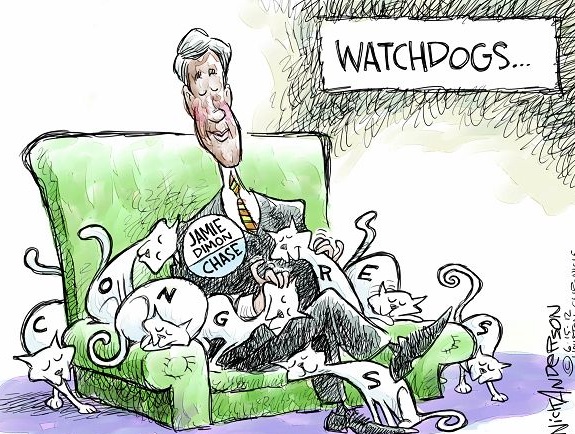
Jamie Dimon, Chase

US and Gulf States Confer

Shawn Brimley, Ilan Goldenberg and Nicholas Heras write:  As President Barack Obama and the leaders of the Gulf Cooperation Council (GCC) sit down at Camp David this week, the White House’s goal is clear: reassure America’s Middle Eastern partners that it remains committed to their security. But the summit is clearly not off to a good start, with only two of the six GCC monarchs planning to attend — and King Salman of Saudi Arabia waiting until the last moment to announce he is not coming.

According to media reports, the Obama administration is preparing to assuage skepticism toward the potential nuclear agreement with Iran by focusing on new security arrangements and billions of dollars in weapons that the United States may offer to sell to the Gulf states. Arms sales and security guarantees may be a piece of the equation — but they won’t be enough. The most effective way for the Obama administration to make headway with the Gulf is by signaling a more comprehensive approach to countering Iranian influence in the Middle East.

What the Gulf states fear most is that in the aftermath of a nuclear agreement, the United States will cut a deal with Tehran to divide the region and abandon its Arab partners. Saudi Arabia has been the most vocal in expressing concerns that the United States is so interested in achieving an agreement on the nuclear question that it is willing to tolerate Iran’s unchecked influence throughout the region. To many of America’s partners, Iranian nuclear ambitions are inextricably linked to Tehran’s aggressive support of its proxies through the Islamic Revolutionary Guards Corps (IRGC), which provides training, funding, and support for Hezbollah, Iraqi Shiite militias, the Houthis in Yemen, and Palestinian Islamic Jihad, among other groups.

In the end, it will not be possible for President Obama to fully reassure America’s regional allies in the aftermath of a nuclear deal with Iran. Their concerns about a “Persian pivot” will remain, and their distrust of the president will make U.S. relations with the Gulf states difficult. But if Obama is able to begin to implement an effective reassurance strategy, he can hand off a better situation to his successor — who will have to do the bulk of the work in repairing some of America’s relations with the Gulf states in the aftermath of a nuclear deal with Iran.  US and Gulf States Confer May 2015

Turkey Plays the Gas Card

Keith Johnson writes:  During a four-hour helicopter ride over the Black Sea and the Sea of Marmara in early February, Turkish Energy Minister Taner Yildiz and Russia’s Gazprom boss, Alexey Miller, mapped out plans that could potentially rebuild the long-adversarial relationship between their two countries.

But Yildiz and Miller also traced what could be the newest fault line in Europe’s geopolitical landscape. That helicopter ride, and the subsequent formal agreement signed in early May, suggest Turkey’s patience with Brussels is wearing thin—the EU, after all, has been slow-footing the country’s membership for decades now—and Ankara’s willingness to support Europe’s foreign-policy priorities, from diversifying energy resources to isolating Russia, is diminishing. Now, this one pipeline, which could deliver gas as early as next year, could have the power to embolden Russian President Vladimir Putin, endanger a critical alliance the West has spent decades cultivating, and upend Eurasia’s entire energy and security landscape.

Turkey would become a middleman for Europe’s energy buyers, and it would be precisely the linchpin Moscow needs to keep an energy hold on the continent.   Turkey Plays the Gas Game

Global Migration?

Kenneth Rogoff writes:  Europe’s migration crisis exposes a fundamental flaw, if not towering hypocrisy, in the ongoing debate about economic inequality. Wouldn’t a true progressive support equal opportunity for all people on the planet, rather than just for those of us lucky enough to have been born and raised in rich countries?

Many thought leaders in advanced economies advocate an entitlement mentality. But the entitlement stops at the border: though they regard greater redistribution within individual countries as an absolute imperative, people who live in emerging markets or developing countries are left out.

If current concerns about inequality were cast entirely in political terms, this inward-looking focus would be understandable; after all, citizens of poor countries cannot vote in rich ones. But the rhetoric of the inequality debate in rich countries betrays a moral certitude that conveniently ignores the billions of people elsewhere who are far worse off.

One must not forget that even after a period of stagnation, the middle class in rich countries remains an upper class from a global perspective.

Nor will it do to appeal to moral superiority to justify why someone born in the West enjoys so many advantages. Yes, sound political and social institutions are the bedrock of sustained economic growth; indeed, they are the sine qua non of all cases of successful development. But Europe’s long history of exploitative colonialism makes it hard to guess how Asian and African institutions would have evolved in a parallel universe where Europeans came only to trade, not to conquer.

Many broad policy issues are distorted when viewed through a lens that focuses only on domestic inequality and ignores global inequality. Thomas Piketty’s Marxian claim that capitalism is failing because domestic inequality is rising has it exactly backwards.

By many measures, global inequality has been reduced significantly over the past three decades, implying that capitalism has succeeded spectacularly.

Allowing freer flows of people across borders would equalize opportunities even faster than trade, but resistance is fierce.

As the world becomes richer, inequality inevitably will loom as a much larger issue relative to poverty, a point I first argued more than a decade ago. Regrettably, however, the inequality debate has focused so intensely on domestic inequality that the far larger issue of global inequality has been overshadowed. That is a pity, because there are many ways rich countries can make a difference. They can provide free online medical and education support, more development aid, debt write-downs, market access, and greater contributions to global security. The arrival of desperate boat people on Europe’s shores is a symptom of their failure to do so.  Global Migration

Global Migration

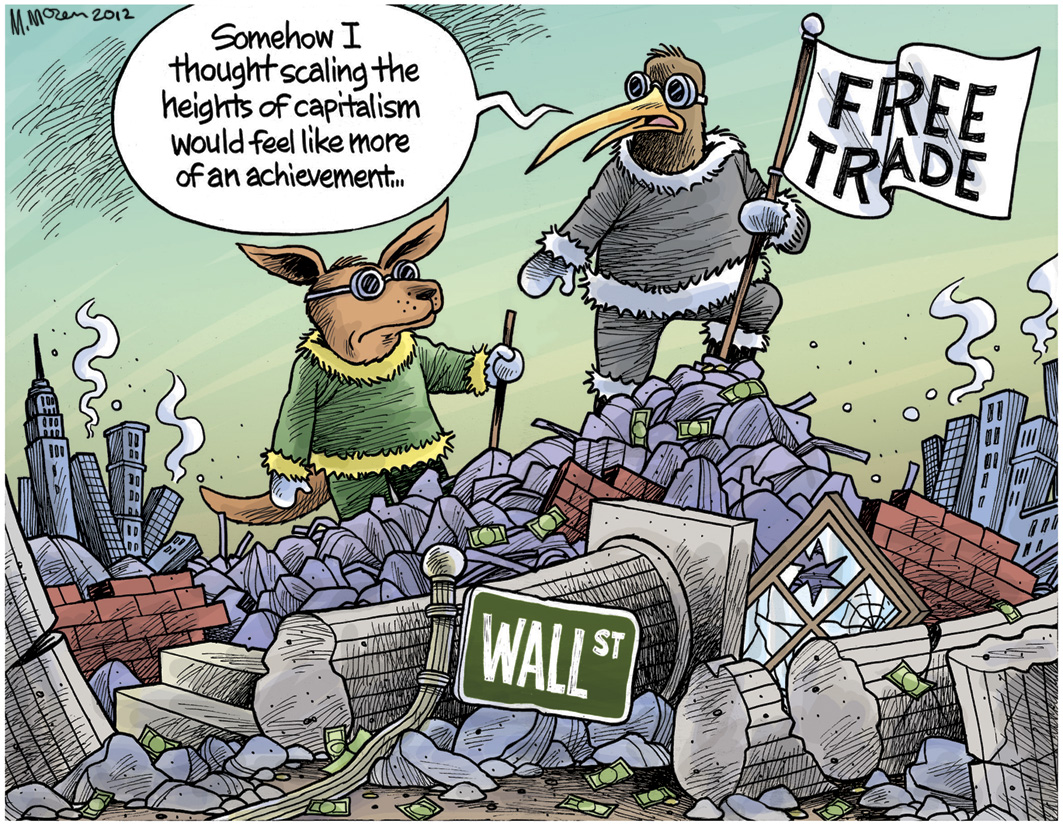
Trade and Jobs

Jeffrey Frankel writes:  Previous trade agreements have  benefited the US (and its partners). The most straightforward argument for TPP is that similar economic benefits are likely to follow.

The economic arguments for the gains from trade go back to David Ricardo’s classic theory of comparative advantage. Countries benefit most from producing and exporting what they are relatively best at producing and exporting, and from importing what other countries are relatively better at producing.

Trade boosts productivity, which is why exporters pay higher wages than other companies, on average – an estimated 18% higher in the case of US manufacturing. And the purchasing power of income is enhanced by households’ opportunity to consume lower-priced imported goods. The cost savings are especially large for food and clothing, purchases that account for a higher proportion of lower-income and middle-class households’ spending.

American trade debates have long been framed by the question of whether a policy will increase or reduce the number of jobs. This concern is a first cousin to the old mercantilist focus on whether a policy will improve or worsen the trade balance. A “mercantilist” could be defined as someone who believes that gains go only to the country that enjoys a higher trade surplus, mirrored by losses for the trading partner that runs a correspondingly higher deficit.

Even by this sort of reasoning, one could make an “American” case for the ongoing trade negotiations. The US market is already rather open; TPP participants such as Vietnam, Malaysia, and Japan have higher tariff and non-tariff barriers against some products that the US would like to be able to sell them than the US does against their goods. Liberalization would thus benefit US exports to Asia more than Asian exports to the US.  The Essence of Trade

Trade

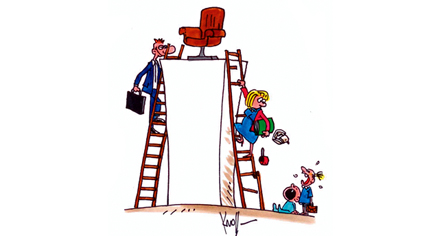
How to Achieve Gender Equity in Pay

Jena McGregor writes:  Salesforce.com CEO Marc Benioff is tackling yet another social issue: the gender pay gap.  Benioff says he’s methodically combing through the pay of all 16,000 employees of his cloud-based software company to make sure his male and female employees are compensated fairly.

He’s already given some women raises after finding differences in their pay, and he expects to hand out more.  Benioff’s move has been called a “radical step” and a “brilliantly simple” way to close the gap. Yet research has also shown that it’s likely quite effective at improving the overall ranks of women at the company, too — perhaps even more so than traditional benefits designed to attract and retain women.

In a study released in November, the consulting firm Mercer asked 164 companies about their benefits and human resources tactics. One of the big findings from its results was that companies with flexible work policies or maternity leave benefits were actually linked with a slower promotion of women into top ranks. The explanation: Such benefits can lead to a check-the-box mentality, in which companies think they’ve done enough to help women along.

Two variables appear to have a positive impact on both current and future gender diversity. One was the involvement of company leaders and men in diversity programs; the other was having a team responsible for pay equity and a process that statistically examines any wage gaps
they discover.

Benioff’s pay initiative is reportedly part of a program called Women’s Surge, designed to help improve the ranks of women at the company, where 85 percent of leaders and 71 percent of the overall workforce are men. The program includes efforts to ensure that women make up at least 30 percent of all meetings and that female  candidates are evaluated for new hires and promotions. A team at Salesforce is also using its own analytics software to examine the salary data, determine whether there is a gap
and surface the factors influencing it, according to Business Insider.

Salesforce isn’t alone in methodically reviewing the company’s potential gender pay gap. Mercer’s study found that 52 percent of the 164 companies that responded said they have a dedicated team for analyzing any salary differences between men and women.

Still, the combined punch — having not only a rigorous process for analyzing gender pay data, but an involved CEO who is willing to talk openly about the issue — could end up being very powerful.

Benioff’s public leadership on this from the CEO perch sets the highest bar yet for more companies to reach.

Gender Equity in Pay

Entpreneur Alert: Women Vinters or Just Vinters?

Reporting by Lettie Teague:  This spring, half the graduates of the University of California’s prestigious viticulture school were women up from a third in 1999.

Women have been successful in their own wine businesses in Napa and Sonoma Counties.  Godmother of them all is Merry Edwards, who started in Mount Eden Vineyards in 1974 and was a founder of Mantanzas Creek WInery in Sonoma in 1977.  Edwards turned out terrific Sauvignon Blancs and Merlots.  When she started her own winery shre produced polished Pinot Noirs.

After 40 years in the business, she laughs when people say, “Wow, women can do this.”  Women come to her for inspiration, but her advice is similar to others who talk to women starting up. “Weak women aren’t going to make it anywhere.”

She helped start a day-care center at Mantazas Creek.  Male wine makers had often told her they didn’t know how to deal with women.  That’s why many women have struck out on their own.

Jennifer Porembski remarked that the work was physical:  Rolling barrels and pulling hoses. Part of a job interview can be a demonstration of hoisting barrels.  There’s also tedium and it’s hot and dusty.

Yet a woman was Napa Valley’s Grape Grower of the Year in 2014.

Some vinters remarked that the difference between men and women in the field was only in the minds of journalists.  One recalled being asked how women liked growing masculine grapes like Syrah.

Many women vinters in Sonoma and Napa Counties felt that the field was wide open for women.  And men too.

 Vinters


Drop Dead Date for Greece?

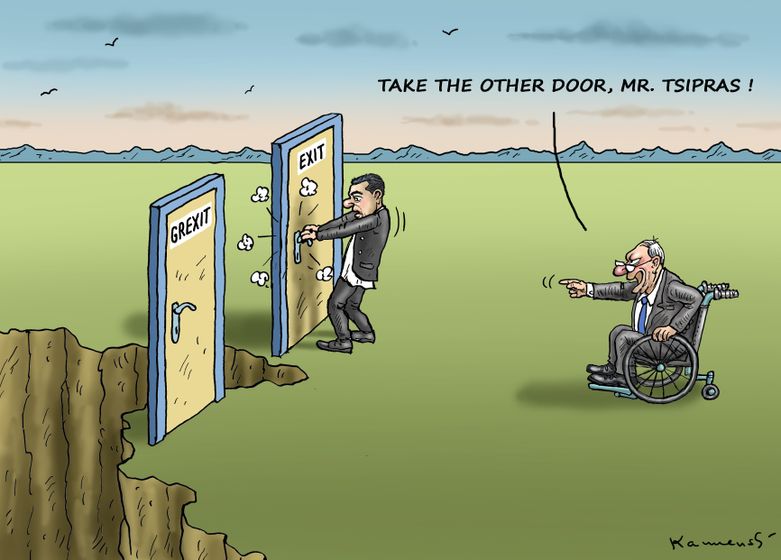
Peter SIegel writes:  Unless Greece and its international creditors agree a deal soon to close out the country’s €172bn bailout, and then quickly agree another rescue, Athens is likely to run out of money and default on its debts. That would push it perilously close to crashing out of the eurozone.

Will Athens bow to pressure and accept tough new economic reforms to release the remaining €7.2bn in the programme and refill its dwindling coffers? Or will Greece’s increasingly divided creditors succumb to fears over “Grexit” and give Athens a pass?

All 19 eurozone finance ministers are due to gather in Brussels next week for their monthly eurogroup meeting, where bailout deals are normally brokered. The next day, Greece is due to make a €750m

Greece appears to have once again scraped together enough cash to stave off the day of reckoning.

Athens hopes the European Central Bank will be persuaded to increase its cap on the amount of short-term debt the government could issue — a key relief valve that would have eased, at least temporarily, the government’s cash crunch. But no such relief is now expected. The current bailout ends in June and officials are starting to examine the calendar to figure out the drop-dead moment a deal must be reached to have enough time to clear all the prerequisites for a payment to reach Athens by June 30.

Most officials believe the last week of May would be the best-case scenario, leaving a full month for eurozone parliaments to approve the deal and for Greece to pass and implement new laws.

Can a deal be reached by then? The differences over the main stumbling points — pension cuts, labour market liberalisation, value added tax increases — remain just as wide as they were when the stand-off began three months ago.

The dark cloud looming over the current negotiations is that even if a deal is reached, the most difficult task still lies ahead: agreeing yet another bailout.

The €7.2bn remaining in the current rescue programme is intended to refill Athens’ empty coffers, pay off arrears, and ensure all debts due through June are met.

Unless the eurozone wants to play with the same fire that nearly caused a full-scale Greek bank run in February — the last time Greece was nearly left without the cover of an EU bailout — a new rescue must also be agreed by the end of June. Two deals in seven weeks. The make-or-break moment may be here.

Grexit

Should Banks Create Money?

Frosti Sigurjonsson, Member of the Parliament of Iceland and Chairman of the Committee for Economic Affairs and Trade, today published a report outlining the need for a fundamental reform of Iceland’s monetary system.  The report, commissioned by the Prime Minister, considers the extent to which Iceland’s history of economic instability has been driven by the ability of banks to ‘create money’ in the process of lending.

The gross demand for money is affected by various factors such as the size and growth rate of the real economy, and the financial sector.  Demand for ISK is also affected by the fact that taxes can only be paid in ISK, thereby creating an underlying demand for ISK by taxpayers.

While banks have an incentive to create money, the costs of an overshooting money supply, in the form of inflation or bubbles, are borne by society in general. This separation of benefit and cost may explain why banks have not created an optimal amount of money for the economy

This has been discussed for centuries almost. Are we better of with credit bubbles and business cycles or are we better of without? Schumpeter’s creative destruction in his theory of economic development would be a good starting point, because money has real consequences!This means that in order to create new money for a growing economy, households and businesses must go deeper in debt. “

Let us not forget that government can create money, too. They call this deficit spending, and we already have decades of experience. Not the Keynesian era, but the neo-liberal era, too! Government debt has exploded, pundits all over the world would tell you, and … government bond yields approach zero.