W-T-W Women and Finance Cartoon of the Year

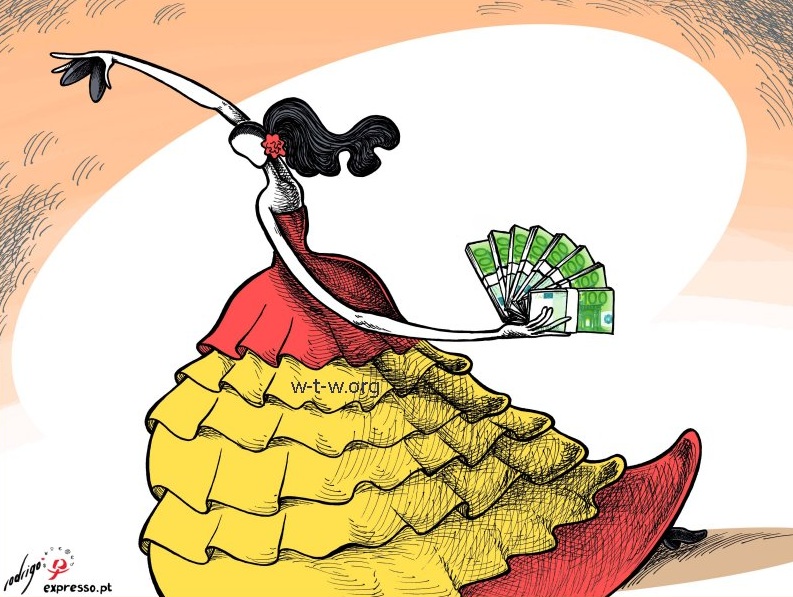
Dagmar Frank announces the winner of W-T-W.org Women and Finance Cartoon of the Year.  Congratulations to Rodrigo de Matos for “Fight Corruption.”  On a website dedicated in part to the definition and exploration of corruption, de Matos’ subtle, feminine portrayal of corruption’s insidious role in society highlights the problem with a cruel grace.

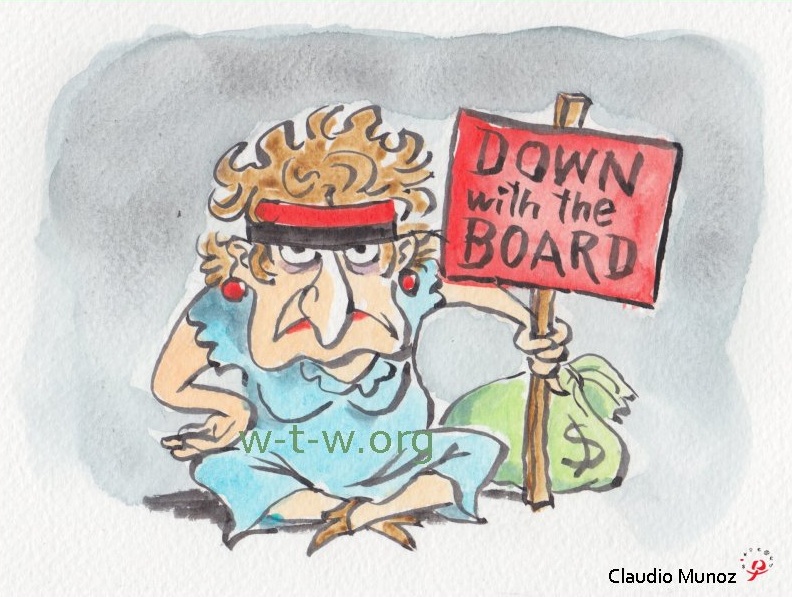
Cartoon of the YearSecond prize to Claudio Munoz for “Put More Women on Boards”  Throughout the world, in leigislation, and through the imposition of quotas and societa debate, the role women can play on corporate boards is a hot issue.  Munoz suggests why it may be a problem.

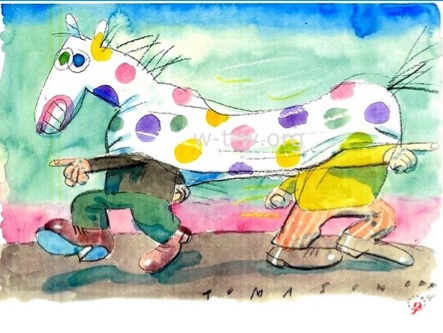
Claudio MunozThird prize to Dr. Jan Tomaschoff for Tapering versus Quantitative Easing.  The issue of Central Banks throughout the world taking control of the financial system and the impact this has worldwide is dramatically portrayed by Tomaschoff’s push me/pull you.

Dr. Jan Tomaschoff

Belly Dancing: An Opportunity for Entrepreneurs

Belly dancing has always been a popular profession for women in Turkey.  When the profession first started, men ‘zennas’ participated as much as women.  Zennes used to be young. In the days of the Ottoman Empire, boys at the age of 7 (mostly from non-Muslim families) started training and they performed until they could no longer hide their beards. That is no longer an issue, Tarik said. “I can dance with a beard, as long as it is stylish. However, body hair is still a no-no.”

Another male dancer, Ali Murat Sahiner, in his mid-30s, is open about his identity. Sahiner, better known as Diva has been dancing since 2000, and his family knows about his profession. He has danced at the most prestigious nightclubs in Turkey, such as Al Jamal, Cahide and Zarifi.

In the early 2000s, Diva says, my friends who had a restaurant in Ankara asked if I could perform one night because there was a shortage of male dancers in those days. That is how I started. Then I went to a popular resort town on the Mediterranean] during the summer, and I now live in Istanbul and earn my living exclusively by dancing.

Diva is passionate about his art, and he is known to have inspired many young dancers. He said, “Initially, it was a secret but once I appeared on television, we could no longer hide it. My family was concerned, but now they understand this is my profession.” Diva, like many other dancers, has a website since he does not hide his identity or wear a veil during performances for fear of cameras.

The most famous belly dancer in Germany is a Turkish male dancer, Mehmet Sasmaz.

Women still find belly dancing satisfying work and welcome men to their ranks.

Men Belly Dancing in Turkey

US Orders Trade with Asia?

For Michael B. Froman is U.S. trade representative charged with expanding global trade.  He and his colleagues have clocked more than 1,500 meetings on Capitol Hill to promote the president’s big potential trade deal, the Trans-Pacific Partnership.  Its prospects for passage don’t look good.

Some said in the beginning that the deal was too small, with only four Asian countries as members.  Now there are twelve.  Mr. Froman is convinced that he can complete negotiations on a complex trade agreement.

At stake is a colossal trade agreement that would stretch from Peru and Chile to Japan and Vietnam, accounting for 40 percent of the world’s economic activity. It would not just lower tariffs: The pact would require rigorous regulations on labor and environmental standards, as well as the first rules for state-owned enterprises like those run by the governments of Vietnam and Malaysia.

The T.P.P. has emerged as the linchpin of Mr. Obama’s strategic shift to Asia, giving the United States a way to counter the economic inroads made in the region by a rising China. The deal is supposed to be followed by the Trans-Atlantic Trade and Investment Partnership with Europe, though those talks have much farther to go.

Mr. Froman has expressed unwavering confidence in the outcome, saying the various parties are searching for “landing zones” on issues ranging from Japanese farm subsidies to Vietnamese labor regulations..

Democrats may be a big problem.  On the Ways and Means Commitee, members have said they wat to work with the administration on the T.P.P., down to the finest details.

One problem with the Obama administration, made clear in executive orders, is that Mr. Obama is not a talented politician and he prefers ‘orders.’   T.P.P. may have of tough time because of this attitude.

Dean Baker, co-director of the Center for Economic and Policy Research and a consultant to American unions monitoring trade talks, said strong currency provisions would do more to promote middle-class manufacturing jobs than any other provisions, including lowering tariff barriers on American goods.

On the broader concerns of reluctant Democratic senators like Elizabeth Warren of Massachusetts, Mr. Froman pointed to the 18 cases of alleged unfair trade practices the administration has brought before the World Trade Organization, half of them against China, as proof that Mr. Obama can be trusted to watch out for the interests of American workers.

The president has mobilized virtually his entire administration to see the trade agenda through: the Interior Department to work on wildlife trafficking; Health and Human Services to work through pharmaceutical issues, especially intellectual property; the Commerce Department to reach out to businesses; Treasury to handle currency; the Labor Department to address worker rights; the Environmental Protection Agency to deal with land, water and air conservation; and the State Department to take on broader diplomacy. Still you have to ask why the President insists on control.  He is no Lyndon Johnson.

Obama in Control?


Young People Can’t Find Jobs

Like many countries around the world, it is the young people, our future, who can’t find jobs in the US.

A Congressional report released Tuesday found that millennials are not feeling the impacts of the economic recovery. Millennials are delaying major life decisions such as buying a home and getting married.
In 2003, nearly 40 percent of Americans between the ages of 25 and 34 headed a household. In 2013, the rate declined to 37.2 percent.

Meanwhile, the percentage of millennials living with their parents has increased from 11 percent before the recession to 14 percent.  Household income adjusted for inflation for Americans aged 25 to 34 declined by more than 10 percent.

While the national unemployment rate remains at 5.8 percent, millennial unemployment is at nearly 17 percent.  American millennials are also more educated than any other previous generation. Sixty-three percent of them have at least some college education. That’s an 11-percentage-point increase from the 52 percent of Americans in that same age bracket who had some level of college education in 1994.

Even if young people land new, better-paying jobs at some point, lower earnings earlier in their careers may result in permanently lower retirement savings and net worth than might have been the case if economic conditions had been better when they first entered the labor force.   Millennials

Young People Jobless

Modern Moguls Don’t Have to Compete?

The Economist writes:  America still has the right formula for producing entrepreneurs. It sucks in talent from all over the world: Carnegie was the son of an impoverished Scottish textile weaver, Mr Brin the son of Russian immigrants. It tolerates failure: the list of barons who failed at least once before they succeeded includes R.H. Macy, H.J. Heinz, Henry Ford and Steve Jobs. And it encourages ambition. Mark Twain and Charles Dudley Warner put their finger on an enduring national trait in “The Gilded Age” (1873): “In America nearly every man has his dream, his pet scheme, whereby he is to advance himself socially or pecuniarily.” Walt Whitman did the same: he celebrated “the extreme business energy, and this almost maniacal appetite for wealth prevalent in the United States”. And the ability to produce such men has allowed America, once again, to pull ahead of the rest of the West.

A delicious and provocative piece:  Robber Barons and Silicon SultansSilicon Moguls

Grexit?

From the Economist:  Since the euro crisis erupted in late 2009 Greece has been at or near its heart. It was the first country to receive a bail-out.  It was the subject of repeated debate over a possible departure from the single currency (the so-called Grexit) in 2011 and again in 2012. It is the only euro country whose official debt has been restructured. On December 29th the Greek parliament failed to elect a president, forcing an early snap election to be called for January 25th. The euro crisis is entering a new, highly dangerous phase, and once again Greece finds itself at the centre.

The early election is likely to create a political crisis in Greece. What happens beyond that is less clear. Investors seem to be betting that the people of Italy, Spain and France will stick to the austerity that Germany’s Angela Merkel has prescribed for them. It is hard to believe that a Greek crisis will not unleash fresh ruptures elsewhere in the euro zone—not least because some of Mrs Merkel’s medicine is patently doing more harm than good.

Mr Tsipras has recanted from his one-time hostility to Greece’s euro membership and toned down his more extravagant promises. Yet he still thinks he can tear up the conditions imposed by Greece’s creditors.  in exchange for two successive bail-outs, he argues that the economy is at last recovering and Greece is now running a primary budget surplus.

A growing economy and a primary surplus may help a country repudiate its debts because it is no longer dependent on capital inflows. But the Greek economy still has far to go to restore its lost competitiveness.

Much has been done to improve the euro’s architecture, with a new bail-out fund, the European Central Bank’s role as lender of last resort and a partial banking union. Moreover, most of the bailed-out and peripheral countries are at last growing again, and unemployment is starting to fall.

Neither Greece nor Europe can afford this game of chicken.  Even if the Grexit is safer, it is still perilous and unpredictable. There was a worrying echo this week of the Lehman crisis of September 2008. Then the widespread assumption was that the global financial system was robust enough to cope with the failure of a single investment bank. Now investors are putting their trust in the resilience of unemployment-plagued countries like France, whose president has record levels of unpopularity, and Italy, whose economy has shrunk in constant prices in the first 14 years of this century (even Greece’s GDP is higher now than it was in 1999).

That stagnation points to the deeper reason for caution. The continuing dismal economic performance of the euro zone now poses a big political risk to the single currency. In the short run if creditor countries insist on budgetary rectitude and reject all proposals for further monetary and fiscal stimulus, that performance seems unlikely to improve. Worse, inflation is now so dangerously low that the euro zone threatens to tip into years of deflation and stagnation worryingly reminiscent of Japan in the 1990s. The continent’s leaders have largely failed to push through the structural reforms that could make their economies more competitive. When voters see no hope, they are likely to vote for populists—and not just in Greece.

As 2015 approached, most of Europe’s leaders assumed that the worst of the euro crisis was behind them. The early Greek election shows that hope was premature.  Ironically, when a country starts to recover is also when popular discontent often boils over. That message needs to be heeded this week in Berlin as much as in Athens.

Grexit

Burma Tries to Up Its Rice Standards

Rice shipments across the Sino-Burmese border, considered illegal in China, accounted for more than two-thirds of total rice exports over the last nine months, the Ministry of Commerce announced this week.

Chit Khine, chairman of the Myanmar Rice Federation (MRF), said Burma’s rice exports across the Sino-Burmese border constituted the highest bilateral trade total, despite a Chinese ban on Burmese rice imports.   “Rice exports, from our side, are legal, but on the China side these exports are illegal, that’s why we’re discussing with the Chinese government to legalize rice exports. One of our business missions will go to China in the second week of next month,” he said.

Early this year, China officially banned rice imports from Burma, demanding that a trade agreement be signed guaranteeing that most rice is milled and meets certain quality standards. China had long been—and continues to be—one of Burma’s biggest customers for rice, much of which is harvested in the Irrawaddy Delta and shipped over land borders in Shan and Kachin states.

According to government figures, rice exports to China through the Burmese border town of Muse to Ruili in China accounted for the vast majority of overland exports, at 700,000 tons, while overseas rice shipments to China reached 11,000 tons.

“That is why the business delegation from the MRF and the government will talk with the Chinese government next month to buy our rice legally over the borders,” Chit Khine said, adding that he expected the legalization of rice exports to China would further accelerate export growth.

A bilateral agreement on rice standards would allow the MRF to legally export about one million tons of milled rice to China, starting in January.

Dr. Soe Tun, chairman of the Myanmar Farmers Association, said that China would continue to hold its position as the No. 1 buyer of Burma’s rice next year.

He added that a China Certification and Inspection Group would open an office in Rangoon soon, pending its obtaining a company license from the government, and will serve to monitor the quality of Burmese rice before exporting to China.

“We expect that the rice export volume will reach 1.5 million tons in this 2014-15 budget year. We expect 2 million tons for next budget year,” he said.

Rice prices are also on the rise, with the grain selling for $400 per ton, up from $350 per ton last month, after a heavy monsoon season lowered yields in Burma.

In October, the MRF reached an agreement with Indian rice traders to supply two states in northeastern India with 240,000 tons of rice per year at $400 per ton, although Burmese traders will incur all costs for transporting the goods to the Indian border.

Paddy yields in Burma are among the lowest in Southeast Asia, at 2.5 metric tons per hectare. Most rice mills used outdated machinery that produces rice with a high portion of broken grains, making it unsuitable for high-value foreign export markets such as the European Union and Japan.

Tokyo Grown Rice Good

China Goes Global with Steel

Adam Minter writes:  These are not the best of times to be one of China’s massive, state-owned steel mills. So what’s a manager of a Chinese steel mill to do?

Hebei Iron & Steel’s is building a big South African mill.  It will produce the “equivalent to two-thirds of that nation’s output last year, and a third of continental Africa’s.” In other words, it’s not clear there’s much demand in these new locales for the Chinese steel giant’s plentiful wares. Why, then, are they doing it?

The officials in Hebei Province faced political pressure to reduce their environmental impact in China: reducing production of steel, cement and glass — all highly polluting industries, especially in developing countries — will have a direct impact on Xi Jinping’s pollution goals. Starting in Hebei will have the added benefit of cleaning up polluted, neighboring Beijing.

Second, Hebei may simply be at a loss as to how to scale back businesses that they recognize have become massively bloated. Officials in China’s construction-related industries clearly have too much capacity and too little demand.  The effect on domestic Chinese steel prices has been devastating.

So where is the steel going in the absence of a strong domestic market? During the first 11 months of 2014, China exported 86 million tons of steel (almost equal to total U.S. production in 2013), up 47 percent over the same period in 2013. But the export market is hardly a sustainable bet in the long-term, especially at a time when the United States and other importing countries are erecting anti-dumping fees on Chinese steel.

For a company looking for growth over the long-term, and significant capitol to invest, that really only leaves one choice: go global. In fact, the Chinese government has had a “go global” policy since the 1990s.  Companies are encouraged to set up subsidiaries abroad, for the purpose of extracting raw materials and energy and — to a lesser extent – manufacture. “Going global” as a strategy has taken on urgency.

China’s ruling State Council announced that it will give financial assistance to firm that go global.  The goals are two-fold. First, China wants to see its flagship firms become internationally competitive.  Second, bankrolling such overseas expansions is a signal that China wants better returns — in the form of profit and political influence — on its considerable foreign exchange reserves. Though Hebei Iron & Steel announced its South African plans two months before the State Council’s announcement, it’s all but certain that it’s benefiting from the promised subsidies.

Will it work?, Hebei Iron & Steel will likely count on using its newly-built modern South African mill to meet demand in emerging Africa. To be sure, it’s hardly a safe bet. But so long as China appears incapable of fostering a climate in which companies want to invest, it might just be the best one available — and one that other Chinese companies are also likely to soon embrace.

China- Go Global with Steel

Oil Price Decline a Black Swan?

Kent Moors writes:  Oil prices are struggling to stabilize.  Some think it is a black swan, a theory popularized by Nassim Nicholas Taleb.  According to Taleb, a black swan event has three characteristics:

  1. It is a surprise. Nothing in the past can convincingly point to its possibility.
  2. It has a major impact.
  3. People contend that they expected the event to take place (in hindsight).

Almost 15 years ago, Taleb applied this approach to the stock market.  As a consequence, the black swan is being used as an “explanation” for all kinds of things. It’s the obverse of the mantra “this time is different.” And that leads us back to the true nature of the 40% drop in oil prices.  Is the stunning fall of crude is a black swan event?

It isn’t. But calling it one may be a good way of clouding up what really is happening.

First off, there were always indications on both the supply and demand side that matters were softening. Second, the OPEC non-decision on Thanksgiving to keep production levels unchanged was both predictable (from the Saudi perspective) and telegraphed in advance. Then, the orchestration of the talking heads commentary on the tube made the whole move “legitimate.”

Unless, of course, there is another motive at work and the black swan becomes a convenient cover. Instead, this is what is really happening when it comes to oil prices.

Yes, there are traditional pressures driving down the price of crude. Rapidly increasing supplies and slower demand would have created a correction in oil prices in any event.  But dropping over $40 a barrel has required something else entirely.

When it comes to oil we are in a new age of massive short plays and swaps. The coordination of these moves is staggering, creating an impact that is immediate. Especially if there is a segue to important policy makers.

For instance, a Kuwaiti official tells the world oil can fall to $60 and… presto, within 48 hours, that’s where oil lands.

Of course, the targets of all of this are well known and have been discussed here at length: Russia, recalcitrant members of OPEC, and U.S. shale producers.

But we should look also at the positioning of sovereign wealth funds (SWFs).These funds have been designed to invest the proceeds from national revenues. Usually, the better a country’s balance of payments, the stronger the SWF. This is always a result of a trade surplus – as more is exported out of a country (being paid for by somebody else) than is being imported (requiring payment).  China, for example, is in this category.

But most of the SWFs of consequence involve investing the proceeds of oil sales. In the case of oil producers, that has usually meant the success of an SWF was perceived as dependent on the price of crude. The higher the price, the greater the leverage for an SWF.

Now these funds are almost always conservative, preferring guaranteed or long-term gains over a higher but riskier return. That explains SWF investments in Rockefeller Plaza and hotels on the one hand, or dull but secure 1.5% annualized return from somebody else’s sovereign low-interest bond on the other.

There is also the problem of limiting the financial downside from introducing the proceeds directly into a domestic economy. Given that oil revenues are in U.S. dollars, a direct flow into the economy ends up inflating the local currency rather quickly.

So the proceeds from export sales are largely segregated from domestic trade, kept outside the country, with the profits from investing introduced in ways to minimize the inflationary impact.

All of which has triggered a new development. SWFs have now become a player in the market, shorting the very product responsible for the funds to begin with. In other words, some OPEC members are making money on both sides of the crude pricing curve.

Transacting the deals outside their own borders via SWFs, these countries are hedging the product in both directions. That means they are currently pushing the lower cost of crude forward by pairing shorts to actual oil consignments.

Plain and simple: This is manipulating the market. It’s equivalent to being a poker dealer who is able to read everybody’s hand while taking a seat at the table.
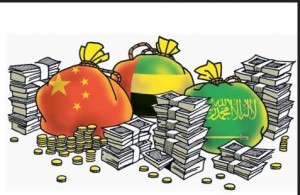
Sovereign Wealth Funds

Should Big Banks Be Primary Dealers for Central Banks?

What impact do primary dealers have on the economics of any country, the EU, or the world economy for that matter, Lee Adler asks.  Here is a table of primrary dealers he has prepared.  World Primary Dealers

Adler looks around at the central banks: The PBoC (China) is also playing a growing role as it integrates its financial markets with the rest of the world’s, but its system does not use Primary Dealers, per se, and its linkages to the rest of the world are more obscure. The BoE (UK) is a small player.

Adler aruges that Central Banks’ policy doesn’t mean much. With Quantitative Easing, the central banks bring the money into existence by making deposits in the Primary Dealers’ accounts at the central banks in payment for the securities the central banks purchase from the Primary Dealers, or by making loans to them. What the dealers do with the money from there is up to them, although they are loosely required to purchase government securities when the central government auctions them. Since there are always plenty of other bidders for the government paper, the Primary Dealers end up with billions in excess cash.

Certainly the US is making the break up of Big Banks a big issue, and this may be why it is important to simplify and clarify their role and divide up their functions.

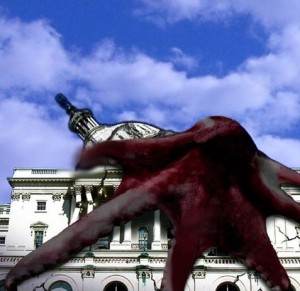
The Tentacles of Big Banks Crush Governments