Be Prepared: The Girl Scout Model Encorporates Entrepreneurship

Today’s Girl Scouts of the USA isn’t all campfires and cookies. Recently the organization has invested in social entrepreneurship programs, STEM subjects and project-based learning.  Girls as young as 9 can earn badges in customer insights, financial literacy and product degin.

The Girl Scouts hopes to reshape the female landscape for an entire generation, so male and female leaders finally find equal footing.

But we rarely get a peek inside this national movement, to see whether these teachings are really preparing young American girls for future success.

Are we pushing kids into the board room too soon?

Child entrepreneurship is such a recent phenomenon that experts say there are few reports that assess their impact.  Teaching entrepreneurship and cultivating leadership skills in children is not a bad thing.  It’s up to individual troops balance boardroom with traditional fun, like camping, volunteering and crafts.

The entrepreneurial child is the child who is flexible, who can find more than one solution to a problem.  Adaptive thinking is especially important in a world where so many things are changing so quickly.

A lesson to us all.

Girl Scout

Turkey’s Dream of an Ottoman Empire Turns into an Economic Nightmare

In 2010, Turkey made deals all ovre the Middle East.  But its support of Hamas and the current ISIS wars have left the country isolated.

Fifty-one agreements made with Syria have been shelved.  Turkey’s exports which reached 8 billion during the ‘fraternity’ era have been lost.  Exports through Syria to 16 other Middle East countries have stopped. Turkish cargo rtucks which used to make 105,000 to 700,000 runs now sit idle at the country’s border.  Border towns are swmaped with homeless, jobless, desitute Syrians.

In October Egypt canceled a Ro-Ro line, which provided an alternate to Syria.  Soured relations with Iraq caused cancellaion of Turkish Petroleum’s access to the oifields.

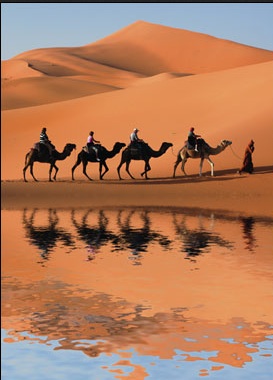
Turkey had envisaged a new Ottoman Empire.  It was a desert mirage.

No Ottoman Empire in the MIddle East

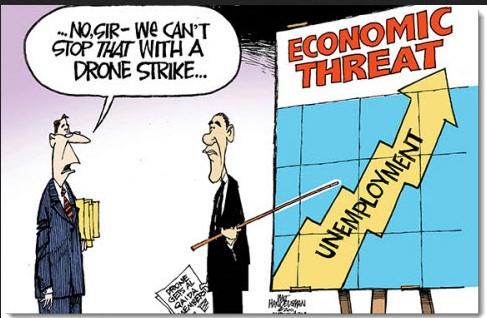
Jobs, Jobs Everywhere and Not A Job for You

W-T-W.org Women and Finance recommens a twenty-year Infrastructure program to give people jobs while we figure out how to fit properly trained people to available jobs.

Megan McArdle writes about the recent election and notes that Republicans won even though the economy appears to be improving and new jobs are up.

She observes that the kind of jobs that satisfy people are often not available.  People can’t find jobs where they have a future.  Business startups and small businesses that employ so many people are on a decline.

It may be that a party that disapproves raising the minimum wage is perceived as being more sympathetic to the real jobs issue.

Jobs


Head, Heart, Hands and Health in Africa 4H

4-H is a uniquely American phenomenon, and in many ways it is. Born in the heartland of the US iin the early 1900s. when land-grant universities sent representatives to rural schools, it sought to teach the next generation of farmers, and through them reach adults skeptical of newfangled techniques. The club thrived until the middle of the century, but as industrial-scale farms gobbled up family operations and America became less rural, membership began to decline.

However, unlike many bygone rural institutions—one-room schoolhouses, barn raisings, and rural free delivery, the club, now part of the Department of Agriculture and still administered through land-grant universities, has managed to reinvent itself. It has expanded in both scope (adding science and engineering to its old standbys of agriculture and animal husbandry) and size: Today, 4-H boasts 7 million members in more than 50 countries.

It is introducing yourng people to farming as a career and these modern farming entrepreneurs are thriving.

Yet DuPont has found a very willing partner in 4-H. “We want 11- and 12-year-olds to gain an appreciation for agriculture as a possible career and a business opportunity,” says Shingi Nyamwanza, who heads 4-H’s programs in Africa. “DuPont is making that possible.” The program started as a small pilot in Tanzania in 2010, and in 2012, it expanded it to Ghana, where 3,500 children, ages 6-19, enrolled. In 2014, 4-H and DuPont have rolled out school gardens in Ethiopia, Kenya, and South Africa.

So is DuPont Pioneer, as critics charge, using 4-H kids as free advertising for a product that will put their families’ farms out of business? What’s clear is that 4-H’s African program is indicative of the continent’s transition from subsistence farming to industrial crop production. As of 2010, foreign interests—including American agribusiness giants like Monsanto and Cargill—owned up to150 million acres in Africa.  The US government has helped make those deals happen: Since 2010, the Agency for International Development has given $7 billion in grants to a wide range of corporations, including Walmart and PepsiCo. to partner with farmers in the developing world. Many of the funds came through a new program called Feed the Future, which a USDA administrator described as a push to “increase agricultural business investments in priority countries.”

In cracking the vast new market in Africa, the 4-H gardens “are essentially demonstration plots,” DuPont’s Captain told me. “We are going to work with you, and you can show your neighbors in your tribe and village what you can do. And then they want the seed as well.”
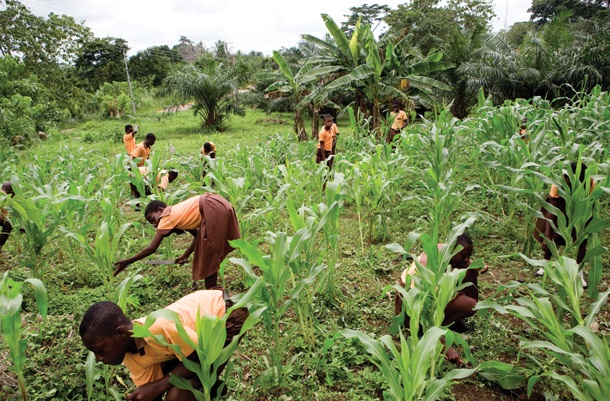
4H members in Africa

Net Neutrality?

Tim Wu, who ran a complelling race for Lieutenant Governor in NY and is a professor at Columbia Law School, writes:  A neutral network might be designed without legal prodding – as in the original internet.   In an ideal world, either competition or enlightened self-interest might drive carriers to design neutral networks.

The problem now is favoritsim by the carriers to certain subscribers.  If there were no favoritism and if the carriers were not allowed to use the information that flowed through the wires, cables and ether, they would have to be subscription based.  Companies like Verizon are now.  Google of course is not. Europeans are more sensitive to privacy issues than people in the US.  NSA and Edward Snowden have made this issue more prominent.

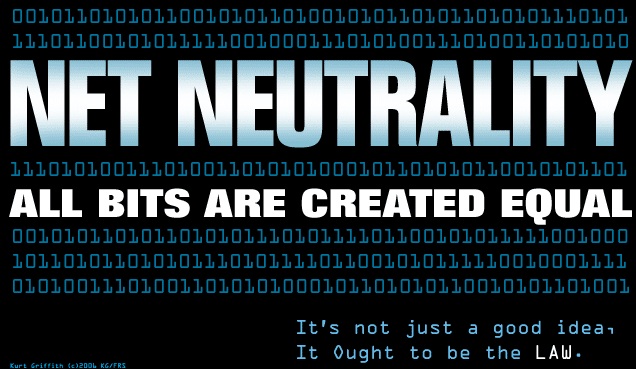
Preisdent Obama has come out for net neutrality.  Under this concept, the internet would be treated like a utility.

Net Neutrality

Paul Allen, A Founder of Microsoft, Bankrolls Financial Literacy

Allen bankrolled 20 shorts called “We the Economy.”  Adam McKay, who made Anchorman, parodied My Little Pony to explain income inequality.  That Film about Money, made by James Schamus, one of the founders of Good Machine, explains how bank’s leverage money.  Maarshall Curry has made an animated film about Debt and Deficits and has fun breaking down the differences betwen John Maynard Keynes and Friedrich Hayek.

Hollywood Reporter writes:  The films will be released on more than 50 digital, cable, TV and mobile platforms, including Android and iPhone custom apps, CNBC, YouTube, Twitter, Facebook, Hulu, iTunes, Netflix, Yahoo Screen, Vimeo, Dailymotion, Amazon Instant Video, AOL’s On Network, CBS News, Conde Nast Entertainment’s The Scene, Crackle and Comcast, Time Warner Cable, Cox and Verizon VOD services. Landmark Theatres is also hosting a one-night-only theatrical sneak preview on Oct. 20 at 7 p.m. in 20 cities nationwide.

“The unique distribution model for We the Economy is all about audience access,” Vulcan Productions general manager and creative director Carole Tomko said in a statement. “There’s not enough accessible, bite-size information that’s easy to digest about the economy. We wanted these short films to help people understand the fundamentals of the economy, and in order to reach the widest audience, we decided to make them available across as many channels as possible, and at no cost. There’s an appetite for this entertaining, informative short-form content, and we know that our extensive group of distribution partners guarantees that everyone in this country with a computer, a smartphone or a television will have access to the series.”

Income Inequality


Obama One-Upped by Putin in Beijing

Scrutinizing body language between Obama and Putin has become something of a pastime in diplomatic circles.  The contrast in their personal styles, Putin brash and macho, Obama more professorial and sometimes self-conscious, was also on display at APEC.

At a tree-planting ceremony at the summit venue, Putin swaggered up, chest out, and shoveled mud onto the roots of a partially-planted tree.  Obama walked up with his hands clasped behind his back, picked up the shovel, grinning slightly, and piled mud on his tree, according to a pool report of the event.  When a Spanish-language camera crew called for his attention, Obama responded with “Hey, hombre” and waved.

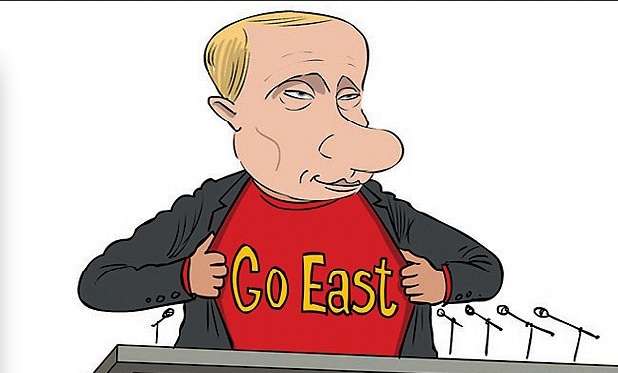
What Putin has succeeded in doing is making deals with China that will leave Russia less vulnerable to the West.  The impact of economic sanctions against Russia has been softened by new deals between Russia and China.

Putin Looks East


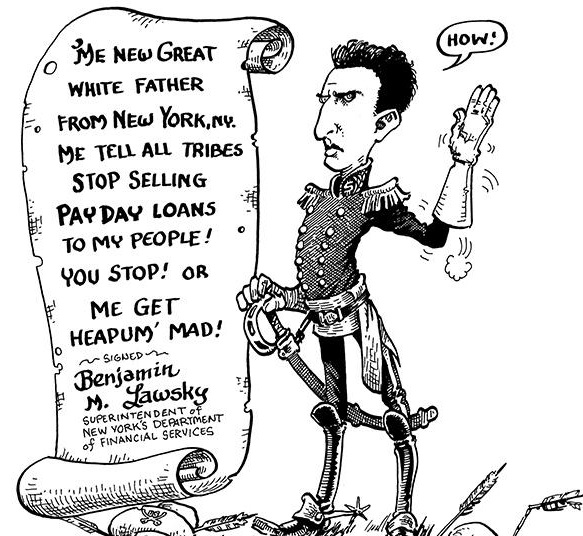
Lawsky to Leave NYS Department of Financial Regulation

Lawsky was a tiger in his job.  Reports on his departure talk about is interest in the Bitcoin and bringing it into the monetary system.  He came to know many people prominrent in the Bitcoin community.

But more than virtual currency, Lawsky fought Payday Loans,  He was also a spokeman for ‘No Banker Too Big to Jail.”  He irritated NY State Attorney General Eriic Schneiderman, who he also got to be more active in looking into banking activities.  Lawsky had shamed him by speaking out.

One wonder why this brave soul is leavaing before his work is done.  Maybe no one wants him to do his work.

Lawsky


Palestinian Tech Industry Featured in Ramallah

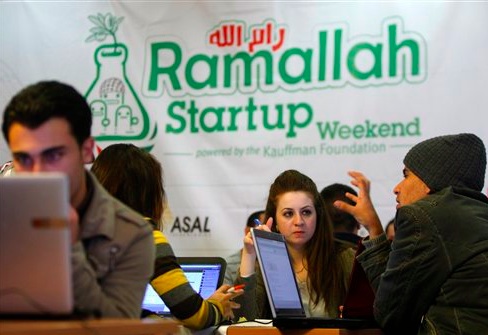
The Palestinian Information Technology Association is making a big contribution to the Palestinian economy.  Five percent of Palestine’s workforce produce 8% of its output.

IT specialist Ala Alaeddin says that the big jump in IT use was the risky move by John Chambers of Cisco to invest in Palestine.  IT may become the engine of the Palestinian economy. The goal is to combine media with IT and to help emerging NGOs. Some complain that the govvernment puts more money into telecommunications than IT.

Palestinian IT Business

Smuggling Costs Tunisia

Smuggling has become a serious problem in Tunisia.  It is almost impossible to monitor Sahel, its surfae, the desert terrain, and the need for several countries to corrdinate.

Rising prices and the hgih cost of living drive Tunisians to buy smuggled televisions, food products, cigaretes and even gas.  The losses to the state are about $650 mllion, and to customs about $270 million.  The turnver of parallel trade is baout $970 million, or half the trade with Libya.

On the border, “knatreya” or smuggling lords live in palaces as they fiercely control their trade.  Stakeholders know what is going on, and express a willingness to control this traffic and yet nothing happens.  Why does no one act?  The equivalent of the entire Health Department’s annual budget is on the line.

Tunisian Borders