Annexation of Crimea Putting Pressure on Russian Economy

Economic considerations could prove the main factor in forcing Russia’s foreign and domestic policy to gradually normalize and evolve toward greater caution and responsibility, writes Vladimir Ryzhkov. The annexation of] Crimea will cost Russia one percentage point in economic growth, or 360 billion rubles ($9 billion) in unpaid wages and accelerated inflation due to the weakening ruble. In fact, Crimea will contribute about three percentage points to inflation this year…. Although the Russian people continue celebrating the annexation of Crimea and giving the authorities sky-high ratings, the first signs of trouble are now appearing…. As Russia’s Crimean-Ukrainian project incurs an increasingly heavy expense, the economy itself will provide an unerring litmus test of the soundness of Kremlin strategy.

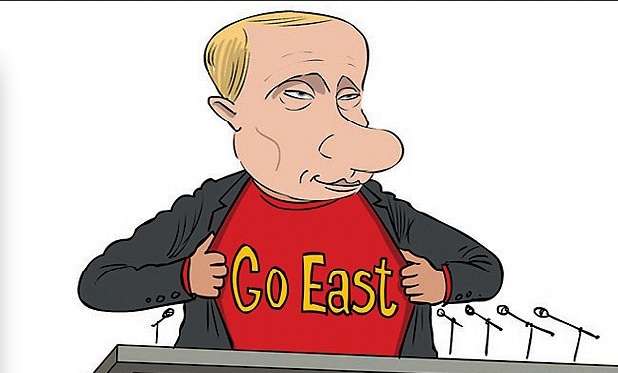
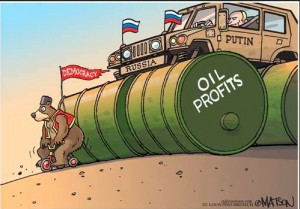
The current hidden costs of the annexation of Crimea are hitting the oil and gas industries mostt prominently.  Meetings in China suggest that looking East is Putin’s best bet, as cash from the oligarchs and other big Russian businesses exit the country.

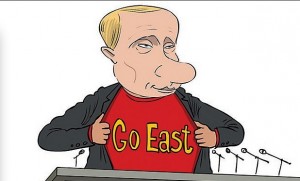
Putin Looking East

China’s One Belt, One Road Infrastructure Program

China is creating a new Silk Road to join its neighbors with roads, railways and ports.  The Asian Infrastructure Investment Bank has 21 countries aboard its infrastructure project.  The Chinese government has announced the investment of another $40 billion dollars.

China is not seeking to dominate the region, however.  It is looking for a win-win situation.  “One belt, one road” is open to all countries who wish to join, regardless of their political regime.  China is distrusted and the government will have to work hard to get rid of this image.  Mexico suddenly cancelled a rail contract, for instance.

China’s “one belt, one road” is very ambitious.  The entire world is being invited to join.  China seems to understand the wish of developing countries to develop first and to do so without encumbrances from the West.

Some countries may see this as an effort by China to dominate the world.  Others may fear dependence on China.  But so far China is taking all the right steps.

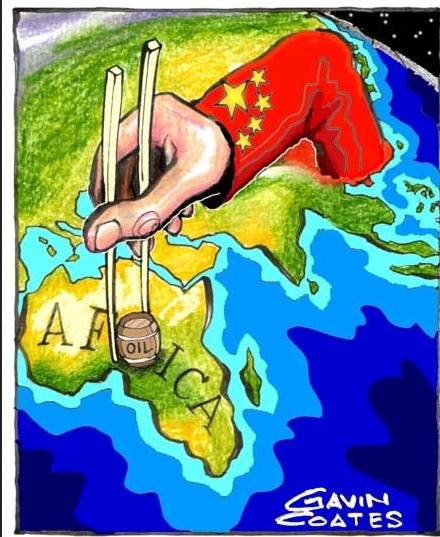
Chinese Investment

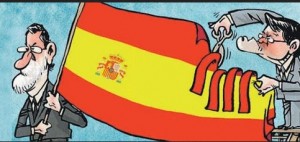
Catalonian Independence?

Politicians in both Madrid and Barcelona are using history as a source of rancor. Spanish nationalists argue that Catalonia was always part of Spain. At the same time, Catalans trace their independent identity back to the 13th century and say they have a right to express their will. Spain’s 1978 constitution doesn’t allow any region to vote alone on independence: Either all of Spain votes on the Catalan question, or no one does. Spain’s Socialist Party, which draws considerable support from Catalonia in Parliament, is proposing a wide-ranging reform of the constitution to clear the way for a negotiated setlement.  Many Catalans say it’s too late for that now.

Catalonia won back control of its health, education and language policies after Franco’s death in 1975, although it didn’t get the tax-raising power awarded to Spain’s Basque Country, where terror group ETA has killed more than 800 people during its own four-decade campaign for independence. Catalonia’s powers were extended with a 2006 law that included references to the region as a separate “nation” and guaranteed the region’s share of public investment. When large parts of that law were struck down in 2010, many Catalans decided their future lay outside of Spain and support for independence surged. Catalonia’s ballot would have come less than two months after Scotland voted to remain part of the U.K., though that referendum was sanctioned by the British government. The votes are emboldening from places like Flanders and Venice, where smaller nationalist groups aspire to dismantle European states forged in the 18th and 19th centuries.

Catalonian Independence?

Middle Class Growth in Sub Saharan Africa

While Africa’s middle class may be smaller than the oft-reported figure of 300-million, it is growing at a strong rate – and the broad-based income growth is likely to encourage more companies to invest in the region, according to a report released by Standard Bank.  There are 15-million middle-class households in 11 of sub-Saharan Africa’s top economies this year, up from 4.6-million in 2000 and 2.4-million in 1990, the report states. This represents an increase of 230% over 14 years. The report, titled “Understanding Africa’s middle class”, found that the combined GDPs of the 11 measured economies – Angola, Ethiopia, Ghana, Kenya, Mozambique, Nigeria, South Sudan, Sudan, Tanzania, Uganda and Zambia – had grown tenfold since 2000.

Income discrepancies, however, are vast among the 11 economies, with almost 86% of the 110-million households falling within the low-income band. This is expected to fall to around 75% by 2030. “While the scale of Africa’s middle-class ascent has, we believe, been somewhat exaggerated in line with the at times breathless ‘Africa Rising’ narrative, there is still plenty of scope for measured optimism regarding the size of the middle class in several key Sub-Saharan Africa economies,” said Simon Freemantle, an economist.

Freemantle said there was cause for optimism among investors as the results suggest even greater scope for future growth. The number of middle-class households in the sub-Saharan African countries is likely to increase significantly in the next 15 years. “Including lower-middle-class households, the overall number swells to over 40-million households by 2030, from around 15-million today,” the report says. The 11 countries covered by the report account for half Africa’s total GDP (75% if South Africa is excluded) and half its population. The figure of 300-million middle-class Africans – one-third of Africa’s people – comes from a study by the African Development Bank in 2011, which defined “middle class” as earning between $4 and $20 a day. “Such individuals would still be exceptionally vulnerable to various economic shocks, and prone to lose their middle-income status,” Freemantle said.

The report found there was “an undeniable swelling” of Africa’s middle class, irrespective of which methodology was used. “Reliable and proven data should if anything spur more interest in the continent’s consumer potential by adding depth to what was previously conjecture,” said Freemantle. As a caution, the report states: “Though there has been a meaningful individual lift in income, it is clear that a substantial majority of individuals in most countries we looked at still live on or below the poverty line (measured as those with a daily income of USD2 or less).”

Infrastrcture Growth in Africa

Russia and China Inking Energy Deals

Keith Johnson writes:  Russia and China took a giant step toward closer economic and political ties with an agreement on another massive energy deal that promises to tighten the bear hug between Moscow and Beijing for decades to come.

The preliminary accord, which comes just months after China and Russia inked a $400 billion natural gas deal, is a reflection of the shifting balance of power in Asia. It’s a marriage based on needs: Russia’s to break out of the isolation imposed by the West in the wake of its annexation of Crimea and China’s for reliable and affordable sources of energy.

Coupled with China’s new trade pacts with U.S. partners such as Austraia and South Korea to a push for Chinese-led development banks that can wrest financing muscle from the West — the latest gas deal shows what kind of challenges await the U.S. economic and diplomatic pivot to Asia.

Russia and China signed a memorandum of understanding on a second gas-export route from western Siberia to China’s western provinces. The 30-year accord, if consummated, would see Russia ship 30 billion cubic meters of gas to China starting in 2018 and would see Russia gain a big new customer right as it is feeling the squeeze from Western financial sanctions. Together with the deal signed in May, Russia could supply at least 68 billion cubic meters of gas annually to China, or about one-fifth of that country’s expected gas demand in 2020.

The deal is far from complete, but it shows the direction of Russia-China relations. Moscow has intensified its efforts to make a deal since the West slapped sanctions on it energy, defense and finance sectors. China too seems more enthusiastic.  China is trying to reduce the importance of coal in its energy mix.  It needs huge amounts of natural gas. While the country ramps up its own production and has gas-import deals with Central Asian countries and more than a dozen gas-importing terminals mushrooming on the coast, Russia’s massive gas fields offer a close and ready supply of clean fuel.

Putin Takes Off his Coat

Will Russia Tank?

Mohamed A. El_Erian writes:  The central bank of Russia appears to be losing control of its currency market.  Here are the seven things to know about what’s going on in Russia now.

  1. Buffeted by Western sanctions and lower oil prices, Russia has suffered a significant decline in net foreign earnings. Capital is fleeing the country, and corporations and households are looking to switch out of rubles and into dollars and other “hard” currencies. The result has been a sharp fall in both international reserves and the value of the ruble, contributing to a rising threat of domestic financial turmoil.
  2. At the same time, it is only a matter of time until the country’s economy has to deal with an even stronger stagflationary wind. The currency’s sharp depreciation is sure to fuel inflation, while the drop in foreign income will curtail domestic economic activity.
  3. The central bank’s retreat from propping up the ruble highlights the fix the country is in. The authorities’ initial response was to use ample international reserves to counter the impact of sanctions imposed by the West.  They backed this up by intervening in the foreign-exchange and repo markets, which readily exchange securities for cash,  and by raising interest rates.  This moderated what would have been more disorderly pressures on the ruble and an even faster loss of confidence. But the subsequent collapse in oil prices and the pickup in capital flight overwhelmed this strategy, forcing the central bank last week to retreat from its policy and fully float the currency.
  4. The country’s foreign-exchange situation could spin further out of control, at one extreme, or the Russian authorities might respond strongly with higher interest rates and spending cuts.  Either approach would risk depressing economic activity even more in the short run. The most likely outcome is somewhere in between — some interest-rate increases and the use of controls to try to buy time by limiting dollar use and channeling more foreign exchange to the government.
  5. While Russia’s creditworthiness is under significant pressure, with international reserves still above $400 billion, the country’s debt-servicing capacity isn’t exhausted, provided the authorities can better manage the movement from rubles into dollars. Yet even then, it is probably only a matter of time until the country loses its investment-grade credit rating, raising its borrowing costs and narrowing further its creditor base. The situation will be acute for companies and banks whose balance-sheet positioning requires them to pay more rubles to obtain the dollars needed to meet their foreign obligations.
  6. The negative spillover effects of Russia’s financial turmoil are a lot less than they were in 1998. While some Western banks and investors still have notable exposures, quite a few responded to Western sanctions in the last few months by reducing their holdings and preparing for further turmoil.
  7. President Vladimir Putin, whose popularity surged when he acted in Ukraine earlier this year, faces one of two choices:  He can moderate Russia’s involvement in Ukraine as a means of relaxing Western sanctions. Or he can press even harder in Ukraine to distract attention at home away from the economy but risk another round of sanctions and countersanctions that would aggravate the economic and financial turmoil in Russia, and potentially tip Europe into recession.  The market implications of the two courses are polar opposites.

Aggravated by lower oil prices, the recent financial turmoil reflects the geopolitical tensions and Russia’s decision to favor regional adventures over internal economic and financial stability. The sovereign analysis that the vast majority of investors use isn’t often comprehensive enough to easily and effectively capture this reality.

Russian Economy

Corruption in Iran

Sooner rather than later, Iran will open up to the Western worlld.  The following reports on economic problems in the country  that particulary impact women and children.

If Iranian President Hassan Rouhani were to battle poverty as he said he would, he must address the corruption that resulted from efforts to evade sanctions.

The Statistical Center of Iran released a report last month showing the average expediture for an  urban household is about 10,925,000 rials ($336), much lower than 25 million rials ($780) estimated by independent economists..

Thirty-six years after the “anti-capitalist” revolution, Islamic leaders have failed to ensure the fair distribution of wealth and equality of opportunity. In Iran, 7 million people now live in absolute poverty and their food security is at risk. At the other end, 5 million are superich with wealth comparable to that of the richest Americans, as Labor Minister Ali Rabiee has put it.

Fighting poverty has been a focal point for President Hassan Rouhani since he took office last summer. In his Oct. 22 speech in the northwestern city of Zanjan, the president reiterated there was “no evil worse than unemployment and poverty.”

Officials predict that unemployment will become a major issue in a few years when about 4 million unskilled university graduates join the 4 million unemployed.  According to the latest data available, in the last fiscal year, almost one-fourth (24%) of Iranian households did not have even one employed member. The figure was 10% back in 1992-93, indicating that many families have lost a reliable income source since 21 years ago.

In the past year, measures taken by Rouhani’s economic team have helped curb inflation and end two years of negative growth, but observers believe the moderate president will face grave challenges in reducing poverty as the lucrative parts of the economy are mainly controlled by either the government or semi-private entities that have close links with power circles.

So far, Rouhani has adopted a three-part policy to assist the most vulnerable population in the short run, earn the trust of the private sector in the middle term and achieve sustainable economic development in the long run, with each requiring a separate strategy.   Iranian Economy

Lining Up for Food Supplies in Teheran


Why Did Obama Nominate Loretta Lynch to the Post of US AG?

The Attorney General in Waiting for Senate confirmation has treated big banks with kid gloves in the past. As a lawyer, her clinets were often white collar criminals from the financial industry.  She was involved in LIBOR, many issues involving subprime mortgages and also security ratings agencies.

Lynch basically got her first six years of white collar criminal defense experience working at the firm that is currently responsible for keeping the bankers behind the great subprime mortgage grift out of jail. The firm is also defending the financial institutions that jacked up interest rates on everything from student loans to home loans out of greedy self-interest. They even defended the agencies that knowingly rated worthless mortgage-backed securities as AAA, setting up millions to lose their retirement savings in a snap.

After six years of exemplary work at this law firm, Lynch walked through the revolving door to the U.S. Attorney’s office in the Eastern district of New York, which plays a major part in investigating financial crimes.   She was chief of the office’s Long Island division by 1998, and was tapped as U.S. Attorney by June of 1999, where she remained until 2001. Then, Lynch walked back through the revolving door to return to defending white collar criminals.

From 2003 to 2005, Lynch sat on the board of the New York Federal Reserve, working directly under future US Treasury secretary Geithner.

Unless some unforesenn issue arises, Lynch will survive her senate confirmation hearing. Senator Dick Durbin once referred to his chamber as overly subservient to the big banks, saying,  “They own the place.”  It is well to remember that Hillary Cinton, the presumptive democratic Presidential nominee got to know the same bankers in her husband’s administration that have continued in the Obama administration, are connected to Lynch and of course Mrs.Clinton’s favoirte Wall Street bank, Goldman Sachs.

Banks

Women’s Media Awards in US

The women’s media center recently gave out their 2014 awards. Included was Ursula M. Burns, chairman and chief executive officer of Xerox Corporation.  She was presented with the Carol Jenkins Visible and Powerful Media Award.

Burns is an interesting woman executive.  “As I’ve progressed in my career, I’ve come to appreciate — and really value — the other attributes that define a company’s success beyond the P&L: great leadership, long-term financial strength, ethical business practices, evolving business strategies, sound governance, powerful brands, values-based decision-making.”

She talks about creating jobs and not thinking about how they can be eliminated.  \At a mst powerful women summit, she noted:  “As long as I’ve been alive discussing this, and even before, this concept of having it all — that’s not the point,” she said. Pick the places where you want to be great, focus your energies there, and then go do it, she added. Understand “you’re not going to be great at everything, and then relax.”

What is her deepest regret.  She wishes she had had more children.  (She has two).

xerox_ceo_ursula_burns_by_prestegui-d4negnn

Too Big To Fail Means Too Big to Jail

The Attorney General of New York State remarked:  “I am concerned that the size of some of these institutions becomes so large that it does become difficult for us to prosecute them when we are hit with indications that if you do prosecute, if you do bring a criminal charge, it will have a negative impact on the national economy, perhaps even the world economy. And I think that is a function of the fact that some of these institutions have become too large. Again, I’m not talking about HSBC; this is just a more general comment. I think it has an inhibiting influence—impact on our ability to bring resolutions that I think would be more appropriate.

What were the banks doing?  Mortgage lenders  would go out into neighborhoods, and during this boom period, they were giving mortgages to anybody and everybody with a pulse, essentially. They were especially low-income neighborhoods. They were offering these very advantageous loans to people, whether they could afford the houses or not. They were buying huge masses of these loans.  They were called like “liar’s loans,” or stated income where no one even checked whether the person had the income to actually pay it off.

Investigative journalist Matt Taibbi writes: Tthese settlements, they always come up with a big number, but the number is always actually—when you actually look at the accounting, it turns out to be smaller than they announce. In the case of the Chase settlement, the number they announced was $13 billion. But there’s a couple of really important factors here. One is that $7 billion of that—it’s $7 billion, right?—was tax-deductible, which means that all of us, American citizens, anybody who pays taxes, actually picked up the check for about $2.4 billion worth of the settlement. So we paid part of that settlement, which is crazy. I mean, the ordinary person, if we get a speeding ticket, we can’t deduct that when we go to pay our taxes. But these people cratered the world economy, and they get to write a tax deduction for it.

Bankers who condcut business this way are careful not to do anything illegal, although their activities are often immoral, unethical and wrong.

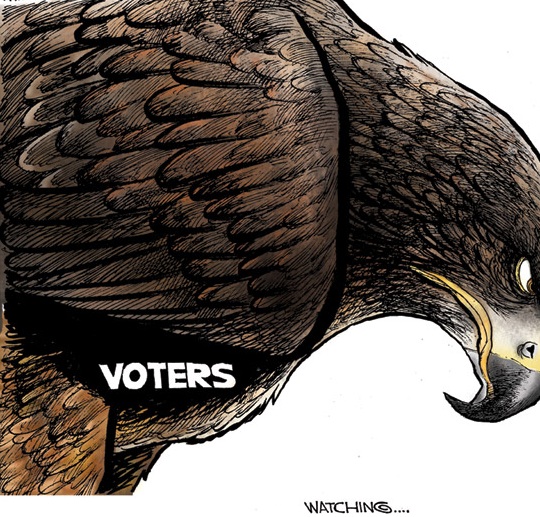
In most developed countries there are laws on the books which prevent bankers from conducting fradulent business.  These laws are often not enforced.  If we are goiing to clean up corrupt business practices of banks, we must enforce the laws on the books.   Banks have to be treated as a special form of business.  They deal in other people’s money and be watched like hawks by public officals and citizens alike.

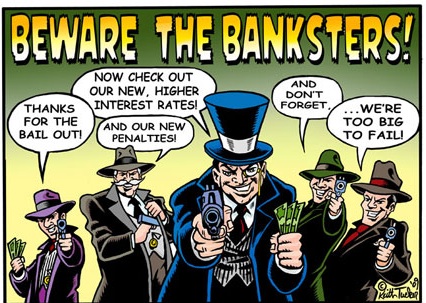
Watching Bankers