US Fed is Not Able to Solve Employment Problems.

Although employment is one of the Fed’s central missions and the current chair, Janet Yellen has a passionate commitment to employment for all willing workers, the shape that unemployment takes in much of the developed world can not be altered by monetary policy although it can perhaps be changed by tax policy.  Writing from Jackson Hole, Daniel Altman looks at some tacts that might help.

The private sector in the United States has been consolidating rather than expanding in the past few decades. The average payroll at an American company is about 50 percent higher now than in 1977, as I have written. In other words, there have been progressively fewer businesses per worker, and those business have gotten much bigger. This hinders innovation too, since bigger organizations tend to have more vertical hierarchies. The more layers in the organization, the tougher it is for new ideas to percolate to the top.

In this environment, low interest rates may not be enough to boost employment. Some firms could find it easier to replace and renew old capital, and new firms may find the cost of raising money more bearable. But stricter lending policies among banks have dulled this effect, stifling the growth of small businesses. Overall, however, the case for hiring in the United States — or, indeed, for any major expansion of their production here — is clearly a difficult one to make for many American companies.   The US Fed is Not Going to Solve the Employment Problem

Employment

Money Transfers in Somaliland

Barclays was one of the last major international banks to still accept accounts held by money-transfer operators (MTOs), whose activities are seen in the West as open to abuse. But a record $1.9 billion fine slapped on HSBC by U.S. authorities for conducting business with banks in Mexico and Saudi Arabia with possible links to drug trafficking and terrorism appears to have tipped the balance for Barclays. The profit margins no longer seem worth the reputational risk. Now, ironically, Barclays finds itself in the role of “bad guy” by dint of its slowness in pulling out of the MTO sector.

“At the end of the day, the money will still come in, but at much higher transaction cost and with less transparency,” says Shire, Somaliland’s minister of planning. “So who do you punish by doing this? Is it the pirate, the terrorist, or the poor man?”  Money Transfers in Somaliland

Money Transfers in Africa

Women’s Equality Day in the US

August 26th is celebrated as Women’s Equality Day in the US,  The not-so-popular President issued a proclamation

“From classrooms to boardrooms, in cities and towns across America, and in the ranks of our Armed Forces, women are succeeding like never before. Their contributions are growing our economy and advancing our Nation. But despite these gains, the dreams of too many mothers and daughters continue to be deferred and denied. There is still more work to do and more doors of opportunity to open. When women receive unequal pay or are denied family leave and workplace flexibility, it makes life harder for our mothers and daughters, and it hurts the loved ones they support. These outdated policies and old ways of thinking deprive us of our Nation’s full talents and potential. That is why this June we held the first-ever White House Summit on Working Families to develop a comprehensive agenda that ensures hard working Americans do not have to choose between being productive employees and responsible family members. We know that when women and girls are free to pursue their own measure of happiness in all aspects of their lives, they strengthen our families, enrich our communities, and better our country. We know that when women succeed, America succeeds.”

It is the hope of the founders of W-T-W.org, women and finance, that knowledge and interconnected networks across the world makes a small contribution to women as they step out into the world and take their deserved places.

We Can Do It!

China Backing Small Cultural Companies

China is to lend more support to micro and small cultural companies in financing, taxation and personnel management.  “High costs and financing remain obstacles for small companies, and our guideline encourages banks and other finance institutes to be more generous when granting them loans,” said Liu Yuzhu, assistant minister of culture.

The guideline, jointly released by the ministries of culture, finance, industry and information technology, targets cultural groups with less than 100 staff. Such companies comprise over 80 percent of all cultural enterprises in China.
The document encourages companies to convert disused factories or warehouses into their working bases and organize and participate in public cultural activities.
The ministry is planning a regulation for government departments to purchase cultural products and services from a widened range of companies and organizations to give more commercial opportunities for small companies.

The ministry is exploring a professional title system that will increase salaries and benefits for those working in non-public cultural companies in accordance with their experience and achievements, and thus, enable these groups to attract more talent.
“Micro and small cultural groups enrich our culture, boost creativity and prosperity and increase employment opportunities. They are of crucial importance to social harmony, economic transformation and upgrades,” said Cai Wu, minister of the Ministry of Culture.

With low employment barriers and more artistic freedom, small companies are more astute in understanding people’s spiritual demands, Cai said.  The guideline, echoing a decision by the Communist Party of China last year, offers suggestions on innovation, finance and tax.   “The guideline is only a starting point. Whether these companies can really succeed lies in enforcement of regulations,” Cai added.

Cultural Companies in China

US Infrastructure Spending


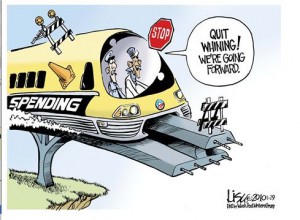
Economists at the Federal Reserve Bank of San Francisco look at the impact of intrastructure repair on the economy:  Highway spending in the United States between 2008 and 2011 was flat, despite the serious need for improvements and the big boost to state highway funds from the Recovery Act of 2009. A comparison of how much different states received and spent shows that these federal grants actually boosted highway spending substantially. However, this was offset by pressures to reduce state highway spending due to plummeting tax revenues. In fact, analysis suggests national highway spending would have fallen roughly 20% over this period without federal highway grants from the Recovery Act.  Fueling Road Spending with Federal Stimulus

Infrastructure Repair


Should Auditors Sign Financial Statements?

An industry group which represents some of the US’s largest investors is urging regulators not to back away from plans to require auditors to sign the financial statements they prepare for companies.

There is an ongoing struggle between the Public Company Accounting Oversight Board, which regulates the accounting industry, and the Securities and Exchange Commission over reforms to auditor disclosure. The PCAOB, and many accounting reformers and investment groups had pushed for this change.

Audit Signatures?


Burger King Latest US Company to Consider Inversion

We continually advocate for a tax code that works for US corporations and US citizens.  Some of our writers have proposed eliminating corporate taxes entirely and taxing only dividends.  Who knows what will work best. But we should have a vigorous and open-minded discussion.


 Burger King Worldwide Inc., the second-largest U.S. burger chain, is in talks to buy Tim Hortons Inc. and move its headquarters to Canada, becoming the latest American company to seek a relocation to a lower-tax country.

Burger King, which is majority-owned by 3G Capital, would create the world’s third-largest fast-food chain by merging with Canada’s bigger seller of coffee and doughnuts, the companies said in a statement. Canada’s corporate tax rate is 26.5 percent, compared with 40 percent in the U.S., according to audit, tax and advisory firm KPMG’s website.

The deal threatens to renew debate over American companies shifting their headquarters internationally in search of a lower corporate tax bill. The trend drew criticism last month from President Barack Obama. His aides vowed that the administration would take action to curtail the practice.

3G Capital will own the majority of the shares of the new company, with the remainder held by other shareholders of Tim Hortons and Burger King, according to the statement. The two chains will operate as stand-alone brands, the companies said.

The combined business would have about $22 billion in sales and more than 18,000 restaurants in 100 countries, according to the statement. The deal is subject to negotiation, and Burger King and Tim Hortons don’t plan to comment further until an agreement is reached or discussions are discontinued.

Between mid-June and late July, when Obama began criticizing deals that cut taxes by relocating outside the U.S., at least five large American companies have announced plans to make such a move, known as an “inversion.” That includes AbbVie Inc. and Medtronic Inc.

Since the start of 2012, at least 21 U.S. companies have announced or completed the deals, comprising almost half the total of 51 such transactions in the past three decades.

Tim Hortons, Canada’s biggest coffee merchant, has about 4,500 restaurants and has been expanding its product lines to boost sales. The Oakville, Ontario-based company’s stock rose 2.8 percent to a record C$68.78 on Aug. 22, the most recent trading day. The restaurant operator posted results this month that beat estimates and said fiscal 2014 profit will top or be at the high end of its target range.

Earlier this month, Burger King reported that revenue fell 6.1 percent to $261.2 million in the second quarter. Same-store sales in the U.S. and Canada rose 0.4 percent. The company has been trying to introduce fewer new items to make its kitchens faster and less complex.

Burger King rose 1 percent to $27.11 at the Aug. 22 close in New York for a gain of 19 percent this year. Its shares rose 4 percent to the equivalent of $28.23 in German trading at 9:44 a.m. Frankfurt time.

The plan to move to Canada follows Burger King’s debut on the New York Stock Exchange in 2012. The chain had been taken private in 2010 by 3G, a New York investment firm, which got $1.4 billion in cash from the public offering and remains the majority shareholder with a 70 percent stake.

U.S. fast-food restaurants are struggling with shaky consumer confidence and steep competition, adding pressure to find ways to alleviate the burden. Burger King has been trying to draw customers with value deals, such as a two-sandwiches- for-$5 offer, as well as some new limited-time fare including chicken fries.

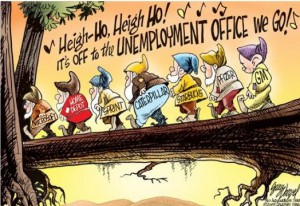
US Companies Invert


Addressing Employment at Jackson Hole

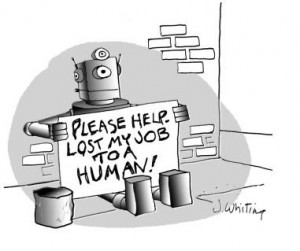
The disappearing middle class has been a topic of much discussion in recent years. David A. Auter, Professor and Associate Department Head, Department of Economics, Massachusetts Institute of Technology is the author of “Polanyi’s Paradox and the Shape of Employment Growth.”  While much has been made of the loss of jobs to automation and robots, Prof. Auter says that data indicates rather than a loss of jobs occurring, a rearrangement of jobs within the economy is taking place.

Auter finds that for Europe and the U.S., growth is occurring in low wage occupations and in high wage occupations while middle wage jobs have been declining over the past couple of decades. He relates this to the relationships between men and machines which he structures in the context of the 1966 proposition of physical scientist, social scientist and philosopher Michael Polanyi that intuitive knowledge is something that transcends learned theory. Following this reasoning he is not surprised to find that the onset of an age of automation and robots is not marked by the obsolescence of human “labor” but actually a redefinition of what that effort is, as reflected by the empirical data.

In 1966, the philosopher Michael Polanyi observed, “We can know more than we can tell… The skill of a driver cannot be replaced by a thorough schooling in the theory of the motorcar; the knowledge I have of my own body differs altogether from the knowledge of its physiology.”

Polanyi’s observation largely predates the computer era, but the paradox he identified-that our tacit knowledge of how the world works often exceeds our explicit understanding-foretells much of the history of computerization over the past five decades. This paper offers a conceptual and empirical overview of this evolution.

The challenges to substituting machines for workers in tasks requiring adaptability, common sense, and creativity remain immense. Contemporary computer science seeks to overcome Polanyi’s paradox by building machines that learn from human examples, thus inferring the rules that we tacitly apply but do not explicitly understand.   David Auter Paper

Jobs

Protests at Jackson Hole

More and more people realize that government fiscal policies impact them.  Protesters, worried that the central bank is about to put its foot on the brakes, have come to the Federal Reserve’s Jackson Hole retreat this year to urge the central bank to hold off and give the economy more time to heal. This is believed to be the first time there ever has been protesters at the event.

“We strongly urge the Federal Reserve to reject the calls to raise interest rates and slow the economy down,” said The Center for Popular Democracy, a coalition of 70 organizations, in a letter to Federal Reserve Chairwoman Janet Yellen and her colleagues.

“Although the stock market has roared back to life, and the wealthiest Americans are richer than ever before, too many of us struggle to secure even basic levels of dignity,” the letter said.

Becky Dernbach, 28, an organizer with Neighborhoods Organizing for Change — an advocacy group for low-income residents in Minneapolis — said she came to Jackson Hole to make sure that the voices of average workers were being heard by the Fed.

Kendra Brooks, 42, a resident of Philadelphia who has an MBA but still found herself out of work even after her unemployment benefits ended, said the American dream has “fizzled” in this economy.  “We are not their [the Fed’s] primary concern. They are more focused on the top end of the [income] scale,” she said.

The activists said the Jackson Hole protest was the start of a new effort to get officials to understand the economy is broken.  The group held a two-hour meeting with Kansas City Fed President Esther George, who has been one of several regional bank presidents advocating for a rate hike sooner rather than later.

Ady Barkan, a staff attorney with the Center for Popular Democracy, said that the group appreciated the meeting but that the two sides had talked past each other.  George told the group that higher rates might not come soon, but said are coming and will balance the economy, he said.

“That is completely wrong,” Barkan said. The way to combat imbalance in the economy is through strong regulation “not throwing people out of work,” he said.

Debate Over Monetary Policy

Janet Yellen Begins to Address Employment and Global Instability


Janet Yellen delivered her first keynote address at the annual conference of central bankers in Jackson Hole, Wyoming.

This year’s gathering is focused on “Re-Evaluating Labor Market Dynamics.”  She described the difficulties confronting an assessment of today’s labor market, including the challenges facing an evaluation of the remaining slack in employment. This takes in factors such as the labor participation rate, wage dynamics, involuntary part-time employment and the extent to which the decline in the unemployment rate “somewhat overstates the improvement in overall labor market conditions.”

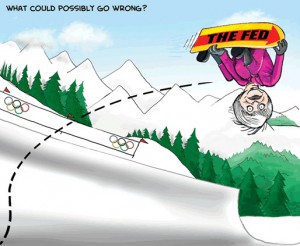
In linking this analytical discussion to the prospects for monetary policy, she reinforced two messages delivered at Wednesday’s Federal Open Market Committee: A less dovish tilt in the general thinking of Fed officials amid a recovery in the labor market, and significant differences in officials’ thinking when it comes to the details of when and how high to raise interest rates.

Yellen shied away from another issue that is attracting growing attention among economists — namely, the costs and risks of whether “there is likely to be a price paid in terms of financial stability,” as economist Larry Summers recently put it.

Finally, Yellen was silent on the issue of how to navigate the intensifying multispeed policy world of central banking in developed countries. Her main dilemma now is how quickly to ease off the monetary-policy accelerator. This is a stark contrast to the challenge facing European Central Bank President Mario Draghi. He is dealing with the question of when and how to step harder on the accelerator.

With other types of economic stimulus undermined by political polarization and dysfunction, the challenge for central bankers is managing the widening difference in monetary policy and market interest rates (just look at the gap between the 10-year U.S. Treasury note and the comparable-maturity German bund). Much of the burden might be borne by the foreign-exchange markets, potentially restoring an element of volatility that has been contained by central banks. This only adds to concerns about the impact of financial instability on the global economy down the road.

Janet Yellen at Jackson Hole